How a Two-Year Permit Covers Two Riding Seasons
A two-year New Mexico OHV permit can make planning easier when you expect to ride in more than one season, but it does not automatically apply to every visitor or every route. The key is checking whether your home-state registration already qualifies, when the permit term begins and ends, and what separate rules still apply to your machine and riders.
What a two-year permit actually covers
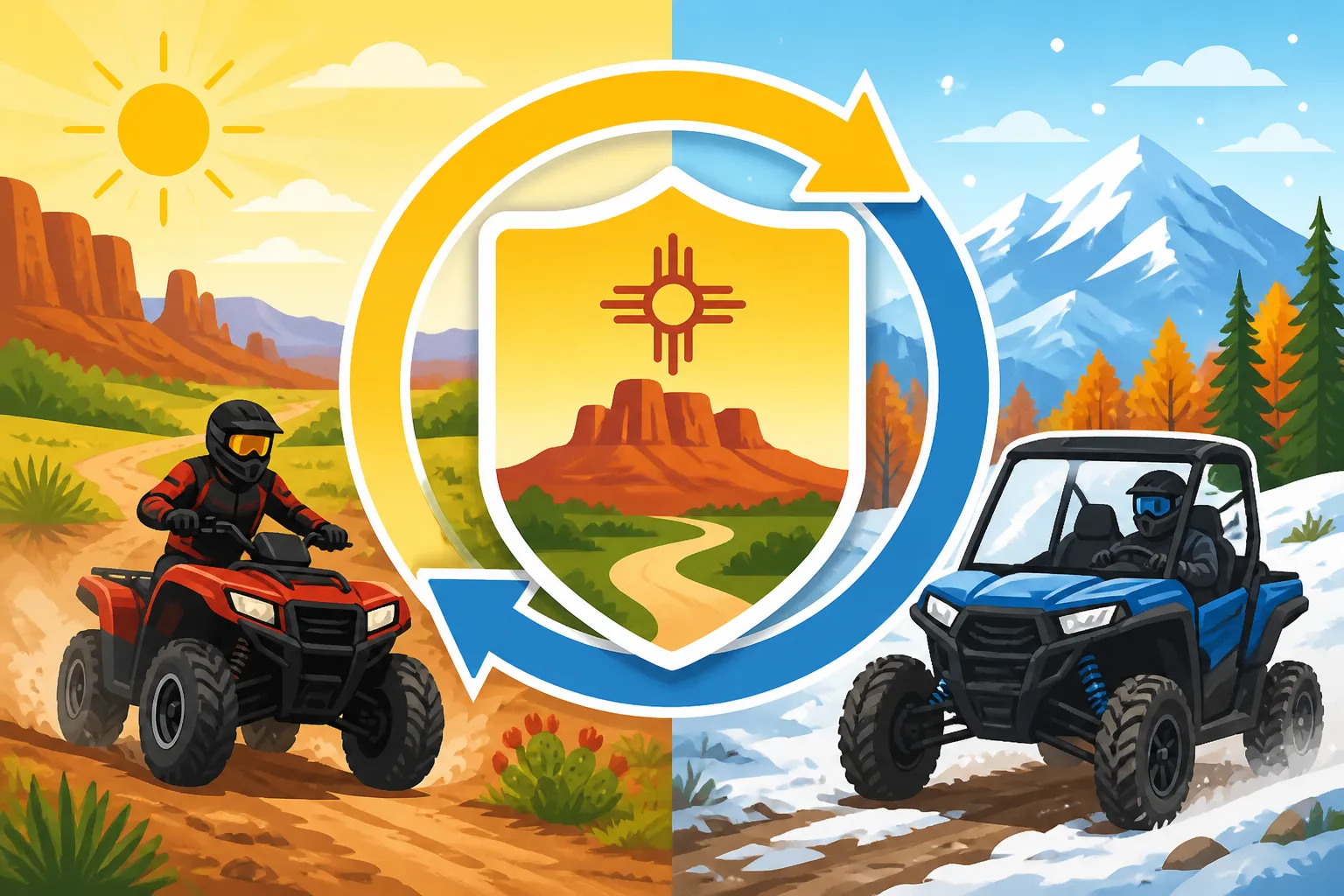
New Mexico’s nonresident OHV permit is intended for qualifying out-of-state riders who need a state permit to operate an off-highway vehicle on public land. A two-year term can cover rides in two different seasons without buying a new permit for each trip. But “two riding seasons” is a useful way to think about the term, not a promise that the permit aligns with two full calendar seasons.
For example, a rider who buys a permit late in one season may use it for the remaining rides that year and return during a later season, as long as the permit remains valid. If you are planning trips around a particular date, check the expiration information shown when you buy the permit and keep a record of it. Do not assume it starts with the next season or expires at the end of a calendar year.
The permit is tied to the rider or machine requirements set by the program, so check the current application instructions rather than assuming it transfers freely between vehicles or people. The details of the permit, eligible machines and proof to carry are covered in New Mexico’s Nonresident OHV Permit.
| Your situation | What to check before riding |
|---|---|
| Your home state registers OHVs | Whether New Mexico recognizes that registration through reciprocity |
| Your home state has no applicable OHV registration program | Whether you need a New Mexico nonresident permit |
| You plan to ride in separate seasons | The permit’s actual expiration date, not just the season names |
| A rider is under 18 | Whether a separate New Mexico safety permit is required |
| You plan to use federal land | The land manager’s route, closure and equipment rules as well as state requirements |
The permit is not a substitute for permission to ride a specific road or trail. It does not turn a closed route into an open one, give access to private or tribal land, or replace any required registration, insurance or safety credential. If your itinerary includes federal land, start with New Mexico Rules for Riding Federal Land and verify the local travel rules before heading out.
A permit is not necessarily the same as registration
Registration and a nonresident permit are related, but they are not interchangeable in every circumstance. Some visitors arrive with a valid home-state OHV registration that New Mexico recognizes. Others may need to obtain a New Mexico permit because their home state does not have a comparable registration program.
That distinction is why a visitor should not buy a permit automatically just because they are from out of state. First, check New Mexico’s Broad OHV Reciprocity and confirm how your own registration is treated. A permit that is unnecessary for one visitor may be required for another riding the same trail.
The state’s nonresident process is also different from registering a machine through a motor vehicle office. Before paying, verify that you are using the correct process for your circumstances and that the permit applies to the machine you intend to ride. Why Nonresident Permits Skip the MVD explains why visitors should not assume that the in-state registration process is the right route.
Check reciprocity before paying
The biggest practical question is often not whether a two-year permit sounds convenient, but whether you need one at all. New Mexico recognizes certain out-of-state OHV registrations. If your machine has qualifying, current registration from a state covered by the reciprocity rules, that may satisfy the relevant requirement without a separate New Mexico nonresident permit.
Do not rely only on the fact that your home state issues a title, license plate or registration for some kinds of vehicles. The important question is whether the document you carry is an OHV registration that New Mexico accepts for the type of machine you are bringing. A road-vehicle plate or an expired document may not establish what you need.
Use this quick check before buying:
- Identify the document your machine carries at home. Confirm whether it is an OHV registration, rather than only a title, bill of sale or general vehicle document.
- Check whether New Mexico recognizes registrations from your state. The reciprocity rules can differ according to the home state’s OHV program.
- Confirm that the registration is current and applies to the machine you will ride.
- If your state is not covered, check the state’s nonresident permit instructions and choose the correct permit term.
- Save proof of the registration or permit in a place you can access while riding.
The list of states that do not have a qualifying OHV program is especially relevant to visitors. If you are coming from one of those states, use Riders From States Without Registration to understand why a New Mexico permit may be needed. If you are unsure what document to bring, Proof of a Home-State Registration can help you check what an officer or land manager may expect to see.
Reciprocity is not a general exemption from all riding rules. Even with accepted registration, you still need to obey closures, stay on routes open to your vehicle, meet applicable equipment requirements and obtain any separate land-access permission. A rider with the correct paperwork can still be turned around for entering a closed route or crossing onto land without authorization.
New Mexico registration is a separate question
If you live in New Mexico, or are moving there, a nonresident permit may not be the appropriate document. Residents generally need to follow the state registration process for their machine. The process for an out-of-state visitor should not be treated as a shortcut around resident registration requirements.
For a visitor who has just moved, has recently bought a machine or is unsure whether a vehicle is already registered, it is worth sorting out that status before a trip. The right next step depends on whether you are visiting temporarily, establishing residence, or bringing a machine into the state for ongoing use. Registering After Moving to New Mexico covers the resident-side issue.
Plan the permit around your rides
A two-year permit makes the most sense when it covers the dates you actually plan to ride and when reciprocity does not already meet the requirement. Think through your schedule before buying: Are you planning one trip or several? Are your visits spread across seasons? Will the machine be the same each time? Do you have a current registration from your home state?
If you only have one short trip planned, compare the available permit options and their terms before deciding. If you expect multiple visits, check whether one two-year permit will remain valid for all of them. The permit’s current cost and purchase conditions can change, so confirm them with the official permit provider rather than relying on an old receipt, forum post or trip-planning note.
The purchase process may be available online or through other authorized channels. Check [Buying a New Mexico Permit Online] for the online route, and make sure the name, machine details and dates you enter are correct. Keep the confirmation and permit information accessible offline. Cell service can be limited in remote riding areas, so it is unwise to depend on a webpage loading at a trailhead.
Before leaving, use this final checklist:
- Confirm your home-state registration is accepted, or obtain the New Mexico permit required for your situation.
- Check the permit’s stated validity dates and carry proof of it.
- Confirm any separate requirement for a young rider. New Mexico’s OHV safety permit rules for minors are distinct from the nonresident permit; see New Mexico’s Safety Permit for Under-18 Riders.
- Check route maps and current closures for each area on your itinerary. A permit does not grant permission to leave designated routes; Designated Routes and Travel Management in New Mexico explains why route status matters.
- Review any additional rules for the land you plan to use. National Forest, BLM, state, tribal and private lands can have different access requirements.
- Carry the documents where you can show them during a roadside check. Carrying Proof on a Desert Ride offers practical advice for keeping proof available away from cell service.
The permit is only one part of preparation. A two-year term can save a repeat purchase when your plans span more than one season, but it is useful only if you need that permit, buy the correct one and stay within its validity dates. Verify reciprocity first, then match the permit to your schedule and confirm the rules for each place you plan to ride.
Disclaimer
This article is for general informational purposes only and does not constitute professional advice. Laws, prices and regulations vary by location and change over time. Consult a qualified professional for guidance on your specific situation.