Registering After Moving to New Mexico
Moving to a new state is exciting, but bringing your beloved ATV or UTV along can quickly turn that excitement into a mountain of paperwork and confusion. Suddenly, the registration you've held for years means nothing, and you're faced with a whole new set of rules and requirements just to get your machine on New Mexico's incredible trails. This guide is here to walk you through the often-overwhelming process of registering your off-highway vehicle (OHV) in the Land of Enchantment once you've made New Mexico your home.
Understanding New Mexico's OHV Registration Philosophy
When you move to a new state, it often feels like you're starting from scratch with everything, and OHV registration is no exception. New Mexico, like many states, wants to make sure all off-highway vehicles operating within its borders are properly accounted for, even if they've come from another part of the country. This isn't about penalizing you for being new; it's about ensuring safety, funding trail maintenance, and maintaining a clear record of who owns what.
For new residents, the clock starts ticking pretty quickly. You can't just keep riding on your old state's registration indefinitely. The state wants you to get your OHV into the New Mexico system as soon as you're officially a resident. Think of it as joining a new club – you've got to get your membership card updated. Failing to do so can lead to headaches and even fines down the road, which is the last thing anyone wants when they're still unpacking boxes and learning the local grocery store layout.
Why New Mexico Cares About Your Out-of-State Machine
It might seem like a hassle, having to re-register a machine you've owned and legally operated for years elsewhere. However, New Mexico has a vested interest in every OHV that calls the state home, even if it just arrived. First and foremost, registration fees contribute directly to the maintenance and development of OHV trails and riding areas throughout New Mexico. This means that by registering your machine, you're directly supporting the very places you love to ride. It's a collective effort to keep our trails beautiful and accessible.
Beyond funding, registration helps with law enforcement and safety. In the unfortunate event of theft, an up-to-date registration and title make it much easier for authorities to track down your machine. It also helps ensure that vehicles on public lands meet certain basic safety and environmental standards, contributing to a safer and more enjoyable experience for everyone. The state wants to protect its natural resources and its riders, and proper registration is a key part of that system.
The Importance of Timely Registration for New Residents
Once you establish residency in New Mexico, there's typically a grace period during which you can operate your out-of-state registered OHV. However, this period isn't indefinite, and it's always best to check the most current regulations for the exact timeframe. Generally, new residents are expected to register their OHVs fairly promptly. Delaying this process can lead to complications, such as potential fines if you're stopped on a trail or road, or issues with law enforcement if they check your vehicle's status.
Think about it this way: the sooner you get your New Mexico registration, the sooner you can truly feel settled and confident hitting those amazing trails without a worry. It's one less administrative task hanging over your head, allowing you to fully embrace your new life and the incredible riding opportunities that New Mexico offers. It’s definitely worth prioritizing, right alongside finding the best green chile cheeseburger. [Registering an OHV in New Mexico] outlines the general process that new residents will also follow.
Essential Documents for a New Mexico Resident Registration
Navigating the paperwork for OHV registration can feel like a scavenger hunt, especially when you're dealing with documents from a different state. The New Mexico Motor Vehicle Division (MVD), which handles OHV registration, needs specific pieces of information to verify ownership, confirm your residency, and properly identify your machine. Gathering these items before you head to the MVD office will save you a tremendous amount of time and frustration, avoiding that dreaded "you're missing this form" trip back home.
It’s not just about proving you own the machine; it’s also about proving you are who you say you are and that you actually live in New Mexico now. The MVD is pretty thorough for a good reason – they need to ensure the integrity of their records and prevent fraud. So, take the time to assemble everything neatly, maybe even put it in a dedicated folder, before you even think about setting foot in an office.
Proving Ownership: Title, Bill of Sale, and More
The cornerstone of proving ownership for your OHV is almost always the Certificate of Title. If your previous state issued a title for your ATV or UTV, you will absolutely need to present this original document. The MVD will use it to verify the vehicle's details and to process the transfer into the New Mexico system. Make sure the title is clean, meaning it shows no outstanding liens (unless you're prepared to address that separately, which we'll discuss later), and that any previous ownership transfers are properly endorsed.
What if your previous state didn't issue titles for ATVs or UTVs? This is a common point of confusion for new residents, as titling laws vary widely from state to state. In this scenario, you'll likely need alternative proof of ownership. This can include a manufacturer's certificate of origin (MCO), a detailed bill of sale, or even previous registration documents from your former state. A comprehensive bill of sale, especially one created through a service like LawDepot, can be incredibly valuable here, detailing the sale terms, VIN, and both buyer and seller information. The MVD will assess these documents to determine if they provide sufficient proof of your ownership. Don't forget, [Titling an Off-Highway Vehicle in New Mexico] explains this in more detail.
Verifying Your Identity and Residency
When you're registering your OHV as a new resident, the MVD also needs to confirm who you are and that you genuinely live in New Mexico. For identity, a valid government-issued photo ID is essential. This could be your new New Mexico driver's license (if you've already obtained one) or a driver's license from your previous state, along with other supporting documents. The goal is to provide undeniable proof of your identity.
For residency, the MVD will require documents that clearly show your physical address in New Mexico. This could include utility bills in your name, a rental agreement or mortgage statement, a New Mexico vehicle registration for another vehicle, or a recent bank statement. The exact combination of documents can vary, but generally, you'll need at least two different forms of proof. Having these ready helps the MVD verify your status as a new resident and process your application smoothly. Think about all the paperwork involved in setting up your new home, and you'll likely have these proofs readily available.
VIN Inspection and Other Machine Details
Before your OHV can be officially registered in New Mexico, it needs to undergo a Vehicle Identification Number (VIN) inspection. This is a crucial step to ensure that the VIN on your machine matches the VIN on your ownership documents and that the vehicle hasn't been reported stolen. In some cases, the MVD staff can perform this inspection on-site at their office, or they might direct you to a certified VIN inspector, often found at law enforcement agencies or certain dealerships.
Beyond the VIN, you'll need to provide other specific details about your machine. This includes the make, model, year, engine size (CCs), and its primary intended use (e.g., ATV, UTV, dirt bike). Having your [New Mexico OHV Registration Paperwork] filled out as completely as possible before you arrive will definitely speed things up. Double-check all these numbers and details against your title or MCO to ensure accuracy; any discrepancies can cause significant delays in the registration process.
The Step-by-Step Process at the MVD
Alright, you've gathered your documents, you've taken a deep breath, and you're ready to tackle the MVD. The process of registering your out-of-state OHV is quite similar to a first-time registration for any vehicle in New Mexico, with a few nuances specific to new residents. Patience is key, but going in prepared will make the experience as smooth as possible. Remember, the folks at the MVD are there to help, even if the system sometimes feels designed to test your resolve.
It's a good idea to set aside a good chunk of time for this, especially if you're going during peak hours. Mornings tend to be a little calmer, but that's not a guarantee. Bring a book or something to keep you occupied, and maybe even a snack, because the wait can sometimes be considerable, particularly in larger cities. But once you get through it, you'll have that sweet, sweet New Mexico decal. [Why MVD Registers New Mexico OHVs] is a good read to understand the agency's role in this.
Locating Your Nearest MVD Office and What to Expect
The first practical step is finding your nearest New Mexico MVD office. You can usually do this by checking the official New Mexico MVD website. It's also wise to check their hours of operation and if they recommend or require appointments for certain services. Some smaller offices might have different procedures or more limited staffing, so a quick call ahead could save you a wasted trip.
Once you arrive, you'll likely need to take a number or check in. Clearly state that you are a new resident looking to register an out-of-state off-highway vehicle. This helps the MVD staff direct you to the correct forms and personnel. Be prepared for a wait; MVD offices can be busy, especially during lunch hours or right after opening. Keep all your meticulously gathered documents in a single, organized folder so you can quickly produce them when called upon.
Filling Out the Necessary Forms Correctly
When your number is called, you'll be directed to a representative who will guide you through the required forms. The primary form you'll complete is typically an Application for Vehicle Title and Registration. As a new resident, you'll indicate your prior state of registration and provide all the details about your OHV, your identity, and your new New Mexico address. It's crucial to fill out every section accurately and completely.
If you have a lien on your vehicle, you'll need to indicate this on the form and provide the lienholder's information. Don't be afraid to ask questions if something on the form is unclear. Making a mistake can lead to your application being rejected, forcing you to start over or return another day. Having a template for a [New Mexico ATV Bill of Sale Requirements] might be helpful if you need to generate one to supplement your existing documents, perhaps using a service like LawDepot.
Understanding Fees and Payment Options
Registering an OHV in New Mexico, especially as a new resident, involves certain fees. There will be a registration fee, which covers the cost of getting your machine into the state's system and typically lasts for two years. There might also be a title fee if your machine is being titled for the first time in New Mexico, as well as an excise tax based on the vehicle's value. These fees are statutory and are generally non-negotiable.
It's a good practice to inquire about the exact fees before you go or check the MVD website for current schedules. Be prepared with accepted payment methods, which usually include cash, checks, and major credit or debit cards. While the exact amount can change, understanding the types of fees involved helps you budget and avoid any surprises at the counter. [New Mexico OHV Registration Cost] covers these elements.
Navigating Specific Situations for New Residents
The registration process isn't always a straightforward path, especially for new residents. You might encounter unique circumstances based on where you moved from or the specific history of your OHV. Whether you're missing a traditional title, still making payments on your machine, or trying to understand New Mexico's dual decal system, there are specific steps and considerations to keep in mind. Don't let these specific hurdles intimidate you; they're common, and the MVD has procedures for handling them.
This is where having a little extra knowledge truly pays off. Knowing what to expect for these less common scenarios can prevent a lot of anxiety and ensure you're asking the right questions at the MVD counter. It’s all part of adapting to your new home state’s system.
When You Don't Have a Title (or it's from a Non-Titling State)
One of the most common challenges new residents face is dealing with an OHV that either never had a title in its previous state or the title has been lost. If your OHV came from a state that does not title off-highway vehicles, you'll need to present alternative proofs of ownership, as mentioned earlier. This might include a Manufacturer's Certificate of Origin (MCO), a detailed bill of sale, and previous registration cards. The MVD will then issue a New Mexico title based on these documents.
If you should have a title but it's lost, you'll need to apply for a duplicate title from your previous state's motor vehicle department before you can register in New Mexico. This can add significant time to the process, so it's best to address a lost title as soon as you know you're moving. Sometimes, if the original title is simply unavailable and the vehicle is old, the MVD may have specific procedures for a bonded title or a title by inspection. Always consult directly with the MVD for the most accurate guidance on these complex situations. Services like LawDepot can assist in creating official-looking documentation like a bill of sale to support your claim if other proofs are insufficient.
Registering a Machine Still Under a Lien
If your OHV still has an outstanding loan on it, meaning a bank or financial institution holds the title, the registration process in New Mexico requires a few extra steps. You'll need to provide the MVD with the name and address of your lienholder. In many cases, the MVD will then correspond directly with your lienholder to obtain the necessary title information or to have the title transferred to New Mexico with the lien noted.
It's often a good idea to contact your lienholder before you go to the MVD. Let them know you're moving to New Mexico and will be registering the OHV in the new state. They might have specific forms or procedures they require on their end to facilitate the transfer of the title and lien information. Having the lienholder's account number and contact information readily available for the MVD will help streamline this part of the process. Remember, the lien remains with the vehicle until the loan is paid off, regardless of which state it's registered in. [Titling a Machine With a Lien in New Mexico] is a good resource for this.
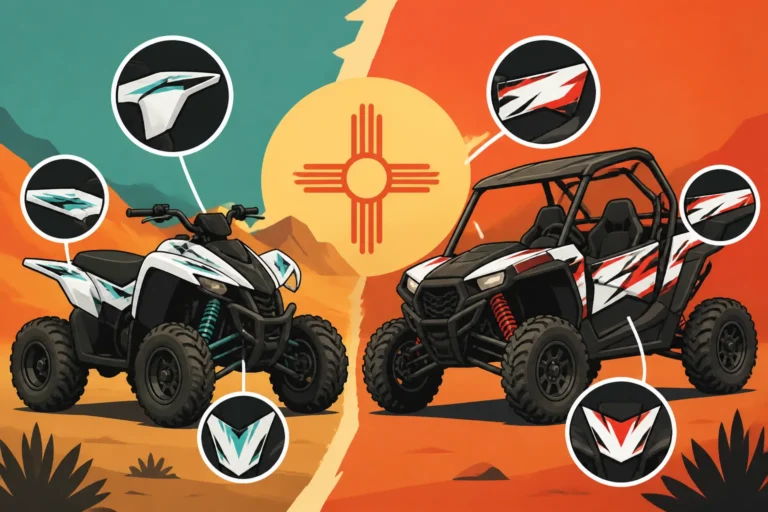
The Difference Between Yellow and Green Decals for Out-of-State Machines
New Mexico has a unique system for OHV registration that involves two different colored decals: yellow and green. When you register your OHV after moving to New Mexico, you'll need to understand which decal applies to your riding intentions.
-
Yellow Decal: This is the standard off-highway decal. It permits you to ride your OHV on designated off-highway trails and public lands where OHV use is allowed. It signifies that your machine is registered purely for off-pavement use. If you plan to only ride trails and avoid paved roads (except for quick, perpendicular crossings), the yellow decal is what you'll receive. [New Mexico's Yellow Off-Highway Decal] provides more insight.
-
Green Decal: This decal is for machines that will be used both off-highway and on paved public roads where local ordinances permit. Obtaining a green decal requires additional steps, including proof of liability insurance that meets New Mexico's minimum requirements and often specific safety equipment on your OHV (like headlights, taillights, and mirrors). Not all OHVs can qualify for a green decal, so if you're thinking of riding on pavement, be sure to ask the MVD about the specific requirements. [New Mexico's Green On and Off-Highway Decal] goes into more detail about this. Most new residents opt for the yellow decal initially, as it covers the vast majority of riding areas in the state.
What Happens After You Register Your OHV
Congratulations! You've navigated the MVD, presented all your documents, and your OHV is officially registered in New Mexico. But the journey isn't quite over. There are a few important things you need to do immediately after registration and to keep in mind for the future to ensure you remain compliant with New Mexico law. This includes correctly displaying your new decal, understanding the renewal process, and being aware of the penalties for non-compliance.
It’s about more than just getting the sticker; it’s about understanding what that sticker means for your riding adventures. Taking these final steps correctly ensures your hard work at the MVD wasn't in vain and that you can enjoy New Mexico's stunning landscapes on your OHV worry-free.
Decal Placement and Display Rules
Once you receive your new New Mexico registration decal (either yellow or green), the next crucial step is to place it correctly on your OHV. New Mexico law is quite specific about where these decals must be affixed, and improper placement can lead to citations from law enforcement.
| Vehicle Type | Decal Placement Location |
|---|---|
| ATV (Quad) | On the left-rear fender or plastic. |
| ROV (Side-by-Side) | On the left-rear quarter panel. |
| Off-Highway Motorcycle | On the left fork leg, above the lower triple clamp. |
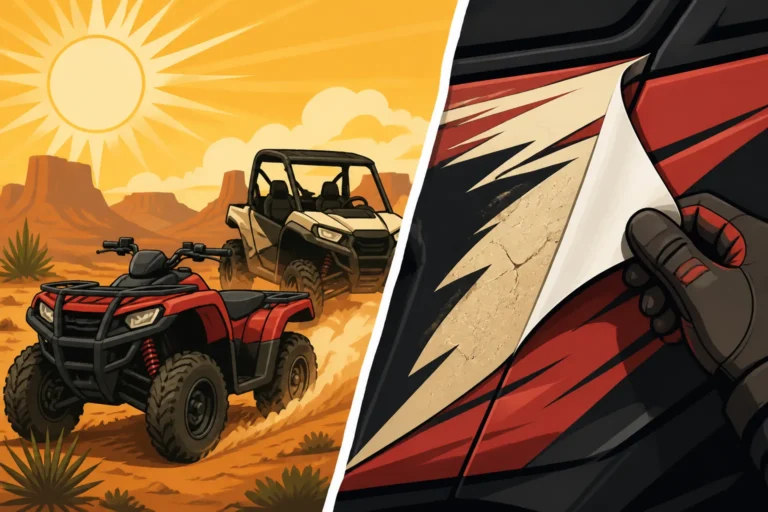
The decal must be clearly visible and permanently affixed. Make sure the surface is clean and dry before applying the decal to ensure good adhesion. The numbers on the decal are your unique registration identifier, so ensure they are not obscured. For a complete visual guide, refer to resources like [Where New Mexico Requires the Decal Placed]. Taking a moment to do this right prevents a lot of hassle down the road when a ranger or deputy checks your machine.
Renewing Your New Mexico Registration in the Future
Your New Mexico OHV registration isn't a one-and-done deal. Like most vehicle registrations, it has an expiration date. New Mexico OHV registrations are typically valid for two years. Before your current registration expires, you'll need to renew it to continue legally operating your OHV on public lands.
The MVD usually sends out renewal notices as your expiration date approaches, but it's ultimately your responsibility to track your registration validity. Renewals can often be completed online, by mail, or in person at an MVD office. The process for renewal is generally much simpler than the initial registration, requiring less paperwork since your information is already in the system. Be aware of the renewal fees, which are usually lower than the initial registration cost. [What a New Mexico Renewal Costs] will give you an idea of the expense. Staying on top of renewals means uninterrupted access to those beautiful New Mexico trails. [Why New Mexico Renews Every Two Years] explains the cadence.
Understanding Compliance and Avoiding Penalties
Now that your OHV is properly registered in New Mexico, it's vital to understand what compliance entails and how to avoid penalties. Riding an unregistered OHV, or one with an expired registration, on public lands or permitted roads in New Mexico can result in fines. Law enforcement officers, whether state police, county sheriffs, or federal land managers, regularly check for current registration decals.
Beyond registration, remember to comply with all other New Mexico OHV laws, such as helmet requirements for certain ages, spark arrester mandates, and sound level limits. Carrying proof of registration with you whenever you ride is also a good idea. By understanding and adhering to these rules, you're not only avoiding potential [New Mexico Fines for an Unregistered OHV] but also contributing to the responsible enjoyment of New Mexico's incredible outdoor spaces for everyone.
Disclaimer
This article is for general informational purposes only and does not constitute professional advice. Laws, prices and regulations vary by location and change over time. Consult a qualified professional for guidance on your specific situation.