When Desert Sun Peels a Decal Off
It's a familiar sight for any off-highway vehicle enthusiast in New Mexico: you glance at your ATV or UTV, ready for an epic ride, only to find that your essential registration decal is peeling, faded, or worse, completely shredded by the relentless desert sun and wind. This guide understands that frustration and aims to walk you through exactly what to do when your New Mexico OHV decal starts to give up the ghost, ensuring you stay legal and ready for the trails.
The Harsh Realities: Why Your New Mexico OHV Decal Suffers in the Sun
New Mexico's stunning landscapes come with a downside for anything left exposed to the elements: the environment here is incredibly tough on materials, especially adhesive-backed decals. It’s not just a matter of time; it's a constant battle against forces that are specifically designed to break things down. You might think, "It's just a sticker, how bad can it get?" but the combination of extreme factors here is genuinely unique and often underestimated.
The Relentless Assault of UV Radiation
Ultraviolet (UV) radiation from the sun is perhaps the biggest culprit in the premature demise of your OHV decal. Think about how the sun fades paint on a car or makes plastic brittle over time. Decals are no different. The UV rays directly attack the pigments in the ink, causing them to fade rapidly, turning vibrant yellows or greens into ghostly, unreadable blurs. More importantly, UV radiation also breaks down the chemical bonds in the adhesive itself. That super-strong glue that held your decal firmly in place begins to weaken and dry out, losing its grip on your machine's plastic or metal surface. This process happens gradually, day after day, turning a once-secure sticker into a brittle, cracking piece of plastic just begging to lift off at the edges.
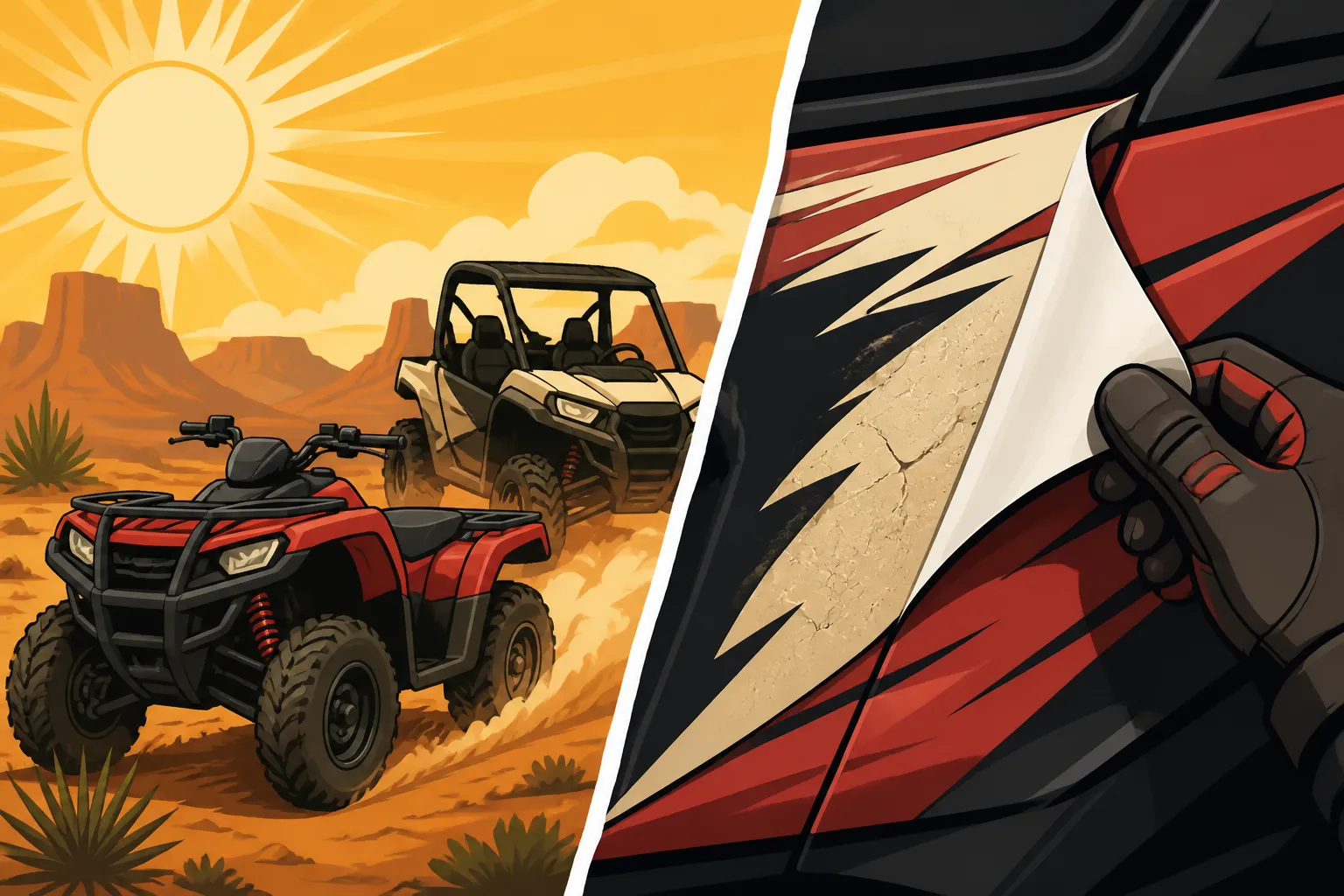
Imagine your beautiful new yellow decal, sparkling under the spring sun in the Red Sands OHV Area. A few months later, after countless sunny days and scorching afternoons, that bright yellow might be a pale cream, and the black numbers might look more like charcoal smudges. It's not a manufacturing defect; it's simply the sun doing what it does best in New Mexico: breaking down anything in its path. This constant exposure can truly make a mockery of even the toughest adhesive, leading to those frustrating lifted edges and bubbling that signal the beginning of the end for your decal.
Temperature Swings: From Scorching Hot to Desert Chill
Beyond UV, New Mexico’s dramatic temperature fluctuations play a significant role in decal degradation. You know the drill: a scorching 95-degree Fahrenheit afternoon ride in the desert can quickly turn into a brisk 50-degree evening. These drastic temperature changes cause the material of your OHV, and by extension, your decal, to expand and contract. While the change might be minuscule, over hundreds or thousands of cycles, it puts immense stress on the decal's adhesive layer. The decal and the surface it's applied to might expand and contract at different rates, leading to tiny stresses that eventually manifest as cracks, peeling, and delamination.
Consider a UTV parked overnight near Elephant Butte Lake in the summer. During the day, the quarter panel heats up to blistering temperatures, causing both the plastic and the decal to expand. As the sun sets and the desert air cools dramatically, they contract. Each cycle is like a tiny tug-of-war on the decal's adhesion. Over weeks and months, this constant push and pull weakens the bond, especially around the edges, making them prime candidates for lifting. This isn't just about direct sunlight; even if your OHV is parked in the shade, it's still subject to the ambient temperature changes that wreak havoc on adhesives and materials alike.
Sand, Dust, and the Winds of New Mexico
And then there's the physical assault. New Mexico is famous for its dust, sand, and wind—all highly abrasive elements that literally sandblast your decal over time. Every time you ride through a dusty arroyo or face a gust of wind on a wide-open plain, tiny particles are scraping across the surface of your decal. This abrasion can physically wear away the protective top layer, exposing the ink underneath to even more rapid fading and making the decal brittle.
Think about riding near Farmington in the Glade Run area. The wind whips up fine grit, and as you hit the trails, dust plumes follow. This isn't just cosmetic; those microscopic sand particles act like sandpaper, slowly but surely eroding the decal's surface. Once the edges start to lift due to UV and temperature, that wind finds a perfect entry point, getting underneath the decal and accelerating the peeling process, sometimes tearing large chunks off. It's a combination of chemical breakdown and physical abuse that leaves your once-crisp decal looking like a relic from another era. This physical damage can quickly escalate, turning a small corner peel into a significant loss of the decal, and with it, potentially crucial registration information.
Recognizing the Need for a Replacement: When "Faded" Becomes "Failure"
It’s easy to put off replacing a decal. "It's still mostly there," you might tell yourself, or "The numbers are almost visible." But when it comes to your New Mexico OHV registration, "mostly" and "almost" aren't good enough. There comes a point where a faded or peeling decal crosses the line from merely unsightly to legally problematic. Knowing when to act can save you a headache, or even a fine, down the line.
Visual Cues of a Decal in Distress
The signs of a decal nearing its end are usually pretty clear, though they can sneak up on you. The most common one, of course, is fading. Your vibrant yellow or green decal will start to look washed out, almost pastel. The black lettering and numbers, which are critical for identification, will become gray, blurry, or even completely disappear in places. If you have to squint, tilt your head, or get uncomfortably close to read the registration number, it's a good indicator that it’s time for a new one. [What to Do About an Unreadable Decal Number] is a real concern and you'll want to address it promptly.
Beyond fading, look for physical damage. Are the edges curling up, creating little flaps that catch the wind or snag on your clothing? Are there cracks spiderwebbing across the decal's surface, particularly where it flexes or on flatter areas that have taken the brunt of the sun? Bubbling beneath the surface, where the adhesive has failed in pockets, is another common indicator. Sometimes, entire sections might be missing, leaving only ghost outlines of the original design. These are not just cosmetic issues; they directly compromise the integrity and readability of your registration. Ignoring these signs means you're driving around with a target on your back for potential legal issues.
The Legal Implications of an Unreadable Decal
Here’s the cold, hard truth: an unreadable or missing OHV decal is, in the eyes of New Mexico law enforcement, essentially the same as having no decal at all. Your decal is proof of your current registration, whether it’s the [New Mexico's Yellow Off-Highway Decal] for pure trail use or the [New Mexico's Green On and Off-Highway Decal] for pavement access. If an officer can't clearly read your registration number, they have no way to verify your compliance. This isn't just about being a stickler for rules; it's about ensuring all OHVs operating on public lands or permitted roads are properly registered for safety, environmental stewardship, and accountability.
The penalties for operating an unregistered OHV in New Mexico can be significant. While an officer might start with a warning if the decal is only slightly faded, a severely damaged or unreadable decal is a clear violation. You could face fines, have your ride cut short, or even have your OHV impounded in extreme cases. [New Mexico Fines for an Unregistered OHV] are no joke, and it's a headache you absolutely want to avoid. It’s far simpler and less stressful to take a few steps to replace a worn-out decal than to deal with the consequences of being caught without a valid, legible one. Remember, the decal isn't just a sticker; it's your proof of legal operation, and keeping it in good order is part of being a responsible OHV owner.
Your Step-by-Step Guide to Replacing a Peeling Decal
So, you've decided it's time to replace that sun-baked, peeling decal. Good call! The process itself isn't overly complicated, but like anything involving official state agencies, it requires a bit of attention to detail and patience. Don't let the thought of bureaucracy deter you; it's a straightforward path once you know the steps.
What You'll Need Before You Begin: The Paperwork Trail
Before you even think about ordering a new decal, you'll need to gather a few pieces of information. The most crucial item is proof of your existing registration. This usually means having your current OHV registration certificate handy. This document contains your OHV's vehicle identification number (VIN), the registration number, and your personal information. If you've been meticulous about keeping your [New Mexico OHV Registration Paperwork] in order, this will be a breeze.
You'll also need identification, like your driver's license or state ID, to verify your ownership. It's always a good idea to have this information readily accessible, as you never know when you might need it for your OHV. For general record-keeping and to ensure all your important documents are in one place, services like LawDepot can be helpful for organizing personal legal documents, though for a direct MVD transaction like a decal replacement, they aren't strictly necessary. However, if you've recently bought or sold an OHV and are sorting out lingering issues, having a robust system for your bills of sale, titles, and registration paperwork is a smart move.
| Document/Information Required | Importance | Notes |
|---|---|---|
| Current OHV Registration Certificate | Essential | Contains VIN, registration number, owner details. |
| Personal Identification (Driver's License/State ID) | Essential | Verifies your identity and ownership. |
| OHV Vehicle Identification Number (VIN) | Essential | Unique identifier for your machine. |
| Proof of Purchase (if recently acquired/transferring) | Optional | Good to have for complex cases or initial registration. |
Navigating the Replacement Process: Where to Go and How
Once you have your information ready, you have a few options for initiating the replacement. The most direct route is usually through the New Mexico Motor Vehicle Division (MVD). You can visit a local MVD office, or if available, process the request online or over the phone. Each method has its pros and cons, largely depending on your schedule and preference. If you're wondering about the overall costs, you can find details on the [New Mexico OHV Decal Replacement Cost].
- Online: Many routine MVD services, including some registration renewals and replacements, can be handled online. Check the official New Mexico MVD website for their specific OHV services. This is often the most convenient option if it's available, allowing you to complete the process from the comfort of your home. [New Mexico OHV Registration Online] is a fantastic resource if you can use it.
- In Person: Visiting an MVD field office is a reliable way to get things done, especially if you have questions or a slightly more complicated situation. Be prepared for potential wait times, but you'll have the benefit of speaking directly with a representative who can guide you. Make sure to bring all your documents.
- By Phone/Mail: Some MVD services can also be handled over the phone or by mail, though these methods might have longer processing times. Check the MVD's contact information for specific instructions on how to request a replacement decal this way.
No matter which method you choose, the MVD will verify your registration and ownership before issuing a new decal. This ensures that decals are only issued to legitimate owners. This is the same basic process as for [Replacing a Lost New Mexico Decal], as an unreadable decal is treated similarly to a lost one.
Cost and Processing Time: Setting Expectations
Like any official document replacement, there's usually a small fee involved for a replacement decal. The exact [New Mexico OHV Decal Replacement Cost] can vary, so it's always best to check the MVD's current fee schedule before you begin. This fee covers the administrative costs of printing and issuing a new decal. It’s a minor expense, especially when compared to the potential fines you could incur for an unreadable decal.
Processing time can also vary. If you process it in person at an MVD office, you might receive your new decal on the spot. If you order online or by mail, it could take several business days or even a couple of weeks for the decal to arrive in the mail. Keep this in mind, especially if you have a planned OHV trip coming up. You don't want to be caught without a valid decal because you waited until the last minute. Plan ahead, start the replacement process as soon as you notice your decal is failing, and you'll ensure a smooth, uninterrupted riding experience.
Making Your New Decal Last: Application and Protection Tips
Getting a new decal is a fresh start, but without proper application and a little preventative care, you might find yourself in the same peeling predicament sooner than you'd like. Investing a little time in applying it correctly and taking steps to protect it can significantly extend its lifespan, saving you future hassle and expense. This isn't just about aesthetics; it's about maintaining a clear, legible registration for the duration of its validity.
Prepping the Surface for a Strong Bond
The single most critical step in ensuring your new decal lasts is proper surface preparation. The adhesive on the back of your decal needs a clean, smooth, and dry surface to bond effectively. If there's any dirt, grime, oil, wax, or residue from the old decal, the new one won't stick properly, and it will quickly start to lift and peel. This is probably the most overlooked part of the process, but it makes all the difference.
Start by thoroughly cleaning the area where the decal will be placed. Use warm, soapy water to remove any major dirt and debris. Rinse it completely. Then, and this is important, use a rubbing alcohol (isopropyl alcohol) solution to wipe down the surface. This will remove any lingering grease, wax, or silicones that detergents might miss. Let the alcohol completely evaporate—the surface must be bone dry before application. For best results, avoid applying the decal in direct sunlight or extreme cold. A moderate temperature, like a shaded garage, is ideal. This meticulous cleaning ensures maximum adhesion, following the best practices for [New Mexico OHV Decal Placement Rules].
The Art of Proper Decal Application
Applying the decal correctly isn't just slapping it on; it's a technique that helps prevent air bubbles and ensures a smooth, lasting bond. Once your surface is perfectly clean and dry, carefully peel off the backing from your new decal, being mindful not to touch the adhesive side with your fingers, as oils from your skin can compromise the glue.
Position the decal carefully, keeping in mind the specific placement rules for your type of OHV. For example, [Where the Decal Goes on an ATV's Left Rear] is specific, as is [Where the Decal Goes on an ROV Quarter Panel], or [Sticking the Decal on a Dirt Bike's Fork Leg]. Once aligned, start by applying one edge of the decal to the surface. Then, using a squeegee or even a credit card wrapped in a soft cloth, firmly press the decal down, working from the applied edge outwards. This pushes out any air bubbles and ensures full contact with the surface. Apply firm, even pressure. If you get a small bubble, you can often work it to the edge. For stubborn, tiny bubbles, a pinprick might help, but try to avoid it. After application, give the adhesive a few hours, or even better, a full day to cure before exposing it to harsh conditions.
Shielding Your Investment: Longevity Strategies
Even with perfect application, New Mexico's environment will eventually win. However, you can significantly prolong your decal's life with a few simple preventative measures. First, whenever possible, park your OHV in the shade or use an OHV cover when it's not in use. Minimizing direct sun exposure is the best defense against UV degradation and extreme temperature cycling. A cover also offers protection against abrasive dust and sand.
Consider applying a clear, UV-resistant vinyl protector or a clear coat spray over the decal. These products can add an extra layer of defense against the elements without obscuring the decal's readability. Just make sure any spray product is compatible with the decal material and won't cause discoloration or damage. You want to protect both your [New Mexico's Yellow Off-Highway Decal] and your [New Mexico's Green On and Off-Highway Decal] equally. Regular, gentle cleaning of the decal area will also help remove dirt and grime before it can cause permanent damage. By taking these extra steps, you're not just protecting a sticker; you're safeguarding your legal ability to enjoy the incredible riding New Mexico has to offer.
Disclaimer
This article is for general informational purposes only and does not constitute professional advice. Laws, prices and regulations vary by location and change over time. Consult a qualified professional for guidance on your specific situation.