New Mexico OHV Plate Application
The landscape of riding your off-highway vehicle (OHV) in New Mexico has certainly seen its share of changes, and for many of us, figuring out the ins and outs of getting a paved road plate can feel like navigating a maze blindfolded. You're probably scratching your head wondering if you even need one, what paperwork you have to gather, and why it all feels so different from just getting a simple off-road decal. This guide is here to untangle that confusion, walking you through the application process for a New Mexico OHV paved road plate so you can ride legally and with peace of mind.
Understanding New Mexico's OHV Paved Road Plate System
For years, many of us in New Mexico grew accustomed to the system of off-highway decals. You had your yellow decal for purely off-road adventures, and then came the green one, which, for a time, allowed you limited paved road access. But laws evolve, and with them, the requirements for how we operate our machines. The state recognized a need for a more robust and clearly defined system for OHVs that wanted to venture onto public paved roads, even for short distances. This wasn't about making things harder, but about safety, accountability, and integrating OHVs more formally into the state's vehicle regulations for on-road use.
This evolution led to the introduction of a specific OHV paved road plate. It’s a distinct item, separate from the registration decals you’d traditionally get for off-highway use. Think of it as the state's way of saying, "If you want to play on the pavement, even for a short hop, you need to meet a different set of criteria, just like a regular car would, to ensure everyone's safety." It's a significant shift, especially for those who remember the simpler sticker days. If you're curious about the history, you might want to read about [Why the Sticker Program Ended].
Plate vs. Decal: The Big Shift for Paved Roads
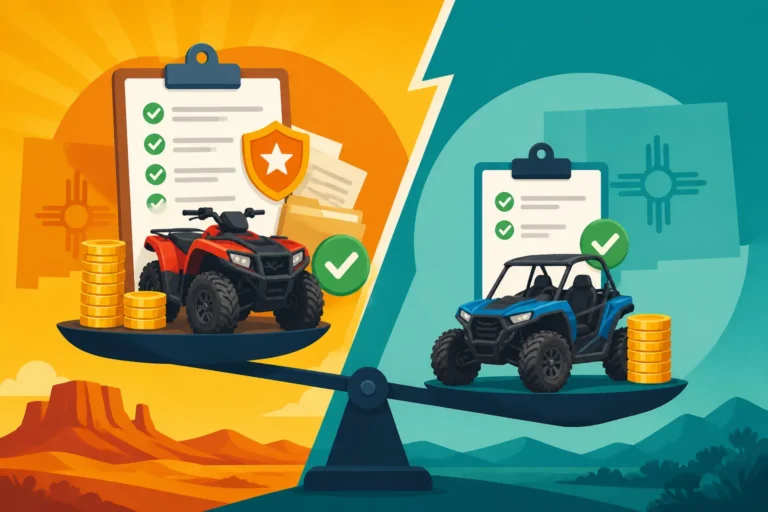
Let's get this straight from the start because it's where most of the confusion lies. The familiar yellow and green decals are primarily about registering your OHV for off-highway use, proving that it's legitimate and contributing to trail maintenance through your registration fees. The yellow decal means you're strictly off-pavement, while the green decal signifies you can ride both off-highway and on specific county or municipal roads where permitted. However, when it comes to true integration onto public paved roads, specifically those managed by the state or counties that have opted in, the game changes.
The paved road plate is a step up. It's designed for OHVs that are configured and insured to meet specific standards for limited on-road travel. This isn't just about a sticker on your fender; it's about a physical plate that makes your OHV identifiable in the same way a car or motorcycle would be. It replaced the previous, more temporary paved road sticker program, aiming for greater clarity and enforcement. This distinction is crucial because simply having a green decal doesn't automatically grant you carte blanche on every paved street in New Mexico. The plate is specifically for that purpose, and it comes with its own set of responsibilities and equipment requirements. For more on this transition, check out [Plates That Replaced the Old Stickers].
Who Needs an OHV Paved Road Plate?
This is the million-dollar question for many riders. Do you need one? The answer largely depends on your riding habits and intentions. If your OHV never touches a paved public road, sticking strictly to designated off-road trails, private land, or unpaved county roads, then the standard off-highway decals are likely all you'll need. However, if you plan to:
- Traverse paved county or municipal roads that have specifically opted-in to allow OHV use.
- Cross state highways (which are generally off-limits for riding, but require specific legal equipment and an OHV plate for a perpendicular crossing at designated points).
- Ride within towns or cities that permit OHVs on their streets (like Red River, with its specific ordinances for ROVs).
- Connect from a staging area to a trailhead via a paved road.
Then, yes, you will need a New Mexico OHV paved road plate. This plate signifies that your machine is equipped and insured to meet the state's requirements for operating on these paved surfaces. It's not optional if you intend to use your OHV in any of these scenarios. It's about ensuring your vehicle is road-ready and you're legally compliant, which ultimately protects you and other road users.
Key Requirements Before You Apply
Before you even think about stepping foot into a New Mexico Motor Vehicle Division (MVD) office to apply for a paved road plate, there are some fundamental requirements you absolutely must have in order. Trying to apply without these will only lead to frustration and a wasted trip.
First and foremost, your OHV must be titled in New Mexico. This is non-negotiable. Without a New Mexico title in your name, you cannot obtain a paved road plate. This often surprises people who might have bought their machine used with just a bill of sale, or from out of state without ever getting it titled here. The MVD needs clear proof of ownership. If you don't have a title, that's your first step, and it can sometimes be the most complex, especially if you bought a used machine where the seller lost the title. You can find more specific guidance on [Titling an Off-Highway Vehicle in New Mexico] and [New Mexico OHV Title Requirements].
Secondly, you'll need proof of financial responsibility, i.e., insurance. Just like any other vehicle on New Mexico's paved roads, your OHV must be covered by a liability insurance policy. This isn't just a suggestion; it's a legal mandate. The policy needs to meet the minimum liability coverage requirements set by the state for paved road use. This is a critical safety net, protecting you and others in case of an accident. Make sure your insurance provider knows you're getting a paved road plate, as they might have specific policies or endorsements needed. You’ll definitely want to have your insurance card or declaration page handy when you visit the MVD. Learn more at [New Mexico Registration and Insurance Proof].
Finally, your OHV itself must meet specific equipment requirements to be considered road-legal. This isn't just about having an engine; it's about safety features. We're talking about working headlights and taillights (visible at specific distances), functional brake lights, at least one rearview mirror, and a muffler that meets noise emission standards (generally 96 decibels). These are not minor details; they are fundamental for safe operation on shared paved roads. If your machine doesn't have these, you'll need to install them before you can apply for the plate. You can dive deeper into these rules with articles like [New Mexico Equipment Rules for Road Use], [New Mexico Mirror Requirements for Road Use], and [New Mexico Headlight and Taillight Rules].
Navigating the Application Process at the MVD
Once you've got your OHV titled, insured, and properly equipped, you're ready to tackle the MVD. I know, I know, visiting the MVD can sometimes feel like an odyssey, but being prepared is half the battle. This isn't a simple online form you fill out in minutes; it's a dedicated process that requires your presence and careful attention to detail. Remember, patience is your friend here.
The key to a smooth experience is arriving with everything they might ask for, leaving no room for "oops, I forgot that at home." The MVD clerks deal with countless transactions every day, and having all your ducks in a row makes their job, and your visit, much quicker and less stressful. Don't be afraid to double-check their website or even call ahead to confirm the exact documents needed for an OHV paved road plate application.
Essential Documents You'll Need
Gathering your documents before you leave the house is probably the most important piece of advice I can give you. A missing paper can send you right back out the door, and nobody wants that. Here’s a checklist of the typical documents the MVD will require for a New Mexico OHV plate application:
- Proof of Identity: A valid driver's license or state-issued ID card. This needs to be current and clearly identify you as the applicant.
- New Mexico OHV Title: As mentioned, this is paramount. The title must be in your name. If you recently purchased the OHV, ensure the title has been properly transferred to you first.
- Proof of Insurance: Your current liability insurance card or a declaration page from your insurer, clearly showing the policy dates and coverage limits. Make sure it explicitly covers your OHV for paved road use.
- Completed Application Form: The MVD will have a specific form for vehicle registration and titling. While you might be able to find and print it online, it's often best to pick one up at the MVD or fill it out there to ensure you have the most current version.
- Bill of Sale (if applicable): If you've just purchased the OHV, especially from a private seller, a properly executed bill of sale is crucial for the title transfer process, which then leads to the plate application. A detailed bill of sale, like those available from resources such as LawDepot, can ensure all necessary information, such as VIN, purchase price, and seller/buyer details, is accurately recorded, smoothing out your title application.
- Payment for Fees: Be prepared for the associated costs. The MVD accepts various payment methods, but having cash or a debit/credit card ready is always wise. The actual [New Mexico OHV Paved Road Plate Cost] can vary, so confirm current fees.
It’s always a good idea to bring original documents, and it never hurts to have a photocopy of everything as well. Better safe than sorry when dealing with government agencies!
The Application Steps: What to Expect at the Counter
With your stack of perfectly organized documents in hand, you're ready to face the MVD counter. Here's a general idea of what the process will look like:
- Arrive and Get a Number: Most MVDs operate on a queuing system. Grab your number and settle in. This is a great time to do a final mental check of your paperwork.
- Present Your Documents: When your number is called, approach the counter. The MVD clerk will ask for your identity and all the supporting documents. They will meticulously review everything, especially your title and proof of insurance, to ensure all details match up and meet state requirements. They might physically inspect your OHV's VIN if it's a first-time registration or title transfer, so make sure it's easily accessible on your machine (though this is less common for just a plate application if the OHV is already titled in NM).
- Verify OHV Information: The clerk will confirm your OHV's details, including the VIN, make, model, and year. It's vital that this information matches exactly what's on your title and insurance. Discrepancies here can halt the process.
- Confirm Eligibility: They will verify that your OHV is indeed eligible for a paved road plate based on its classification and your stated intention for use. This is where they might ask about the equipment it has.
- Pay Applicable Fees: Once everything is approved, you'll be instructed to pay the required fees for the plate application. This will include the cost of the plate itself, and any other associated registration fees.
- Receive Your Plate and Registration: Congratulations! Upon successful payment, you'll typically be issued your new New Mexico OHV paved road plate on the spot, along with an updated registration document that reflects the plate. Make sure to double-check all the information printed on your registration document before you leave the counter.
The entire process, from getting your number to walking out with your plate, can vary significantly depending on the MVD office's wait times and how prepared you are.
Costs Involved and How Long It Lasts
Let's talk about the practicalities of fees and duration. While I can't give you exact figures (those change over time, so always check the official MVD website or call them directly!), I can tell you the shape of the costs. There will be a fee specifically for the New Mexico OHV paved road plate itself. This is typically a modest amount, separate from the biennial off-highway registration fee. You might also encounter a small processing fee.
When it comes to how long your paved road plate lasts, it's generally tied to your OHV's underlying registration. New Mexico OHV registrations are typically biennial, meaning they are valid for two years. Your paved road plate will usually align with this two-year cycle, expiring on the same date as your OHV's main registration. This simplifies things, as you won't have multiple expiration dates to keep track of for the same machine. You'll renew both components at the same time. You can find more details about [How Long a New Mexico OHV Registration Lasts] and [New Mexico OHV Registration Cost] for the overall picture.
Common Pitfalls and Troubleshooting Your Application
Even with the best preparation, sometimes things don't go as smoothly as we'd hope. It's frustrating to invest time and effort only to hit a snag at the MVD. But understanding common issues ahead of time can help you either avoid them entirely or know how to quickly resolve them if they pop up. Remember, the MVD clerks are there to follow procedures, so having your ducks in a row is the best way to ensure success.
One of the biggest sources of headaches for OHV owners trying to get a plate or even just title their machine is the initial proof of ownership. Many older OHVs, or those bought in private sales, might not have come with a pristine title. Or perhaps you bought a used machine from a neighboring state where titling requirements are different. This often means extra steps or paperwork before you can even think about a paved road plate.
Dealing with Missing or Incomplete Paperwork
This is probably the most frequent reason people get turned away from the MVD. A single missing signature, an incorrectly filled-out date, or a document left at home can mean starting over.
- Missing Title: If you don't have a New Mexico title for your OHV, that is your immediate roadblock. You'll need to go through the process of obtaining one first. This can involve a VIN inspection if it's an out-of-state machine, or a bonded title process if the original title is lost and cannot be retrieved from the previous owner. Sometimes, even if you have an out-of-state title, the MVD needs additional verification or forms to transfer it to New Mexico.
- Incomplete Forms: Double-check every blank on the application form. Make sure all names, addresses, VINs, and dates are filled out accurately and legibly. A common mistake is forgetting to sign where required.
- Proof of Insurance Issues: Ensure the insurance policy clearly lists your OHV and meets New Mexico's minimum liability requirements for on-road use. If your policy only covers off-road liability, it won't be sufficient for a paved road plate.
- Incorrect Bill of Sale: For private sales, a comprehensive bill of sale is crucial for the title transfer process. If it lacks critical information like the VIN, purchase price, or signatures, it can cause delays. Resources like LawDepot offer customizable bill of sale templates that help ensure you capture all the necessary legal details, making your MVD visit smoother when you eventually apply for your plate.
If you find yourself in this situation, don't panic. Ask the MVD clerk for precise instructions on what's missing and what steps you need to take to rectify it. It might mean a second trip, but at least you'll know exactly what to bring.
What if Your OHV Doesn't Meet Requirements?
Another common snag is when your OHV physically doesn't meet the state's minimum equipment standards for paved road use. The MVD isn't just checking paperwork; they're ensuring your machine is safe for the road.
- Lighting: Do you have a working headlight that projects at least 150 feet? How about a taillight visible from 200 feet? And don't forget a functioning brake light! Many aftermarket setups or older machines might not meet these specific visibility standards.
- Mirrors: New Mexico requires at least one rearview mirror for paved road use. If your OHV doesn't have one, or if it's broken, you'll need to install or replace it.
- Muffler/Sound: OHVs generally can't exceed 96 decibels for road use. If your aftermarket exhaust is particularly loud, it might not pass muster.
- Tires: While not always strictly checked at the MVD, ensure your tires are in good condition and suitable for the speeds you'd travel on pavement. Knobby off-road tires are fine, but heavily worn or damaged ones could be an issue.
If your OHV is missing these items, you won't get a paved road plate until they're installed. It's a matter of safety and compliance. It’s always best to perform a thorough pre-application inspection of your machine, ticking off all the boxes for [New Mexico Equipment Rules for Road Use] before heading to the MVD.
After Approval: Where to Put Your New Plate
Once you've successfully navigated the MVD and have your shiny new New Mexico OHV paved road plate in hand, the final step is knowing where to put it. Unlike a standard vehicle, OHVs can have various designs, so the placement rules are specific to ensure visibility and compliance.
The general rule is that the plate must be securely attached to the rear of the OHV, in a position that is clearly visible and unobstructed. This means no mud flaps, cargo, or accessories blocking its view. It needs to be mounted horizontally, with the numbers and letters clearly readable.
For ATVs (quads), this usually means attaching it to the rear grab bar or a specifically designed mounting point on the rear fender. It needs to be visible to traffic behind you.
For ROVs (side-by-sides/UTVs), the plate is typically mounted to the rear of the machine, often on the bed frame, roll cage, or a dedicated bracket. Again, the key is clear, unobstructed visibility from the rear.
Dirt bikes (off-highway motorcycles) are a different story. While they can get a green decal for certain paved roads, they are generally not eligible for the paved road plate that ATVs and ROVs can get for broader paved road access. This is an important distinction to remember.
Always ensure your plate is securely fastened so it doesn't fall off during a bumpy ride. Losing your plate means needing to apply for a replacement, which is another trip to the MVD and another fee. Understanding [New Mexico OHV Decal Placement Rules] can offer context, even if plate rules are distinct.
Getting your New Mexico OHV paved road plate might seem like a bit of a bureaucratic journey, but with careful preparation and a clear understanding of the requirements, you'll be well on your way to exploring even more of New Mexico's incredible landscape, both on and off the pavement.
Disclaimer
This article is for general informational purposes only and does not constitute professional advice. Laws, prices and regulations vary by location and change over time. Consult a qualified professional for guidance on your specific situation.