Why a First Registration Costs More Than a Renewal
It’s a common moment of confusion for many off-highway vehicle enthusiasts in New Mexico: you finally get that shiny new (or new-to-you) ATV or UTV home, excited to hit the trails, only to find the initial registration process at the Motor Vehicle Division (MVD) feels a bit more involved and, let’s be honest, a little pricier than you expected. You might wonder why that first time at the counter seems to ask for more of your time and money compared to what your buddy pays for his biennial renewal. This guide is here to demystify those initial costs and processes, explaining exactly why your first New Mexico OHV registration carries a few more zeros than subsequent renewals, and what each step truly entails.
The Initial Hurdles: Why a New Machine Costs More Up Front
Bringing a brand-new or newly acquired OHV into the New Mexico MVD system for the very first time involves a set of procedures that are simply not required for a machine already in the system. Think of it like buying your first home versus refinancing an existing one – the initial paperwork and checks are much more extensive. The MVD isn't just slapping a sticker on your machine; they're establishing its legal identity within the state.
Establishing Ownership and Identity
When you're registering an OHV for the first time, especially if it's a private sale or an out-of-state purchase, the MVD has to verify a few fundamental things: who truly owns the machine and what exactly that machine is. This isn't just bureaucracy for bureaucracy's sake; it's a vital step to prevent theft, ensure proper taxation, and maintain a clear record of every OHV operating in the state. If you’re buying a used machine, having solid proof of ownership is paramount. A detailed bill of sale, perhaps one you can create through a service like LawDepot, can make this step smoother by clearly documenting the transfer.
This initial verification process often means the MVD needs to see your original Manufacturer's Certificate of Origin (MCO) for a new machine, or a properly endorsed title if you bought it used. If you're coming from a state that doesn't title OHVs, things can get even more interesting, requiring additional steps to establish legal ownership in New Mexico before you can even think about registration. This legwork ensures that the state recognizes you as the rightful owner and can then track the machine appropriately. We cover more on this in [Titling an Off-Highway Vehicle in New Mexico].
Processing the Paperwork for a New Record
Every time a new OHV enters the MVD's database, a fresh digital file is created. This file needs to capture all the essential details about your machine: its Vehicle Identification Number (VIN), make, model, year, and of course, your owner information. This data entry isn't instantaneous, and it requires careful attention to detail from the MVD staff. They're setting up the foundation for all future interactions with your OHV, from renewals to potential transfers of ownership.
This initial data input is a comprehensive process that takes time and resources. It's more than just scanning a barcode; it's about correctly classifying your vehicle, ensuring all accompanying documents (like proof of purchase, lien information, or even a notarized [New Mexico ATV Bill of Sale Requirements]) are accurate and complete. If any information is missing or incorrect, it can lead to delays and additional trips to the MVD, which can be frustrating when all you want to do is get out and ride. This thoroughness is a big part of [Why MVD Registers New Mexico OHVs] and contributes to the higher initial cost.
Breaking Down the First-Time Costs: What Those Extra Dollars Cover
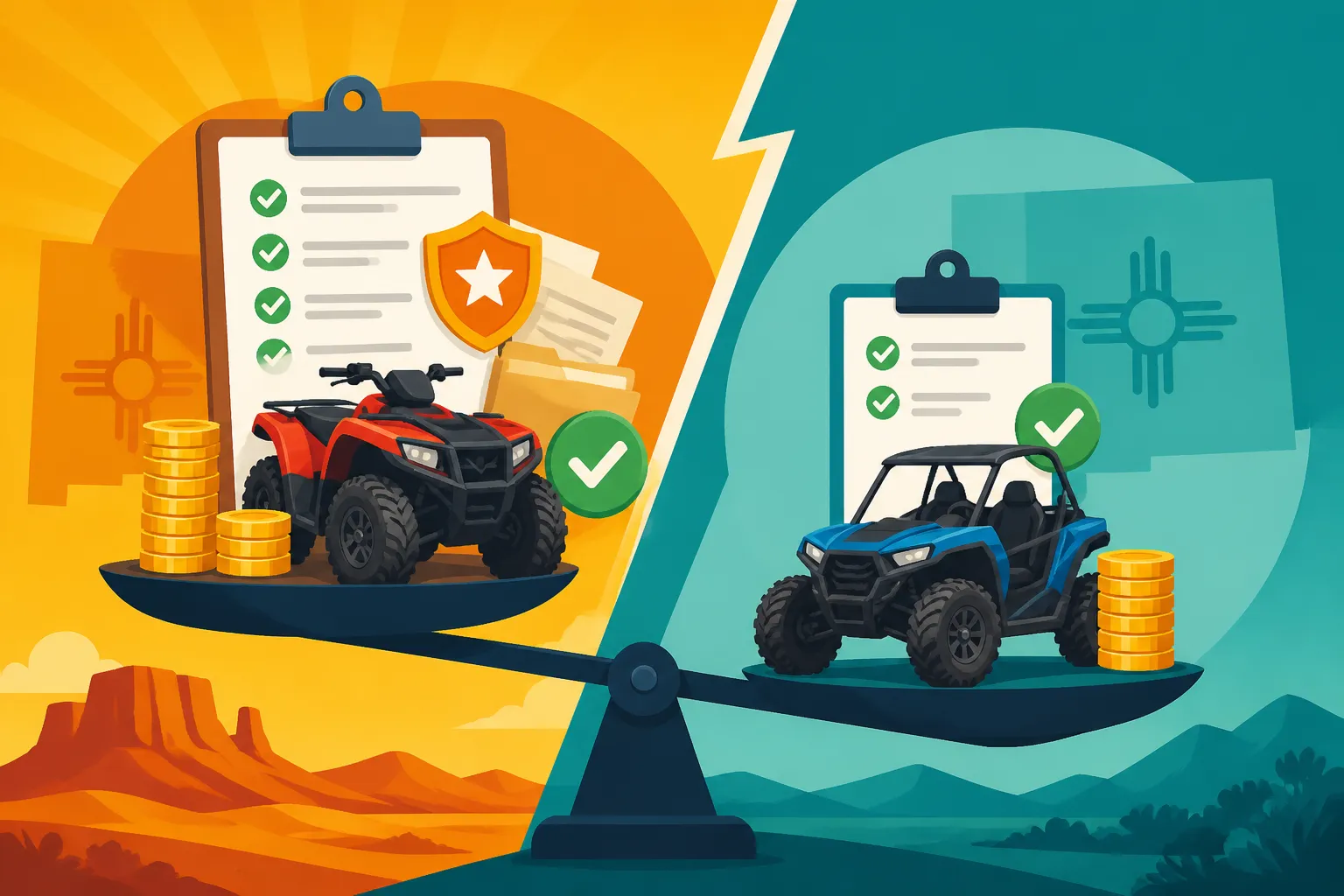
The difference in cost between a first registration and a renewal isn't arbitrary; it reflects the additional administrative work, the specific fees for titling, and the initial setup within the MVD system. Understanding these components can help ease the sting of that first payment.
Title Application and Issuance Fees
One of the biggest factors contributing to the higher cost of a first registration is the titling process itself. In New Mexico, most OHVs require a title, much like a car or truck. When you register for the first time, you're not just getting a registration decal; you're also applying for and being issued an official New Mexico title. This title is proof of your legal ownership and is a one-time fee, typically not incurred again unless you sell the machine and the new owner applies for a title in their name, or if you need a replacement.
The title application involves reviewing your ownership documents, checking for any liens against the vehicle, and then printing and mailing out that official document to you. This entire process has associated fees that are distinct from the registration itself. It’s an investment in your ownership rights and crucial for any future transactions, like [Selling an OHV in New Mexico]. Without that initial title, you really don't have legal proof that the machine belongs to you, which can create a lot of headaches down the road.
Initial Registration Fee and Decal Issuance
Beyond the title, the very first registration itself often carries a slightly higher fee than subsequent renewals. This is because it covers the initial setup of your registration record and the issuance of your first set of decals. New Mexico OHV registrations are typically biennial, meaning they last for two years. That first registration fee covers this initial two-year period, but it also encapsulates the cost of getting your record into the active system.
New Mexico uses colored decals to denote registration status – primarily a yellow decal for off-highway use and a green decal if you opt for paved road access. Your initial registration will include the cost of producing and providing these specific decals for your machine. This isn't just the sticker itself; it's the administrative effort to ensure the correct decal is issued for your specific vehicle type and intended use. You can learn more about these in [New Mexico's Yellow and Green Decals].
Here's a simplified look at the typical components of a first-time registration versus a renewal:
| Fee Component | First-Time Registration | Biennial Renewal | Explanation |
|---|---|---|---|
| Title Application Fee | Yes (One-time) | No | Covers the processing and issuance of your official New Mexico OHV title, establishing legal ownership. |
| Initial Registration Fee | Yes | Yes | Covers the administrative cost of creating your OHV record and issuing the first two-year registration. It includes the decal cost. |
| Biennial Renewal Fee | N/A | Yes | Covers the ongoing two-year registration period and the issuance of new decals. It's a reduced fee compared to the initial registration because the titling and initial record setup are already complete. |
| Lien Fees (if applicable) | Yes | No | If you financed your OHV, there may be a fee to record the lienholder on the title. This is a one-time charge. |
| VIN Inspection Fee | Often Yes | No | If your OHV is coming from out-of-state or lacks a clear title history, an MVD-certified VIN inspection may be required to verify its identity. This is a physical check and incurs a small fee. |
| Transaction Fees | Yes | Yes | Small administrative fees for processing the transaction. Often included in the overall fee structure. |
The total cost for your first registration can feel like a jump, especially when you factor in all these elements. While we can't give exact figures here, these separate charges add up, making that initial trip to the MVD seem more expensive than when you simply go in to update your [New Mexico's $50 Biennial Renewal].
The Simplicity of Renewal: What Changes the Second Time Around
Once your OHV is in the New Mexico system and has a title issued in your name, subsequent renewals become a significantly more streamlined and less costly affair. The MVD already has all the foundational information, so their job is much simpler: confirm, update, and re-issue.
A Streamlined Process
When it comes time to renew your OHV registration, typically every two years, the MVD already has your entire vehicle history on file. They know who you are, what machine you own, and that it's been properly titled. This means much of the heavy lifting from the initial registration—like verifying ownership, performing VIN inspections, and creating a new record—is no longer necessary. You're simply extending an existing record.
The process usually involves just providing your current registration, proof of insurance (if required for paved road access), and the renewal fee. It's often a quick visit or, in many cases, can be done online or by mail, saving you time and hassle. This ease of renewal is one of the benefits of going through the initial, more rigorous process. It’s also why [How Long a New Mexico OHV Registration Lasts] is generally a two-year cycle – it balances convenience with necessary oversight.
Lower Administrative Fees for Existing Records
The core reason renewals are cheaper is that they bypass most of the one-time fees associated with establishing a new record. You're not paying for a new title, nor are you paying for a comprehensive VIN inspection unless there's a specific issue, like a salvage title or a major modification. The renewal fee primarily covers the administrative costs of updating your record for another two-year period and issuing a new set of valid decals.
These decals, whether they are the [New Mexico Yellow Off-Highway Decal] or the [New Mexico Green On and Off-Highway Decal], essentially mark your machine as currently compliant. The cost of producing and distributing these updated stickers is minimal compared to the full initial setup. This makes the renewal process not only quicker but also more budget-friendly, reflecting the reduced administrative burden on the MVD. It's a recurring, but significantly smaller, investment in keeping your machine legal and ready for adventure.
When you think about the initial investment in time and money for that first registration, remember that it's laying the groundwork for years of easier, less expensive renewals. It’s a necessary step to get your machine legally recognized and titled in the Land of Enchantment, ensuring you can enjoy all the incredible trails and roads New Mexico has to offer without a hitch.
Disclaimer
This article is for general informational purposes only and does not constitute professional advice. Laws, prices and regulations vary by location and change over time. Consult a qualified professional for guidance on your specific situation.