Riding on a Sticker After the Program Ended
It can be incredibly frustrating to keep up with changing regulations, especially when you've done everything right in the past, only to find the rules have shifted under your tires. For many New Mexico ATV and UTV enthusiasts, the transition from the old paved road sticker program to the new system has caused a fair bit of confusion and left riders wondering if their old sticker still holds any weight. This guide will clarify the status of New Mexico's former paved road sticker, what officially replaced it, and how you can ensure your off-highway vehicle is fully compliant for both trail and approved paved road use today.
Understanding the End of New Mexico's Paved Road Sticker Program
For years, New Mexico riders who wanted to take their off-highway vehicles (OHVs) on approved paved roads had a specific sticker they'd affix to their machine. It was a simple solution that many of us got used to, a quick visual cue for law enforcement that you had opted into the paved road program. You paid a small fee, got your sticker, and off you went, at least on designated roads. It felt straightforward.
What the Paved Road Sticker Was For
The paved road sticker was specifically designed for those situations where you needed to traverse a short stretch of asphalt to get from one dirt trail to another, or perhaps ride into a small town that had opened its streets to OHVs. It wasn't about making your ATV or UTV street legal in the traditional sense, like a car. Instead, it was an "opt-in" program that allowed limited use on certain paved roads as defined by local ordinances. Imagine you're out near the Carson National Forest, moving between different sections of trail, and a short paved county road stands between you and the next fantastic route. That sticker was your ticket to legally make that connection without having to trailer your machine. It was about convenience and expanding access, albeit in a carefully regulated way.
Why the Sticker Program Ended
Change often comes with good intentions, even if it feels like a headache at the time. The paved road sticker program, while functional for a period, eventually faced some scrutiny regarding its effectiveness and clarity. The state decided to transition to a more robust and permanent system, one that aligned more closely with traditional vehicle registration and identification. This shift was outlined in new legislation, making it clear that the temporary sticker solution was being phased out. Essentially, the state aimed for a more durable and easily trackable method for identifying OHVs permitted on paved roads, leading to the decision to sunset the sticker program. If you're curious about the specifics of this legislative shift, you can delve deeper into [Why the Sticker Program Ended].
The Transition Period and Its Challenges
Whenever a program ends, there's always a period of adjustment. It's not like the stickers instantly became invalid the moment the law changed. There was typically a grace period or a phase-out window, allowing riders time to understand the new requirements and get their machines updated. However, confusion naturally arose. Some riders might have just renewed their sticker right before the change was announced, feeling like they'd paid for something that was now obsolete. Others might have simply missed the announcements amidst all the other day-to-day happenings. This transition period was a common source of questions for many OHV owners, as they tried to figure out what was still valid and what they needed to do next. It really highlighted the need for clear communication and accessible information to help everyone stay compliant.
What Replaced the New Mexico Paved Road Sticker?
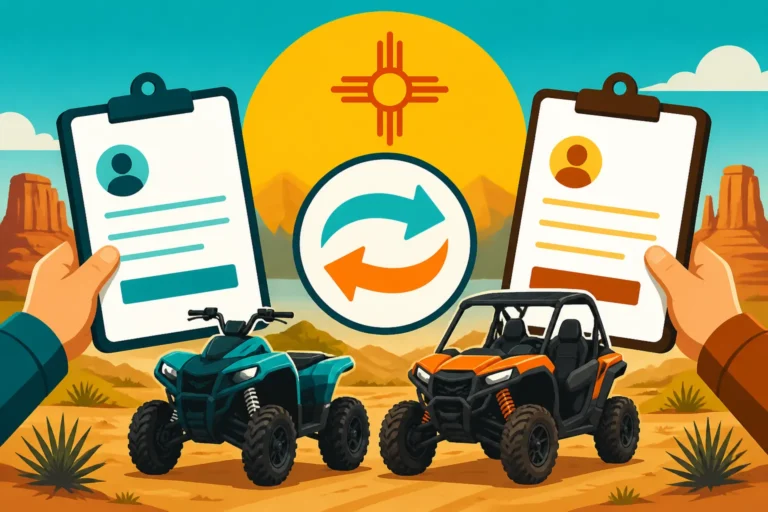
Out with the old, in with the new, as they say! The state didn't just end the paved road sticker program without offering an alternative. Instead, they introduced a new system designed to be more integrated and permanent: the New Mexico Paved Road Plate. This change aimed to provide a clearer, more consistent method for identifying OHVs authorized for limited paved road travel.
Introducing the New Paved Road Plate
The New Mexico Paved Road Plate is precisely what it sounds like: a metal license plate, similar in concept to what you'd see on a motorcycle or a car, specifically issued for OHVs that qualify for paved road use. This isn't just a fancy sticker; it's a legitimate, numbered plate that ties directly to your vehicle's registration. When you apply for it, you're not just buying a temporary permit; you're essentially getting a specialized registration component for your off-highway vehicle. This plate must be displayed prominently on your machine, making it much easier for law enforcement to identify compliant vehicles. It's part of a broader push to standardize OHV identification across different use cases in New Mexico. For more details on this, you can look at [Plates That Replaced the Old Stickers].
Key Differences Between the Sticker and the Plate
The differences between the old sticker and the new plate are more than just cosmetic. The sticker was a temporary, self-adhesive decal that, while serving its purpose, could fade, peel, or be easily damaged. It wasn't linked to a formal titling or plate system in the same way. The new Paved Road Plate, however, brings several distinctions:
- Permanence: It's a durable metal plate, designed to last longer than a sticker and be more resistant to the elements.
- Identification: Each plate has a unique number, providing a more formal and traceable method of identifying a paved-road-approved OHV.
- Integration: The plate is part of a more integrated system with the state's motor vehicle division (MVD), linking it more closely to your overall OHV title and registration.
- Requirements: Obtaining the plate often comes with specific prerequisites that might not have been as rigorously enforced for the sticker, such as proof of ownership and a clear title. You'll definitely want to ensure you have your [Titling Before You Can Get a Plate] sorted out.
This table highlights some of the functional differences:
| Feature | Old Paved Road Sticker | New Paved Road Plate |
|---|---|---|
| Format | Self-adhesive decal | Metal license plate |
| Durability | Prone to fading, peeling, damage | More durable, permanent |
| Identification | Basic visual cue | Unique numbered identifier |
| Issuing Agency | Potentially various vendors initially | Primarily MVD |
| Connection | Less integrated with formal title/reg | Tightly linked to MVD title/reg |
| Cost Shape | Lower, often annual or biennial | Likely a slightly higher initial fee, then renewals |
| Validity | Time-limited, less formal expiration | Specific expiration, tied to biennial OHV registration |
Comparing the two makes it clear that the state moved towards a more formalized and robust system for paved road access. You can learn more about [New Mexico OHV Plate Versus Sticker].
Who Needs the New Paved Road Plate
So, who exactly needs this new plate? If you plan to ride your ATV, UTV, or side-by-side on any paved public roads that are designated as open to OHVs by a local municipality or county ordinance, then you absolutely need the new [New Mexico's Paved Road Plate]. This includes riding across a highway to access a trail, traveling a short distance on a paved county road, or using designated streets in OHV-friendly towns like Red River.
It's crucial to understand that even if you only use your OHV sporadically on paved surfaces, the requirement still applies. If your tires touch the asphalt of an authorized public road, you need to be compliant. This plate is separate from your general OHV registration decals (the yellow or green ones) which primarily govern off-highway use. While you still need your primary OHV registration (and the green decal if you want any paved road access at all, even for short crossings), the Paved Road Plate is the specific authorization for riding on those paved roads. Essentially, if you have a [New Mexico's Green On and Off-Highway Decal] and want to take advantage of its "on-highway" allowance for designated areas, the plate is your next step.
Navigating Riding Rules Without a Valid Sticker
If you're reading this and realizing your old paved road sticker is still on your machine, it's natural to wonder what your options are. The short answer is: that sticker is no longer valid for its intended purpose. It's time to get current with the new system to avoid any potential issues while riding.
The Legality of an Expired Paved Road Sticker
Let's be blunt: attempting to use an expired or invalid paved road sticker to justify riding on a paved road today is not going to hold up. The program it belonged to has been discontinued, and the sticker itself no longer carries any legal weight for new paved road authorizations. Think of it like an expired vehicle registration; it might have been valid once, but now it's just a relic.
Law enforcement officers are well aware of the change to the Paved Road Plate system. If you're stopped on a paved road and present an old sticker, you'll likely be considered non-compliant with the current regulations. This isn't about officers being difficult; it's about enforcing the law as it currently stands. The intent behind the law is to have a clear, easily verifiable system, and an outdated sticker doesn't fit that criteria anymore.
Risks of Riding on Pavement with an Invalid Sticker
Riding on a paved road with an invalid or expired sticker can lead to several undesirable consequences, none of which you want to experience while enjoying your OHV.
First and foremost, you could face fines. New Mexico takes its OHV regulations seriously, and operating a machine on public roads without the proper authorization is a violation. These fines can be significant, cutting into your fun money or even your budget for maintaining your machine. Ignorance of the law is generally not a defense, so even if you genuinely didn't know the sticker program ended, you'd still be liable. You can find more details on potential penalties under [New Mexico Fines for an Unregistered OHV].
Secondly, there's the risk of your machine being impounded. While perhaps less common for a first offense regarding an expired sticker, it's a possibility, especially if other violations are present or if an officer decides to be particularly strict. Imagine your weekend ride cut short, and having to pay towing and impound fees on top of any fines. It's a major headache and expense.
Finally, and perhaps most critically, is the issue of liability. If you're involved in an accident on a paved road while operating your OHV without the proper plate, your insurance company might deny coverage. This could leave you personally responsible for damages, medical bills, and legal fees, which could be catastrophic. Your insurance policy is likely predicated on you operating your vehicle legally. Don't take that risk.
Steps to Get Compliant: From Sticker to Plate
The good news is that getting compliant isn't overly complicated, though it does require a trip to the MVD or a licensed third-party provider. Here's a general roadmap:
- Ensure Your OHV is Titled: First and foremost, you'll need a title for your OHV. If you've been riding without one, or only have a bill of sale, that needs to be addressed. The MVD will need a clear record of ownership before they can issue a plate. This often means providing documents like your original Manufacturer's Statement of Origin (MSO) or a properly executed bill of sale. Sometimes, creating a comprehensive bill of sale, especially if you bought your machine privately, is critical. Services like LawDepot can provide templates for a legally sound bill of sale, ensuring you have the necessary documentation.
- Verify Your OHV is Registered: Beyond the paved road plate, your OHV needs a general registration with the state. This means you'll have either a yellow or green decal, depending on your primary use. The paved road plate is an addition to this primary registration, not a replacement. Make sure your biennial registration is current.
- Gather Necessary Paperwork: Before heading to the MVD, collect all required documents. This typically includes your OHV title, proof of insurance (especially if you intend to ride on pavement, as liability insurance is mandatory for that), and a completed application for the Paved Road Plate. Having everything in order, including accurate details on your [New Mexico OHV Registration Paperwork], will make the process smoother.
- Visit the MVD or Authorized Provider: You'll need to apply for the Paved Road Plate through the New Mexico MVD or an authorized MVD agent. You can't just apply online for the plate itself, although you might be able to start some processes or find forms there. Be prepared for a wait, and double-check their operating hours. This is the place where you'll officially apply for your [New Mexico OHV Plate Application].
- Pay the Required Fees: There will be a fee associated with obtaining the Paved Road Plate. This is separate from your general OHV registration fees. It's best to check the MVD website for the most current fee schedule, as these can change. Be prepared to pay by an accepted method. While specific costs aren't cited here, be aware that you'll have to pay a [New Mexico OHV Registration Cost] and a separate fee for the plate.
- Mount Your New Plate: Once you receive your Paved Road Plate, ensure it's properly mounted on your OHV in a clearly visible location, as per MVD guidelines.
By following these steps, you'll transform your outdated sticker situation into a fully compliant, ready-to-ride status for New Mexico's designated paved roads.
Beyond the Paved Road Plate: Comprehensive OHV Registration in New Mexico
While getting your Paved Road Plate is crucial for street use, it's just one piece of the larger New Mexico OHV registration puzzle. To truly enjoy all the incredible riding opportunities our state offers, it’s vital to understand the comprehensive registration requirements for your machine, whether it touches pavement or not.
The Importance of General OHV Registration
Even if you never, ever plan to take your ATV or UTV on a paved road, and you only stick to designated dirt trails, federal lands, or private property (with permission, of course!), your off-highway vehicle still needs to be registered with the State of New Mexico. This general registration is distinct from the paved road plate and comes with its own set of rules and decals.
Why is this so important? First, it contributes to trail maintenance and safety programs. The fees collected from OHV registration are often funneled back into improving our riding areas, maintaining trails, and funding educational initiatives. So, your registration isn't just a tax; it's an investment in the very sport you love. Second, it's about identification and accountability. In the event of an accident, theft, or a lost machine, registration helps authorities track ownership and ensures responsible use of public lands. Plus, if you're ever stopped by a game warden or a law enforcement officer on a trail, showing proof of current registration is usually one of the first things they'll ask for. You'll process this general registration at the [New Mexico OHV Registration at MVD].
Understanding New Mexico's Decal System
New Mexico uses a color-coded decal system to indicate your OHV's registration status and intended use:
- Yellow Decal: This is your basic off-highway registration. If you have a yellow decal, your machine is registered for use exclusively on designated off-highway trails, roads, and areas. It explicitly does not permit any riding on paved public roads, even for short crossings. Think of it as your "dirt-only" pass.
- Green Decal: This decal signifies that your OHV is registered for both off-highway use and limited on-highway use. The "on-highway" part means you are permitted to make perpendicular crossings of paved roads and ride on designated paved roads in areas where local ordinances allow it. To fully capitalize on the paved road allowance of the green decal for riding on roads, you would also need the Paved Road Plate. Without the plate, the green decal only allows for the simple crossing of paved roads, not riding along them.
It's crucial to have the correct decal for your intended riding style. If you plan any paved road use at all, even just crossings, the green decal is a must. If you're going to ride on paved roads, the green decal and the Paved Road Plate are your combo.
Ensuring All Your Paperwork is in Order
Beyond the physical plate and decals, having all your documentation meticulously organized is essential.
- Title: This is the ultimate proof of ownership for your OHV. Ensure your name is correctly listed, and that it's readily accessible, especially if you need to sell your machine or register it. If you're buying a used machine, make sure you get a properly signed-off title. If there's a lien on the machine, make sure that's handled correctly as well.
- Registration Card: Always carry your current OHV registration card with you when you ride. This card corresponds to your yellow or green decal and contains vital information about your machine and its registration status.
- Proof of Insurance: For any paved road use, New Mexico mandates liability insurance for your OHV. Keep your insurance card or proof of financial responsibility with you at all times when riding on or across paved surfaces. Even for purely off-road riding, having insurance is a wise choice, as accidents can happen anywhere. LawDepot can also be a valuable resource for creating other legally binding documents, like waivers or agreements, if you're ever loaning out your OHV or organizing group rides, ensuring you're covered beyond just state registration.
Being thorough with your paperwork might seem like a chore, but it prevents unnecessary headaches, fines, and potential legal issues down the trail. A little preparation goes a long way in ensuring your New Mexico OHV adventures are safe, legal, and stress-free.
Disclaimer
This article is for general informational purposes only and does not constitute professional advice. Laws, prices and regulations vary by location and change over time. Consult a qualified professional for guidance on your specific situation.