New Mexico OHV Registration Transfer
Buying or selling an off-highway vehicle (OHV) in New Mexico can feel like navigating a maze, especially when it comes to getting that registration into the new owner's name. It's a common point of confusion and frustration, making many folks wonder if they've dotted all their i's and crossed all their t's. This comprehensive guide is here to walk you through every step of transferring an OHV registration in New Mexico, ensuring a smooth and compliant process whether you're the buyer or the seller.
Understanding the New Mexico OHV Registration Transfer Process
When you purchase an off-highway vehicle, whether it's a nimble ATV, a rugged UTV, a zippy dirt bike, or a custom sand rail, the transaction isn't truly complete until the ownership and registration are properly transferred. Ignoring this step can lead to a heap of headaches down the road, from legal liabilities for the seller to riding restrictions for the buyer. It's more than just a formality; it's a crucial part of securing your ownership and right to ride on New Mexico's incredible public lands.
When a Registration Transfer is Necessary
A registration transfer isn't just for a traditional sale at a dealership. It's required in several common situations to legally update who is responsible for the machine and ensure it can be properly renewed when the time comes. If you've just bought a quad from a private party you met online, you can't just slap their old decal onto your new machine and call it good. The state needs to know who the current owner is.
One of the most frequent reasons for a transfer is a private sale. When you buy an OHV from another individual, even if they've been meticulous with their own registration, the state's records need to reflect you as the new owner. This triggers a fresh registration period for you. You see, the registration clock actually resets on a sale, meaning even if the previous owner just renewed it, your new registration will typically be valid for two years from your date of registration, not from their last renewal. This is a common surprise for new buyers, but it ensures everyone gets a full term. Similarly, if an OHV is gifted to you by a family member or friend, or if you inherit one after a loved one passes away, you'll still need to go through the transfer process to get it legally registered in your name. Moving into New Mexico with an out-of-state machine also falls into this category, as you'll be converting your prior registration to a new New Mexico one. [Registering After Moving to New Mexico] covers this in more detail.
Key Documents You'll Need for the Transfer
Gathering the correct paperwork is often the biggest hurdle in any vehicle transaction, and OHVs are no different. Showing up at the New Mexico Motor Vehicle Division (MVD) without everything in order is a quick way to get sent home empty-handed. The MVD is quite particular about documentation, and rightly so, as these documents prove legitimate ownership and compliance.
The absolute cornerstone document is the certificate of title. This little piece of paper is the ultimate proof of ownership. If the seller doesn't have it, or has "misplaced" it, that should raise a red flag. While there are ways to [Titling an Off-Highway Vehicle in New Mexico] without a traditional title in very specific circumstances, it adds significant complexity. Next, you'll need a bill of sale. This document outlines the specifics of the transaction, including the buyer, seller, purchase price, date, and a detailed description of the OHV, crucially including its Vehicle Identification Number (VIN). A well-drafted bill of sale is your legal protection and provides the MVD with the necessary details. You might consider using a reputable online service like LawDepot to generate a comprehensive bill of sale, ensuring all the necessary legal language is included and nothing is overlooked. It can save you a lot of guesswork. You'll also need a completed OHV Registration Application, which can be obtained from the MVD or downloaded from their website. Don't forget your proof of identity (like a driver's license) and potentially proof of residency if you're new to the state. The VIN of the machine itself is paramount; the MVD will verify it against the title and bill of sale to prevent fraud and ensure you're registering the correct vehicle. In some cases, especially for machines that have been off the books for a while or are coming from out of state, a physical VIN inspection might be required by the MVD.
Here's a quick rundown of the essential documents:
| Document Type | Purpose | Important Details |
|---|---|---|
| Certificate of Title | Primary proof of legal ownership. | Must be signed by the seller. Crucial for transfer. |
| Bill of Sale | Details of the sale/transfer, protecting both buyer and seller. | Includes VIN, sale price, date, buyer/seller info. LawDepot can help. |
| Registration Application | Official MVD form to request new registration. | Available at MVD offices or online. |
| Proof of Identity | Verifies your identity as the new owner. | Valid driver's license or state ID. |
| Proof of Residency | Establishes you as a New Mexico resident (if applicable). | Utility bill, lease agreement, etc. |
| Vehicle ID Number (VIN) | Unique identifier for the OHV. | Must match all documents; may require physical inspection. |
Step-by-Step Guide to Transferring Your OHV Registration
Transferring an OHV registration doesn't have to be intimidating, but it does require attention to detail. By breaking it down into manageable steps, you can navigate the process efficiently and avoid unnecessary delays. Remember, patience is a virtue, especially when dealing with paperwork!
Preparing Your Paperwork
Before you even think about stepping foot in an MVD office, dedicate some time to meticulously prepare all your documents. This pre-work is critical to a smooth experience. Start with the New Mexico Off-Highway Vehicle Registration Application. Fill out every section completely and accurately. Double-check all spellings, addresses, and especially the VIN. A single transposed digit on the VIN can cause significant headaches and delay your transfer.
Next, focus on your bill of sale. This document should clearly state the full names and addresses of both the buyer and the seller, the date of the sale, the purchase price (even if it's $0 for a gift), and a comprehensive description of the OHV, including make, model, year, and the all-important VIN. Both buyer and seller must sign and date the bill of sale. For a gift or inheritance, the transfer document might be slightly different, but the core information remains crucial. Many people find using a template from a service like LawDepot incredibly helpful for creating a legally sound bill of sale for private sales. These templates are designed to ensure all essential clauses are included, protecting both parties and meeting state requirements. If you're unsure about what's required for this, reviewing [New Mexico ATV Bill of Sale Requirements] can be very insightful. Having multiple copies of the bill of sale for both parties is also a good practice.
Finally, ensure the certificate of title is properly signed over by the previous owner. Look for the designated areas for the seller's signature and the odometer reading (if applicable, though less common for OHVs). Any alterations or white-out on the title can invalidate it, so handle this document with extreme care. Make sure you also have your personal identification ready; typically, a valid New Mexico driver's license or state ID card will suffice.
Visiting the New Mexico MVD
Once your paperwork is organized, your next stop is a New Mexico Motor Vehicle Division (MVD) office. It's often a good idea to check the MVD's website beforehand to see if appointments are recommended or required, especially in busier urban areas. Showing up prepared, perhaps even with an appointment, can drastically cut down on your wait time. You can find more specific guidance on this process in [New Mexico OHV Registration at MVD].
When you arrive, present all your prepared documents to the MVD agent. They will review everything carefully, verifying signatures, VINs, and ensuring all required fields are completed. Be prepared to answer any questions they might have about the transaction. In some instances, particularly if the OHV has been unregistered for a long time or if there are discrepancies in the paperwork, the MVD might require a physical VIN inspection. This means they will need to visually inspect the VIN on the machine itself to ensure it matches the documents. If this is a possibility, it might be wise to trailer your OHV to the MVD office, or at least be prepared to bring it back if required. Once everything checks out, the agent will process your application for the registration transfer.
Fees and Decals Involved
Transferring an OHV registration in New Mexico comes with associated fees, and it's important to budget for them. You won't just be paying a "transfer fee." You'll also be paying for a new registration for your machine. This new registration is generally a biennial (two-year) fee, which covers your right to operate the OHV on designated public lands. The exact cost can vary, and it's always best to check the current rates directly with the MVD or on their official website. However, the registration fee itself typically falls within a consistent range.
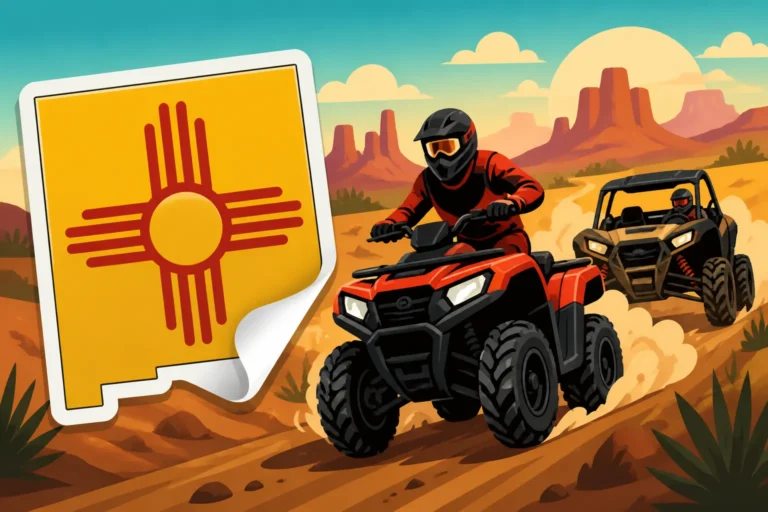
Once your registration is successfully processed and the fees are paid, you'll be issued new decals for your OHV. New Mexico uses different colored decals to indicate riding privileges. Most off-highway machines will receive the [New Mexico's Yellow Off-Highway Decal], which allows you to ride on designated trails and unpaved county roads. If your OHV meets specific criteria for street-legal operation on paved public roads (which is a separate, more involved process), you might also receive [New Mexico's Green On and Off-Highway Decal] and potentially a specialized plate. The MVD agent will provide guidance on where to properly affix these decals to your specific type of OHV, ensuring they are clearly visible as required by law. Always make sure to ask if you are unsure about placement.
Common Challenges and Troubleshooting for OHV Transfers
Even with the best preparation, sometimes unexpected hurdles pop up during an OHV registration transfer. Knowing what to do when you encounter these common challenges can save you a lot of stress and repeated trips to the MVD.
Dealing with Missing Titles or Unregistered Machines
One of the most frequent and frustrating issues buyers face is purchasing an OHV, especially an older one, where the seller simply doesn't have a title. It's not uncommon for folks to think a bill of sale is enough, or that smaller machines don't need titles. While a bill of sale proves the transaction, a title is the legal proof of ownership for registration purposes. If you find yourself in this predicament, or if you've bought an OHV that has never been registered in New Mexico before, the process becomes more complex. You might need to go through a "bonded title" process or apply for a title based on a detailed bill of sale and other supporting evidence. This often involves a thorough VIN inspection and potentially even reaching out to previous owners if their information is available.
It's crucial to understand that buying a used ATV with nothing but a key, or from a seller who claims to have misplaced the title, means you're taking on a significant amount of risk and potential paperwork. Always try to ensure the seller has a clear title in their name before finalizing a purchase. If they don't, be prepared for a longer, more involved process at the MVD. Sometimes, proving ownership requires sworn affidavits or other legal declarations. Consulting with the MVD directly about their specific requirements for "no title" scenarios is the best first step. You can find more context on this in [Buying a Used ATV in New Mexico].
Out-of-State Transfers and Specific Scenarios
If you're bringing an OHV into New Mexico from another state, the transfer process has its own unique considerations. While New Mexico honors valid registrations from many other states for temporary recreational riding, if you're becoming a resident, you'll need to register your OHV in New Mexico. This typically involves submitting your out-of-state title (or equivalent proof of ownership), the bill of sale from when you purchased the machine, and a New Mexico OHV registration application. An out-of-state VIN inspection is almost always required in these cases to confirm the machine's identity and ensure it hasn't been stolen. More details can be found in [Registering an Out-of-State Machine in New Mexico].
Similarly, gifting an OHV or inheriting one also requires a proper transfer. For a gifted machine, a bill of sale indicating a $0 purchase price (or "gift") is essential. For an inherited OHV, you'll typically need a copy of the death certificate, proof of your relationship to the deceased, and potentially probate documents or an affidavit of heirship, depending on the value of the estate and the legal framework involved. [Registering an Inherited Machine in New Mexico] provides a good overview of this. Each of these scenarios has particular documentation needs, so contacting the MVD or a qualified professional for guidance can streamline the process significantly.
Ensuring a Smooth Transfer
To avoid delays and frustration, a few best practices can make your OHV registration transfer as smooth as possible. First, double-check everything. Go over all your forms, the bill of sale, and the title for accuracy, especially the VIN. A small typo can send you back to square one. Make sure all signatures are present and correctly placed on the title and bill of sale.
Second, communicate clearly with the seller (or buyer). Ensure both parties understand their responsibilities in providing documentation and signing forms. If you're the buyer, don't leave the transaction without all the necessary paperwork signed by the seller. If you're the seller, make sure you receive payment and have a signed bill of sale for your records, to protect yourself from future liability. A well-drafted bill of sale, perhaps created using a template from a service like LawDepot, is a simple yet powerful tool for clear communication and legal protection.
Finally, be prepared for fees and potential wait times at the MVD. Having all your documents in order is the best way to minimize the time you spend there. Remember, the goal is to get that registration transferred quickly and correctly so you can hit the trails of New Mexico with peace of mind, knowing your OHV is legally registered and ready for adventure.
Disclaimer
This article is for general informational purposes only and does not constitute professional advice. Laws, prices and regulations vary by location and change over time. Consult a qualified professional for guidance on your specific situation.