Registering a Recovered Machine in New Mexico
Finding yourself reunited with an off-highway vehicle (OHV) that was previously lost, stolen, or somehow fell out of your possession can be an incredibly mixed bag of emotions. There’s the sheer relief of having it back, but then the immediate dread of realizing that the paperwork might be long gone, the registration expired years ago, or even worse, the title is nowhere to be found. Trying to get a recovered machine legally registered in New Mexico can feel like navigating a maze blindfolded, especially when the usual, straightforward registration process doesn’t quite fit your unique situation. This guide is here to cut through that confusion, giving you a clear, step-by-step path to successfully register your recovered ATV, UTV, dirt bike, or any other OHV in the Land of Enchantment.
Understanding What "Recovered" Means for New Mexico OHVs
When we talk about a "recovered machine" in the context of New Mexico OHV registration, it's not a one-size-fits-all definition. The specific circumstances surrounding how the machine came back into your possession profoundly impact the process you'll need to follow. Whether it was stolen and found, discovered after being lost, or even a vehicle you’ve purchased that has a murky past, each scenario requires a slightly different approach to satisfy the New Mexico Motor Vehicle Division (MVD). Understanding these distinctions from the outset is crucial for a smoother journey.
Theft Recovery: From Report to Reclaim
This is perhaps the most common scenario for a "recovered" machine. Your beloved ATV was stolen, you reported it to law enforcement, and by some stroke of luck or diligent police work, it’s been found and returned to you. In this case, your primary goal is to ensure that the OHV is officially cleared from the stolen vehicle database and that its ownership can be unequivocally traced back to you.
The key piece of documentation here will be the police report from both the initial theft and, crucially, the recovery. This report acts as an official record of the machine's status and its return to its rightful owner. Without this, the MVD may be hesitant to process any registration or title updates, as they need to confirm that you are indeed the legal owner and that the machine isn't still listed as stolen or subject to further investigation. You'll want to ensure the police report clearly identifies the vehicle by its Vehicle Identification Number (VIN) and states that it has been recovered and released to you. Sometimes, a law enforcement agency will provide a formal letter of release, which is incredibly helpful. Think of this as the official "all clear" signal from the authorities, telling the state that this machine is no longer contraband and is ready to rejoin the legitimate world of OHV ownership.
Found or Abandoned Machines: A Different Path
What if you found an OHV abandoned on your property, or perhaps purchased one from someone who found it and genuinely doesn't know its history? This situation is significantly more complex than a theft recovery where you were the original, rightful owner. New Mexico law has provisions for dealing with abandoned property, but attempting to register such a machine without proper diligence can lead to serious legal troubles, including charges related to receiving stolen property, even if you acted in good faith.
If you find an abandoned OHV, the first and most critical step is to report it to local law enforcement. They will attempt to locate the original owner. There are typically waiting periods involved, during which the authorities will hold onto the machine or keep it on record while they search for the rightful owner. If, after a specific period (which varies by jurisdiction and the value of the property), the owner cannot be found, you might be able to claim the machine. This usually involves a formal process, potentially even a court order, to establish legal ownership. It’s not as simple as just "finding it, so it's mine." The MVD will require proof that you have legally acquired the machine, often through a judicial process or a clear paper trail from the finding authority. You absolutely cannot skip these steps. Trying to register a machine you "found" without proper legal transfer could result in the MVD seizing the vehicle or, at the very least, denying your application outright.
Immediate Post-Recovery Actions and Documentation
Once the physical machine is back in your hands, the real work of getting it properly squared away with the state begins. It's not enough to simply have possession; you need to demonstrate clear, legal ownership and ensure that all previous records, particularly those that might indicate a problem, are cleared up. This phase is all about gathering your evidence and preparing your case for the MVD.
Verifying Ownership and Clearing the Record
Before you even think about stepping foot into an MVD office, you need to verify the OHV’s current legal status and your connection to it. If it was stolen, confirm with the police department that the "stolen" flag has been removed from its VIN in national and state databases. You can often ask for a copy of the recovery report for your records. This clearance is paramount. The MVD runs VIN checks on every machine, and if it still shows up as stolen, your registration application will hit an immediate wall.
Next, you need to locate any and all documents related to the OHV. This includes the original title, previous registration cards, any bills of sale from when you originally purchased it, and even insurance documents. These pieces of paper are your proof of ownership. If your original title was among the documents lost or stolen with the machine, don't despair, but recognize this adds a layer of complexity. You'll need to explain this to the MVD and potentially apply for a duplicate title if you were the last registered owner. If you're dealing with a found or abandoned machine, your "ownership" will likely be established through court documents or a specific process outlined by law enforcement, not a traditional title transfer. This distinction is critical for preparing your paperwork.
Essential Paperwork: Building Your Case
Building a strong case for your recovered OHV means having all your ducks in a row when it comes to documentation. The MVD thrives on clear, verifiable information, and the more you can provide, the smoother the process will be. Here’s a rundown of what you’ll likely need:
- Police Report(s): For theft recovery, both the initial theft report and the recovery report are vital. These prove the machine's journey through the legal system.
- Original Title: If you have it, this is your gold standard for proving ownership. If it was lost or stolen, you'll need to address this with the MVD, potentially requiring an application for a duplicate title.
- Proof of Identity: Your valid driver's license or state ID.
- Proof of Residency: Utility bill, lease agreement, etc., showing your New Mexico address.
- Bill of Sale: If you recently re-acquired the machine from someone, or if you're trying to establish ownership of a found machine through a legal sale process (after it's been unclaimed), a properly executed bill of sale is crucial. Tools like those found on LawDepot can help you draft a comprehensive bill of sale if you need one to formalize a new acquisition or transfer.
- Application for Title and Registration: This is the standard MVD form you'll fill out for any OHV registration.
- Lien Release (if applicable): If there was a lien on the OHV when it was stolen or lost, you'll need proof that the lien has been satisfied. The MVD cannot issue a clear title if an active lien exists.
- Court Order (for abandoned machines): If you've gone through a legal process to claim an abandoned OHV, the court order granting you ownership is essential.
It's a good idea to make copies of everything you submit, and even bring the originals to the MVD for verification, then take them back home. The more prepared you are with a complete packet of documents, the less back-and-forth you'll have with the MVD. Having these documents organized will also help you if you ever need to apply for a [New Mexico's First OHV Registration].
Registering Your Recovered Machine with New Mexico MVD
Once you've done all the prep work, it's time to actually submit your application to the New Mexico MVD. This process can feel daunting, especially if your situation isn't straightforward, but breaking it down into manageable steps makes it much less intimidating. Remember, patience and thoroughness are your best friends here. You’re not just registering a new purchase; you’re often also untangling a bit of history.
The Application Process: Step-by-Step
Bringing your recovered OHV into compliance with New Mexico law primarily involves visiting a local MVD office. While some aspects of general registration can be handled online or by mail, a recovered machine with potentially complex ownership or history usually requires an in-person visit to ensure all documentation is properly reviewed. Here’s what that typically looks like:
- Gather All Documents: As discussed, collect your police reports, original title (if available), personal ID, proof of residency, and any court orders or bills of sale. Don't forget any lien releases.
- Complete the Application for Title and Registration: You can often find this form online on the MVD website or pick one up at any office. Fill it out completely and accurately. Pay close attention to sections requesting VIN information, previous owner details, and how you acquired the vehicle. Even if you're the original owner and the machine was just recovered, you're essentially re-establishing its active status in the system.
- Prepare for a VIN Inspection: In some cases, especially if the machine has been out of the system for a while, or if there's any doubt about its identity, the MVD may require a VIN inspection. This is typically done by an MVD agent or authorized law enforcement officer to verify that the VIN on the machine matches your paperwork and hasn't been tampered with. It's a critical step in preventing fraud and ensuring the vehicle is legitimate. Know where to locate your OHV's VIN before you go, as it can sometimes be challenging to find on older or off-road machines. Understanding [New Mexico OHV VIN Requirements] can help you prepare.
- Visit Your Local MVD Office: Bring all your documents, your OHV (if a VIN inspection is required on-site, call ahead to confirm), and your payment for registration fees. Be prepared to explain your situation clearly to the MVD agent. They might have specific questions about the recovery, so having your police report numbers and dates handy is beneficial. The agent will review all your paperwork, perform necessary checks, and guide you through the next steps. For more general information about this process, refer to [New Mexico OHV Registration at MVD].
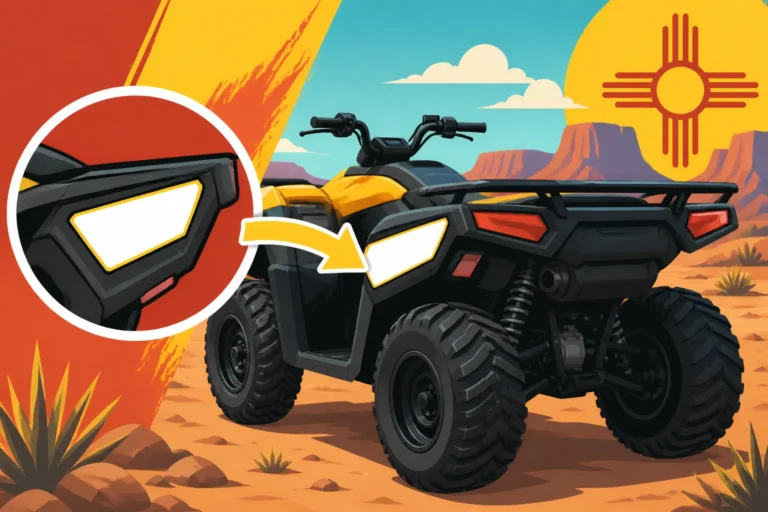
- Pay Fees and Receive Decals: Once everything is approved, you'll pay the applicable registration fees. A first registration typically costs more than a simple renewal, as it involves the initial setup in the system. After payment, you'll receive your New Mexico OHV decals, which must be properly affixed to your machine. The MVD will provide instructions on [New Mexico OHV Decal Placement Rules] for your specific type of OHV, such as [Where the Decal Goes on an ATV's Left Rear] or [Where the Decal Goes on an ROV Quarter Panel]. This officially completes the registration process, allowing you to legally operate your OHV on designated trails.
Addressing Missing Titles and Ownership Gaps
One of the trickiest parts of registering a recovered machine is when the original title is missing, was stolen, or was never properly transferred. This is a common hurdle, and how you address it depends on whether you were the last legal owner listed on record. If you need to understand the general requirements, [New Mexico OHV Title Requirements] can be a good starting point.
- If You Were the Last Titled Owner: If you had a New Mexico title in your name and it was lost or stolen, you can generally apply for a duplicate title at the MVD. You'll need to fill out a specific form for duplicate titles, provide your ID, and pay a fee. The MVD will cross-reference your application with their records to confirm you were indeed the last titled owner. This is often a straightforward process once your identity and previous ownership are verified.
- If You Were NOT the Last Titled Owner (or Title Unknown): This is where it gets more complicated. Perhaps you bought a machine years ago with just a bill of sale, and the title was never transferred, or you're claiming an abandoned machine. The MVD needs a clear chain of ownership to issue a title. If the title is missing and the previous owner is unknown or unreachable, the MVD may require you to go through a bonding process or obtain a court order to establish ownership. A bonded title provides a level of protection for the state and any potential rightful owner who might appear later. This often involves purchasing a surety bond for a certain value of the OHV. For general information on ATV titling, you might find [Do You Need a Title for an ATV in New Mexico?] helpful.
- Using a Bill of Sale to Bridge Gaps: If you have a legitimate bill of sale from a previous owner, even if the title is missing, it can sometimes help establish a chain of ownership. However, if that bill of sale is very old or if the seller isn't the titled owner, the MVD may still require further steps. Remember, the MVD requires a clean title to register an OHV in most cases. If you're drawing up a new bill of sale because you've re-acquired the machine under unusual circumstances, make sure it's comprehensive; resources like LawDepot can provide templates that cover all necessary legal clauses. This is particularly relevant when dealing with a machine that has a [New Mexico ATV Bill of Sale Requirements].
Overcoming Unique Challenges in Recovered OHV Registration
Even with all your documentation and a clear understanding of the process, registering a recovered OHV can still present unique challenges. These often stem from the machine's history, previous financial obligations, or simply the passage of time. Knowing what these potential roadblocks are and how to navigate them can save you a lot of frustration.
Dealing with Liens and Encumbrances
One of the most common and stubborn issues with a recovered machine, especially if it was stolen, is an outstanding lien. A lien means there’s a financial interest in the OHV held by a bank, credit union, or another lender. If you had a loan on the machine when it was stolen, that lien might still be active on the title record.
The MVD absolutely will not issue a clean title or register an OHV with an active lien in your name unless that lien is cleared. This means you’ll need to contact the lender directly and obtain a lien release. This document, signed by the lienholder, officially states that the loan has been paid off or the lien has been otherwise satisfied. Even if your insurance paid out on a stolen vehicle claim, which might have transferred ownership to the insurance company and then back to you, you still need that formal release. If the lienholder is no longer in business, or if you can't locate them, this can become a significant legal challenge, potentially requiring a court order to clear the title. Always check the machine's history for any hidden liens; sometimes, a VIN check can reveal these, even if you don't have the original title.
When the Previous Owner is Unreachable
Another common conundrum, particularly with found or abandoned machines, or even older purchases where the title was never correctly transferred, is dealing with an unreachable previous owner. The MVD wants to see a clear transfer of ownership, and if the last titled owner isn't you and can't be contacted, it creates a dead end in the paperwork chain.
If you are trying to register an OHV where the titled owner is unknown or cannot be located, you have a few options, none of which are quick or simple:
- Bonded Title: As mentioned earlier, applying for a bonded title is a common solution. This involves purchasing a surety bond, which protects the MVD and any potential true owner for a period (often three years) if they come forward. You'll need to apply, pay the bond premium, and potentially have the OHV appraised to determine the bond amount. This option is often explored when you have a machine but no clear path to getting a traditional title.
- Court Order: In some extreme cases, you might need to pursue a court order to establish ownership. This involves filing a petition with a court, attempting to notify the last known owner (even if it's via publication in a newspaper), and then presenting your case to a judge. If the judge rules in your favor, they can issue an order declaring you the legal owner, which the MVD will then honor. This is typically a last resort due to the time and legal costs involved. For help with formal legal documents that might support such a case, platforms like LawDepot can be a useful resource for generating affidavits or other legal forms.
- Affidavit of Ownership: In very specific, limited circumstances for low-value machines, the MVD might accept an affidavit of ownership where you swear under penalty of perjury that you are the rightful owner and have made all reasonable attempts to locate the previous owner. However, this is rare and usually requires MVD approval beforehand, often in conjunction with a VIN inspection and other supporting evidence.
Successfully navigating these unique challenges requires persistence and sometimes legal advice. Don't be afraid to ask for clarification at the MVD or consult with a legal professional if you find yourself in a particularly tangled situation with a [Registering an Inherited Machine in New Mexico] or one with an unknown past.
| Document Type | Purpose | Key Information Needed | Potential Issues & Solutions |
|---|---|---|---|
| Police Report | Official record of theft and recovery | Case number, VIN, date of recovery | Must be clear that OHV is released to you; follow up with police. |
| Original Title | Primary proof of legal ownership | Your name, VIN, clear title status | Lost/stolen: apply for duplicate. Unreachable owner: bonded title/court. |
| Bill of Sale | Proof of transaction and ownership transfer | Buyer/seller names, VIN, purchase price | Missing: may need affidavit/court to establish prior ownership. |
| Lien Release | Confirms no outstanding financial claim | Lender name, VIN, date of release | Active lien: contact lender for release; MVD cannot register without it. |
| Application for Title & Registration | Standard MVD form for all registrations | Your info, OHV details, how acquired | Fill completely, accurately; any discrepancies will cause delays. |
| VIN Inspection | Physical verification of VIN | Actual VIN on machine, inspector signature | Required if MVD suspects tampering or for out-of-state/older machines. |
| Court Order | Legal declaration of ownership | Your name, VIN, judge's signature | Necessary for abandoned machines where owner can't be found. |
Getting your recovered OHV legally registered in New Mexico might involve a few extra hoops to jump through, but the peace of mind that comes with knowing you're fully compliant with state law is absolutely worth it. It means you can hit the trails without worry, knowing you won't face [New Mexico Fines for an Unregistered OHV] and that your investment is secure. Whether it was a happy reunion after a theft or a painstaking process to establish ownership of a forgotten machine, following these steps will ensure your OHV is ready for all the adventures New Mexico has to offer. Just imagine the freedom of riding through the Mescalero Sands or up in the Carson National Forest, knowing all your paperwork is in order.
Disclaimer
This article is for general informational purposes only and does not constitute professional advice. Laws, prices and regulations vary by location and change over time. Consult a qualified professional for guidance on your specific situation.