Why the Yellow Decal Keeps You Off Pavement
It can be incredibly frustrating to navigate the seemingly complex world of off-highway vehicle (OHV) regulations in New Mexico, especially when you're just trying to figure out where you can legally ride your ATV or UTV. Many riders get hung up on the different colored decals, wondering what each one means for their adventures. This guide is here to untangle the mystery of the yellow decal, specifically explaining why it's your signal to stay off paved roads and what that truly entails for your riding plans.
Understanding New Mexico's Decal System for OHVs
New Mexico has put a system in place to help manage off-highway vehicles, ensuring safety, responsible land use, and a clear distinction between machines intended solely for the dirt and those that can venture onto pavement. It might feel like a lot of red tape, but each part of the system serves a purpose, from funding trail maintenance to identifying properly equipped machines for road use. The primary tool for this identification is the colored decal displayed on your machine.
When you register your ATV, UTV, or dirt bike with the New Mexico Motor Vehicle Division (MVD), you'll encounter a choice, or rather, a designation based on your intended use. This isn't just a sticker; it's a legal declaration of where your machine is allowed to operate. The colors – yellow and green – are distinct, and mistaking one for the other can lead to unexpected fines and a lot of headaches. It's crucial to understand these differences from the moment you acquire your machine, whether it's a brand-new purchase from a dealer or a used find where you might need a [New Mexico ATV Bill of Sale Requirements] form. Getting your paperwork in order, even for a simple sale, is easier with resources like LawDepot to ensure everything is legally sound.
The Purpose of Registration and Decals
Beyond simply identifying your vehicle, the registration system in New Mexico plays a vital role in the OHV community. The fees collected from registration contribute directly to the maintenance and development of riding areas across the state. This means that when you register your machine, you're not just complying with the law; you're actively supporting the trails and open spaces you love to explore. It's a way for the state to manage the growing number of OHVs and ensure that there are sustainable places for everyone to ride.
The decal itself, once affixed to your machine, acts as a quick visual cue for law enforcement, land managers, and even other riders. It indicates that your vehicle has met the basic requirements for operation in New Mexico. Without a proper decal, you could face penalties, even if you're riding in an area that seems remote and unpatrolled. Understanding [New Mexico Fines for an Unregistered OHV] can underscore the importance of this simple sticker.
The Yellow Decal: Strictly Off-Highway
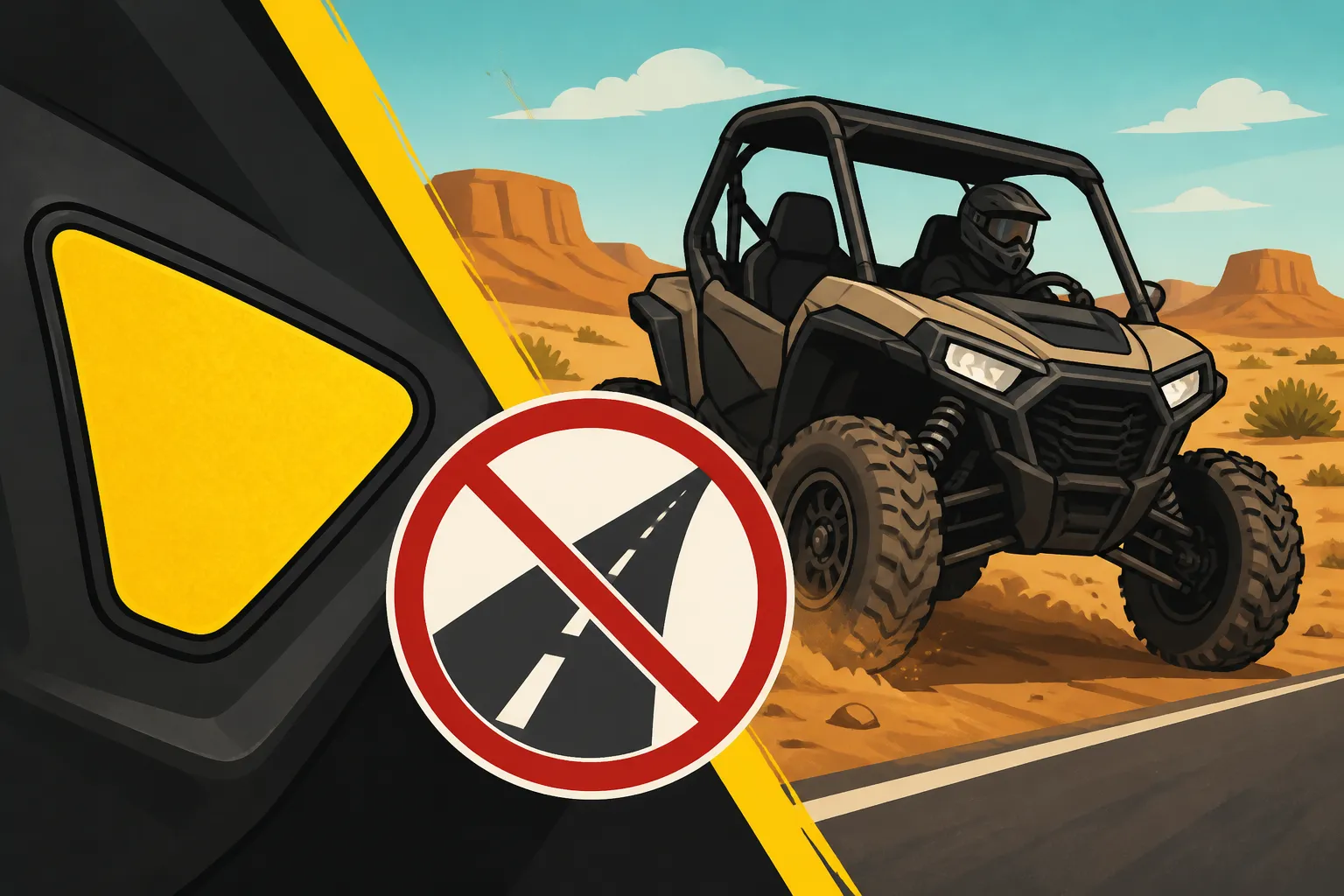
Let's talk about the yellow decal. This is the one you'll receive if your OHV is registered only for off-highway use. Its bright color is a clear signal: this machine belongs on dirt, gravel, and designated trails, not on the asphalt of New Mexico's public roads. The intent behind the yellow decal is straightforward – to keep vehicles that aren't designed or equipped for safe road travel off the busy streets and highways.
Many riders, especially those new to New Mexico or OHV ownership, might feel this is an arbitrary restriction. After all, if your machine runs, why can't it go down the road? The answer lies in safety and vehicle design. OHVs are built for different terrains, different speeds, and different types of impacts than street-legal cars and trucks. Their suspension, tires, braking systems, and even their lighting are optimized for off-road environments. Placing them in a high-speed, multi-lane traffic situation creates significant risks not only for the OHV rider but for other motorists as well. This is why the state has strict rules, and why the yellow decal serves as a constant reminder of these limitations.
What the Yellow Decal Permits
With a yellow decal, you are legally permitted to operate your OHV on:
- Designated OHV trails: These are the trails specifically marked and managed for off-highway vehicle use within areas like national forests, BLM lands, and state OHV parks.
- Unpaved county roads: Many counties in New Mexico have opened some or all of their unpaved roads to OHV use. However, it's absolutely crucial to check local ordinances. A yellow decal does not automatically grant you access to all dirt roads; you must verify that the specific road is open to OHVs.
- Private property: With the landowner's permission, of course. This is always a safe bet, as private land operations are generally exempt from state registration requirements, though having a decal is still good practice for transport.
It's important to note that even on legally open unpaved roads, you're still considered to be operating an off-highway vehicle. This means you generally cannot ride on any paved section of these roads, nor can you use them to access paved city streets or state highways, except for very limited, perpendicular crossings. Understanding [New Mexico Rules for Riding a County Road] is key to staying legal.
Why Pavement is Prohibited for Yellow Decal Holders
The prohibition of yellow-decaled OHVs on paved roads stems from a combination of factors:
- Safety Concerns: As mentioned, OHVs are not designed for pavement. Their knobby tires provide poor traction on asphalt, leading to unpredictable handling and longer stopping distances. Their higher center of gravity can make them unstable at road speeds, especially when cornering or encountering uneven pavement. The lack of standard safety features found in street vehicles, like crumple zones, advanced braking systems, and robust turn signals, further compounds these risks.
- Equipment Requirements: To be legally "street-legal" or even "street-capable" in New Mexico, an OHV needs specific equipment. This includes DOT-approved tires, mirrors, a horn, brake lights, headlights, and turn signals that meet minimum visibility standards. A standard off-highway machine, as implied by its yellow decal, typically lacks many of these features.
- Jurisdictional Clarity: The decal system helps law enforcement quickly identify the status of a vehicle. A yellow decal instantly tells an officer that the machine should not be on pavement, allowing them to enforce regulations effectively without needing a detailed inspection of the vehicle's equipment on the spot.
- Funding Allocation: The yellow decal is tied to off-highway registration, with fees dedicated to off-road resources. Paved road use involves different infrastructure and maintenance costs, which are typically funded through other means (like fuel taxes for on-road vehicles).
In essence, the yellow decal is a visual shorthand for a machine that meets the minimum requirements for off-road fun but hasn't undergone the modifications or inspections needed for safe and legal pavement operation. If you're buying or selling a used OHV, using a resource like LawDepot for official documentation can clarify the vehicle's registration history and intended use for both parties.
What Happens If You Ride Pavement with a Yellow Decal?
Ignoring the "off-highway only" rule of the yellow decal can lead to some pretty unwelcome consequences. It's not just a suggestion; it's a legal mandate that carries penalties. Many riders mistakenly believe they can "just run down the road for a minute" to get to the next trail or pop into town for supplies. This kind of thinking can quickly land you in hot water with law enforcement.
The most immediate consequence is a citation and a fine. New Mexico takes its OHV laws seriously, and officers are on the lookout for improperly operated vehicles on public roads. These fines can vary depending on the specific violation and whether it's a first offense, but they can quickly add up and put a significant damper on your riding plans.
Legal Penalties and Fines
Beyond monetary fines, you could face other legal repercussions. Repeated violations might lead to your machine being impounded, which is a costly and inconvenient process to retrieve. Your driving privileges could also be affected, especially if the infraction is combined with other offenses like reckless operation or lack of a valid driver's license (which isn't generally required for off-road use with a yellow decal, but definitely is for paved road use).
It's not uncommon for OHV laws to be enforced by various agencies, including state police, county sheriffs, and even forest rangers, depending on where you're riding. They all understand the decal system and the rules that come with it. You can find detailed information on these penalties in resources covering [New Mexico Fines for an OHV Violation]. It's always better to be informed and compliant than to risk a confrontation that could end your day of riding prematurely.
Safety Implications and Risks
Beyond legal issues, riding a yellow-decaled OHV on pavement presents significant safety risks.
- Tire Performance: Those aggressive, knobby tires that grip so well in dirt and mud are terrible on pavement. They wear down quickly, create excessive road noise, and, most importantly, have poor traction, especially in wet conditions. Emergency braking or sudden maneuvers can easily lead to a loss of control.
- Handling Characteristics: OHVs are often lighter and have a higher center of gravity than street vehicles. This makes them prone to tipping or rolling, particularly when making sharp turns on hard surfaces at speed. The suspension designed for absorbing bumps and rocks off-road feels soft and imprecise on pavement.
- Visibility: While many OHVs have headlights and taillights, they often don't meet the brightness or coverage requirements for street-legal vehicles. Furthermore, the smaller profile of an OHV can make it harder for other motorists to see, especially in traffic or at dusk.
These factors make paved road riding on a yellow-decaled OHV inherently dangerous. It's not just about getting caught; it's about protecting yourself and others from potential accidents.
Making the Switch: When You Need a Green Decal (and What That Means)
So, what if you do want to legally ride your OHV on paved roads in New Mexico? This is where the green decal comes into play. The [New Mexico's Green On and Off-Highway Decal] is your ticket to dual-sport capability, allowing you to seamlessly transition between trails and approved paved routes. However, acquiring a green decal and legally riding on pavement involves much more than just sticking on a different color sticker. It signifies a complete change in the legal classification and required equipment of your machine.
The state's "paved road opt-in" program allows counties and cities to open their own roads to OHVs, provided the vehicles meet specific requirements. This is a crucial distinction: not all paved roads are open, and state highways are almost universally off-limits. Even in areas where local ordinances permit OHV road use, your machine must be equipped as if it were a street-legal vehicle, and you, as the operator, must meet certain qualifications.
Requirements for a Green Decal and Paved Road Use
To obtain a green decal and legally operate your OHV on designated paved roads, you'll need to satisfy several requirements:
- Titling and Registration: Your OHV must first be properly titled in New Mexico. This can be a point of confusion for some, as many older off-road machines were never formally titled. You'll need proof of ownership, such as a bill of sale. LawDepot can assist in creating valid documents for transfers. Once titled, you can apply for the green registration at the MVD.
- Insurance: This is non-negotiable for paved road use. You must carry proof of liability insurance that meets New Mexico's minimum requirements. This isn't just a good idea; it's the law. [New Mexico ATV Insurance Requirement] mandates a certain level of coverage to protect against financial responsibility in an accident.
- Driver's License: To operate any motor vehicle on a public road in New Mexico, including a green-decaled OHV, you must possess a valid driver's license. Your standard off-road safety permit won't cut it here.
- Vehicle Equipment: This is perhaps the most significant hurdle. Your OHV needs to be outfitted with specific safety equipment to be deemed road-worthy. This typically includes:
- Headlights and Taillights: Must be visible from specific distances.
- Brake Lights: Clearly visible when braking.
- Mirrors: At least one rearview mirror, typically two, allowing the driver to see at least 200 feet to the rear.
- Turn Signals: Functional front and rear turn signals.
- Horn: An audible warning device.
- DOT-Approved Tires: Tires designed for on-road use, not just aggressive off-road knobbies.
- Windshield: Often required, or at least eye protection at all times.
- Muffler and Spark Arrester: Must meet specific sound limits and safety standards, especially for use on public lands.
The process of ensuring your OHV meets all these specifications can involve modifications and inspections. It's a commitment that transforms your purely off-road machine into a versatile dual-purpose vehicle.
When a Green Decal Makes Sense for You
Deciding whether to pursue a green decal depends entirely on your riding style and needs.
- For Trail-to-Town Connections: If you frequently ride in areas where open trails lead directly to small towns, or you need to use short stretches of paved county roads to connect different trail systems, the green decal offers unparalleled convenience. For instance, in places like Red River, some local roads are open to ROVs, and a green decal makes navigating these areas legal.
- Exploration and Scenic Drives: Some riders enjoy the flexibility of exploring remote areas that might include both dirt roads and occasional paved segments. A green-decaled machine allows you to take advantage of scenic byways or access points that are otherwise inaccessible without trailering.
- Longer Trips: If your trips involve staying in different locations and riding various trail systems, the ability to ride your OHV on approved paved roads to get fuel, groceries, or move between staging areas can save a lot of time and hassle compared to constantly loading and unloading your machine onto a trailer.
However, if your riding is strictly confined to dedicated OHV parks, private land, or well-established off-road trail systems that never intersect with pavement, then the yellow decal is perfectly sufficient. There's no need to invest in costly modifications and additional insurance if you have no intention of riding on public roads. It all comes down to understanding your local opportunities, like those outlined in [New Mexico's Paved Street Opt-In].
Navigating the Decal Choice: A Quick Comparison
To help clarify the differences between the two decals and guide your decision, here's a quick overview of their key characteristics:
| Feature | Yellow Off-Highway Decal | Green On and Off-Highway Decal |
|---|---|---|
| Primary Use | Strictly off-highway (trails, unpaved roads) | Both on-highway (approved paved roads) and off-highway |
| Paved Road Operation | No (except for perpendicular crossings) | Yes (where permitted by local ordinances) |
| Required Equipment | Basic OHV registration, muffler, spark arrester | Extensive: street-legal lighting, mirrors, horn, DOT tires, etc. |
| Insurance Required | No (optional for off-road liability) | Yes (mandatory liability for paved road use) |
| Driver's License | No (safety permit for minors under 18) | Yes (valid driver's license required for paved road use) |
| Cost to Obtain | [New Mexico OHV Registration Cost] (biennial) | Higher due to additional equipment, insurance |
| Typical User | Dedicated trail riders, ranch hands, casual off-roaders | Riders needing to connect trails via pavement, explore diverse routes |
This table clearly illustrates why the yellow decal keeps you off pavement—it's tied to a set of regulations and equipment standards that do not permit on-road operation. Choosing the right decal for your machine is about matching your riding ambitions with legal compliance and safety. Remember to always check current local ordinances and state regulations, as these can evolve. Resources like LawDepot can help ensure you have all the correct documentation for any transactions involving your OHV, making the ownership process smoother.
Ultimately, whether you choose the yellow or green decal, the goal is to enjoy the incredible riding opportunities New Mexico has to offer safely and legally. The yellow decal ensures that your off-road adventures remain purely off-road, respecting both the law and the safety design of your machine.
Disclaimer
This article is for general informational purposes only and does not constitute professional advice. Laws, prices and regulations vary by location and change over time. Consult a qualified professional for guidance on your specific situation.