New Mexico Supervision Rules for Young Riders
A child’s safety card does not necessarily mean they can ride alone. In New Mexico, young OHV riders have safety-training and adult-supervision requirements, and the rules can be easy to confuse with registration or visitor permits. Here’s how to tell what a minor needs, what supervision means in practice, and which age limits still apply.
Who Needs a Safety Permit and Adult Supervision
New Mexico requires an OHV safety permit for riders under 18 who operate an off-highway vehicle on public land. The permit is earned by completing an approved safety course; it is not the same as vehicle registration or a nonresident OHV permit. The state’s requirements for young riders are summarized in New Mexico’s Safety Permit for Under-18 Riders and New Mexico OHV Safety Permit Requirements.
A minor’s safety permit shows that the rider completed the required training. It does not replace adult supervision, and an adult supervising a minor does not replace the child’s own permit. Treat these as separate requirements:
| Requirement | What it addresses | What it does not replace |
|---|---|---|
| Safety permit | The minor’s completion of required safety training | Adult supervision, vehicle registration, or land access permission |
| Adult supervision | An adult’s oversight of the minor while riding | The minor’s safety permit or the machine’s paperwork |
| OHV registration or accepted out-of-state credentials | Whether the machine meets applicable registration requirements | The rider’s safety permit or supervision |
| Land or route permission | Whether riding is allowed in that location | Any of the requirements above |
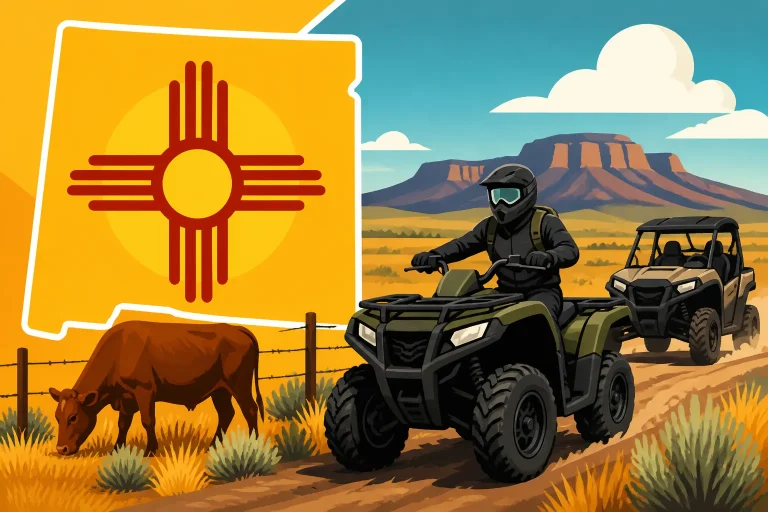
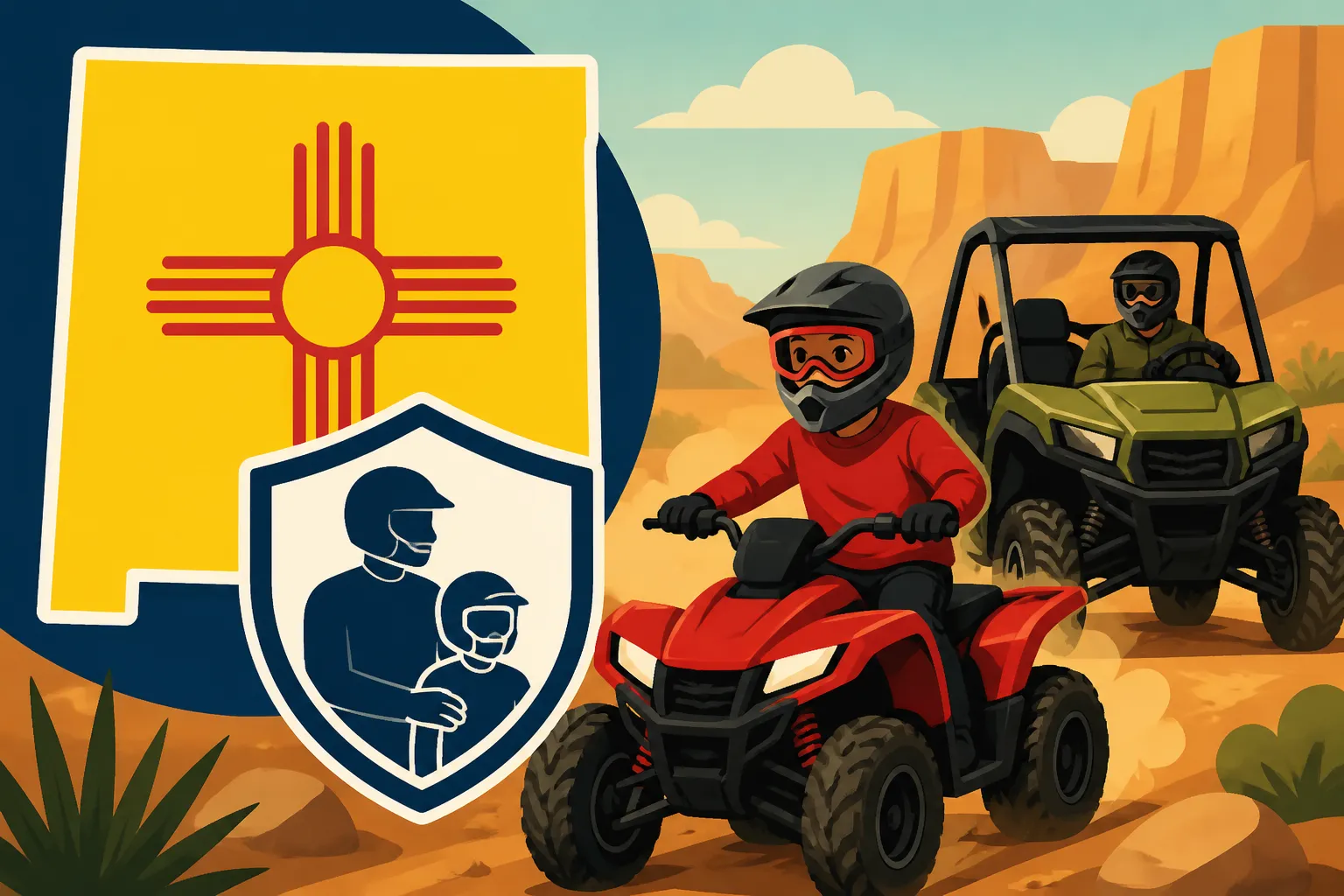
In general, a rider under 18 must be under the direct supervision of an adult who is at least 18. The adult may be a parent or guardian, or an adult authorized to supervise the child. Supervision means staying close enough to keep the young rider in view and respond if something goes wrong. It is not enough to leave a child on a trail while the supervising adult waits at the staging area. For a closer look at how that standard works, see Visual Supervision and What It Means.
The rule applies to young riders, including visitors, when they ride where New Mexico’s OHV requirements apply. A child’s home-state registration, a parent’s permit, or an adult’s presence does not automatically exempt the child from New Mexico’s safety requirements. Visitors can check New Mexico’s Nonresident OHV Permit and New Mexico OHV Reciprocity Rules separately to understand the credentials that apply to their machine.
What Counts as Supervision on a Ride
The practical test is whether the adult can see the child and step in promptly. A group ride can make that harder than it sounds: a child may fall behind, round a blind corner, or be separated by dust, terrain, or other machines. Plan the ride so the adult and minor stay together rather than relying on occasional visual checks.
The adult does not necessarily need to be on the same vehicle. But riding far ahead, waiting out of sight, or assuming another rider will keep watch is not a sound way to meet a direct-supervision requirement. If the adult cannot see the minor or quickly reach them, the arrangement is no longer meaningful supervision.
A sensible setup before leaving the staging area is to:
- Choose one adult who is clearly responsible for each young rider.
- Agree on a pace and a regrouping point before entering the route.
- Keep the child within view, especially at intersections, narrow sections, and changes in terrain.
- Stop and regroup if dust, distance, or a trail feature blocks the adult’s view.
- Turn around or choose an easier route if the adult cannot keep the rider in sight.
The right setup depends on the machine and the route. A child on a small ATV may be able to stay close on an open, easy trail, while a group on larger vehicles may quickly spread out. A phone or radio can help riders communicate, but it is not a substitute for visual supervision when the rules require the adult to keep the child in view.
Supervision is also only one part of a safe ride. The machine should suit the rider’s size and ability, and the child should understand how to stop, turn, and respond to hazards before setting out. A young rider who is overwhelmed by speed, loose sand, steep grades, or traffic may need a different route or a more controlled practice area. Meeting the legal supervision rule does not make every trail or vehicle appropriate for every child.
Age Limits and Other Rules Parents Should Check
Adult supervision does not override every age restriction. A child under six may not ride an OHV on New Mexico public land, even if a parent is right beside them. The restriction is not a reason to look for a more attentive supervisor; it means public-land riding is not allowed for that child. See Why a 5-Year-Old Cannot Ride New Mexico Public Land for that age limit.
For older children, the safety permit and supervision requirements are important, but they are not the only rules that may apply. Helmet and eye-protection requirements, passenger restrictions, and vehicle-specific limits can also affect a ride. For example, the rules for carrying a passenger may differ from the rules for operating a machine alone. Review New Mexico Rules for a Rider Under 13, New Mexico Rules for a Rider Aged 15, and New Mexico Rules for Carrying a Passenger when those situations apply.
A driver’s license or motorcycle endorsement should not be assumed to cancel a young rider’s OHV obligations. A license may affect a particular rule, but it does not automatically settle questions about the safety permit, adult supervision, age limits, or whether a route is open to OHVs. If a teen has a motorcycle endorsement or provisional license, check the specific requirements in Can a 13-Year-Old With a Motorcycle License Ride? and Does a Provisional License Count for a Teen Rider?.
Location matters, too. A route can cross land with different access rules, and some roads are closed to OHVs even when a machine is registered and its rider has the required safety permit. Public land rules do not grant permission to ride on private, tribal, or state trust land. Check route access and any required permission before the trip; [New Mexico Rules for Riding a Designated Route] explains why staying on an authorized route matters.
A Practical Checklist Before a Minor Rides
Use this checklist before a New Mexico ride with anyone under 18. If an answer is unclear, pause and confirm the requirement with the relevant agency or land manager rather than assuming that another credential covers it.
- Age: Is the rider old enough to operate an OHV at this location? A child under six cannot ride on New Mexico public land.
- Safety training: Has the minor completed the required approved course and obtained the safety permit?
- Proof: Will the minor have the permit available during the ride? See Carrying Your Safety Permit Number on a Card.
- Adult: Is an adult at least 18 responsible for supervising the child?
- Visibility: Can that adult keep the minor in view and intervene promptly throughout the ride?
- Machine: Is the OHV suitable for the child’s size and ability, and does it meet applicable registration requirements?
- Route: Is the route open to this type of OHV, and does the rider have permission to be there?
- Additional rules: Do helmet, eye-protection, passenger, equipment, and road-use rules apply to this rider or machine?
For a nonresident family, check each rider’s requirements rather than assuming the adult’s home-state paperwork covers the child. Reciprocity relates to the vehicle’s registration status; it does not necessarily remove New Mexico’s safety requirements for a minor. Likewise, a New Mexico nonresident permit concerns the machine and does not serve as a young rider’s safety permit.
When planning a route, account for the child’s pace and the adult’s ability to stay nearby. A legal route may still be too difficult for a particular young rider. Choose a route where the supervising adult can maintain sight, communicate clearly, and stop safely if the child needs help. If terrain or group spacing makes that impossible, select a different route or ride arrangement.
Disclaimer
This article is for general informational purposes only and does not constitute professional advice. Laws, prices and regulations vary by location and change over time. Consult a qualified professional for guidance on your specific situation.