New Mexico Rules for Carrying a Passenger
Navigating the rules for carrying passengers on your ATV or UTV in New Mexico can feel like trying to solve a puzzle, especially with varying age limits and machine-specific requirements. Many riders unknowingly put themselves and their loved ones at risk by not understanding who can legally ride shotgun and under what conditions. This guide will cut through the confusion, helping you understand the essential regulations so you can enjoy the trails safely and legally.
The Core Rule: One Rider, One Machine (Mostly)
Let's get right to the heart of the matter: New Mexico law, like many other states, takes a very specific stance on how many people can ride an off-highway vehicle (OHV) at once. It's not just about fitting someone on; it's about the machine's design and intent. Overlooking this detail is one of the most common mistakes I see riders make, often with good intentions but potentially serious consequences.
Understanding the "Manufacturer's Design" Principle
The fundamental principle governing passengers on an OHV in New Mexico revolves around the vehicle's original manufacturer's design. Simply put, if a machine was built by its manufacturer to carry one person, then it should only ever carry one person. This isn't just a suggestion; it's a legal expectation rooted in safety. Most traditional ATVs, for instance, are designed as single-rider vehicles. They have one seat, one set of handlebars, and the center of gravity is calibrated for a single operator's weight and movements.
Trying to squeeze a second person onto a single-rider ATV, even a small child, significantly alters the vehicle's handling characteristics. It can make steering difficult, braking less effective, and increases the risk of tipping, especially on uneven terrain or during turns. I've heard too many stories of families who thought a quick ride around the ranch wouldn't hurt, only to find themselves in a dangerous situation. It's crucial to remember that what might seem like a minor adjustment to you can have major safety implications. The legal ramifications can be just as significant if you're stopped by an officer and found to be in violation of this design principle.
When Two (or More) is Allowed: Purpose-Built Machines
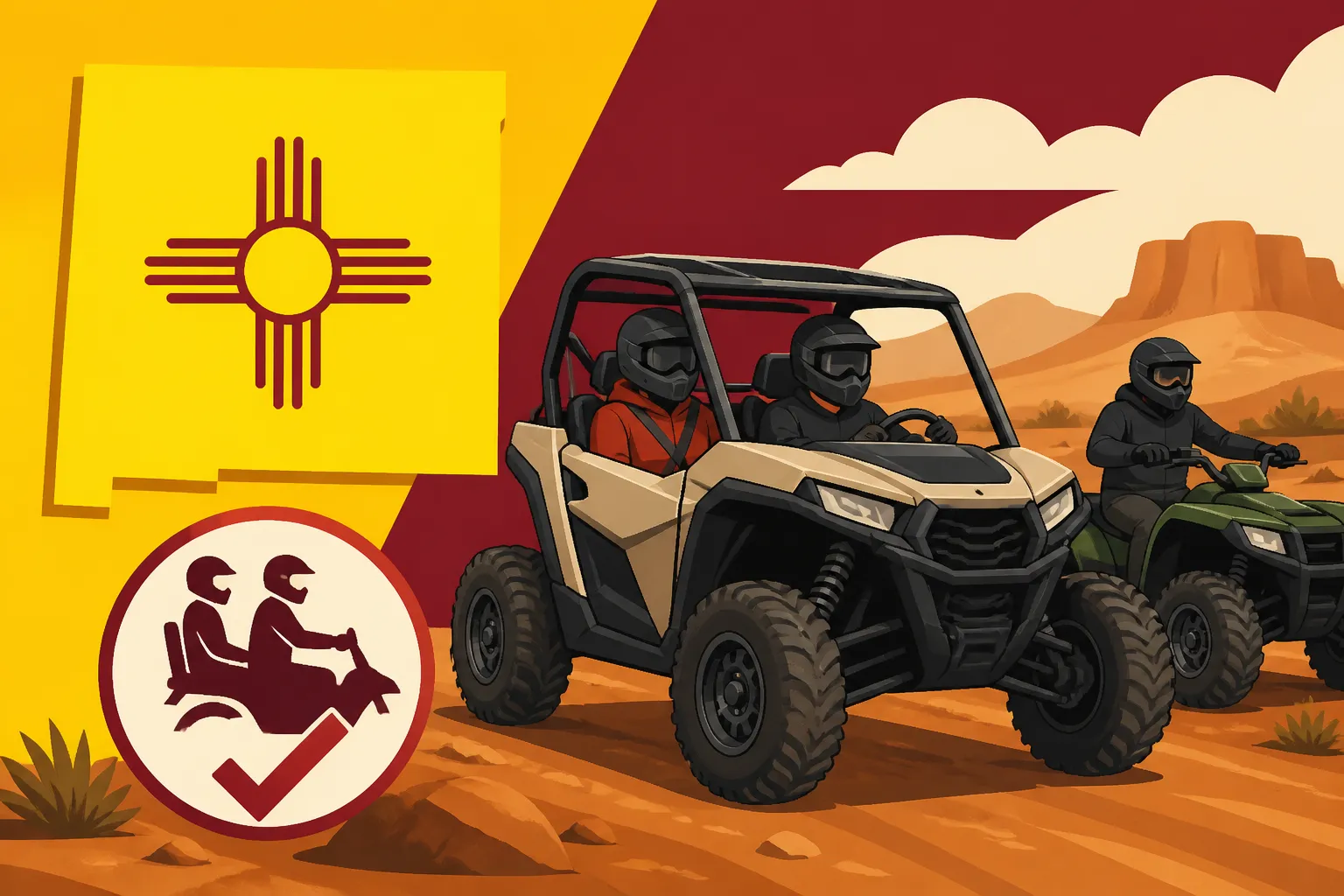
Now, before you think you can never share the thrill of the trail, let's clarify when carrying passengers is perfectly fine and encouraged! The good news is that many OHVs are specifically designed to accommodate more than one person. This primarily applies to side-by-sides (UTVs or ROVs) and certain "two-up" ATVs. These machines are engineered from the ground up for multi-passenger use, featuring essential safety components.
When a manufacturer designs a machine for multiple riders, they incorporate specific features to ensure safety and stability. You'll typically see:
- Factory-installed passenger seats: These aren't just padded extensions; they are integrated into the chassis, providing proper support and ergonomics for additional riders.
- Dedicated handholds: Passengers need something secure to grip, especially over bumps or during sudden maneuvers.
- Separate footrests or floorboards: This ensures passengers' feet are safely contained and supported, preventing them from dragging or getting caught.
- Seatbelts or harnesses: Especially in UTVs, multi-point seatbelts are standard and absolutely critical for passenger retention.
A couple planning a weekend ride through the Carson National Forest on their two-seater UTV, complete with factory-installed bucket seats and harnesses, is exactly the scenario these regulations are designed to permit. They're enjoying the outdoors safely and legally, knowing their machine is built for the task. Remember, if your machine doesn't have these factory-installed features, it's generally considered a single-rider vehicle, no matter how much you wish it wasn't.
Age Restrictions and Supervision for Young Passengers
Beyond the machine's design, New Mexico has specific rules about the age of both the OHV operator and any passengers, particularly when riding on public lands. These rules are in place to protect younger riders who may not have the judgment, strength, or experience to handle the unique challenges of off-highway riding. It’s a common misconception that if a child can physically fit, they can ride, but the law is much more nuanced.
General Age Limits for Riding and Passengers
New Mexico sets clear guidelines for who can operate an OHV. Generally, a person must be at least 10 years old to operate an OHV on public land. However, this doesn't automatically mean a 10-year-old can take a younger sibling for a spin. The rules for carrying passengers layer on top of these operator requirements, adding another layer of safety, especially for the most vulnerable riders.
When considering a passenger, you need to think about the age of the operator and the age of the passenger. Even if a UTV is designed for multiple occupants, there are still age-related restrictions on who can operate it when carrying others, especially on public land. For a full breakdown of operating ages, you can look up [New Mexico Minimum Age to Ride Off-Road]. Understanding this foundational age requirement is the first step before even thinking about adding a passenger.
The Under-18 Passenger Rule on Public Lands
This is a critical rule that often surprises even experienced riders: No one under the age of 18 may carry a passenger on an OHV when operating on public land in New Mexico. This applies to all types of OHVs, including multi-passenger side-by-sides (UTVs/ROVs) that are otherwise designed to carry passengers.
Imagine a 17-year-old, who is a perfectly competent UTV driver, wants to take their 10-year-old sibling for a ride on a designated trail in the Red Sands OHV Area. Even though the UTV is a two-seater and the younger sibling is old enough to ride as a passenger, the 17-year-old operator is still a minor. Under New Mexico law, this scenario would be illegal on public lands. The intent is to ensure that the person ultimately responsible for the safety of all occupants has reached legal adulthood. This rule helps prevent situations where a minor operator might be pressured or might make less-than-optimal decisions when responsible for another life on challenging terrain. More details are available in [New Mexico Passenger Rules for Young Riders].
The Under-6 Rule: No Public Land at All
Now for perhaps the most absolute rule concerning young riders: children under the age of six are prohibited from riding on any OHV on public land in New Mexico, whether as an operator or a passenger. There are no exceptions to this rule. It doesn't matter if they are buckled into a five-point harness in a brand-new UTV or if they are just on a short, slow ride with a parent. If the ground is public land, and the child is under six, they cannot be on an OHV.
This rule reflects a common understanding of childhood development: children under six often lack the physical strength, cognitive awareness, and developed reflexes to safely withstand the forces and movements associated with OHV riding, even as a passenger. Their skeletal systems are still developing, making them more vulnerable to injury in an accident. This isn't just a legal formality; it's a vital safety measure designed to protect the youngest members of our riding community. For further clarification on this specific prohibition, check out [Why Under-6 Riders Stay Off Public Land].
Equipment, Safety, and Paved Road Considerations
Beyond who can ride and where, New Mexico law also lays out essential equipment requirements, especially when it comes to passengers and operating on paved roads. These aren't just suggestions; they are mandates designed to prevent serious injury and ensure that all riders are as protected as possible.
Helmets, Eye Protection, and Seatbelts for All Passengers
Safety gear is non-negotiable, particularly for younger riders and anyone using an OHV on paved surfaces. New Mexico law specifically states that any person under the age of 18 operating or riding as a passenger on an OHV must wear a safety helmet and eye protection. This means if your 12-year-old is riding in the passenger seat of your side-by-side, they absolutely need a DOT-approved helmet and goggles.
Even for adults, while helmets might not be legally mandated off-road, they are always a highly recommended piece of gear. In a UTV, everyone should be properly secured with the factory-installed seatbelts or harnesses. These aren't just for show; they keep you inside the vehicle during rollovers or sudden stops. Think about a sudden jolt over a rocky section – a helmet protects against impact, eye protection keeps dust and debris out, and a seatbelt keeps you from being ejected. These are layers of protection that can make the difference between a minor scare and a serious injury. You can find more specific details on headgear in [New Mexico Helmet Law for ATV Riders] and [New Mexico Eye Protection Requirement].
Paved Road Use and Passenger Rules
If you plan to utilize New Mexico's "opt-in" paved road access for OHVs, there are additional requirements that kick in, especially regarding passengers. For one, your OHV must be properly registered for paved road use, typically signified by a green decal or the specific paved road plate. Information on this is available in [New Mexico Green On and Off-Highway Decal].
More importantly, to operate an OHV on a paved public road in New Mexico, you must possess a valid driver's license. This applies to the operator, regardless of whether they are carrying a passenger. If you're riding solo on dirt trails, a driver's license isn't generally required, but the moment you hit the asphalt, it becomes mandatory. This requirement indirectly affects passengers, as you can only legally carry them on paved roads if the operator is licensed. Furthermore, liability insurance becomes mandatory for any OHV operated on a paved public road. While it's always a good idea, it's a legal necessity on asphalt. Ensure your policy covers all occupants, not just the operator. Details on licensing are covered in [New Mexico Driver's License Rules for OHVs].
Modifying Your Machine for More Passengers (and Why You Shouldn't)
You might be tempted to modify your single-seat ATV or UTV to accommodate an extra person, perhaps by adding an aftermarket seat or custom seating arrangement. While the aftermarket industry, including companies like SuperATV, offers a vast array of accessories to enhance your OHV's performance, utility, and comfort – from lift kits to winches to storage solutions – it is absolutely crucial to understand the legal and safety implications when it comes to passenger capacity.
You should never attempt to convert a single-rider ATV into a multi-rider one, or exceed the manufacturer's stated passenger capacity for any OHV, using aftermarket parts. Even if a product, from SuperATV or any other vendor, appears to create an extra seat, it does not magically change the vehicle's original manufacturer's design or its legal classification. The frame, suspension, braking system, and overall stability are designed for a specific load and number of occupants. Adding an extra seat, even a seemingly robust one, can compromise the vehicle's integrity, create unsafe handling characteristics, and, critically, put you in violation of New Mexico law. An officer will look at the original design, not your modifications. Stick to accessories that enhance your existing legal setup, rather than altering its fundamental passenger capacity.
Penalties and Enforcement
Ignoring New Mexico's OHV passenger rules isn't just risky from a safety standpoint; it also carries legal consequences. Law enforcement officers, whether from the New Mexico State Police, county sheriff's departments, or federal land agencies, are tasked with enforcing these regulations to ensure everyone's safety on the trails and roads.
Fines for Violating Passenger Rules
Violating New Mexico's OHV passenger rules can lead to citations and significant fines. The exact amount can vary depending on the specific infraction, but penalties for unsafe operation, riding in areas where prohibited, or failing to meet age/equipment requirements can quickly add up. For instance, carrying a passenger on a single-rider ATV, or an underage operator carrying a passenger on public land, are serious violations.
Beyond the immediate financial penalty, there can be other repercussions. In some cases, repeated violations could lead to more severe penalties or even the impoundment of your vehicle. Parents, be especially aware: New Mexico law holds parents or legal guardians responsible for violations committed by minors under their supervision. This means if your underage child is operating an OHV with an illegal passenger on public land, you, as the parent, could face the same fines and penalties as if you had committed the violation yourself. It's a direct way the state ensures parental oversight in OHV safety. For a general overview of fines, see [New Mexico Fines for an OHV Violation] and specific details for parents in [New Mexico Penalties for a Parent].
Roadside Stops and Officer Discretion
When you're out riding on public lands or approved paved roads in New Mexico, it's not uncommon to encounter law enforcement. Officers conduct routine checks at trailheads, on trails, and along open roads to ensure compliance with all OHV laws. During a roadside stop, an officer will typically check for several things, including your OHV registration, any required permits, and, crucially, adherence to passenger and safety equipment rules.
If an officer observes an illegal passenger situation – for example, a child under six on public land, an underage operator carrying a passenger, or an extra rider on a single-seater ATV – they will likely issue a citation. While officers do exercise discretion, particularly in minor circumstances, violations of passenger rules are often treated seriously due to the inherent safety risks. It's best to always be prepared and ensure you and your passengers are in full compliance. Knowing [What a New Mexico Officer Checks Roadside] can help you understand what to expect.
Summary of New Mexico Passenger Rules
To help clarify the various rules, here's a quick summary of New Mexico's passenger regulations for OHVs:
| Rule Category | ATVs (Single-Rider) | ATVs (Two-Up) & UTVs (Multi-Passenger) | General Requirements for All OHVs |
|---|---|---|---|
| Capacity | One rider ONLY (by manufacturer's design) | Up to manufacturer's stated capacity (seats) | Never exceed manufacturer's stated capacity. Modifications don't count. |
| Passenger Age (Public Land) | Not applicable (no passengers allowed) | All passengers must be 6 years old or older | Children under 6 are prohibited from riding OHVs on public land. |
| Operator Age w/ Passenger (Public Land) | Not applicable (no passengers allowed) | Operator must be 18 years or older to carry a passenger on public land | Any operator, regardless of age, must adhere to vehicle's design capacity. |
| Safety Gear (Under 18) | Not applicable (no passengers allowed) | Helmet & eye protection mandatory for passengers under 18 years | Helmet & eye protection highly recommended for all ages. |
| Paved Road Use | If street-legal, still one rider only (unless two-up model) | If street-legal, follow all passenger rules + driver's license for operator, insurance required. | All occupants must use seatbelts (if equipped). |
This article is for general informational purposes only and does not constitute professional advice. Laws, prices and regulations vary by location and change over time. Consult a qualified professional for guidance on your specific situation.