New Mexico Rules for Carrying a Firearm on an ATV
Riding your ATV or UTV through the vast, beautiful landscapes of New Mexico often means venturing into remote areas for recreation, exploration, or even hunting. Many riders, understandably, want to carry a firearm for personal protection or to pursue game. However, the rules around carrying firearms on off-highway vehicles in the Land of Enchantment can feel like a tangled web of state statutes, federal regulations, and local ordinances, leaving many feeling uncertain and risking unintentional violations. This comprehensive guide will untangle those complexities, providing clear, actionable insights into New Mexico's rules for carrying a firearm on your ATV or UTV.
The Basics of Firearm Carry on OHVs in New Mexico
Navigating the legalities of carrying a firearm on your off-highway vehicle begins with understanding New Mexico's general firearm laws, and then seeing how they specifically apply to OHVs. It's not always as simple as "yes" or "no," because the context of where you are, what kind of firearm you have, and how it's being carried all matter.
Open vs. Concealed Carry on Public Land
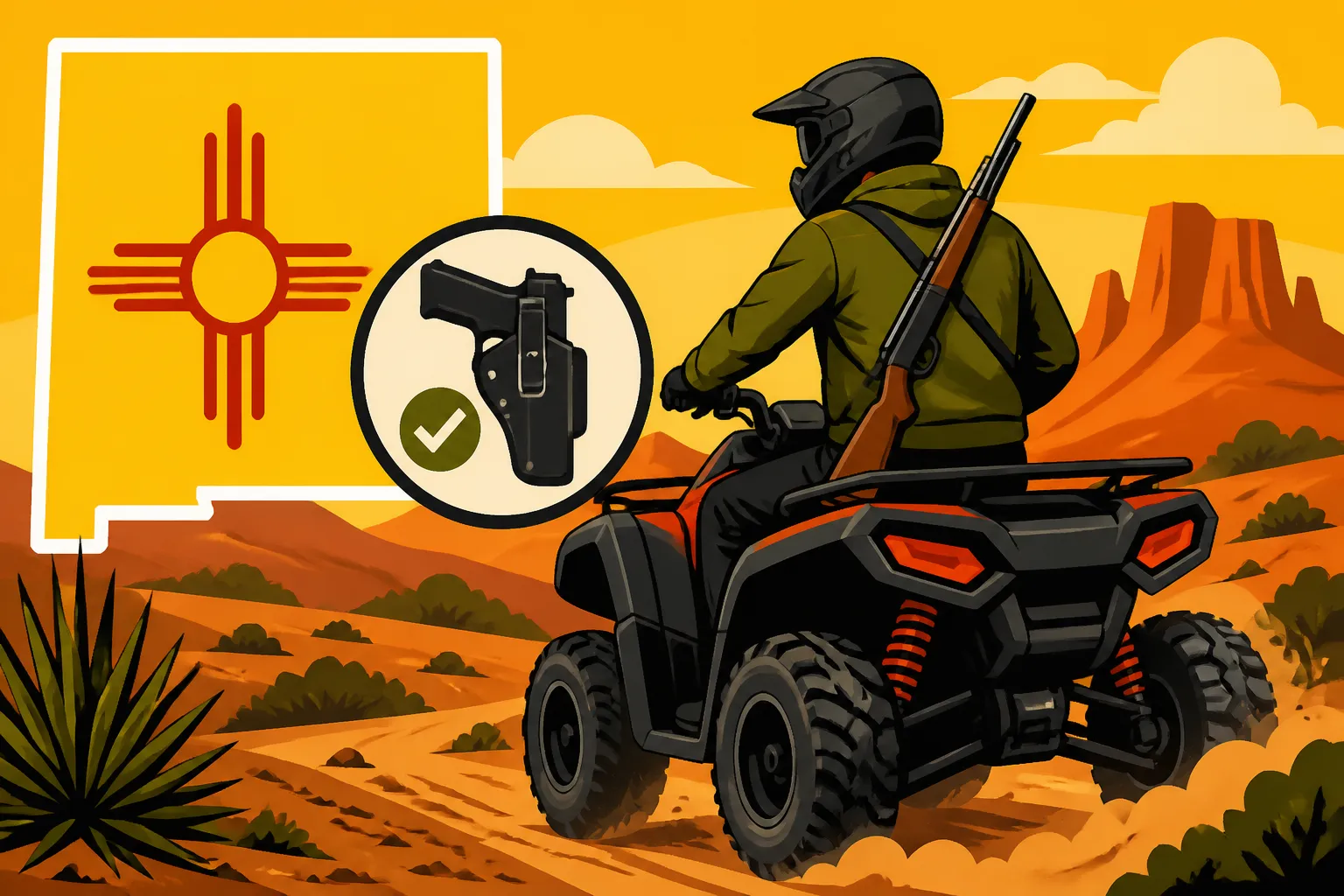
New Mexico is a state with strong Second Amendment protections, and generally speaking, both open and concealed carry are legal for those who are not otherwise prohibited from possessing a firearm. Open carry of a handgun or long gun is permitted without a license for individuals 18 years or older who can legally own a firearm. This means if you're riding your ATV down a designated trail on public land and your rifle is visible in a scabbard, or your handgun is openly holstered, you are generally within your rights under state law.
For concealed carry, New Mexico requires a Concealed Handgun License (CHL) for handguns carried concealed. This applies whether you're walking down a street or seated on your UTV. If you prefer to have your handgun out of sight, either on your person or within the machine in a manner that makes it not readily observable, you must possess a valid New Mexico CHL or a recognized reciprocal license from another state. Without a CHL, carrying a concealed handgun is illegal.
These general carry principles extend to public lands accessible by OHV. Whether you're traversing a BLM road or a designated trail in a National Forest, the state's open and concealed carry laws are your baseline. However, remember that "public land" isn't a monolithic entity; different agencies manage different tracts, and they can layer additional regulations on top of state law. We'll dive into those specifics shortly, but always start with a solid understanding of New Mexico's core carry laws.
Specific OHV-Related Firearm Restrictions
Beyond the general carry laws, New Mexico has specific regulations that come into play when firearms are being transported in vehicles, and for legal purposes, your ATV or UTV often falls under this "vehicle" umbrella. One of the most critical distinctions often revolves around whether a firearm is "loaded" while in a vehicle, and what constitutes a "loaded" firearm. For many states, a loaded firearm in a vehicle (including an OHV) is prohibited or restricted, especially outside of actual hunting activities.
New Mexico law prohibits carrying a loaded firearm in a vehicle on public roads or rights-of-way, unless you possess a valid concealed handgun license, are a law enforcement officer, or are actively engaged in hunting where it's specifically permitted. This applies to rifles, shotguns, and handguns. For an OHV, this typically means if you are operating your machine on a public road or trail, your firearm should be unloaded. For a rifle or shotgun, "unloaded" generally means no ammunition in the chamber or magazine. For a handgun, it means no ammunition in the chamber or a loaded magazine inserted.
The nuances here are crucial. If you're on your way to a hunting blind on an authorized game retrieval route, the rules might be different than if you're just out for a recreational ride. This is why understanding [New Mexico Rules for Hunting From an ATV] is so important. Always verify the current regulations, particularly with the New Mexico Department of Game and Fish, before heading out with a loaded firearm on your OHV, especially when crossing roads or operating on designated trails. Ignorance of these specific OHV-related restrictions can lead to citations, fines, or even confiscation of your firearm or vehicle.
Navigating Different Land Jurisdictions with a Firearm
New Mexico is a mosaic of different land ownerships and jurisdictions, each potentially having its own set of rules regarding firearms. What's perfectly legal on state land might land you in hot water on tribal land or even certain federal parcels. It's not enough to know New Mexico state law; you also need to know whose land you're on.
Federal Lands (Forest Service, BLM)
When you're riding your ATV or UTV on federal lands managed by agencies like the U.S. Forest Service or the Bureau of Land Management (BLM), New Mexico's state laws regarding firearm carry generally apply. This means if open carry is legal statewide, it's generally legal on these federal lands, provided you're not otherwise prohibited from possessing a firearm. However, federal agencies can implement their own specific regulations that go beyond or add to state law, especially concerning the discharge of firearms, hunting activities, or areas sensitive to public safety.
For example, while New Mexico allows open carry, a specific National Forest might have regulations against target shooting in certain developed recreation areas or prohibit hunting with certain types of firearms outside of designated seasons. It's also critical to understand the distinction between "carrying" a firearm and "discharging" one. Carrying is generally allowed, but discharging a firearm often has much stricter rules based on location, safety zones, and whether you possess a valid hunting license and tag. Always look for posted signs, consult the agency's website for the specific forest or BLM district you plan to visit, or even call the local ranger station before your trip. Being prepared helps you avoid problems. For more detailed information, consider reviewing [New Mexico Rules for Riding Federal Land] or [New Mexico Rules for Riding BLM Land].
State Trust Land, Tribal Land, and Private Property
Moving beyond federal land, other jurisdictions present their own unique challenges for firearm carry on an OHV. Each type of land requires a distinct approach and understanding of the rules.
State Trust Land in New Mexico is managed by the State Land Office primarily to generate revenue for public education and other institutions. To ride an OHV on State Trust Land, you generally need a Recreational Access Permit. These permits come with specific rules, and while they don't typically prohibit general firearm carry if it's otherwise legal under state law, you must adhere to any rules regarding hunting or discharge of firearms specified by the permit or the Land Office. It's your responsibility to review the terms of your permit carefully before you venture out.
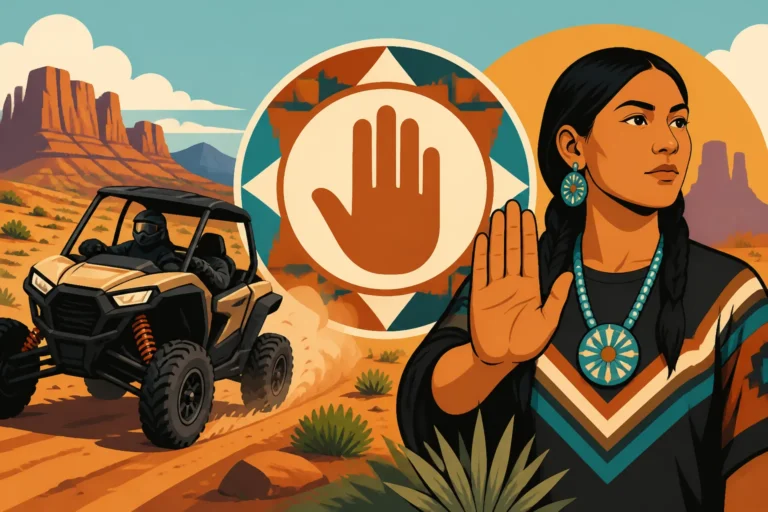
Tribal Lands are sovereign nations within New Mexico, and their laws regarding firearm possession and carry can be vastly different from state or federal law. Often, tribal laws are much stricter, and some tribes may prohibit firearms entirely on their lands without explicit, prior permission or specific tribal hunting permits. Never assume that state or federal carry laws apply on tribal land. Always secure explicit permission from the tribal government or a tribal member authorized to grant it, and meticulously follow their rules. Unauthorized firearm possession on tribal land can lead to serious legal consequences under tribal jurisdiction. For more context on riding on these lands, check out [New Mexico Rules for Riding Tribal Land].
Private Property comes with its own set of rules: the property owner's rules. If you have permission to ride your OHV on private land, you are generally subject to New Mexico's state firearm laws, but the landowner can impose additional restrictions. They might request that you do not carry a firearm, or that it remains unloaded. Always clarify the landowner's expectations regarding firearms before entering their property, as [New Mexico Rules for Riding Private Land] still means you need to respect the owner's wishes and property rights. Similarly, for those riding through ranch land, you might encounter gates, and understanding [New Mexico Rules for Opening a Gate] is crucial, as you'll want to leave things exactly as you found them, especially when carrying equipment like firearms.
| Land Jurisdiction | General State Carry Laws Apply? | Specific Permit/Permission Needed for OHV? | Specific Firearm Rules to Check? | Example Scenario |
|---|---|---|---|---|
| New Mexico State Land | Yes | No (unless for specific parks/areas) | General New Mexico carry laws. Hunting laws. | Riding a designated state OHV trail with an openly carried rifle. |
| Federal Land (BLM, FS) | Yes | No (OHV permit may be required) | Federal agency specific rules (e.g., discharge zones, hunting areas). | Riding on a BLM road to a remote campsite with a holstered pistol. |
| State Trust Land | Yes | Yes (Recreational Access Permit) | Terms of permit, hunting regulations on trust land. | Crossing State Trust Land to access hunting grounds with a shotgun in a scabbard. |
| Tribal Land | No (Tribal Law Governs) | Yes (Tribal Permission) | Varies by Tribe, often stricter, or outright prohibition. | Strictly forbidden without direct tribal permission. |
| Private Property | Yes | Yes (Owner's Permission) | Owner's specific requests/rules, New Mexico hunting laws. | Riding a friend's ranch with a firearm, as per their consent. |
Practical Considerations and Best Practices
Knowing the laws is one thing; putting them into practice safely and responsibly is another. When you combine off-highway vehicle riding with firearm carry, there are essential practical steps and best practices to ensure your safety, the safety of others, and legal compliance.
Securing Your Firearm on an OHV
Transporting a firearm on an ATV or UTV demands secure storage. These machines are designed for rugged terrain, which means bumps, vibrations, and sudden movements are part of the ride. A loose firearm can become a dangerous projectile, get damaged, or even fall out and be lost. This is where dedicated mounts and scabbards become not just convenient, but critical safety equipment.
For rifles and shotguns, a robust scabbard or gun boot that securely attaches to your machine is ideal. These not only protect the firearm from dust, moisture, and impact but also keep it pointed in a safe direction – usually down or away from riders. Many riders opt for rigid cases that mount to the cargo racks of their ATVs or the roll cages of their UTVs. Ensure the mount system you choose is designed for off-road use and can withstand the rigors of the trail. Companies like SuperATV offer a variety of purpose-built mounts and storage solutions specifically designed for the demands of off-road riding, ensuring your firearm stays put no matter how bumpy the ride gets. For handguns, a quality, secure holster that can be mounted within easy reach (if legally permitted for concealed carry with a CHL) or a secure, lockable box if it's not being carried on your person, is vital.
Always double-check that your firearm is unloaded before placing it in a scabbard or mount, especially if it's not within immediate reach. Muzzle control is paramount, even when mounted. Consider how the firearm will react if you roll the machine or hit a tree. Proper securing isn't just about protecting your expensive gear; it's about preventing a potentially catastrophic accident in the backcountry.
Loaded vs. Unloaded Rules and Ammunition
As mentioned earlier, New Mexico has specific rules about carrying loaded firearms in vehicles, and this is perhaps one of the most common areas for unintentional violations. Generally, a loaded firearm is prohibited in a vehicle on a public road or right-of-way without a valid CHL. On an OHV, this typically means your long gun (rifle or shotgun) should not have a round in the chamber, and often, its magazine should not be inserted or should be empty. For a handgun, it means no round in the chamber and, if applicable, no loaded magazine inserted.
What constitutes a "public road or right-of-way" for an OHV can sometimes be ambiguous in the vastness of New Mexico. Is a dirt two-track in the middle of nowhere considered a "public road"? Often, yes, especially if it's maintained by a county or used by the public for access. It’s always safest to assume that if you are operating your OHV on any publicly accessible trail or road, your firearm should be unloaded, unless you're actively engaged in a legal hunting activity that specifically allows it, and you have the appropriate licenses and tags. Even if you have a great mount from a brand like SuperATV, you still need to know the legalities of a loaded firearm on your machine.
Ammunition should be stored separately from the firearm, or at least in a manner that the firearm is not considered "loaded." Many riders carry ammunition in a separate pouch or a dedicated compartment on their OHV. This practice not only helps ensure legal compliance but also enhances safety by reducing the risk of accidental discharge during transport. If you encounter a game warden or law enforcement officer, being able to clearly demonstrate that your firearm is unloaded and securely stored will go a long way in ensuring a smooth interaction. Unloaded means no bullet in the chamber and no loaded magazine inserted in a semi-automatic, or no rounds in the cylinder for a revolver.
Staying Informed and Respecting the Law
The legal landscape surrounding firearms can change, and what was permissible last year might have new restrictions this year. It's incumbent upon every responsible firearm owner and OHV rider to stay informed. Before every trip, especially if you're venturing into a new area or during hunting season, take a few minutes to check current regulations.
Start with the New Mexico Department of Game and Fish for hunting and fishing regulations, as these often contain specific rules about firearm transport during those activities. Review the websites for the U.S. Forest Service or Bureau of Land Management for the specific district you plan to visit, as they might have temporary closures or fire restrictions that also impact firearm use. Additionally, be aware that some counties or municipalities in New Mexico may have their own ordinances regarding firearms, though state law generally preempts local handgun ordinances. However, local rules on discharge or specific types of firearms can still apply.
Respect for the law and the land you're recreating on is paramount. Always obtain necessary permits for riding on State Trust Land, and never enter tribal land without explicit permission and a clear understanding of their rules. Adhering to these guidelines not only keeps you safe and legal but also helps preserve access for all OHV enthusiasts. Remember, violations can lead to significant [New Mexico Fines for an OHV Violation], so it's always better to be over-prepared and over-informed. Even if you're just using your UTV for retrieving game, ensuring you're compliant with all carry and land-use regulations is essential. Consult [New Mexico Rules for Retrieving Game by UTV] for more insights on that specific activity. For hunters, a good quality gun scabbard or a secure mount, perhaps from SuperATV, is indispensable for safe and legal transport.
Disclaimer
This article is for general informational purposes only and does not constitute professional advice. Laws, prices and regulations vary by location and change over time. Consult a qualified professional for guidance on your specific situation.