Crossing a Rail Line on a Ranch Road
There's a unique knot of anxiety many off-highway vehicle (OHV) riders feel when their plotted trail on a New Mexico ranch road unexpectedly brings them face-to-face with an active rail line. It's not like crossing a paved road where traffic is somewhat predictable; these are usually remote, often unmarked crossings, and the sheer power of a train makes any error unforgivable. This guide is here to untangle that confusion and help you navigate these potentially dangerous encounters safely and legally, ensuring your adventures on New Mexico's vast and beautiful ranch lands remain thrilling, not terrifying.
Understanding the Legal Landscape Around Rail Crossings in New Mexico
Navigating private land in New Mexico with your ATV or UTV often means encountering a mix of property types, and sometimes, a rail line cuts right through it all. It’s easy to feel lost in the rules, especially when you’re out in the wide-open spaces where signs are scarce and assumptions can be dangerous. Understanding the nuances of land ownership and the specific laws governing railways is your first line of defense against both legal trouble and serious accidents.
The Complexities of Private vs. Public Land and Easements
Many ranch roads crisscross private property, state trust land, and sometimes even federal land. What makes it even more complex are the easements granted to utility companies, including railways, that often run through these very same properties. It feels like navigating a legal minefield, doesn't it? You might have permission from a rancher to ride their property, but that permission doesn't automatically extend to crossing a railway line that runs through it, even if there appears to be a well-worn path. Railway companies hold specific rights to their corridors, which are often considered private property, separate from the surrounding ranch land.
It's a frustrating situation because, from a rider's perspective, it looks like a continuous path. However, railway easements typically grant the railroad exclusive rights to use that strip of land for their operations. This means that unless a specific, public, and legally designated crossing exists, you're essentially trespassing on railway property, even if you’re otherwise on an authorized ranch road. Always remember that even if a gate is open, or a crossing looks informal, it doesn't necessarily grant you legal passage. Checking land maps and talking to the landowner about designated crossings is crucial. For broader guidance on navigating various land types, you might find our article on [New Mexico Rules for Riding a Ranch Road] helpful.
Why Rail Lines Are Different From Other Road Crossings
You might think, "I cross paved roads all the time, what's so different about train tracks?" Well, quite a lot, actually. Unlike a typical road where you might have traffic lights, stop signs, or at least a clear view, rail lines on ranch roads are often stealthy. They might appear around a blind curve, over a crest, or hidden by scrub brush, with no warning signs whatsoever. Compounding this, trains are incredibly fast, quiet until they’re right on top of you, and cannot deviate from their path. They also require miles to stop, making them unable to react to an OHV on the tracks.
Furthermore, rail lines fall under a different legal jurisdiction, often federal, with stringent rules designed to protect both the public and railway operations. Trespassing on railway property, even for a quick crossing, can lead to significant fines and even criminal charges, far more severe than many other forms of trespass. The legal penalties aside, the physical danger is paramount. An encounter with a train is almost always catastrophic for the OHV and its occupants. It's a stark reminder that these aren't just another set of bumps on the trail; they are a distinct and serious hazard that demands extreme caution and respect.
Safety First: Best Practices for Crossing Rail Lines on OHVs
When you're out exploring New Mexico's beautiful backcountry, it's easy to get caught up in the moment. But when a rail line suddenly appears, that’s your cue to switch gears and prioritize safety above all else. These aren't obstacles to be rushed; they are serious hazards that demand your full, undivided attention. Your life, and the lives of anyone riding with you, literally depend on it.
Stop, Look, and Listen: The Golden Rules
This isn't just a childhood rhyme; it's a vital safety mantra, especially for OHV riders at unmarked rail crossings. When you approach any set of tracks, regardless of how deserted the area seems, your absolute first step is to stop completely. Don't just slow down; come to a full, controlled halt at a safe distance from the tracks. This allows you time to assess the situation without rushing. Next, you need to look in both directions down the tracks, not just once, but multiple times. Lean forward, lean back, use your mirrors if you have them – some riders find upgraded mirrors from SuperATV helpful for enhancing visibility in tricky spots. Account for any blind spots caused by vegetation, terrain, or the curve of the tracks.
Finally, and perhaps most crucially in remote areas, you must listen. Turn off your engine if possible, or at least idle it down, and remove your helmet if it impedes hearing. Trains, especially modern ones, can be incredibly quiet until they're very close, and the sound might be muffled by wind or engine noise. Listen for the distinct rumble, the horn, or the squeal of brakes. If you're riding in a group, implement a "one-at-a-time" crossing rule, with the first rider signaling when it's clear for the next. It's far better to spend a few extra minutes ensuring safety than to risk a lifetime of regret. For comprehensive safety tips that apply to all kinds of riding, consider reviewing information on [New Mexico OHV Safety Permit Requirements].
Crossing Techniques for ATVs and UTVs
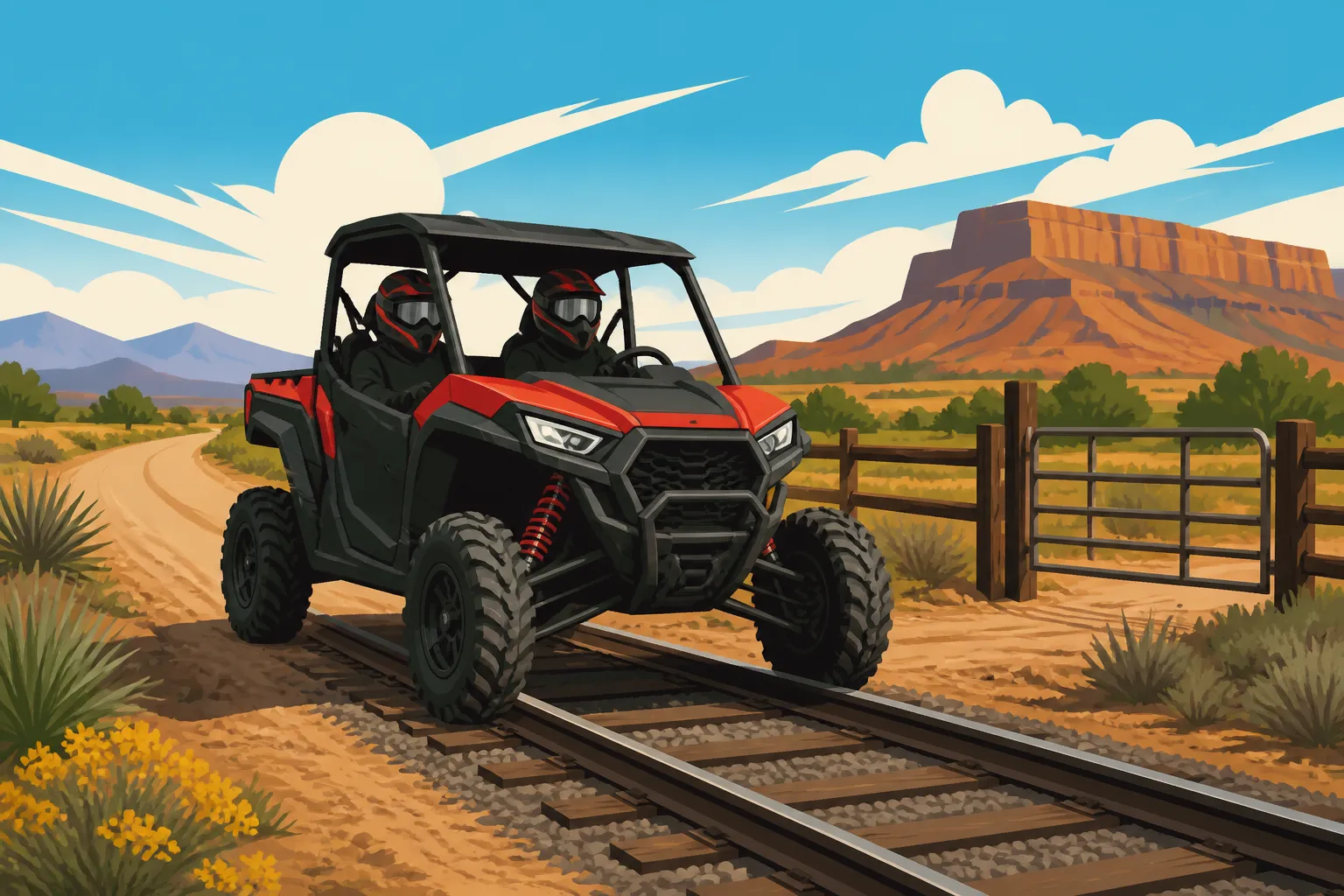
Once you've confirmed the tracks are clear, the way you actually cross them can make a big difference in safety and avoiding damage to your machine. For ATVs and UTVs, the approach angle is key. Never cross tracks at a sharp angle parallel to the rails, as this significantly increases the risk of getting a tire stuck or high-centering your machine. Instead, aim to cross the tracks as perpendicularly as possible – ideally at a 90-degree angle, or as close to it as the terrain allows. This minimizes the time your tires are in the flange grooves and reduces the chance of getting hung up.
Maintain a steady, moderate speed – not too fast to lose control, but fast enough to clear the tracks efficiently. Avoid sudden braking or acceleration once you're on the tracks. Be mindful of the rail ties and the ballast rock, which can be uneven and potentially catch your undercarriage, especially if your machine has lower ground clearance. If you frequently ride rough terrain, products like lift kits or larger, more aggressive tires from SuperATV can provide enhanced ground clearance and traction, which are certainly beneficial for navigating challenging crossings. Make sure your tires are properly inflated for the terrain, as under-inflated tires can sometimes get pinched between the rail and the ground.
What to Do If There's No Designated Crossing or a Gate
It's a common scenario on New Mexico's expansive ranch roads: you're following what seems like a perfectly good trail, only to find it bisected by a rail line with no clear, marked crossing. This can be incredibly frustrating and even intimidating. The urge might be to just push through, but doing so could put you in serious jeopardy, both legally and physically.
When a Crossing is Not Clearly Marked
On many ranch properties, "roads" are often just two-track trails carved out by years of ranch vehicles, and formal infrastructure like designated rail crossings might not exist. When you encounter a rail line in this situation, it's crucial to understand that the absence of a "No Trespassing" sign doesn't automatically mean you have permission to cross. Informal crossings, often just dirt paths worn down by infrequent use, are usually illegal and inherently dangerous. They haven't been maintained for safety, meaning the ground might be uneven, ties could be exposed or rotten, and the rails themselves might be rusty or slippery.
Attempting to cross where there's no official crossing increases your risk of getting stuck, damaging your OHV, or worse, being caught by a train. If you arrive at an unmarked crossing, the safest and often only legal option is to turn back and find an alternative route. This might mean adding significant miles to your trip, but it's a small price to pay for your safety and avoiding a hefty fine or a potential accident. Always prioritize your safety and the legality of your ride, even if it means altering your planned adventure. Exploring different routes is sometimes part of the fun, and knowing where you can and cannot go is crucial for enjoying the vastness of the New Mexico landscape.
Gates, Fences, and Property Rights
Encountering a gate or a fence near a rail line on a ranch road adds another layer of complexity. Sometimes, these fences are there specifically to keep people and livestock off the railway right-of-way. A locked gate is a clear signal: you do not have permission to proceed. Forcing or circumventing a locked gate is not only illegal trespass but can also lead to serious charges, especially if it's on railway property. Remember, when riding on private land, you are a guest, and respecting property boundaries and rules is paramount. Our article on [New Mexico Rules for Opening a Gate] offers excellent advice on proper etiquette when encountering gates in general, which is especially important near sensitive areas like rail lines.
Even if a gate is unlocked or appears to be for access, you still need to verify if it grants you legal passage across the railway. In some cases, a rancher might have an easement to cross the tracks, but that easement might not extend to recreational OHV use by visitors. Always err on the side of caution. If you're unsure, or if access seems ambiguous, it’s best to assume you don't have permission to cross. Trying to force your way or trespass could result in fines, your machine being impounded, or even more severe legal consequences. It's always a good idea to seek explicit permission from the landowner or relevant authorities before your ride, especially if your route includes areas near rail lines.
Avoiding Rail Crossings When Possible and Planning Your Route
While knowing how to safely and legally cross a rail line is important, the best strategy is often to avoid them altogether if your route planning allows. New Mexico offers an incredible diversity of landscapes for OHV riding, and with a little foresight, you can often enjoy your adventure without the added stress of confronting railroad tracks. Proactive planning not only enhances safety but also ensures a more enjoyable and uninterrupted ride.
Route Planning and Mapping for OHV Adventures
Thorough route planning is an essential part of any successful OHV adventure, particularly when you're venturing onto ranch roads or less-traveled paths. Before you even load up your machine, dedicate time to studying maps. Detailed topographic maps, satellite imagery, and specialized OHV trail maps can be invaluable. Look for any linear features that might indicate railway lines, even if they're not explicitly labeled. Pay close attention to contour lines and terrain features that might create blind spots around potential crossings. While many GPS devices and apps are fantastic for navigation, remember that they may not always accurately depict every private rail line or show whether a crossing is legal and safe for OHVs.
Sometimes, what appears on a map as a continuous ranch road might actually be interrupted by private holdings or rail lines that require specific permissions or alternative routes. If your planned route shows a rail crossing, try to find an alternative. Are there other designated trails or roads that run parallel or bypass the rail line entirely? Could you adjust your starting or ending point to avoid it? Many riders find that a bit of extra planning at home saves a lot of headaches and potential dangers out on the trail. Understanding things like [New Mexico Rules for Riding a Ditch Bank] might also give you ideas for alternative linear routes if you encounter an unexpected barrier.
The Importance of Local Knowledge and Permits
When you're riding on ranch roads, local knowledge is golden. Ranchers, long-time residents, and local OHV clubs often have invaluable insights into property lines, legal access points, and the status of various crossings. Before heading out, especially to a new area, make an effort to connect with these resources. A simple phone call to the ranch owner (if access is permitted) can clarify many ambiguities regarding rail crossings. They can tell you if a specific crossing is authorized, if there are particular times to avoid it, or if an alternative route is preferred.
Additionally, always ensure you have any necessary permits for the land you'll be traversing. Riding on New Mexico State Trust Land, for instance, often requires a Recreational Access Permit. While this permit might grant you access to the trust land, it won't necessarily cover crossing a private railway that runs through it. Always verify. Sometimes, the best way to navigate these complexities is to join an organized ride or consult with a local outfitter who knows the area intimately. This due diligence ensures that your ride is not only safe but also respectful of landowners and legal regulations.
Disclaimer
This article is for general informational purposes only and does not constitute professional advice. Laws, prices and regulations vary by location and change over time. Consult a qualified professional for guidance on your specific situation.