Forest Roads That Close From December Onward
There's nothing quite like the crisp air and stark beauty of a New Mexico winter ride, but for many ATV and UTV enthusiasts, the season brings a frustrating reality: the closure of beloved forest roads. It's a common disappointment to pack up the rig, head for the mountains, and find a gate across your favorite route, often without much warning. This guide is here to help you understand why these closures happen, how you can stay informed, and what alternatives exist so you can still enjoy the Land of Enchantment on four wheels when the snow starts to fall.
The Unavoidable Truth: Why New Mexico Forest Roads Close in Winter
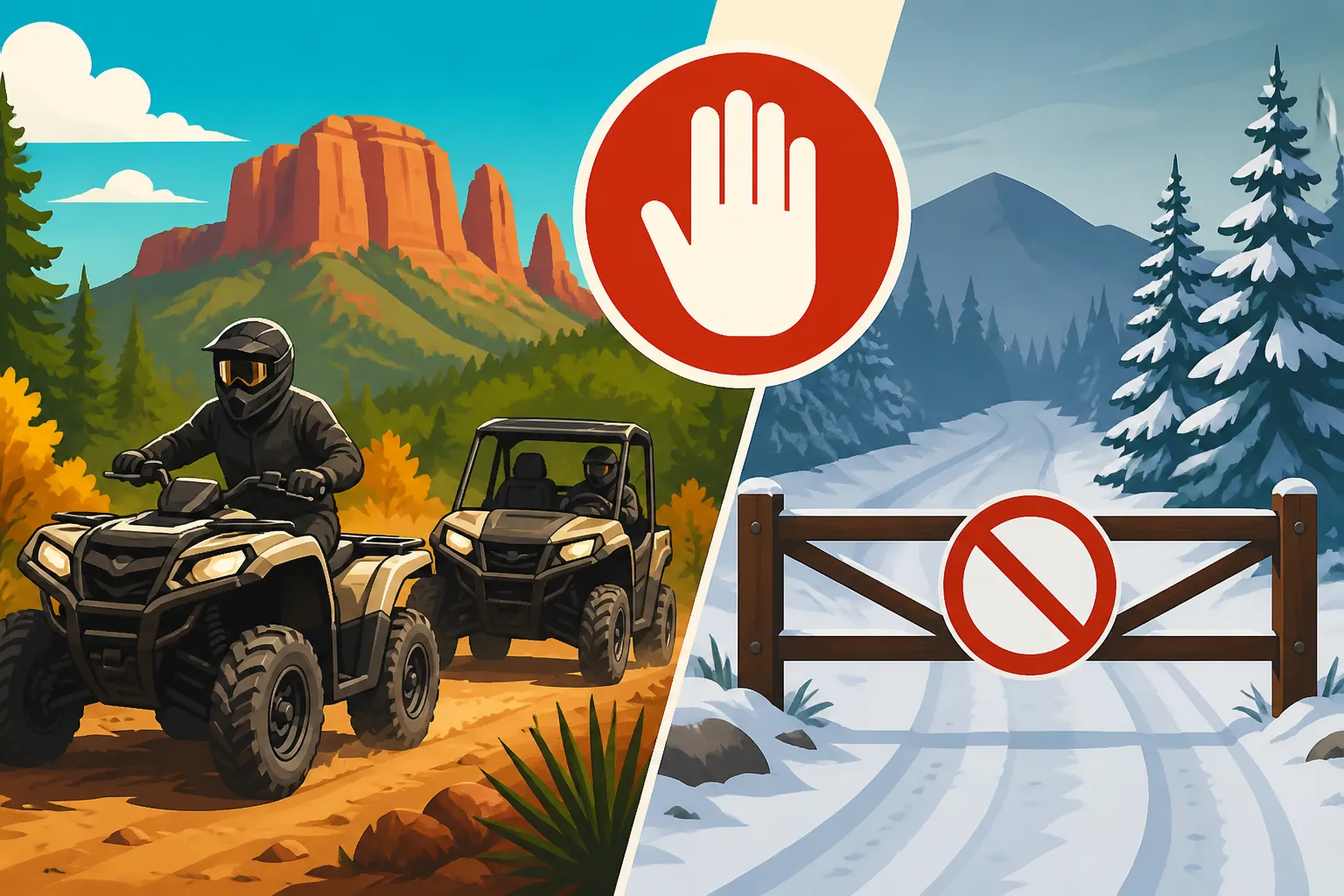
Heading out for a winter adventure on your ATV or UTV in New Mexico can be absolutely breathtaking – the quiet, the snow-dusted piñons, the chance to see wildlife in a different light. But it often comes with a significant hurdle: many of the incredible forest roads we love to explore start closing down once December rolls around. This isn't just an inconvenience; it can completely derail your plans if you're not aware of the reasons behind these seasonal shutdowns and how they might affect your ride. It’s not uncommon to hear tales of riders who’ve driven hours only to find their planned route blocked, and that's a frustrating experience we want to help you avoid.
Understanding the "December Onward" Timeline
When we talk about "December onward," it's not usually a magic, fixed date that all roads instantly shut down. Instead, it marks the beginning of a period where you should expect closures, with specific dates varying wildly based on elevation and actual snowfall. Generally, the higher you go into the mountains – think parts of the Carson National Forest near Red River or the Santa Fe National Forest – the earlier the roads will close and the longer they'll remain impassable. A heavy early season snowstorm can accelerate these closures, sometimes even in November, while a mild start to winter might push them back a bit.
The U.S. Forest Service manages these closures, and each individual ranger district within the larger national forests has its own set of rules and timelines. They're constantly monitoring weather patterns and ground conditions. For instance, a road that's perfectly navigable in the Cibola National Forest at a lower elevation might be completely under snow and closed in the higher reaches of the Carson. It's not just about the snow on the road itself, but the entire environment around it, including potential avalanche risks or simply conditions that make the road unsafe for passage, even for a capable OHV. Getting stranded miles from anywhere in freezing temperatures is a serious concern, and these closures are often a preventative measure.
Environmental Stewardship and Wildlife Protection
Beyond just the snow and ice, there are deeply rooted environmental and wildlife protection reasons why forest roads close in winter, and it's something every responsible rider needs to understand. New Mexico is home to incredible biodiversity, and winter is a critical, often fragile, time for many species. Large animals like elk, deer, and bighorn sheep migrate to lower elevations in search of food and shelter, often using the same corridors as our favorite trails. Unrestricted OHV use during this period can cause immense stress to these animals, forcing them to expend precious energy avoiding vehicles, which can be life-threatening when food is scarce.
Furthermore, the ground itself becomes more vulnerable in winter. As snow melts and refreezes, the soil underneath can become saturated and then unstable. Driving heavy ATVs and UTVs over these thawing and freezing roadbeds can cause significant damage, leading to deep ruts, accelerated erosion, and long-term harm to the road's integrity and the surrounding ecosystem. This kind of damage can take years to repair and affects everyone who uses the forest, not just OHV riders. By closing roads, the Forest Service aims to minimize human impact during this sensitive period, preserving the natural beauty and ecological health for when conditions are more robust. It's a balance between recreational access and safeguarding the environment that we all cherish.
Navigating the Closures: Finding Open Trails and Planning Alternatives
Facing down a closed forest road when you've got your ATV or UTV eager to hit the trail is a true bummer. It can feel like your adventure plans are crumbling before your eyes. But a closed gate in one area doesn't mean your entire winter riding season is over. New Mexico is vast, offering a variety of terrains and elevations, which means there are often alternative spots to explore, even when the high-country forest roads are blanketed in snow. The key is knowing how and where to find accurate, up-to-date information and being flexible with your plans.
Your Go-To Sources for Up-to-Date Information
The absolute best way to avoid disappointment and ensure you're riding legally and safely is to check official sources before you load up your machine. Your first and most reliable point of contact should always be the U.S. Forest Service ranger district office for the specific area you plan to visit. These offices often have recorded messages, dedicated web pages, or social media updates detailing current road and trail conditions, including specific closure dates. Don't rely solely on third-party apps or outdated information you found online; direct contact with the managing agency is crucial.
Many of the national forests in New Mexico, like the Carson, Santa Fe, and Cibola, have excellent websites that are regularly updated with alerts and notices about closures. A quick search for "Carson National Forest road conditions" or "Santa Fe National Forest winter closures" will usually point you in the right direction. It's also wise to be aware of [New Mexico Fire Restrictions That Close Trails], as even in winter, dry conditions can lead to unexpected closures, especially at lower elevations. Remember, arriving at the trailhead only to find a closed sign means wasted time and fuel; a quick call or web check can save you a lot of grief.
Embracing Different Riding Opportunities in Winter
So, your favorite forest roads are closed for the season. Does that mean your riding gloves get tucked away until spring? Absolutely not! New Mexico has a fantastic range of terrain, and when the high mountains are locked down by snow, the lower-elevation desert and plains often offer prime riding conditions. Areas managed by the Bureau of Land Management (BLM) are often less affected by deep snow and remain open year-round, providing a completely different but equally exhilarating experience.
Consider heading south to places like the [Red Sands OHV Area in Southern New Mexico] near Alamogordo, where you'll find sprawling sand dunes and open desert trails perfect for cooler winter temperatures. Or explore [Haystack Mountain in Eastern New Mexico] near Roswell, offering a mix of trails and open riding. These areas provide a unique challenge and beauty that contrasts sharply with forest riding, often featuring wide-open spaces and unique geological formations. The key is adapting your mindset from pine forests to mesquite and sand. You might find a new favorite winter spot! These areas can also give you a better understanding of the [New Mexico Riding Seasons by Elevation], helping you plan future trips strategically.
Preparing Your Machine and Yourself for New Mexico's Winter Trails
Even when some forest roads remain open, or if you decide to explore lower-elevation areas, winter riding in New Mexico presents its own set of challenges. The crisp air and quiet trails are a reward, but only if you're adequately prepared. Forgetting crucial gear or neglecting machine maintenance can quickly turn an enjoyable outing into a miserable, or even dangerous, situation. It’s not just about bundling up; it’s about a holistic approach to cold-weather riding that ensures both your safety and your machine’s reliability.
Essential Gear and Machine Maintenance for Cold Weather
When the temperatures drop, layering becomes your best friend. Forget bulky coats; think multiple thin layers that trap warmth and can be adjusted as your body temperature changes. A waterproof and windproof outer shell is non-negotiable, especially for cutting through the cold air on your ATV or UTV. Good quality insulated gloves are vital to prevent frostbite and maintain dexterity, and a helmet, along with goggles or a full-face shield, will protect you from the biting wind and any flying snow or debris. Many places, including those offering [New Mexico Rentals and What to Wear], will emphasize this kind of preparation.
Your machine needs attention too. Cold weather can be hard on batteries, so ensure yours is in top condition. Check all fluids, including antifreeze levels, and consider a heavier-weight oil if your owner's manual permits for extreme cold. Tire pressure can fluctuate with temperature, so monitor it closely. For serious snow, you might even look into specialized accessories like heated grips, which are a game-changer for hand comfort, or even snow chains or track systems for your UTV for unparalleled traction. Brands like SuperATV offer a range of robust accessories, from winches for self-recovery to heavy-duty plows, though for typical forest road use, simple preparedness is usually sufficient. Also, ensure your [New Mexico Lighting Requirements for OHVs] are met, as daylight hours are much shorter, and visibility can quickly diminish.
Safety First: Riding Smart on Potentially Hazardous Winter Terrain
Riding in winter conditions demands an extra layer of caution and preparedness. Never, ever ride alone when the temperatures are freezing or there's snow on the ground. A minor mechanical issue or a simple tip-over can become a life-threatening emergency if you're isolated. Always let someone know your route and expected return time. Be vigilant for hidden hazards: thin ice patches can lurk in shaded areas, and snow can obscure rocks, fallen branches, or deep ruts, turning a smooth trail into a treacherous obstacle course.
Know your limits, and more importantly, your machine's limits. Winter isn't the time to push boundaries or experiment with risky maneuvers. Pack an emergency kit that goes beyond your usual essentials: include extra layers, a robust first-aid kit, high-energy food, plenty of water (even in cold weather, hydration is crucial), and a way to start a fire. A tow strap or small shovel can be invaluable, and consider carrying a satellite messenger or personal locator beacon for emergencies in areas without cell service. [New Mexico Trail Maps Worth Carrying] and a reliable GPS device are also critical, as trails can look vastly different under a blanket of snow. Always adhere to [New Mexico Helmet Law for ATV Riders] and [New Mexico Eye Protection Requirement], and be mindful of [New Mexico Rules for Riding After Dark], which might catch you off guard with the sun setting much earlier. For added peace of mind and protection against unexpected trail hazards, a sturdy set of SuperATV skid plates for your UTV can truly make a difference, giving your machine's underside robust defense.
Riding Season Transitions: From Winter Snow to Spring Thaw
Just as quickly as the winter closures descend, the promise of spring brings with it the anticipation of reopening trails. However, this transition period isn't always a flip of a switch; it's a gradual process that demands patience and continued vigilance from riders. The excitement of warmer weather and melting snow can make us eager to hit the trails, but jumping the gun can lead to unpleasant surprises or even contribute to further trail damage. Understanding how New Mexico's forest roads transition from winter to spring is key to safely enjoying the earliest days of the riding season.
Anticipating Spring Openings and Muddy Conditions
The "when" of spring trail openings is just as variable as the winter closures, often depending heavily on the specific elevation and the amount of snowpack accumulated over the winter. Lower-elevation forest roads might open as early as late March or April, while high-mountain passes and trails could remain snowbound and closed well into May or even June. The U.S. Forest Service again plays a crucial role here, assessing snowmelt, ground saturation, and overall trail integrity before officially reopening routes. Don't assume a trail is open just because the calendar says spring; always verify the current status with the local ranger district before heading out.
When trails do begin to open, especially in early spring, prepare for significantly different conditions than you might find in summer or fall. Mud is often the prevailing condition, particularly in shaded areas or on north-facing slopes where snow lingers longer. [New Mexico Riding at High Elevation] can mean encountering packed snow, slush, and icy patches even when the valleys are green. Riding through deep mud can be incredibly fun, but it's also taxing on your machine and the environment. Be mindful of widening trails by going around mud puddles; instead, ride straight through them to keep the trail corridor intact. This period of thaw and refreeze also impacts the stability of culverts and bridges, so approach these with extra caution.
Respecting the Land During Transition Periods
The spring thaw is a particularly delicate time for the environment, and responsible riding practices are more important than ever. The same reasons for winter closures – particularly protecting wildlife and minimizing erosion – remain highly relevant during the early spring. Many animals are still emerging from winter dormancy or are engaged in crucial breeding activities, making them especially vulnerable to disturbance. Riding quietly and sticking to designated open trails helps minimize your impact on these sensitive ecosystems.
Remember that trail maintenance crews often work tirelessly during this transition to clear fallen trees, repair damage from winter storms, and ensure the routes are safe for everyone. Your patience and cooperation help them do their job more effectively. If you encounter a crew working, slow down, give them space, and offer a friendly wave. Also, be aware that some areas may have temporary closures or restrictions due to very wet conditions, even if the general seasonal closure has lifted. These are in place to prevent irreversible damage to the trails, which benefits all riders in the long run. By being informed, prepared, and respectful, we can all contribute to a sustainable riding future in New Mexico.
| Factor | Reason for Winter Closure | Impact on Riders |
|---|---|---|
| Snow Accumulation | Roads become impassable, unplowed by Forest Service. | Access blocked, risk of getting stuck. |
| Ice Formation | Dangerous driving/riding conditions, especially on inclines. | High risk of skidding, loss of control. |
| Wildlife Habitat | Protects wintering animals from disturbance and stress. | Limits access to critical migration corridors. |
| Road Preservation | Prevents damage from freeze/thaw cycles and heavy use. | Helps maintain trail integrity for spring/summer. |
| Public Safety | Reduces search and rescue incidents, exposure to elements. | Keeps riders safe from extreme weather and isolation. |
Disclaimer
This article is for general informational purposes only and does not constitute professional advice. Laws, prices and regulations vary by location and change over time. Consult a qualified professional for guidance on your specific situation.