Why an Arroyo Runs After a Desert Storm
There's nothing quite like the thrill of riding your ATV or UTV across the vast, open landscapes of New Mexico's deserts, feeling the sun on your face and the dust under your tires. But then, you turn a bend, and a seemingly dry arroyo—a natural desert wash—is suddenly flowing with water, sometimes a surprising amount, even if the sky above you is perfectly clear. This can be jarring, confusing, and frankly, a little scary. It's a common experience for riders who aren't familiar with the unique hydrology of arid regions, and understanding why these dry washes can become torrents after a desert storm, sometimes miles away, is crucial for safe and enjoyable off-highway adventures. This guide will unravel the mystery of the running arroyo and help you navigate the risks and realities of New Mexico's desert waterways.
Understanding New Mexico's Desert Climate and Flash Flood Dynamics
New Mexico's climate, particularly in its southern and eastern reaches, is defined by its aridity. However, this doesn't mean it never rains; quite the opposite. The rain that does fall often comes in dramatic, intense bursts, creating conditions ripe for flash floods, even when you're riding under sunny skies.
The Monsoon Season Phenomenon and Its Impact
Many visitors and even some newer residents are surprised by New Mexico's monsoon season, which typically runs from mid-June through September. This isn't your gentle, all-day drizzle. Instead, the monsoon brings moisture from the Gulf of California and the Gulf of Mexico, colliding with the intense desert heat to create towering thunderstorms. These storms are often isolated, sometimes dumping inches of rain in a small area while leaving adjacent valleys completely dry. The ground, baked hard by months of sun, struggles to absorb this sudden deluge, leading to massive surface runoff. This phenomenon is a primary reason for [New Mexico Riding in Summer Monsoon] being so unique and requiring extra vigilance.
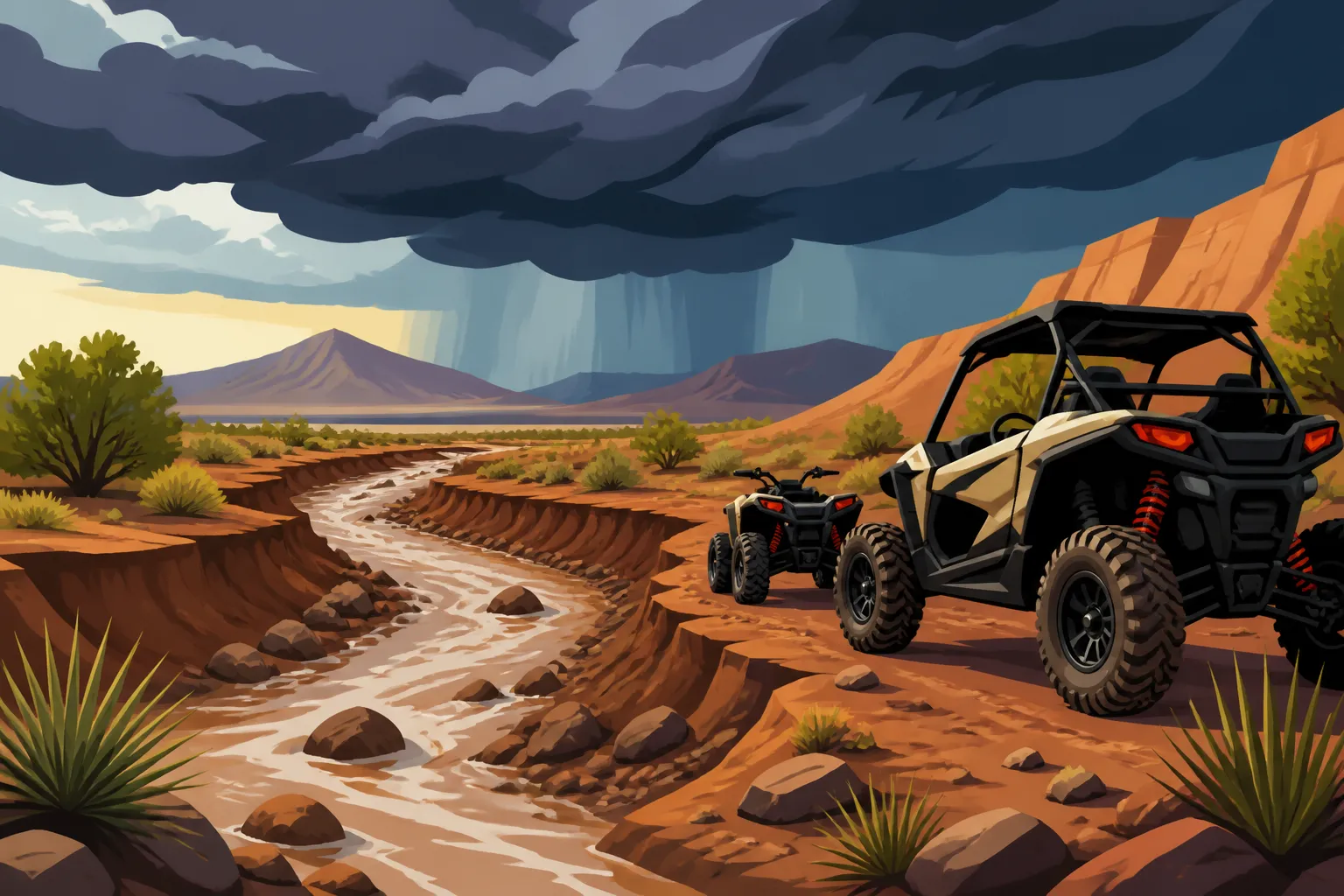
Imagine you're deep in the southern desert, enjoying a peaceful ride. Miles away, over a mountain range you can barely see, a massive thunderhead has just unleashed a torrential downpour. That water doesn't just sink into the ground. It begins its journey, finding the path of least resistance, which often means flowing into the intricate network of arroyos that crisscross the landscape. What starts as a small trickle quickly gains momentum, collecting more water as it travels, until it becomes a formidable force.
Sudden, Localized Storms and Distant Flash Floods
One of the most deceptive aspects of desert weather is the localized nature of storms. You could be riding under a brilliant blue sky, feeling completely safe, while a significant rain event is happening ten or twenty miles upstream. The water from that distant storm can travel quickly through the arroyo system, reaching your location with little to no warning. This is why paying attention to distant clouds, even seemingly innocent ones, is vital. A dark cloud building on the horizon, even if it looks far off, could be the source of the water that will soon surge through the arroyo you plan to cross. This is particularly true during [Flash Flood Season in the Southeast], where vast, flat plains allow water to accumulate and travel long distances.
The ground in these arid environments is often highly compacted and lacks significant vegetation, which would typically help slow down water and allow for absorption. When heavy rain falls on such a surface, it simply sheets off, accelerating its journey into the nearest drainage. This creates a powerful, fast-moving current capable of dislodging rocks, carrying debris, and quickly transforming a dry path into a dangerous river.
The Dangers of Unexpected Arroyos Running
When an arroyo runs, it’s not just a little creek. It can be a violent, debris-laden torrent. The water's speed and force are often underestimated. Rocks, tree branches, and even larger items can be swept downstream, creating hazardous obstacles. The force of the water can easily sweep away an ATV or UTV, turning a fun ride into a life-threatening situation. Even if the water looks shallow, the current can be incredibly strong, and the bottom can be soft and unpredictable. The phrase "turn around, don't drown" is not just a slogan; it's a critical safety directive in these scenarios. [New Mexico Fines for an OHV Violation] can also apply if you ignore warnings or signage related to hazardous conditions.
Beyond the immediate danger of being swept away, there's the risk of getting stuck in mud, which can be surprisingly deep and sticky after water recedes or slows. Recovering a stuck machine from an arroyo can be a major undertaking, requiring specialized gear and potentially leaving you stranded far from help. This is where having robust recovery gear, perhaps from a brand like SuperATV, can make a real difference, but ideally, you'd never need to use it in a dangerous flood situation.
The Anatomy of an Arroyo and Its Water Collection Process
Arroyos are more than just dry ditches; they are the desert's natural arteries, intricately designed by millennia of infrequent yet powerful water flow. Understanding their structure helps to demystify why they suddenly come alive.
Arroyos as Natural Drainage Systems
An arroyo is, at its core, a natural drainage channel that has been carved by intermittent water flow. In New Mexico, these features are ubiquitous, ranging from shallow depressions to deep, canyon-like cuts with vertical banks. They are specifically adapted to handle the desert's unique precipitation patterns – long periods of drought followed by intense, short-lived rainfall. During dry periods, they blend into the landscape, often serving as convenient (but risky) travel routes for riders. [New Mexico Rules for Riding an Arroyo] often come into play here, emphasizing caution.
When rain does fall, especially during monsoon season, these arroyos act as highly efficient conduits. Their primary purpose is to collect surface runoff from a wide drainage basin and channel it quickly through the landscape. This means that a small, seemingly insignificant arroyo can be connected to a vast network of feeder channels stretching miles upstream, all contributing to the volume of water it carries.
Impermeable Desert Soils and Surface Runoff
A key factor contributing to running arroyos is the nature of desert soils. Many desert soils, particularly those rich in clay or compacted by millennia of dryness, are highly impermeable. This means they don't absorb water readily. Imagine pouring water onto a sheet of glass; it just runs off. Desert soil acts similarly, especially when it's been baked hard by the sun. This phenomenon is often referred to as "hardpan."
When a desert storm unleashes its fury, instead of soaking into the ground, the vast majority of the water flows across the surface. This surface runoff quickly finds the lowest points in the landscape, which are typically the arroyos. The sheer volume of water generated from even a moderate rainstorm, when it can't soak into the ground, is astounding. This is why [Dry Washes and New Mexico Riders] must always be treated with respect, as they are not always dry.
Upland Runoff and Distant Rainfall
Perhaps the most counterintuitive aspect of a running arroyo is when it flows even though it hasn't rained where you are. This is due to "upland runoff" or "flash flooding from a distance." A storm that occurs many miles away, perhaps in higher elevations or simply out of your line of sight, can generate a significant amount of water that then flows down through the arroyo system to your location.
Picture a remote mountain range in New Mexico. A heavy thunderstorm drenches the slopes. The water cascades down the mountainside, gathering into smaller channels, which then merge into larger arroyos. This water can travel for hours, picking up speed and volume, before it reaches the flatter desert floor where you might be riding. This means that even on a clear, sunny day, an arroyo can suddenly become a raging river. Always be aware of the weather not just where you are, but also upstream in the drainage basin.
Riding Safely in and Around Arroyos
Given the unpredictable nature of arroyos, safety must always be your top priority when riding your ATV or UTV in New Mexico's deserts. Being prepared and knowing what to look for can make all the difference.
Pre-Ride Checks and Weather Awareness
Before you even load up your machine, a thorough pre-ride check of the weather forecast is absolutely essential. Look beyond the immediate area you plan to ride. Use weather apps or local news reports to check for rain upstream in the drainage basins that feed into your planned route's arroyos. Many weather services offer radar views that show precipitation patterns, allowing you to see if rain has fallen in distant areas that could affect your ride. It’s also wise to check local land management websites, like the BLM or Forest Service, for any flood warnings or trail closures. [New Mexico Trail Closures to Check First] should be part of your routine.
On the day of your ride, continually observe the sky. Look for dark, building clouds, especially during monsoon season. Pay attention to changes in wind direction or sudden drops in temperature, which can signal approaching weather. If you see lightning or hear thunder, it’s time to seek shelter or head back to your staging area, as these are clear indicators of active thunderstorms that could lead to running arroyos.
Recognizing Warning Signs of Running Water
Even if you check the forecast, conditions can change rapidly. While riding, keep an eye out for these critical warning signs that an arroyo might be about to run, or already is:
- Changes in Water Color: If a normally clear (or nonexistent) trickle suddenly turns muddy or reddish-brown, it means sediment is being picked up upstream by a significant flow. This is a huge red flag.
- Sounds: A low rumble or roar, even faint, can indicate a large volume of water approaching. Listen carefully, especially if you're near an arroyo.
- Debris: Small sticks, leaves, or even larger branches appearing in a previously dry wash are clear signs that water is actively flowing upstream and carrying material.
- Rising Water Levels: If a small puddle or trickle you observed earlier has visibly increased in size or depth, it’s a strong indication of more water on the way.
If you encounter any of these signs, do not attempt to cross. Retreat to higher ground immediately and wait. Flash floods can crest in minutes and then recede, but the danger is immense during the peak flow.
Safe Crossing Techniques and When to Avoid Crossings Entirely
First and foremost: if an arroyo is actively running with any significant current or depth, do not attempt to cross it. It’s simply not worth the risk to your life or your machine. Wait it out, find an alternative route, or turn back. It's far better to cut your ride short than to become a statistic.
If the water is shallow, slow-moving, and you're confident it's safe to cross (e.g., a small, clear stream, not muddy floodwater), here are some tips:
- Scout the Crossing: If possible, walk the crossing first (if it's truly shallow and safe to do so) to check the depth, current, and bottom conditions. Look for submerged rocks, holes, or soft spots.
- Assess Machine Capabilities: Know your ATV or UTV's water fording depth. Don't exceed it. Many riders choose to equip their machines with snorkels to raise air intakes, or lift kits to gain ground clearance, especially if they anticipate regular water crossings. SuperATV, for instance, offers a range of these products that can enhance your machine's capability, but they don't make you invincible against flash floods.
- Enter Slowly and Maintain Momentum: Enter the water slowly to avoid creating a splash that could get water into critical components. Once in, maintain a steady, low-speed throttle to create a bow wave in front of your machine, which helps keep water out of the engine bay. Avoid sudden stops or sharp turns.
- Cross Perpendicularly: Cross at a slight angle downstream, which allows the current to push your machine gently into the bank you're heading toward.
- Ride with Others: Never cross alone if you can avoid it. If you get stuck, a riding partner can assist with recovery. A strong winch, perhaps a heavy-duty model from SuperATV, can be invaluable for self-recovery or helping a friend.
| Sign of Danger | Action | Reason |
|---|---|---|
| Muddy/Brown Water | Do NOT cross | Indicates significant runoff upstream, strong current, and debris. |
| Roaring Sound | Stop, climb to high ground | Large volume of water approaching rapidly. |
| Floating Debris | Do NOT cross | Water is actively flowing and carrying hazards. |
| Fast Current | Do NOT cross | Can sweep you and your machine away, even in shallow water. |
| Clear, Shallow Water | Scout, then cross slowly and steadily (if safe) | Minimal risk, but still requires caution; bottom can be unpredictable. |
| Distant Thunder | Seek shelter, monitor arroyos | Indicates active storms that could cause flash floods downstream. |
Preparing for Unexpected Water Encounters
Even with the best planning, nature can throw curveballs. Being prepared for an unexpected water encounter in an arroyo means carrying the right gear and ensuring your machine is ready for the challenges.
Essential Gear for Water Hazards and Recovery
When venturing into New Mexico's arid landscapes, where dry washes can become sudden rivers, carrying essential gear isn't just a good idea—it's a necessity. Your off-road kit should always include recovery equipment. This means a sturdy tow strap, shackles, and a powerful winch, if your machine doesn't have one integrated. Remember, even a small amount of water can turn an arroyo bed into a muddy trap, making self-recovery difficult without proper tools. A shovel can also be incredibly useful for digging out tires stuck in soft mud. For communication, especially in remote areas with no cell service, a satellite messenger or a two-way radio like a GMRS or HAM radio can be a lifesaver, allowing you to call for help if you become stranded. [Satellite Messengers in the Bootheel] can save lives.
Beyond recovery gear, think about personal safety. Always carry extra water, even more than you think you'll need, especially during warmer months. [Carrying Water in the Southern Desert] is non-negotiable. A basic first-aid kit, a whistle, a headlamp, and a multi-tool are also vital. If you plan to ride near water features or anticipate minor crossings, a spare set of dry clothes in a waterproof bag can make a big difference in comfort and preventing hypothermia if you get wet in cooler weather.
Machine Preparedness for Water Crossings
While no machine is truly "waterproof" against a flash flood, you can certainly prepare your ATV or UTV to better handle incidental water crossings or unexpected puddles. The primary goal is to keep water out of vital components.
- Air Intakes and CVTs: Many riders install snorkel kits, which extend the air intake and CVT (Continuously Variable Transmission) vents to a higher point on the machine, often near the handlebars or roll cage. This dramatically reduces the risk of hydro-locking your engine or getting water in your belt drive. Brands like SuperATV are well-known for offering these kinds of specialized kits, along with other accessories designed for rugged off-road conditions, including those involving water.
- Electrical Systems: While modern OHVs have increasingly sealed electrical systems, it's still a good practice to ensure all connections are secure and corrosion-free. A dielectric grease can offer an extra layer of protection on exposed connections.
- Differential and Transmission Breathers: Just like air intakes, these components have breather hoses that allow air to enter and exit as temperatures change. Extend these hoses to a higher point on your machine to prevent water from entering the differential or transmission, which can lead to costly damage.
- Tires: For riding in areas prone to mud or soft arroyo beds, aggressive mud tires with good self-cleaning properties can significantly improve traction and help prevent getting stuck.
Post-Water Ride Maintenance
After any ride that involves water crossings, even small ones, it's crucial to perform some post-ride maintenance to prevent long-term damage.
- Clean Thoroughly: Wash off all mud and debris, paying special attention to suspension components, brakes, and radiator. Mud can hold moisture, leading to corrosion, and can pack into moving parts, causing premature wear.
- Inspect Brakes: Water and mud can reduce braking efficiency. Test your brakes and inspect pads and rotors for excessive wear or contamination.
- Check Fluids: Check engine oil, differential fluid, and transmission fluid for any signs of water contamination (e.g., milky appearance). If contaminated, change them immediately.
- Lubricate: Re-lubricate all grease points, especially if you've been through water. Water can wash away grease, leading to increased friction and wear.
- Inspect Air Filter: Check your air filter for any signs of water intrusion. A wet air filter needs to be dried or replaced to prevent engine damage.
- Dry Out: If your machine's seat or storage compartments got wet, open them up and allow everything to air dry thoroughly to prevent mold and mildew.
Taking these steps helps ensure your ATV or UTV remains in top condition, ready for your next adventure across New Mexico's diverse and sometimes unpredictable terrain. Always remember that safety and preparation are your best companions on the trail.
Disclaimer
This article is for general informational purposes only and does not constitute professional advice. Laws, prices and regulations vary by location and change over time. Consult a qualified professional for guidance on your specific situation.