Riding Under a Transmission Line
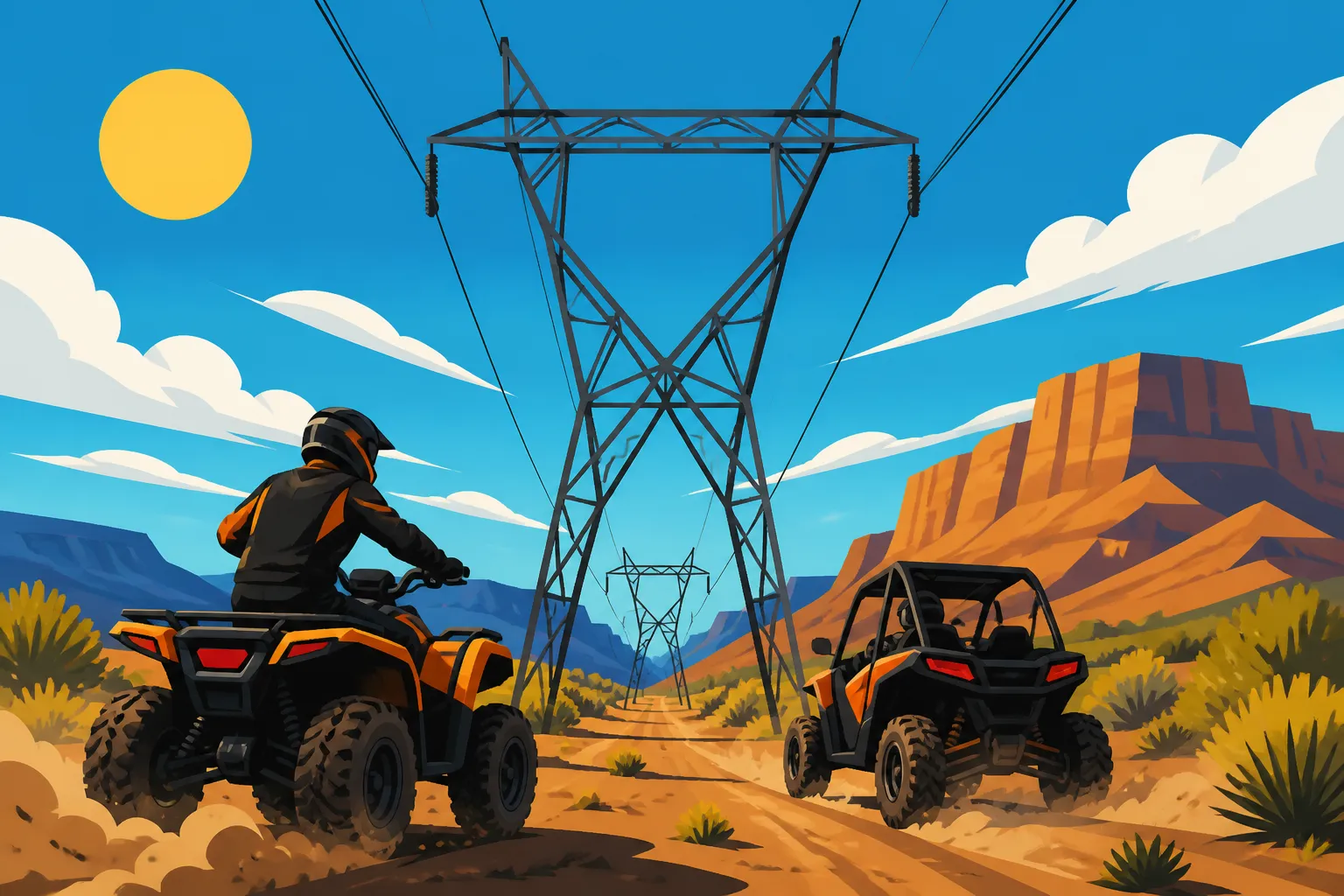
There’s nothing quite like exploring the vast, open spaces of New Mexico on your ATV or UTV, feeling that incredible freedom as you navigate canyons and mesas. But sometimes, those wide-open spaces are crisscrossed by towering power lines and their associated corridors. It can be tempting to see these clearings as ready-made trails, a straight shot through the landscape. However, riding under transmission lines in New Mexico comes with its own set of unique rules, safety considerations, and often, legal complexities that can quickly turn a fun ride into a frustrating, or even dangerous, situation if you're not prepared. This guide is here to help you understand the nuances of accessing and riding these areas responsibly and legally.
Understanding Access on Public and Private Lands
New Mexico offers an incredible diversity of riding opportunities, from the high mountain forests to the vast desert plains. However, not all land is open for recreational use, and the presence of utility infrastructure like transmission lines often complicates things. It’s crucial to understand who owns the land and what rules apply before you ever turn the key.
Designated Routes and the "Stay on Trail" Rule
Many of the places where you’ll find transmission lines in New Mexico—especially on federal lands managed by the Bureau of Land Management (BLM) or the National Forest Service—operate under strict travel management plans. This means that OHV use is typically restricted to designated routes only. You can’t just go wherever you see a cleared path or an easy shortcut. These designated routes are usually clearly marked on maps and with signs on the ground. The whole idea is to protect the environment, prevent erosion, and minimize disturbance to wildlife.
When transmission lines cut across these public lands, their maintenance roads or cleared corridors might look like designated trails. But unless they are explicitly marked as open for OHV travel on an official map, they are generally not. Utility companies have easements that give them the right to access and maintain their equipment, but these easements typically do not grant public recreational access. Ignoring this can lead to fines, environmental damage, and even conflicts with utility workers. Always check official land management maps, available online or at local field offices, before you head out. These maps are your best friend for knowing [New Mexico Rules for Riding Federal Land] and [New Mexico Rules for Riding BLM Land].
Private Land and Easements: The Murky Waters
Many transmission lines, especially as they stretch between towns or cross vast agricultural and ranching areas, traverse private property. This is where things can get really tricky. A utility company has an "easement" on that private land, which means they have a legal right to use a specific portion of the property for their infrastructure (like poles, wires, and access roads) and for maintenance. This easement does not, however, grant the general public permission to ride their ATVs or UTVs on that same land.
Think of it this way: the utility company essentially has a narrow strip of land they can use, but the underlying property still belongs to the private landowner. Riding under a transmission line on private property without explicit permission from the landowner is trespassing, plain and simple. Even if there are no fences or "No Trespassing" signs visible, it’s still private land. This is a common frustration for riders who see what looks like an open path, only to discover they're breaking the law. Always assume land is private unless you have clear information otherwise, and always get permission directly from the landowner. If you’re unsure, it’s best to err on the side of caution and find another route. Reviewing [New Mexico Trespass Rules for Riders] can give you a better understanding of the legal implications.
Specific Considerations for Riding Under Transmission Lines
Beyond the legalities of land access, there are some very real, practical considerations and potential hazards when you choose to ride in areas with active power lines. These aren't just theoretical dangers; they're situations that could put you, your passengers, and your machine at serious risk.
Safety Hazards: Wires, Poles, and Equipment
Let’s be honest, those massive steel towers and thick power lines aren't just scenery. They represent significant safety hazards. The most obvious danger is downed power lines, which can be lethal if contacted. Even lines that appear intact can carry immense voltage. Always be aware of your surroundings and look up frequently. Beyond the lines themselves, the infrastructure includes poles, guy wires, transformers, and other electrical equipment, some of which may be low to the ground or partially obscured by brush. Striking a guy wire or an unmarked foundation could cause serious injury or damage to your machine.
Furthermore, utility corridors are active work sites. Crews regularly patrol, repair, and upgrade these lines. You might encounter heavy machinery like bucket trucks, bulldozers, or specialized off-road vehicles. These vehicles often have limited visibility and operators might not expect recreational riders in their work zone. Imagine a large SuperATV UTV equipped for utility work, loaded with tools and material, turning a blind corner. You need to be extra vigilant and prepared to yield to any utility personnel and equipment you encounter. Your best bet is to avoid these areas entirely if you see active work happening.
Environmental and Regulatory Restrictions
Utility corridors, while seemingly barren, can actually cross incredibly sensitive ecosystems. The clearing and maintenance activities often create disturbed ground that is prone to erosion, especially in New Mexico's dry and often delicate terrain. Riding off designated paths in these areas can exacerbate erosion, damage fragile plant life, and disturb wildlife habitats. Land management agencies and utility companies may have specific rules in place to protect these areas, even within the utility easement.
For example, certain stretches of a transmission line might be closed seasonally to protect nesting birds or migrating wildlife. There could be restrictions on noise or dust to maintain air quality or minimize impact on nearby communities. Some utility companies actively work to restore native vegetation or prevent invasive species within their corridors, and recreational traffic can hinder these efforts. Always be on the lookout for signs indicating closures, restrictions, or environmental sensitivity. Ignoring these can lead to fines and harm to the very landscapes we love to explore. Checking for [New Mexico Trail Closures to Check First] is a good habit.
| Aspect of Access | Public Land with Designated Routes | Private Land with Easement | Utility Corridor (Undesignated) |
|---|---|---|---|
| Legal Status | Generally Permitted on Designated Routes | Prohibited Without Landowner Permission | Generally Prohibited for Recreation |
| Required Action | Check Official OHV Maps, Stay on Trail | Obtain Written Permission from Landowner | Assume Closed, Avoid |
| Key Risk | Environmental Damage, Fines | Trespassing Charges, Conflict | Safety Hazards, Trespassing, Fines |
| Responsibility | Follow All Rules, Protect Environment | Respect Private Property Rights | Prioritize Safety, Verify Access |
Legalities and Permits for New Mexico OHV Riding
Regardless of where you ride in New Mexico, there are fundamental legal requirements that every ATV and UTV operator must meet. These aren't just suggestions; they're laws designed to ensure safety and responsible use of our trails and open spaces. Failing to comply can result in hefty fines and a ruined day out.
New Mexico OHV Registration and Permits
Before you even think about hitting any trail, whether it’s a designated route or a questionable utility corridor, your off-highway vehicle must be properly registered in New Mexico. This is a non-negotiable step for almost all public land use. When you get your [New Mexico's First OHV Registration], you'll receive a decal that clearly shows your machine is good to go. Most riders will be looking for either a [New Mexico's Yellow Off-Highway Decal] for pure off-road use, or a [New Mexico's Green On and Off-Highway Decal] if they plan to ride legally on certain paved roads.
For our friends visiting from out of state, New Mexico has specific requirements for you too. If your home state doesn't have a reciprocal OHV registration program, or if it doesn't require registration at all, you'll need to purchase a [New Mexico's Nonresident OHV Permit]. This permit ensures that all riders contributing to the maintenance and management of our trail systems. It's important to remember that having your registration or permit doesn't automatically grant you access to all land. It simply means you've met the state's basic requirement for operating an OHV where legal access exists. It doesn't magically open up private lands or utility corridors that are otherwise off-limits.
Crossing and Accessing Public Roads and Rights-of-Way
Sometimes, a transmission line corridor might run alongside or cross a public road. This can lead to confusion about access. While you might be able to legally cross a paved public road, or even ride a short distance on certain county roads to get to a legal trail, that doesn't mean the area under the transmission lines is fair game. New Mexico has very specific rules about [New Mexico Rules for Crossing a Highway] and [New Mexico Rules for Riding a County Road]. These rules are primarily designed to get you to legal riding areas, not to open up every piece of land adjacent to a road.
For instance, you might be able to ride your SuperATV UTV on a county road to connect two sections of a trail system, and that county road might happen to pass under a transmission line. In that scenario, you're riding on the road, not venturing off into the utility corridor itself. The distinction is critical. If you leave the established road and enter the transmission line corridor that is not explicitly a designated trail, you could still be trespassing or violating land use regulations. Always know where the public road right-of-way ends and where private or restricted land begins. Make sure your machine meets [New Mexico Equipment Rules for Road Use] if you plan to touch any pavement.
Best Practices for Responsible Riding
Being a responsible OHV rider in New Mexico means more than just having the right registration; it means actively planning your rides, respecting the land, and knowing when to seek clarification. This is especially true when you're dealing with areas that have features like transmission lines, which can add layers of complexity.
Pre-Ride Research and Planning
Before every ride, especially if you're exploring new territory or areas near infrastructure like transmission lines, thorough research is your absolute best friend. Don't just rely on what looks like a trail from the highway. Invest in good maps—both physical and digital. Apps like Avenza Maps or dedicated GPS units with topographical and land ownership overlays can be invaluable. These tools can clearly show property lines, designated OHV routes, and identify federal, state, and private lands. Pay particular attention to areas marked as private, or those with no clear OHV designation.
If you have any doubt about whether an area under a transmission line is legal to ride, take the time to contact the appropriate land management agency (BLM, Forest Service) or even the utility company directly. A quick phone call or email before your trip can save you a lot of trouble, fines, or even a dangerous encounter. They can provide definitive answers on access rights and any specific restrictions in place for those corridors. Thinking ahead and preparing will not only keep you legal and safe but will also enhance your enjoyment of New Mexico's stunning landscapes.
Respecting Property and Signs
This point cannot be stressed enough: respect for property, whether private or public, is paramount. If you encounter "No Trespassing" signs, turn around. It's that simple. These signs are there for a reason, and ignoring them can lead to legal consequences, including fines and having your vehicle impounded. Never cut fences, go around gates, or try to find "secret" entry points onto private land or restricted utility corridors. Such actions not only violate the law but also damage relationships between land users and landowners, potentially leading to more closures for everyone.
Remember that utility companies frequently use their corridors for access with their own SuperATV UTVs and other equipment to perform maintenance and inspections. Interfering with their operations, even inadvertently, can create hazards for them and for you. If you see their crews working, give them a wide berth. If you accidentally find yourself in an area where you shouldn't be, the best course of action is to politely and safely turn around and exit the way you came, avoiding any further intrusion. Being a good steward of the land and a respectful rider ensures that we all get to continue enjoying the incredible OHV opportunities New Mexico has to offer.
Disclaimer
This article is for general informational purposes only and does not constitute professional advice. Laws, prices and regulations vary by location and change over time. Consult a qualified professional for guidance on your specific situation.