Tribal Land and Why You Need Permission
Picture this: you're out exploring the vast, beautiful landscapes of New Mexico on your ATV or UTV, buzzing with excitement, when suddenly you see a sign that makes your stomach drop. "Private Property – No Trespassing." Or worse, you're stopped by someone who isn't a state park ranger or a BLM officer. Navigating land ownership in New Mexico, especially when it comes to tribal lands, can be incredibly confusing and lead to serious trouble if you're not careful. This guide is here to help you understand why tribal lands are different, how to respectfully gain access if it's even possible, and what the real consequences are if you ride where you shouldn't.
Understanding Tribal Sovereignty and Land Ownership
First off, let's get real about what "tribal land" actually means. It's not just another piece of private property, and it's certainly not public land. The 23 sovereign Native American nations (Tribes, Pueblos, and Nations) in New Mexico hold these lands in trust or outright ownership, and they operate under their own distinct laws and governance. This means they're not subject to state or federal OHV regulations in the same way that, say, a Bureau of Land Management (BLM) trail system or a state park would be. Each Pueblo or Tribal nation has its own set of rules, traditions, and priorities for how their land is used.
Think of it like visiting a completely different country within our borders. You wouldn't just wander across the border into Mexico and expect to drive your UTV wherever you please without checking the local laws, right? The same goes for tribal lands. These aren't just tracts of dirt; they are ancestral homes, sacred sites, and vital resources for the communities who live there. Respecting their sovereignty means understanding that they have the right to control access and dictate terms, and they don't owe anyone a reason for denying entry. Many riders simply don't realize the profound difference this makes until they find themselves in a sticky situation.
This distinction is crucial because it means that your New Mexico OHV registration or even a [New Mexico OHV Permits Explained] might not grant you any rights to ride on these specific lands. While a state registration and permit are essential for designated state and federal trails, they are irrelevant when it comes to tribal jurisdiction. Ignoring this fundamental difference is where many riders get into trouble, often unintentionally, believing that if they can ride on federal land, tribal land must be similar. That's a huge misconception, and one that can have much more severe repercussions than a simple state fine.
How to Seek Permission for Riding on Tribal Lands
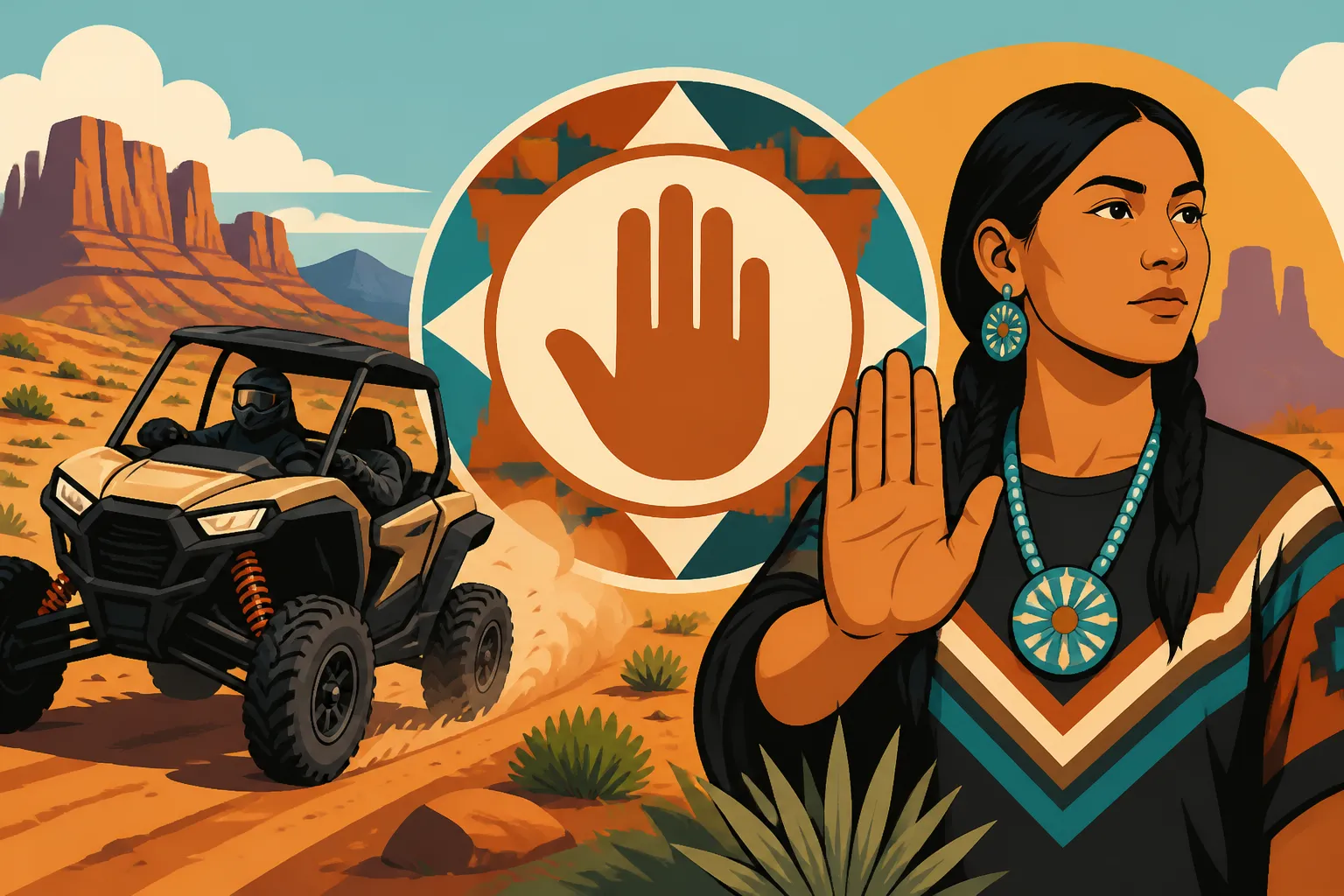
So, you've got an area in mind that you suspect might be tribal land, or you know for sure it is, and you're hoping to ride there. What's the protocol? First and foremost, you must assume that all tribal lands are closed to recreational OHV use unless you have explicit, written permission. There is no implied consent, and "no trespassing" signs are often subtle or nonexistent in remote areas. Your best bet is always to err on the side of caution and assume closure.
The process for seeking permission is not a simple one, and honestly, for recreational riding, it's often an uphill battle, if not impossible. Each Pueblo, Tribe, or Nation will have its own government and administrative structure. You'll need to identify the specific tribal entity that owns or manages the land you're interested in. A quick search online for the particular Pueblo or Tribal Nation (e.g., Ohkay Owingeh Pueblo, Navajo Nation, Mescalero Apache Tribe) will usually lead you to their official website, which might have contact information for their land management, natural resources, or governor's office. Expect to make phone calls, send emails, and be very patient.
When you do make contact, be clear, concise, and respectful in your request. Explain exactly where you want to ride, what kind of machine you have, and the purpose of your visit. Be prepared for a "no." Many tribal nations prioritize the preservation of their natural resources, cultural sites, and traditional practices, and recreational OHV use often conflicts with these goals. For instance, the Navajo Nation is vast, but much of it is used for grazing livestock or has sensitive cultural areas. Permission for riding recreationally is rare, and often restricted to members or for specific sanctioned events. It's a far cry from the [New Mexico Rules for Riding a Ranch Road] where you might sometimes get a verbal okay from a private landowner.
Even if by some slim chance you are granted permission, it will likely come with very specific stipulations. This could include designated routes, specific dates and times, requirements for a guide, or limitations on group size. You might need a special permit unique to that tribal nation, distinct from any state-issued [New Mexico OHV Permits Explained] or registration. Make sure you get everything in writing, carry it with you, and adhere to every single condition. Anything from loud exhausts – even a performance one from SuperATV – to riding off a marked path could be seen as a violation of your agreement and could lead to serious repercussions. Understand that this is a privilege, not a right, and it reflects directly on the entire OHV community.
Consequences of Riding Without Permission
This is where things can get very serious, very quickly. Riding on tribal lands without explicit, documented permission is considered trespassing, and the penalties can be far more severe than state-level fines for minor infractions. Because tribal nations are sovereign, they have their own law enforcement and judicial systems, and they can prosecute offenders under their own tribal codes. This isn't just a slap on the wrist or a simple ticket you pay by mail.
One of the immediate consequences could be the impoundment of your ATV or UTV. Tribal law enforcement has the authority to seize your machine, and getting it back can be a lengthy, expensive, and complicated process involving tribal courts and administrative fees. Imagine your prized UTV, perhaps outfitted with rugged SuperATV axles or lift kit for those challenging trails, being held indefinitely in an impound lot because you didn't do your homework. This isn't just inconvenient; it can represent a significant financial loss on top of any fines.
Beyond impoundment, you could face substantial fines. While a New Mexico state [New Mexico Fines for an Unregistered OHV] might be a few hundred dollars, tribal fines can be significantly higher, often in the thousands of dollars. You could also be required to pay restitution for any damage caused to the land or resources, such as damage to sacred sites, disturbance of wildlife, or disruption of traditional activities. In some cases, depending on the severity of the trespass and any damage, you could even face tribal jail time. This is a stark difference from simply showing your [New Mexico OHV Registration Paperwork] at a roadside stop.
Furthermore, a tribal trespass conviction could follow you. It might appear on background checks, impact future interactions with law enforcement, or even complicate future attempts to gain permission for legitimate activities on tribal lands. It's not just about the immediate penalty; it's about the long-term ramifications and the damage to the relationship between the riding community and tribal nations. Just as with [New Mexico Trespass Rules for Riders] on private land, ignorance is no excuse, and the consequences underscore the importance of respecting boundaries.
Respecting Cultural Sites and Protecting the Environment
When you're out riding, especially in a state as rich in history and culture as New Mexico, it's easy to forget that almost every landscape holds significance. On tribal lands, this is amplified a thousandfold. These areas often contain unrecorded archaeological sites, sacred gathering places, and delicate ecosystems that have sustained communities for generations. Even if you're riding on public lands adjacent to tribal areas, understanding the sensitive nature of the broader landscape is crucial.
Environmental protection is another huge consideration. Many tribal nations actively work to preserve their natural resources for future generations. This includes maintaining pristine water sources, protecting wildlife habitats, and preventing soil erosion. Reckless OHV use, such as riding off-trail, through waterways, or in sensitive vegetation, can cause irreparable damage. Imagine a high-performance tire from your SuperATV setup tearing through ancient medicinal plants or disturbing a traditional hunting ground. This isn't just about breaking a rule; it's about disrespecting a way of life and jeopardizing vital resources.
Responsible riding on any land, but especially near or on tribal lands (with permission, of course!), means adhering to strict Leave No Trace principles. Pack out everything you pack in, stay on designated routes, and avoid disturbing wildlife or cultural artifacts. If you come across anything that looks like an artifact or a historical site, leave it undisturbed and report it to the appropriate authorities if you have permission to be there. This level of respect helps foster positive relationships and demonstrates that the OHV community can be a responsible and respectful partner in land stewardship, rather than a threat.
Ultimately, the decision to allow or deny access to tribal lands rests solely with the sovereign tribal government. As OHV enthusiasts, our role is to respect those decisions, whether we agree with them or not, and to operate with the highest level of integrity. By doing so, we not only avoid legal trouble but also contribute to a culture of mutual respect that benefits everyone who cherishes the incredible landscapes of New Mexico.
Here's a quick look at the fundamental differences in land types:
| Land Type | Who Owns/Manages It | Permission Needed for OHV Riding | Typical OHV Access | Primary Regulatory Authority |
|---|---|---|---|---|
| Tribal Land | Sovereign Tribal Nations | Explicit, written permission from Tribal Gov. | Generally closed for recreation | Tribal Law & Governance |
| BLM/National Forest | Federal Government | No permit for general access, but registration required | Designated trails/areas only | Federal Agencies (BLM, USFS) |
| State Park/Recreation Area | New Mexico State Parks Division | Specific park rules apply; may require state permits/fees | Restricted to designated areas | New Mexico State Parks |
| Private Land | Individual or Corporate Owners | Explicit permission from landowner | Varies widely by owner | State/Local laws & owner's rules |
This table clearly highlights why [New Mexico Rules for Riding Tribal Roads] are so distinct and require a different approach than other public or private lands.
Disclaimer
This article is for general informational purposes only and does not constitute professional advice. Laws, prices and regulations vary by location and change over time. Consult a qualified professional for guidance on your specific situation.