New Mexico Rules for Riding to a Trailhead
You've packed up your rig, loaded your ATV or UTV, and you're itching to hit those stunning New Mexico trails. But as you pull out of your campsite or hotel, a knot forms in your stomach: how exactly do you get your off-highway vehicle (OHV) to the trailhead legally? The rules can feel like a maze, especially when asphalt roads separate you from the dirt. This guide is here to clear up that confusion, walking you through the ins and outs of legally navigating New Mexico's roads to reach your adventurous destination.
The Journey to the Trailhead: Understanding New Mexico's OHV Road Rules
Navigating New Mexico's diverse landscape with your ATV or UTV is a huge draw for many riders, but the patchwork of regulations for road use can be downright frustrating. It's not as simple as just firing up your machine and heading down the road. The state has specific rules, often implemented at the county or even city level, that dictate where and how you can operate your OHV on public roads to access those coveted trailheads. The core challenge many riders face is understanding which roads are open, what equipment is required, and what documentation you need to carry. This isn't just about avoiding a ticket; it's about ensuring your safety and the safety of others on shared roadways.
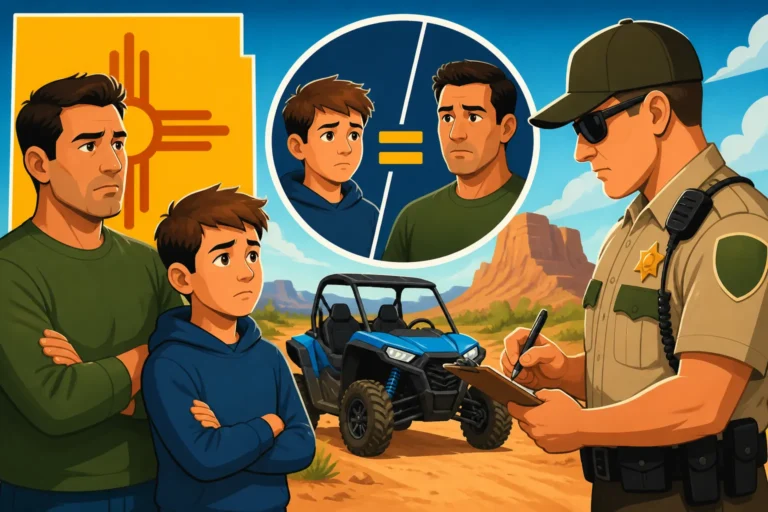
Think about it: you've planned this epic ride, perhaps through the Carson National Forest near Red River or the vast BLM lands outside Farmington, and the last thing you want is to be turned back by a sheriff's deputy just a mile from the staging area because you missed a crucial detail. Whether it's a quick hop across a paved county road or a longer journey on a graded dirt route, knowing the legalities upfront saves a lot of headaches and keeps your adventure on track. New Mexico has created a framework to allow for some road use, but it comes with stipulations that every rider needs to be aware of.
The "Opt-In" System for Paved Roads
New Mexico operates under what's often called an "opt-in" system when it comes to riding OHVs on paved roads. This means that generally, state highways are off-limits, but individual counties and municipalities have the authority to "opt-in" and open their own paved roads or streets to OHV traffic. This isn't a blanket rule across the state; it varies significantly from one locale to another. One county might enthusiastically embrace OHV road use, while a neighboring one might restrict it heavily, or not at all. This regional variation is often the biggest source of confusion for riders.
For example, you might be riding in Sierra County, which has broadly opened many of its county roads, both paved and unpaved, to OHV use. This means a relatively stress-free journey to a trailhead. However, if you venture into a town within that same county, that town might have its own ordinance overriding the county's decision, limiting or banning OHVs on its streets. It's crucial to check local ordinances for any city or town you plan to travel through, even if the surrounding county has opened its roads. This research prevents unpleasant surprises, like finding yourself on a main street that's suddenly off-limits. You often need to be looking for specific resolutions or ordinances passed by county commissions or city councils.
Registration and Decal Requirements for Road Use
Regardless of whether you're on a dirt road or an "opted-in" paved street, your ATV or UTV must be registered with the New Mexico Motor Vehicle Division (MVD). This isn't optional for road use, even if it's just a short distance to a trailhead. There are two primary decals you'll encounter in New Mexico: the yellow off-highway decal and the green on-and-off-highway decal. [New Mexico's Yellow and Green Decals] Each serves a distinct purpose, and understanding them is key to legal road access.
The yellow decal signifies that your machine is registered for off-highway use only. While it makes your machine legal for designated trails and public lands, it generally does not authorize travel on paved public roads. For any significant travel on asphalt, you'll need the green decal. This green decal explicitly permits both off-highway and on-highway use on approved roads. If you anticipate even a short stretch of pavement to connect to a trail, the green decal is what you need. Beyond the decal, for true paved road travel, you might also be looking at the specific requirements for a New Mexico Paved Road Plate, depending on the circumstances and how long you intend to use the paved surface. [New Mexico's Paved Road Plate] For short hops to a trailhead on an open county road, the green decal is usually sufficient, but always confirm local requirements. The placement of these decals is also critical; there are specific rules for where they must be affixed to different machine types like ATVs, UTVs, and dirt bikes. [New Mexico OHV Decal Placement Rules]
Equipping Your OHV for the Pavement: What You Need to Get to the Trailhead
Just having the right decal isn't enough when you're taking your ATV or UTV onto a paved road, even if it's just to get to a trailhead. New Mexico law, particularly for on-highway use, demands specific safety and operational equipment. This isn't about making your machine street-legal in the same way a car is, but rather ensuring it meets a minimum standard for visibility and control when sharing the road with other vehicles. Many riders, especially those new to New Mexico or coming from states with different regulations, often overlook these crucial requirements until they encounter a roadside check.
The purpose of these equipment rules is safety. When you're transitioning from a dirt trail to a paved road, you're entering a different kind of traffic environment, one with higher speeds, different braking demands, and other vehicles that might not expect to see an OHV. Having the proper gear isn't just a legal formality; it's a vital part of protecting yourself and others on the road. Aftermarket accessory companies like SuperATV offer a wide range of products that can help ensure your machine meets these safety requirements, from lighting kits to mirror setups that are designed for the ruggedness of an OHV but still comply with road-use standards.
Essential Equipment for Road Travel
When your OHV rolls onto a paved road in New Mexico, even for a short trip to a trailhead, it needs to be properly equipped. The most common requirements include:
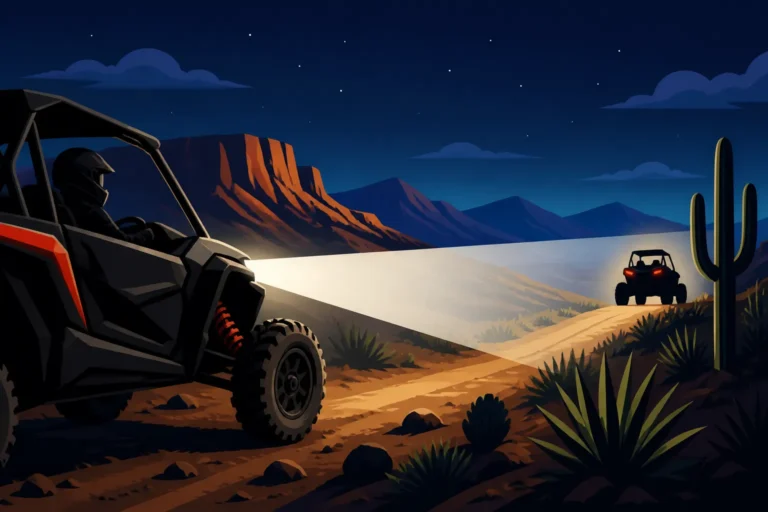
- Headlights and Taillights: Your machine must have at least one headlight that can illuminate objects 150 feet ahead and at least one taillight visible from 200 feet to the rear. This is crucial for visibility, especially if you find yourself on the road at dawn, dusk, or in less-than-ideal weather conditions. [New Mexico Headlight and Taillight Rules]
- Brakes: Functioning brakes on all wheels are a given, but they must be in good working order and capable of stopping your vehicle safely.
- Mirrors: You'll need at least one rearview mirror, mounted to provide a clear view of the road behind you. Many OHVs come with one, but if yours doesn't, or if it's damaged, you'll need to install one. This is a common requirement that riders overlook, but it's essential for safe merging and lane changes, even on quieter county roads.
- Horn: A working horn is necessary for signaling other vehicles or pedestrians. It's a small detail but an important safety feature.
- Muffler and Spark Arrester: All OHVs operating on public land or roads must have an adequate muffler to limit noise and a spark arrester in good working condition. The noise limit is generally 96 decibels. [New Mexico's 96 Decibel Ceiling]
- Turn Signals: While not always explicitly stated for every single type of OHV in every single road-use scenario, turn signals are generally a wise addition for paved road travel, enhancing your visibility and communication with other drivers. Many SuperATV kits include integrated lighting solutions that meet or exceed these requirements.
It's a good idea to perform a quick pre-ride check before hitting any paved surface. Test your lights, horn, and brakes, and ensure your mirror is properly adjusted. This quick inspection can prevent a roadside stop or, more importantly, an accident.
Insurance and Driver's License Mandates
Beyond the physical equipment, two crucial pieces of documentation are required for legal OHV road travel in New Mexico: proof of liability insurance and a valid driver's license.
- Liability Insurance: If you plan to ride your OHV on any paved public road that has "opted in" for OHV use, you must carry proof of financial responsibility (i.e., liability insurance). This isn't just a recommendation; it's a state law. [New Mexico OHV Registration and Liability Insurance] This insurance is vital for protecting yourself and others in case of an accident involving your OHV on a public road. The state mandates specific minimum coverage amounts, similar to what's required for a regular automobile. Ensure your policy meets these requirements and that you have a physical or digital copy of your insurance card with you while riding.
- Driver's License: Any person operating an OHV on a paved public road in New Mexico must possess a valid driver's license. This means a standard automobile driver's license is sufficient; you don't need a special motorcycle endorsement unless you're riding an actual street-legal motorcycle. This applies to everyone, regardless of age, who is operating the machine on pavement. [A Driver's License on a New Mexico Paved Road] For off-road riding, the rules regarding licenses and age are different, but the moment you hit the asphalt, the driver's license requirement kicks in.
It's tempting to think these rules only apply if you're going for a long cruise, but they are equally relevant for that half-mile stretch of paved road separating your campground from your favorite trail system. Ignorance of the law is not an excuse, and fines for non-compliance can quickly put a damper on your trip.
Different Roads, Different Rules: Accessing Trailheads on Various Land Types
New Mexico offers an incredible variety of riding terrain, from high mountain trails in the national forests to vast expanses of desert on BLM land. Understanding the rules for different types of roads—county, Forest Service, or BLM—is paramount for successfully navigating to your chosen trailhead. The regulations often shift depending on the managing agency, and what's permissible on one type of road might be strictly prohibited on another. This can be especially confusing when a "county road" might transition into a "Forest Road" or a "BLM Road" without a clear signpost.
The key here is diligent research before you head out. Don't assume that because a dirt road is passable, it's automatically legal for OHV use. Land management agencies like the U.S. Forest Service and the Bureau of Land Management (BLM) have specific travel management plans that designate routes open to OHVs. These plans often include maps that clearly mark which roads and trails are open, and for what types of vehicles. Relying on an outdated map or casual advice can lead you astray, potentially into restricted areas where you could face fines or cause environmental damage.
County Roads: Dirt and Paved Connections
County roads in New Mexico can be a mixed bag. Many rural counties have a network of unpaved, gravel, or dirt roads that are often open to OHV use for connecting to trails or traversing open country. [New Mexico Rules for Riding a County Road] These dirt county roads are frequently the lifelines that lead riders directly to their desired trailheads. While the registration and decal requirements (green or yellow, depending on whether you'll touch pavement) still apply, the equipment and licensing rules are often less stringent than for paved city streets. However, always exercise caution and respect posted speed limits, as these roads are shared with residents, ranchers, and other vehicles.
For paved county roads, the "opt-in" system is your guiding principle. As discussed, many counties have passed ordinances to allow OHV use on some of their paved roads. These are often the critical short links that allow you to get from a main highway to a dirt road, or from a town to a forest entrance. It's crucial to look up the specific county's ordinance or check with the county sheriff's office or planning department. Some counties might only open specific segments of paved roads, particularly those leading to popular recreational areas. Remember, even if a paved county road is open, all the equipment, insurance, and driver's license rules for paved road travel still apply.
Forest Roads and BLM Roads: Gateway to the Wilds
For many ATV and UTV enthusiasts, national forests and BLM lands are the ultimate destinations for riding. These federal lands typically have an extensive network of "Forest Roads" (managed by the U.S. Forest Service) and "BLM Roads" (managed by the Bureau of Land Management) that are explicitly designed for public access, including OHVs. These roads are often unpaved and lead directly to designated trailheads or provide access to expansive riding areas.
- National Forest Roads: [New Mexico Rules for Riding a Forest Road] The U.S. Forest Service implements travel management plans that designate specific roads and trails for OHV use. These are usually clearly marked on Forest Service maps, which are indispensable resources for planning your trip. Many Forest Roads are seasonally closed, especially at higher elevations, due to snow or to protect wildlife during certain times of the year. Always check the local ranger district for current conditions and closures before heading out. When riding on Forest Roads, your OHV must be registered, and you must adhere to any posted rules regarding speed, right-of-way, and environmental protection.
- BLM Roads: [New Mexico Rules for Riding a BLM Road] Similar to Forest Service lands, BLM lands also have designated routes for OHV travel. The BLM emphasizes "traveling on designated routes," which means staying on established roads and trails. Their maps will show which routes are open to OHVs. BLM lands often cover vast desert and high desert areas, and their roads can range from well-maintained gravel to deeply rutted two-tracks. Be prepared for varied conditions and ensure your machine, perhaps fortified with SuperATV's heavy-duty suspension components, is up to the task. Respect for the land, wildlife, and other users (like ranchers and campers) is paramount on BLM land.
In both cases, while the focus is on off-road recreation, these roads are your primary access to trailheads. They are distinct from county or city roads, and their rules primarily revolve around land management, conservation, and safe recreation within the federal land system.
Smart Strategies and Common Mistakes When Riding to a Trailhead
Getting to the trailhead shouldn't be the most challenging part of your ATV or UTV adventure. With a bit of foresight and adherence to New Mexico's regulations, you can smoothly transition from road to trail. However, many riders, even experienced ones, can fall victim to common pitfalls that lead to frustration, delays, or even citations. Being proactive and informed is your best defense against these issues.
It's easy to get caught up in the excitement of a ride and overlook the small print. But a few minutes of planning can save hours of hassle. Imagine finally arriving at your destination, only to realize you forgot a crucial piece of paperwork or equipment. That's a quick way to deflate the anticipation. By understanding the nuances of the rules and adopting some smart habits, you can ensure your journey to the trailhead is as enjoyable and stress-free as the ride itself.
Planning Your Route and Verifying Local Rules
The most critical step in successfully riding to a trailhead is thorough pre-trip planning. Don't just rely on GPS for navigation; actively research the specific roads you plan to use.
- Maps are Your Friends: Obtain current maps from the U.S. Forest Service or BLM for the area you intend to ride. These maps clearly designate open routes for OHVs. Supplement these with detailed county maps.
- Check Local Ordinances: If any part of your journey involves paved county or city roads, a quick call to the county sheriff's office, the city police department, or a visit to their respective websites can clarify local OHV ordinances. This is especially vital for towns like Red River, which have specific rules for different types of OHVs and curfews. [Red River's ROV-Only Streets]
- Identify Connecting Roads: Sometimes, the shortest distance between two points (your staging area and the trailhead) involves a mix of dirt roads, paved county roads, and federal land roads. Map out this entire journey, noting where road types change and what rules apply at each segment. A route that appears simple on a basic map might hide a stretch of prohibited road.
It's also worth noting that some private landowners might have roads crossing their property that connect to public trails. Always ensure you have explicit permission to use private roads; otherwise, you're trespassing. This isn't usually an issue for designated trailheads but can become one if you're exploring less-traveled access points.
Common Mistakes to Avoid
Even with good intentions, riders can sometimes make mistakes. Being aware of these common errors can help you avoid them:
- Assuming All Dirt Roads Are Open: Not all unpaved roads are open to OHVs. Some might be private, others might be closed for environmental reasons, and certain federal roads might be restricted to other vehicle types. Always verify with official maps.
- Ignoring Decal Requirements: Trying to get by with just a yellow decal on a paved road that requires a green one (or even a paved road plate) is a recipe for a ticket. Ensure you have the correct New Mexico registration and decal for your intended use. [New Mexico's Green On and Off-Highway Decal]
- Neglecting Equipment: Forgetting essential equipment like mirrors, working lights, or your insurance card can lead to immediate citations if you're stopped on a paved road. It's an easy fix to install aftermarket parts from SuperATV or another reputable supplier, and an even easier one to simply remember your documentation.
- Crossing State Highways Improperly: New Mexico state highways are generally off-limits for OHV travel. If you must cross one to access a trail, there are specific rules: you usually need to do so perpendicularly, stopping fully before entering the roadway, and proceeding directly across. Lingering or riding along the highway is not permitted. [New Mexico Rules for Crossing a Highway]
- Underage or Unlicensed Riding on Pavement: Letting an unlicensed minor operate an OHV on a paved road, even a short stretch, is illegal and can result in severe penalties for both the rider and the supervising adult. A valid driver's license is non-negotiable for paved road use. [New Mexico Rules for Riders Under 18]
- Not Carrying Proof of Insurance: Riding on designated paved roads without valid liability insurance is against the law and can lead to fines and other penalties. Always have your insurance card handy.
Here's a quick reference table for navigating different road types to your New Mexico trailhead:
| Feature / Road Type | Open Dirt County Road (if permitted) | Paved City/County Road (if permitted) | Federal Land Road (Forest/BLM) | New Mexico State Highway (General) |
|---|---|---|---|---|
| OHV Registration | Required (Yellow or Green Decal) | Required (Green Decal, maybe Paved Plate) | Required (Yellow or Green Decal) | N/A (Prohibited for sustained travel) |
| Insurance (Liability) | Recommended; required if county mandates | Required | Recommended | N/A (Prohibited) |
| Driver's License | Recommended; required if county mandates | Required | Recommended | N/A (Prohibited) |
| Helmet (Under 18) | Required | Required | Required | N/A (Prohibited) |
| Equipment | Basic safety, spark arrester, muffler | Headlights, taillights, mirrors, horn, muffler, spark arrester | Basic safety, spark arrester, muffler | N/A (Prohibited) |
| "Opt-In" Rule | N/A (often open by default if designated) | Yes, city/county must "opt-in" | N/A (managed by federal agency plans) | N/A (Generally closed, exceptions for perpendicular crossing) |
| Primary Goal | Access local trails/properties | Connect to dirt roads/trailheads | Access vast trail systems/wilderness areas | Avoid riding on, use for perpendicular crossing only |
By taking the time to understand these rules and prepare your machine and documentation accordingly, you can transform the often-dreaded "road leg" of your journey into a seamless part of your incredible New Mexico OHV adventure.
Disclaimer
This article is for general informational purposes only and does not constitute professional advice. Laws, prices and regulations vary by location and change over time. Consult a qualified professional for guidance on your specific situation.