New Mexico Rules for Riding With a Dog
Many of us who love exploring the vast, rugged landscapes of New Mexico on our ATVs and UTVs find our adventures incomplete without our loyal canine companions by our side. The thought of leaving your best friend at home while you hit the trails can be a real bummer, leading many riders to wonder: what exactly are the rules and best practices for riding with a dog in the Land of Enchantment? This guide dives deep into the practicalities, legalities, and common-sense considerations to ensure your furry co-pilot has a safe, enjoyable, and compliant experience on New Mexico's diverse terrain and roads.
The Initial Question: Can Your Canine Companion Come Along for the Ride?
It's a question that sparks joy for dog lovers and sometimes a little anxiety for those concerned about safety and regulations. You see fellow riders with dogs in their UTVs or even on the back of ATVs, and you think, "Can I do that too?" The short answer is often "yes," but it comes with a significant asterisk involving responsibility, safety, and a good understanding of local rules, especially when you're looking at New Mexico's varied public lands and potential street use.
Understanding the Legal Landscape for Pets on OHVs in New Mexico
When it comes to New Mexico law, you won't find a specific statute that says, "Dogs are permitted on ATVs if wearing a helmet" or "UTVs must have a dog-specific seatbelt." The state's OHV laws tend to focus more on rider safety, registration, equipment, and where you can or can't ride. This lack of explicit "dog on OHV" legislation, however, doesn't mean it's a free-for-all. Instead, it pushes the responsibility onto you, the owner, to ensure your dog is safe, secure, and not posing a hazard to yourself, others, or the animal itself.
Think about it this way: if your dog is unrestrained in your UTV and suddenly jumps out, causing you to swerve into another vehicle or off a cliff, that's a serious incident that law enforcement would investigate under general reckless operation or animal endangerment statutes. Similarly, if your dog is not properly secured on an ATV and falls off, getting injured, you could face animal cruelty charges. The spirit of the law, even without specific mentions, implies a duty of care. This is why understanding broader public land rules, which often include leash requirements and waste removal, becomes paramount. These regulations, while not specific to OHVs, certainly apply when your OHV is traversing those lands. You might be surprised how many specific rules apply to different types of roads and trails. For instance, knowing the [New Mexico Rules for Riding a County Road] or [New Mexico Rules for Riding a City Street] is crucial, as these areas might have different interpretations or enforcement of pet behavior than, say, a remote BLM trail.
Beyond the Law: Common Sense and Canine Safety
Before you even consider hitting the trail with your dog, you need a serious dose of common sense. Every dog is different. Some breeds, like herding dogs, might naturally be more agile and less prone to motion sickness, while a more timid or elderly dog might find the experience terrifying or uncomfortable. Ask yourself: Is my dog generally calm and well-behaved? Does my dog get anxious in new environments or with loud noises? Is my dog prone to jumping or chasing things? Answering these questions honestly is the first step.
The environment itself also plays a huge role. New Mexico's terrain can be incredibly dusty, rocky, and uneven. The sun can be intense, and temperatures can soar or plummet depending on the season and elevation. Riding on pavement, even for short stretches, introduces different considerations like hot asphalt and increased vehicle traffic. What might be an enjoyable experience for a seasoned trail dog in a secure UTV on a dirt track could be a traumatic and dangerous ordeal for a nervous pup tethered to an ATV's rack on a paved road. Prioritizing your dog's comfort and safety isn't just about avoiding legal trouble; it's about being a responsible pet owner and ensuring your shared adventures are positive ones. Remember, an injured or lost dog is not a memory you want to make on the trail.
Practical Considerations for Bringing Your Dog on an OHV Adventure
Alright, so you've assessed your dog's temperament and decided they're a good candidate for hitting the dirt. Now comes the nitty-gritty: how do you actually do it safely and comfortably? This isn't like strapping your dog into the back seat of your truck. OHVs present unique challenges, and addressing them properly is key to a fun, incident-free outing.
Securing Your Dog for a Safe Journey
This is arguably the most critical aspect of riding with your dog. An unsecured dog is a projectile, a distraction, and an accident waiting to happen. The best method depends heavily on your OHV type and your dog's size and temperament.
- For UTVs (Side-by-Sides): UTVs offer the most robust options.
- Crates/Kennels: A secure, hard-sided travel kennel is often the safest bet. It protects your dog from rollovers, flying debris, and prevents them from jumping out. Make sure the kennel is securely strapped down in the bed of the UTV, or even in the passenger footwell if your dog is small enough and you're not sacrificing driver legroom. Look for tie-down points or even specialized cargo boxes that accommodate kennels.
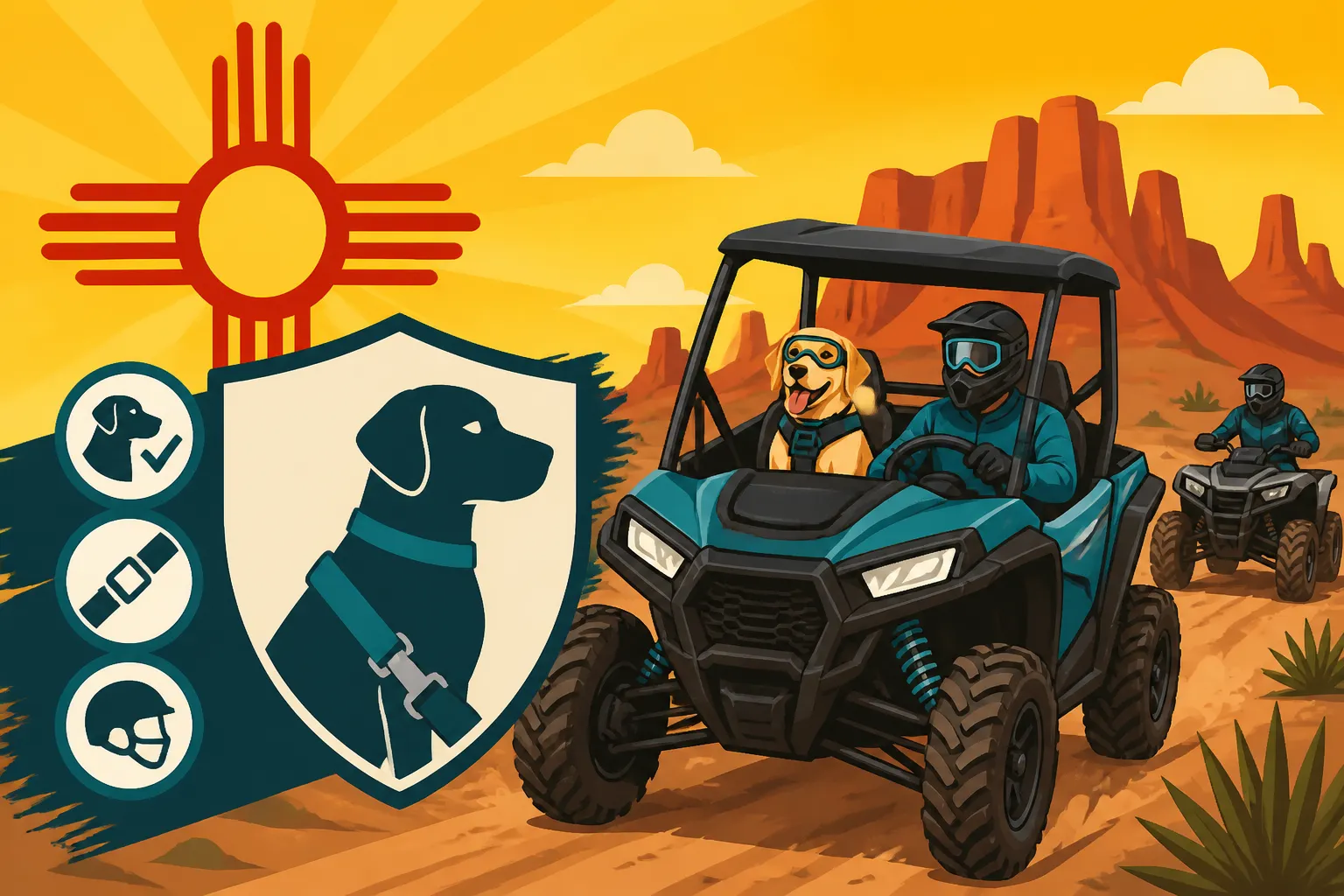
- Harnesses & Seatbelts: For dogs that prefer to ride "shotgun," a crash-tested safety harness connected to a UTV seatbelt system is a good option. This keeps them restrained but allows them to sit up and look around. Never use a collar with a seatbelt, as sudden stops can cause severe neck injury. A good quality, padded harness is crucial.
- Specialized Enclosures: Some UTV owners invest in bed enclosures or dog boxes designed specifically for OHV use. These can offer excellent ventilation and protection. Companies like SuperATV offer a wide range of UTV accessories, from full cab enclosures to cargo boxes, that can be adapted or utilized to create a safe space for your dog. For instance, an aluminum cargo box could be modified with ventilation and bedding to serve as a robust dog kennel, offering more protection than an open bed. Just ensure it's well-ventilated and secure.
- For ATVs (Quads): This is much trickier and often less recommended due to the open nature and lack of substantial passenger space.
- Front or Rear Rack Baskets/Bags: Small, calm dogs might be able to ride in a specially designed, secure basket or soft-sided bag on a front or rear rack. These must be extremely well-secured to the ATV, and the dog must be in a harness that is also secured to the basket. There should be no way for the dog to jump or fall out.
- Never allow your dog to run alongside the ATV or ride on your lap. This is incredibly dangerous for both of you.
Regardless of your OHV type, practice with your dog in a controlled environment before hitting a bumpy trail. Get them used to the sounds, vibrations, and the feeling of being secured. A little desensitization can go a long way. When considering upgrades to your UTV to make it more dog-friendly, remember that robust aftermarket parts are available. A solid roof and a full or half windshield from SuperATV, for example, can dramatically reduce dust and wind exposure for your dog, making the ride much more comfortable and safer in the rugged New Mexico environment.
Essential Gear and Preparations for Your Four-Legged Co-Pilot
Just like you wouldn't head out on a New Mexico trail without proper gear for yourself, your dog needs its own adventure kit.
- Water, Water, Water: This cannot be stressed enough, especially in New Mexico's arid climate. Carry ample fresh water and a collapsible bowl. Even on cooler days, dogs can dehydrate quickly, especially if panting from excitement or exertion.
- Food and Treats: If it's a longer outing, bring their regular food. Treats can be great for positive reinforcement during breaks.
- First-Aid Kit: A dedicated pet first-aid kit is a must. Include items like antiseptic wipes, paw balm, self-adhesive wrap, tweezers (for thorns/cactus), pain relief (consult your vet first!), and any specific medications your dog requires.
- Paw Protection: New Mexico trails can be brutal on paws – sharp rocks, hot sand, thorns, and burrs. Dog booties can protect against cuts, burns, and abrasions. Start training them to wear booties at home before the trip.
- Eye Protection (Doggles): Just like you need eye protection, your dog does too! Dust, branches, and flying debris are major hazards. Doggles (dog goggles) can prevent serious eye injuries. Again, introduce them gradually.
- Leash and Collar/Harness: Even if they're secured on the OHV, you'll need a leash for breaks, walking around camp, or navigating any areas with specific leash laws.
- Waste Bags: Pack it in, pack it out! This applies to dog waste too. Being responsible with waste is a critical part of [New Mexico Trail Etiquette on Shared Ground] and helps preserve access for all.
- ID Tags/Microchip: Ensure your dog has up-to-date ID tags with your phone number. A microchip is also highly recommended in case they get separated from you.
- Shade and Shelter: If you're stopping for an extended period, ensure your dog has access to shade and isn't exposed to direct sun for too long.
Introduce your dog to the OHV gradually. Let them explore it while it's off, then with it running at idle. Short, slow rides around the yard or a quiet area can help them get accustomed to the motion and noise before you tackle a full trail.
Public Land Rules and Etiquette with Your Dog in New Mexico
New Mexico offers an incredible variety of public lands for OHV riding, from vast Bureau of Land Management (BLM) tracts to stunning National Forests. However, each land management agency, and sometimes specific areas within them, can have distinct rules regarding pets. It's crucial to know before you go, as ignoring these rules can lead to fines or even losing access to these fantastic areas. Understanding how these rules intersect with your OHV activities is key to being a responsible visitor.
Navigating Bureau of Land Management (BLM) and National Forest Lands
These federal lands make up a significant portion of New Mexico's OHV opportunities, and generally, they are quite dog-friendly, provided you follow some basic tenets:
- Leash Laws: While not always strictly enforced in very remote areas, the general rule of thumb on BLM and National Forest lands is that your dog should be under control. This usually means on a leash, especially in developed recreation sites, trailheads, or any area where other people or wildlife might be present. An excited dog bounding towards a group of hikers or a herd of elk is never a good look and can lead to trouble. It's often the best policy to keep your dog leashed, especially when you're on your OHV and dismounting, as a startled dog might run off.
- Waste Removal: This is non-negotiable. Always pack out your dog's waste. No one wants to see or step in dog poop on a beautiful trail or at a scenic overlook. Leaving waste behind can contaminate water sources and spread disease.
- Staying on Designated Trails: Just like with your OHV, your dog should remain on designated trails or within appropriate riding areas. Letting your dog roam off-trail can disturb sensitive ecosystems, scare wildlife, or even lead them into dangerous situations like encountering wildlife or getting lost. You need to be familiar with [New Mexico Rules for Riding BLM Land] and [New Mexico Rules for Riding a National Forest] to understand where your OHV and your dog are allowed to be. These rules also extend to camping and staging areas.
- Impact on Wildlife: New Mexico is home to diverse wildlife. An unleashed dog can chase, harass, or injure wildlife, especially during nesting or birthing seasons. Even the scent of a domestic dog can stress wild animals. Be especially vigilant in areas known for deer, elk, or smaller game.
- Seasonal Closures and Restrictions: Be aware that certain areas may have seasonal closures for wildlife protection, fire danger, or to protect sensitive habitats. These closures can apply to both OHVs and pet access, so always check with the local field office before your trip. For example, during fire season, there might be severe restrictions on activities, including where you can even stop with your vehicle, let alone your dog. Also, remember that [New Mexico Riding Seasons by Elevation] can impact accessibility, and a snowy trail might not be safe for your dog.
State Parks, Wildlife Areas, and Other Restricted Zones
While federal lands are often open to dogs, New Mexico State Parks and dedicated Wildlife Management Areas (WMAs) often have much stricter rules, if they allow pets at all.
- New Mexico State Parks: Most New Mexico State Parks have specific rules about pets. While many allow leashed dogs in developed campgrounds and picnic areas, they often restrict them from trails, visitor centers, and swimming areas. Furthermore, OHV use is generally prohibited in New Mexico State Parks. So, if you're planning a trip to a state park with your OHV and your dog, you'll need to know [New Mexico Rules for Riding a State Park] to avoid disappointment. The general rule is, if you're on your OHV, you're probably not in a New Mexico State Park.
- Wildlife Management Areas: These areas are specifically managed for wildlife habitat and population. Pet access is usually highly restricted or completely prohibited to minimize disturbance to sensitive species.
- Private Land: If you're riding on private land with permission, the rules for your dog are entirely up to the landowner. Always clarify their expectations before bringing your dog along.
- City/County Ordinances: Even in areas where you might ride on a paved road, like through a small town or on a county road, local ordinances might dictate leash laws or even prohibit animals in certain public spaces. So, if you're planning to use your OHV on these roads, in addition to knowing [New Mexico Rules for Riding a County Road], you should also check local pet ordinances.
The golden rule here is always to call ahead or check the specific website for the land management agency or park you plan to visit. Don't assume. A quick phone call can save you a lot of hassle and potential fines.
| Location Type | Typical Pet Rules (General) | OHV Riding Allowed? (General) | Notes |
|---|---|---|---|
| BLM Lands | Leashed or under voice control, waste removal required. | Yes, on designated routes. | Generally dog-friendly, but always follow leave no trace principles. Be mindful of wildlife and sensitive areas. Check local field office for specific restrictions or seasonal closures. |
| National Forests | Leashed or under voice control, waste removal required. | Yes, on designated routes. | Similar to BLM, but some areas might have stricter rules, especially wilderness areas (where pets might be allowed but OHVs are not). Look out for specific rules in picnic areas, campgrounds, and around water sources. |
| New Mexico State Parks | Typically leashed in developed areas; often restricted/prohibited on trails. | Generally No. | Most State Parks are not OHV riding areas. If visiting a state park, assume your OHV will be trailered and your dog will be leashed only in parking lots/campgrounds, not on hiking trails. Always check individual park rules. |
| Wildlife Management Areas | Highly restricted or prohibited. | Generally No. | These areas are for wildlife protection. Do not bring pets into WMAs unless explicitly allowed and with strict adherence to rules. OHVs are rarely permitted. |
| Private Land (with permission) | Up to the landowner. | Yes, with permission. | Always clarify pet rules with the landowner beforehand. Respect their property and any requests regarding your dog's behavior. |
| County/City Roads | Leash laws and local ordinances apply. | Conditional. | If your OHV is street legal, municipal pet ordinances apply. Your dog must be safely secured within the OHV, and leashed if exiting the vehicle in public. For more on street legality, check out [Which Riders Actually Need a Paved Road Plate]. |
This table provides general guidelines. Always verify rules with the specific land management agency or local authority before your trip.
Addressing Potential Issues and Ensuring a Positive Experience
Even with the best preparation, riding with a dog on an OHV in New Mexico can present challenges. Being proactive and knowing how to handle common issues can make all the difference between a great adventure and a stressful one.
Dealing with Dust, Debris, and Environmental Factors
New Mexico's environment is beautiful but can be harsh. Dust, sun, wind, and debris are constant companions on the trail, and they can take a toll on your dog just as much as on you.
- Dust and Dirt: Riding on dirt roads and trails kicks up a lot of dust. This can irritate your dog's eyes, nose, and respiratory system. Eye protection (doggles) is crucial. For UTVs, a full windshield can make a huge difference in deflecting dust and wind, keeping your dog's area cleaner. Consider how you're seating your dog; being low to the ground in the bed of a UTV might expose them to more dust than if they were elevated slightly.
- Sun and Heat: Dogs can overheat rapidly, especially in the direct New Mexico sun. Ensure your dog has access to shade whenever you stop. Carry plenty of water and offer it frequently. Watch for signs of heatstroke: excessive panting, lethargy, drooling, or wobbly legs. If you're worried about heat, plan your rides for cooler mornings or evenings, or stick to higher elevations where temperatures are more forgiving. [Carrying Water in the Southern Desert] is a crucial skill for both you and your dog.
- Wind: Constant wind can dry out a dog's eyes and nose. Again, a windshield or enclosure on a UTV can provide significant relief.
- Thorns, Burrs, and Cactus: These are ubiquitous in the New Mexico landscape. Regularly check your dog's paws, coat, and ears for embedded plant matter. Keep a comb and tweezers in your first-aid kit. Paw protection (booties) is highly recommended.
- Temperature Extremes: New Mexico experiences significant temperature swings. In winter, even if sunny, it can be quite cold. Consider a dog coat for short-haired breeds. In summer, the ground can be scorching, so avoid letting your dog walk on hot surfaces.
After your ride, give your dog a thorough check-over. Look for cuts, scrapes, burrs, or anything unusual. A good brush-down can remove a lot of dirt and debris from their coat. Using products from a company like SuperATV can help you tailor your UTV for these conditions. For instance, a durable roof and rear panel can offer much-needed shade and protection from the elements, ensuring your canine companion stays more comfortable throughout the journey.
Respecting Others and Wildlife on the Trail
Part of being a good OHV enthusiast, whether you have a dog or not, is being respectful of other trail users and the environment. When you bring a dog, you have an added layer of responsibility.
- Yielding to Others: On shared trails, you'll encounter hikers, mountain bikers, and equestrians. Always yield to them. A barking, excited dog can spook horses or intimidate hikers. Keep your dog close, on a leash, and under control when passing others. This is fundamental [New Mexico Trail Etiquette on Shared Ground].
- Controlling Noise: Constant barking can be disruptive in quiet natural areas. If your dog is prone to barking at everything, you might need to work on their training or reconsider bringing them to places where quiet is expected.
- Wildlife Encounters: Be prepared for your dog to encounter wildlife. Keep them leashed to prevent them from chasing or harassing animals. Even a friendly "hello" from a dog can be terrifying for a deer or a rabbit.
- Leave No Trace: Beyond picking up waste, this also means not letting your dog dig holes or disturb natural features.
- Responsible Pet Ownership: Ultimately, the behavior of your dog reflects on all OHV riders. A well-behaved, well-controlled dog helps keep trails open for future use with pets. Conversely, a poorly behaved dog can lead to complaints, stricter regulations, or even bans on pets in certain areas. Remember that there can be [New Mexico Fines for an OHV Violation] for yourself, and if your dog causes problems, you might incur additional penalties related to animal control or public disturbance.
Riding with your dog in New Mexico can be one of the most rewarding experiences. The shared adventure, the incredible scenery, and the bond strengthened on the trail are truly special. By planning carefully, prioritizing safety, and being a responsible steward of the land, you and your furry friend can enjoy countless adventures together.
Disclaimer
This article is for general informational purposes only and does not constitute professional advice. Laws, prices and regulations vary by location and change over time. Consult a qualified professional for guidance on your specific situation.