Riding Into Red River on a Side-by-Side
There’s nothing quite like the dream of heading to Red River, New Mexico, with your trusty side-by-side loaded up, ready to hit the incredible trails of the Carson National Forest. But if you’re imagining a seamless transition from mountain roads right onto Main Street for a burger and a beer, you might be in for a rude awakening. Navigating the specific local ordinances for OHVs in Red River can be incredibly confusing, leaving many riders scratching their heads and worried about fines. This guide is here to cut through the noise, explaining exactly what you can and can't do when it comes to riding your side-by-side into the charming streets of Red River.
The Dream of Riding into Red River and the Reality
When you picture an off-road adventure in New Mexico, Red River often springs to mind. It's a town that truly embraces the outdoor spirit, with breathtaking scenery, challenging trails, and a vibrant atmosphere. You see other riders, you hear the rumble of engines, and naturally, you assume that bringing your side-by-side into town to grab supplies or a meal should be part of the experience. It's frustrating to arrive at such a prime riding destination only to discover a maze of rules that seem to contradict the very spirit of OHV culture that the town otherwise fosters.
Red River: An OHV Paradise with Specific Rules
Red River’s reputation as an OHV haven is well-earned. The surrounding Carson National Forest offers hundreds of miles of diverse trails, from scenic forest roads perfect for a leisurely cruise to more challenging routes that will test your machine and your skills. Riders come from all over to experience the beauty of the Sangre de Cristo Mountains, often with Red River as their home base. The town understands its appeal to riders, with many businesses catering directly to the OHV community. It's an awesome place, and that's why the desire to simply ride your machine from the trail to a local eatery feels so natural and so right.
However, that natural desire often bumps up against local regulations designed to manage traffic flow, noise, and pedestrian safety in a busy tourist town. It's a common lament among riders: you've spent good money on a capable machine, perhaps even invested in upgrades like durable tires or enhanced suspension, and you just want to enjoy the full experience without legal headaches. The frustration is real when you're looking at a map, seeing the trails leading directly into town, but then hearing whispers of complicated rules about where you can and cannot go. It feels like a barrier to the full enjoyment of your adventure, and it leaves you feeling hesitant.
The Crucial Distinction: ROV vs. ATV
Here’s where a lot of the confusion really sets in, and it's absolutely critical for anyone planning to ride in Red River: the town makes a very clear and specific distinction between an "All-Terrain Vehicle" (ATV) and a "Recreational Off-Highway Vehicle" (ROV), which most of us know as a side-by-side or UTV. If you've been calling your quad a side-by-side, or vice-versa, thinking they're interchangeable, Red River's ordinance will make you think again. This isn't just semantics; it's the difference between being able to ride on town streets and potentially facing a citation.
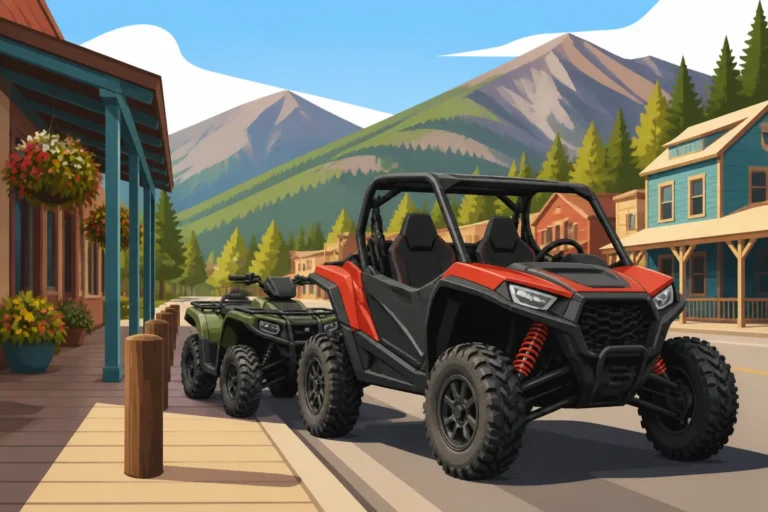
An ATV, or quad, is typically designed for a single rider (though some allow a passenger) who straddles the machine like a motorcycle, using handlebars for steering. Think of the classic four-wheeler you might have grown up riding. An ROV, on the other hand, is built for multiple passengers who sit side-by-side (hence the name!) with a steering wheel and foot pedals, much like a car. They often have roll cages and seatbelts. This distinction isn't arbitrary; it's rooted in how the town perceives the safety and operability of these machines on shared paved roads.
For Red River, this difference is paramount. The town's local ordinance is specifically crafted to permit Recreational Off-Highway Vehicles (ROVs) on certain streets under specific conditions, while generally prohibiting traditional ATVs from doing the same. If you’re coming with a quad, you’ll likely need to trailer it or leave it parked at your lodging, as the streets are not open to you. It's one of those rules that can feel unfair if you're an ATV rider, but understanding [Why Red River Bans ATVs but Allows ROVs] is the first step in planning your visit without incident.
Red River's Specific ROV Ordinance: What You Need to Know
Alright, let's get into the nitty-gritty of Red River's rules for side-by-sides. This isn't just about what New Mexico state law says; it's about the unique local regulations that can make or break your street-legal aspirations within the town limits. Knowing these details is like having a secret map to navigate the town without a hitch.
Permitted Streets and Operating Hours for ROVs
Red River does allow ROVs on certain paved streets, but it's not a free-for-all. The key is understanding [Red River Ordinance 2000-5]. This ordinance explicitly states which streets are open to ROVs and, just as importantly, during what hours. Generally, ROVs are permitted on most of the town's public streets, including parts of Main Street and River Street, which is fantastic for accessing shops, restaurants, and your lodging. Imagine rolling up to your favorite coffee spot right from the trail – that's the dream!
However, there's a strict curfew that you absolutely cannot ignore. ROVs are typically allowed on these permitted streets only between 8:00 AM and 7:00 PM. Outside of these hours, even if your side-by-side is fully equipped and street legal, you risk a citation. This [Red River's 7 p.m. to 8 a.m. Curfew] is in place for a good reason: it helps manage noise levels during the evening and early morning hours, ensuring a more peaceful experience for residents and other visitors, especially those staying close to Main Street. So, if your dinner plans run late, be prepared to leave your ROV parked and walk or find alternative transportation. It's a small concession for the privilege of riding in town.
The Infamous NM 38 Exclusion Zone
Now, here's a segment of the rules that trips up many riders, and it's crucial to understand to avoid a fine: the NM 38 Exclusion Zone. While you might be able to ride your ROV on parts of Main Street, there's a specific stretch of New Mexico State Highway 38 that runs right through the heart of Red River that is strictly off-limits to all OHVs, including side-by-sides, even if they are otherwise compliant. This zone exists to enhance safety on a busier section of the state highway.
Specifically, [The NM 38 Exclusion Zone in Red River] runs between Caribel Trail and Jayhawk Trail. It's not a huge stretch, but it's central, and bypassing it requires careful planning. You cannot simply ride your ROV through this section to connect from one end of town to the other. Imagine you're coming down from the trails on the west side, hoping to cruise straight through town to get to the east side; you'll need to find an alternate route that avoids this specific segment of NM 38. This usually means using parallel side streets or being prepared to trailer your machine if you must traverse that area. It feels counterintuitive when the rest of town is so welcoming, but respecting this boundary is key to a trouble-free visit. Law enforcement in Red River is well aware of this ordinance, and they do enforce it.
Required Equipment for Road-Legal ROVs
Beyond Red River's specific local rules, your ROV must still meet New Mexico state-level equipment standards to be considered street legal on any paved public road, including those within Red River. This isn't unique to Red River; it applies across the state wherever OHVs are allowed on pavement through the state's "opt-in" statutes. Failing to meet these requirements, even if you're on a permitted street during allowed hours, can lead to a citation.
Your side-by-side needs to be equipped with a functional headlight (visible from 150 feet), a taillight (visible from 200 feet), and working brake lights. A horn is also mandatory, allowing you to signal your presence when needed. Don't forget mirrors—at least one rear-view mirror is required, though many riders prefer two for better visibility, especially with passenger-carrying machines. Seatbelts are also a must, not just for safety but for legal compliance on public roads. Lastly, a spark arrester is essential, especially when you consider you'll likely be transitioning from town roads to forest trails.
Many riders turn to aftermarket accessories to ensure their machine meets these specifications and enhances their safety. Brands like SuperATV offer a wide range of products, from turn signal kits that integrate seamlessly, to robust mirrors that offer clear rear visibility, and even full windshields that protect against road debris. Investing in these items, perhaps even a full cab enclosure from SuperATV, not only brings your ROV into compliance but also makes the experience of riding on paved roads far more comfortable and secure. Check your machine before you leave home to ensure all these components are present and in good working order. For more details on what's required, you can check out [New Mexico Equipment Rules for Road Use].
State-Level Requirements for Riding on New Mexico Paved Roads
While Red River has its own unique ordinances, it’s absolutely vital to remember that state laws regarding OHV use on paved roads still apply. Red River’s rules are an addition to state law, not a replacement. You might meet all of Red River’s criteria, but if you fall short on state requirements, you’re still looking at potential issues.
Registration, Decals, and the Paved Road Plate
First and foremost, any off-highway vehicle, including your side-by-side, needs to be properly registered with the New Mexico Motor Vehicle Division (MVD) if you plan to operate it on any public land or public paved road. This isn't an option; it's a requirement. When you register your machine, you'll receive a decal that indicates its registration status. For off-highway use only, you'll get a yellow decal. However, if you intend to ride on paved public roads, which you absolutely will be doing in Red River, you need the green on-and-off-highway decal.
For a period, New Mexico also offered a specific [New Mexico's Paved Road Plate] that further signified a machine's eligibility for paved roads. While the system for these specific plates has evolved and simplified, the underlying requirement to be properly registered for road use with the appropriate decals remains. It means going through the MVD process, ensuring your machine's VIN is correctly recorded, and paying the necessary fees. Think of this as your foundational ticket to ride legally. Without current state registration and the correct decal for paved road use, even Red River's local allowance means nothing. Make sure your registration is current and clearly displayed.
Mandatory Insurance and Driver's License
This is another non-negotiable point for anyone hoping to ride their side-by-side on Red River’s paved streets: you absolutely must have liability insurance. New Mexico law requires proof of financial responsibility for any motor vehicle operating on public roads, and once your OHV is on a paved street, it falls under this umbrella. It’s not just a good idea for your own protection; it’s a legal mandate. Imagine the headache if you're involved in a fender bender with a car on Main Street and don't have coverage.
The state typically requires a certain minimum level of liability coverage. It’s always best to check with your insurance provider to ensure your policy meets New Mexico's requirements. And don't just have it; carry proof of insurance with you! An insurance card in your wallet or a digital copy on your phone can save you a lot of hassle if you're ever stopped. In addition to insurance, if you're operating your side-by-side on any paved public road, you need a valid driver's license. This isn't an OHV permit; it's a standard automobile driver's license. So, make sure both your insurance and your license are current and accessible. For more details on this, look into [New Mexico OHV Registration and Liability Insurance].
Rider Age and Passenger Restrictions
New Mexico has clear rules about who can operate an OHV and who can be a passenger, especially when it comes to minors. These rules apply whether you're on a dirt trail or a paved street in Red River. If you have younger riders or plan to carry passengers, understanding these regulations is critical for everyone's safety and to stay on the right side of the law.
For riders under the age of 18, wearing a helmet is mandatory, regardless of whether they are operating an ATV or an ROV, and whether they are on a trail or a paved road. This [New Mexico Helmet Law for ATV Riders] is in place to protect young riders, and it's strictly enforced. Additionally, there are specific age restrictions for operating OHVs on public lands and roads, as well as rules about carrying passengers. For example, riders under 18 generally cannot carry a passenger, and children under six years old are typically prohibited from riding on public lands at all.
When you're cruising through Red River in your side-by-side, it's easy to think of it as just another vehicle. But remembering these youth-specific regulations is essential. If you have a teenager driving, ensure they have the proper safety training and are wearing their helmet. If you have kids with you, double-check the [New Mexico Rules for Carrying a Passenger] to make sure you're compliant. Ignorance of these laws won't be a valid excuse if a deputy pulls you over.
Making Your Red River ROV Adventure a Success
So, you've got your side-by-side equipped, registered, insured, and you understand Red River's local rules and New Mexico's state laws. Now, how do you ensure your actual riding experience is as smooth and enjoyable as possible? A little extra planning and a lot of courtesy go a long way.
Planning Your Route and Staging Points
The key to a stress-free Red River visit with your ROV is good planning. Knowing which roads are open, which are closed (the NM 38 exclusion zone!), and where you can legally park will save you a world of headaches. Before you even arrive, take a look at a town map and familiarize yourself with the layout. Identify the parallel streets that can help you bypass the forbidden stretch of NM 38 if you need to travel from one end of town to the other. Many riders find it helpful to plan their routes to specific destinations, like a restaurant or a general store, ensuring they stay on permitted roads the entire time.
If you happen to be an ATV rider, or if your side-by-side doesn't meet all the necessary requirements for paved road use, don't despair! Red River is still an amazing destination. Plan to stage your machine at your lodging or at a designated trailhead just outside of town. Many rental cabins and hotels offer ample parking for trailers and OHVs. From there, you can still access the incredible trail system without needing to bring your machine onto the town's paved streets. It might require an extra step, but it keeps you legal and stress-free.
Courtesy, Compliance, and Community
Ultimately, the ability to ride our OHVs on designated public roads, whether they're dirt trails or paved streets in a tourist town like Red River, is a privilege that we, as riders, need to protect. This means going beyond just following the letter of the law and embracing a spirit of courtesy and community. Red River thrives on tourism, and a good experience for everyone—riders, pedestrians, shop owners, and residents—is paramount.
This means being mindful of your speed on town streets, staying within posted limits, and being extra cautious around pedestrians, especially children, who might not expect an ROV to be operating on Main Street. Keep your noise levels respectful; while many of us love the rumble of an engine, it can be disruptive in a town setting, particularly outside of the permitted hours. Use your turn signals, follow traffic laws, and park your machine considerately in designated areas, perhaps utilizing the specific rules for [Parking on River Street in Red River]. Every time we ride responsibly and courteously, we help ensure that the privilege of street-legal ROV use in places like Red River remains available for future generations of riders. Let's all do our part to be good ambassadors for the sport!
Disclaimer
This article is for general informational purposes only and does not constitute professional advice. Laws, prices and regulations vary by location and change over time. Consult a qualified professional for guidance on your specific situation.