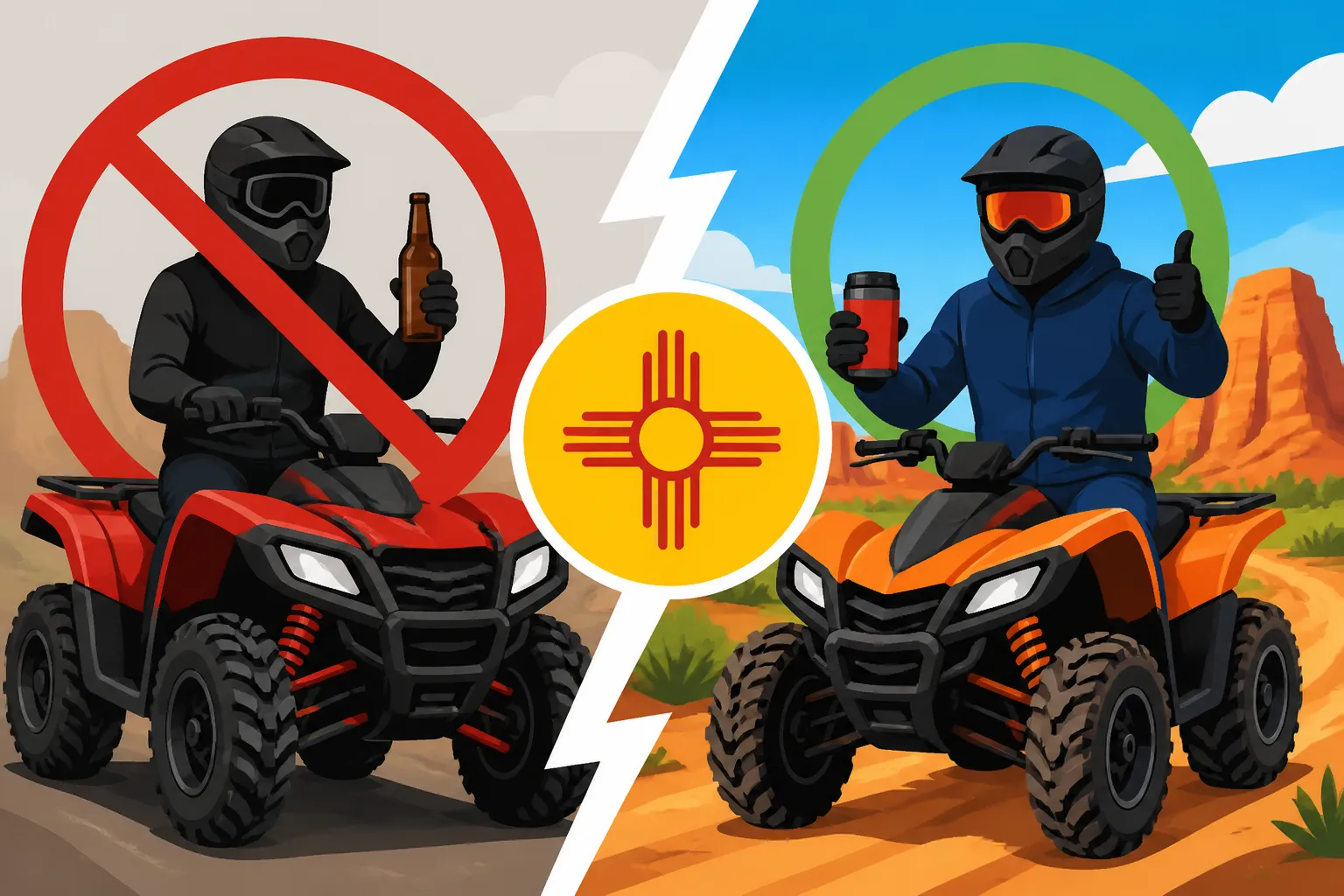
New Mexico Open Container Rules on an ATV
There's nothing quite like a day out exploring the vast, beautiful landscapes of New Mexico on your ATV or UTV. The sun is shining, the dust is flying, and the open trails call your name. But amidst all that freedom, it's easy to overlook some important rules, especially when it comes to enjoying a cold beverage. Many riders find themselves confused about New Mexico's open container laws for off-highway vehicles, wondering if what's okay at a campsite is okay on the trail or a county road. This guide will cut through the confusion, explaining exactly what New Mexico law says about open containers on your ATV or UTV, where those rules apply, and how to stay on the right side of the law so your adventure doesn't end with an unexpected citation.
Understanding New Mexico's Open Container Law for OHV Riders
When you're out enjoying the Land of Enchantment on your ATV or UTV, it’s crucial to understand what New Mexico considers an “open container” and why these laws exist. It might seem like a simple concept, but the nuances can make all the difference between a relaxing ride and a legal headache. These laws are designed with public safety in mind, aiming to prevent impaired operation, which is just as dangerous on a trail as it is on a paved highway.
What Constitutes an "Open Container" on Your Machine?
Let's break down the legal definition of an "open container" in New Mexico. Generally, it refers to any container of an alcoholic beverage that has been opened, had its seal broken, or from which a portion of the contents has been removed. This isn't just about a can of beer or a mixed drink; it includes wine bottles with the cork pulled or liquor bottles with the seal broken, even if they're capped. The key here is accessibility and the state of the container. If it's been opened and is readily accessible to the driver or any passengers while the vehicle is in operation (or even if it's stopped, but the driver is in control), it's likely considered an open container.
It's not just about what you're actively drinking. Imagine you finished a soda and then cracked open a beer to enjoy once you got to camp, but you forgot it was in the cup holder while you were still riding down a public access road. Even if you weren't drinking it at the moment, if that seal is broken and it's within reach, it can be a problem. This is where the law gets tricky for many OHV riders, as the lines between a "vehicle" and a "campsite" can blur out in the wilderness.
The Core Principle: Impairment and Public Safety
The fundamental reason for open container laws, whether on paved roads or off-highway trails, is public safety. These laws aim to reduce alcohol-related incidents by discouraging consumption while operating any vehicle, including ATVs and UTVs. While you might feel perfectly capable of navigating a dirt road after a single beverage, the law doesn't make exceptions for perceived sobriety. It's about preventing the potential for impaired operation. Riding an ATV or UTV, especially in challenging terrain, requires full concentration, quick reflexes, and sound judgment. Even a slight impairment can significantly increase the risk of accidents, not just for the rider and passengers, but for other trail users and even wildlife.
Think about it: you're navigating rocky climbs, steep descents, or unexpected obstacles. A moment of impaired judgment can lead to a serious injury or a costly breakdown far from help. These laws are less about punishing responsible adults and more about ensuring everyone using public lands and roads is doing so safely. It ties directly into the broader concern of [New Mexico DWI Rules for ATV Riders], which are strictly enforced regardless of the type of vehicle you're operating. The state wants to ensure that all drivers, whether in a truck or on a quad, are operating with a clear head.
Where Do New Mexico's Open Container Rules Apply to ATVs and UTVs?
This is where many OHV riders get caught off guard because the rules aren't uniformly applied across all types of land in New Mexico. The key distinction often lies between public roads, designated off-highway trails, federal lands, and private property. Understanding these boundaries is critical before you even think about cracking open a cold one.
On Designated Roads and Public Paved Surfaces
If you're riding your ATV or UTV on any public paved road, county road, or other thoroughfare that is legally open to OHV traffic, New Mexico's standard open container laws for motor vehicles apply just as they would to a car or truck. This means absolutely no open containers of alcohol are allowed in the passenger area, accessible to the driver or passengers. This includes crossing a highway, even for a short distance, where [New Mexico Rules for Crossing a Highway] are very specific.
This is particularly relevant for those machines that are street-legal or are using the [New Mexico's Paved Road Plate] to access trails from town or to connect different riding areas. If you're using your UTV to run to the corner store in a town like Red River where OHVs are permitted on certain streets, that UTV is considered a motor vehicle on a public roadway, and open container laws are in full effect. Even if you're just traveling [New Mexico Rules for Riding to a Trailhead] on a paved or designated county road, those same rules apply. You can transport sealed alcohol in a secure compartment, like a cooler or a cargo box, but it cannot be open or readily accessible. Many riders invest in sturdy, lockable cargo boxes or coolers that can be securely fastened to their UTV or ATV, perhaps with durable tie-downs from a company like SuperATV, to keep any beverages sealed and out of the passenger compartment until they reach their destination.
Off-Highway Trails and Federal Lands
This is often the trickiest area for riders. While you might be deep in the wilderness on a dirt trail, many of these trails are on public land managed by entities like the Bureau of Land Management (BLM) or the U.S. Forest Service. On these federal lands, their specific regulations often supplement or supersede state laws, and generally, they have a zero-tolerance policy for open containers while operating an OHV. This means even on a remote trail in the Carson National Forest or a vast expanse of BLM land, an open container is a violation. Always check the specific rules for the area you plan to ride, as regulations can vary. For example, understanding [New Mexico Rules for Riding BLM Land] or [New Mexico Rules for Riding a National Forest] is paramount, as these often include provisions about alcohol consumption.
It’s about respecting the environment and the safety of everyone enjoying these shared resources. An open container could not only lead to a citation but could also be seen as contributing to irresponsible behavior, which resource managers are keen to prevent. Even if you're parked at a scenic overlook on a trail, if you're still "in control" of your machine and an open container is accessible, you could be in violation. The best practice here is to keep all alcoholic beverages sealed and stored away until you are completely done riding for the day and set up at a designated campsite or private property.
Private Land and Permitted Areas
Here's where you generally find more leniency. If you are riding on private land with the owner's permission, the state's open container laws typically do not apply. This means if you own a large ranch, or you're riding on a friend's property with their explicit consent, you can usually enjoy an adult beverage on your OHV without legal repercussions from state open container laws. However, this comes with a huge caveat: you are still subject to [New Mexico DWI Rules for ATV Riders]. Operating any motor vehicle, including an OHV, while intoxicated is illegal everywhere, regardless of whether it's public or private land. The open container law is distinct from DWI. So, while you might be able to have an open beer on private land, you absolutely cannot be impaired while operating your machine.
Some private OHV parks or designated riding areas might have their own internal policies regarding alcohol. Always check with the management of such facilities. They might permit alcohol in certain areas, like a picnic zone, but prohibit it on the trails themselves. When you're dealing with [New Mexico Rules for Riding Private Land], remember that while state open container laws might not apply, property owners can set their own rules, and safety should always be your top priority.
Here's a quick summary table to help you distinguish where the rules apply:
| Location Type | Open Container Rules Apply? | Important Considerations |
|---|---|---|
| Public Paved Roads/County Roads | Yes | Same as a car. No open containers accessible to driver/passenger. Vehicle must be street legal (e.g., [New Mexico's Paved Road Plate]). Still subject to DWI. |
| Off-Highway Trails (Public/Federal) | Yes | Federal land (BLM, Forest Service) typically has strict rules. Keep all alcohol sealed and stored. Still subject to DWI. |
| Private Land (with permission) | Generally No | Open container laws usually don't apply. However, DWI laws ALWAYS apply. Property owner's rules may still prohibit alcohol. |
| Designated Campsites | Generally No (while stationary) | Alcohol consumption is typically permitted at a campsite, but not while actively riding to/from it on public routes. Still subject to DWI. |
The Consequences of an Open Container Violation on Your New Mexico OHV
So, what happens if you're caught with an open container on your ATV or UTV where it's not allowed? It's not just a slap on the wrist. The penalties can range from significant fines to more serious legal troubles, impacting your wallet and potentially your driving privileges. It’s always better to understand the potential repercussions and avoid the situation entirely.
Immediate Penalties and Fines
An open container violation on an OHV in New Mexico typically results in a citation and a fine. While I can't give you exact dollar amounts (they can change and vary by jurisdiction), be prepared for a substantial hit to your pocketbook. This isn't just a minor traffic ticket; it’s a misdemeanor offense in some cases, and the fines can be hundreds of dollars. Beyond the monetary cost, you'll also likely deal with court appearances, which means time away from work or riding, and the general hassle of navigating the legal system.
Law enforcement officers, whether it's a State Police officer, a county deputy, or a Forest Service ranger, are well-versed in these laws. They conduct routine patrols and checkpoints, especially in popular riding areas. They'll be checking for proper [New Mexico OHV Registration and Liability Insurance], proper decal placement, and adherence to all other laws, including open container rules. An officer will often observe [What a New Mexico Officer Checks Roadside] and an open container is an easy thing to spot. Ignorance of the law is never an excuse, and explaining that you "didn't know" won't get you out of the ticket.
Potential for Broader Charges
This is where an open container violation can truly spiral. While an open container ticket itself is a specific offense, it often serves as a "red flag" for law enforcement, leading to further investigation. If an officer finds an open container and then suspects you might be impaired, they have grounds to investigate you for driving while intoxicated (DWI). As mentioned earlier, [New Mexico DWI Rules for ATV Riders] are very serious, and a conviction can carry severe penalties, including hefty fines, jail time, suspension of your driver's license (yes, even if you were on an OHV and not a car), mandatory alcohol education programs, and increased insurance rates.
The presence of an open container, even if you claim you haven't been drinking much, can strengthen a prosecutor's case for DWI if there's any evidence of impairment. It's not uncommon for what starts as a simple open container stop to escalate into a full-blown DWI investigation, leading to much more severe consequences. It's a risk simply not worth taking when you're out trying to enjoy the trails.
How an Open Container Can Escalate Other Situations
Beyond the direct legal penalties, an open container can exacerbate other issues you might encounter while riding. Imagine you're involved in a minor accident on the trail, perhaps a rollover or a collision with another rider. If law enforcement arrives and discovers an open container in your machine, even if alcohol wasn't the direct cause of the accident, it immediately raises questions about your judgment and level of impairment. This could affect insurance claims, liability in a civil lawsuit, and certainly influence how law enforcement views the incident.
Furthermore, being found with an open container might also lead to scrutiny of other aspects of your ride, such as whether your machine meets [New Mexico Equipment Rules for Road Use] if you're on a street-legal route, or if you're adhering to all other off-road specific rules, like proper decal placement or spark arrester requirements. It can turn a minor interaction with law enforcement into a much more thorough examination of your compliance with all OHV regulations, potentially leading to additional citations or [New Mexico Fines for an Unregistered OHV] if other issues are discovered. The bottom line is that an open container can quickly turn a simple check into a much more complicated and costly encounter.
Smart Practices for Enjoying Beverages Responsibly on Your New Mexico Ride
Enjoying a cold drink at the end of a long day of riding is one of life's simple pleasures, and it’s absolutely possible to do so responsibly without running afoul of New Mexico's open container laws. It just requires a little foresight and planning. The key is to separate your riding time from your drinking time, ensuring that when your wheels are turning on public land or roads, your alcoholic beverages are securely stowed and sealed.
Secure Transport and Storage
The golden rule for transporting alcohol on your ATV or UTV is simple: keep it sealed and out of reach of the driver and passengers while the machine is in operation. This means no unsealed cans or bottles in cup holders, center consoles, or unsecured compartments. For UTVs, a great solution is to utilize a dedicated cargo box or trunk. Many aftermarket companies, including SuperATV, offer rugged, weather-resistant cargo boxes designed to fit specific UTV models. These boxes provide a secure, out-of-the-way place to store coolers with sealed beverages, ensuring they aren't considered "readily accessible" while you're riding. For ATVs, a front or rear cargo rack bag or a secure cooler strapped down tightly can serve the same purpose.
When packing, make sure that any alcohol you bring is still in its original, unopened packaging. If you're bringing a bottle of wine or spirits to enjoy at camp, ensure the seal remains unbroken until you reach your destination and your machine is safely parked for the night. Even if you're just moving camp a short distance, reseal everything and place it back into a secured storage area. This isn't just about legality; it's also about preventing spills and keeping your gear tidy on dusty trails.
Designating a Sober Driver
This might sound obvious, but it's worth reiterating: if you or your group plans to consume alcohol at your campsite or after riding, always designate a sober driver if any further operation of the OHV is anticipated, even for short distances on private land. Even if you're on private property where open container laws don't apply, [New Mexico DWI Rules for ATV Riders] are still very much in effect. Getting behind the handlebars after consuming alcohol, regardless of the amount, puts everyone at risk.
A designated sober driver doesn't just mean for driving on paved roads; it means for any operation of the machine, even moving it across a campsite. The person in control of the ATV or UTV should be completely sober, focused, and free from any impairment. This is especially true if you're carrying passengers, as [New Mexico Rules for Carrying a Passenger] mandate a safe and responsible operator. Safety should always be the top priority for any group outing, and ensuring everyone gets back safely after a day of fun, regardless of whether a few adult beverages were consumed, is paramount.
Planning Ahead for Your Day
A little planning goes a long way in avoiding open container issues. Before you head out, know your route and the type of land you'll be on. Will you be primarily on private property? Will you traverse public roads? Will you be on federal land with stricter rules? Knowing the landscape you'll be riding through helps you make informed decisions about how and when to consume or transport alcohol.
It's always a good idea to pack plenty of non-alcoholic beverages, especially water, for your ride. New Mexico's climate can be unforgiving, and staying hydrated is critical. Consider saving alcoholic beverages for when you've reached your final destination, set up camp, and are no longer operating your OHV for the day. You can enjoy your favorite drink then, perhaps while sitting around a campfire, completely relaxed and free from legal worries. Packing a high-quality cooler with a secure lid and using durable attachments like those found on SuperATV's UTV storage solutions can help keep your drinks cold and your mind at ease throughout your adventure. By planning responsibly, you ensure that your New Mexico ATV or UTV experience remains safe, enjoyable, and free of unnecessary complications.
Disclaimer
This article is for general informational purposes only and does not constitute professional advice. Laws, prices and regulations vary by location and change over time. Consult a qualified professional for guidance on your specific situation.