New Mexico Permit Rules at Fifteen
A 15-year-old may be ready to ride, but age alone does not settle what New Mexico requires. The key questions are whether the machine will be operated on public land, whether the teen has the required safety credential, and who must supervise. Separating those rules from registration and road-use requirements helps families prepare before they unload.
What a 15-year-old needs to ride
For a 15-year-old operating an off-highway vehicle on public land in New Mexico, the safe starting point is to expect that an OHV safety permit is required. The permit is separate from the registration, decal, or permit attached to the machine. Having the vehicle’s paperwork in order does not automatically satisfy the rider’s safety requirement.
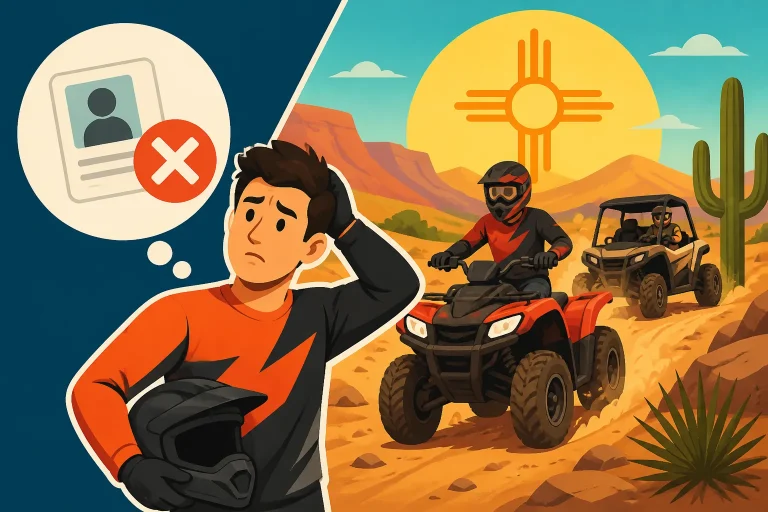
The state’s rules for young riders can depend on the rider’s credentials and circumstances. Do not assume that being 15, having a school ID, or holding a learner’s permit makes the teen exempt. A learner’s permit for driving a car is not the same thing as an OHV safety permit. If the teen has a driver or motorcycle credential, confirm with the state agency whether that specific credential changes the OHV requirement before relying on it. Does a Provisional License Count for a Teen Rider? discusses why the type of credential matters.
| Question | Practical answer |
|---|---|
| Is a 15-year-old under 18? | Yes. Check the rules that apply to riders under 18. |
| Should the teen expect to need an OHV safety permit on public land? | Yes, unless a specific exemption is confirmed for that rider. |
| Does a vehicle registration replace the safety permit? | No. They apply to different things: the machine and the rider. |
| Does a car learner’s permit automatically count? | Do not assume that it does. Verify the state rule for the exact credential. |
| Is adult supervision a separate issue? | Yes. Check the supervision requirements as well as the permit requirement. |
| Does the safety permit make every road or trail legal? | No. It does not override land access, route, equipment, or road-use rules. |
New Mexico has a specific permit framework for minors. Before the ride, review New Mexico OHV Safety Permit Requirements and New Mexico Safety Permit for a Minor. Those pages help distinguish the safety credential from other requirements, but families should still confirm current instructions with the responsible agency if the teen’s situation is unusual.
A safety permit is not machine registration
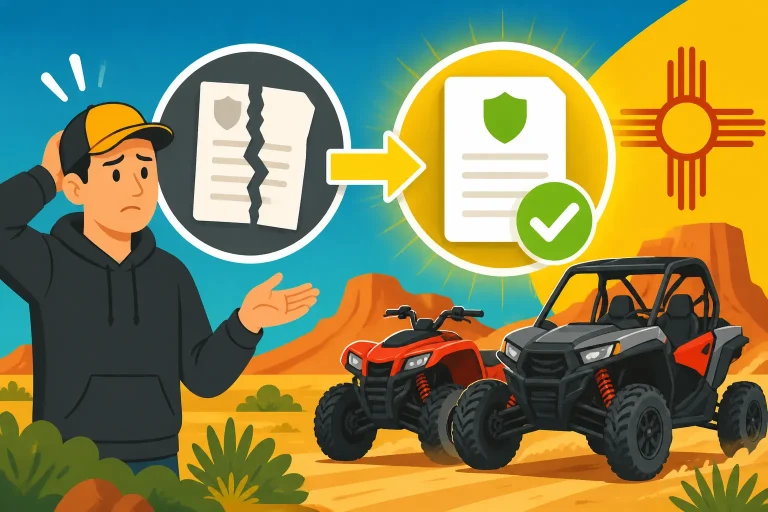
A common source of confusion is that the word “permit” can refer to more than one document. The youth safety permit relates to the rider’s training or eligibility. Registration and nonresident OHV permits relate to whether the machine can be operated under New Mexico’s vehicle rules.
A machine owned by a New Mexico resident may have different paperwork from a machine brought in by a visitor. Reciprocity can also affect what a nonresident needs. Check the machine’s own requirements separately through New Mexico OHV Reciprocity Rules and New Mexico’s Nonresident OHV Permit. A teen can have the correct safety credential and still be unable to ride if the vehicle paperwork is missing or the route is closed to that vehicle.
Keep the documents easy to access. If a ranger or officer checks the group, it helps to be able to show the rider’s safety permit and the machine’s required paperwork without searching through a packed trailer. Carrying the Safety Permit on a New Mexico Ride covers the practical side of carrying proof.
A credential is not a substitute for supervision
A 15-year-old’s safety permit should not be treated as permission to ride without any required adult oversight. New Mexico has rules concerning supervision of young riders, and the permit does not cancel them. Families should check who may supervise, what “visual supervision” means, and whether the adult must stay close enough to see the teen while the machine is moving. New Mexico Supervision Rules for Young Riders and Visual Supervision and What It Means address these questions.
For planning purposes, choose a responsible adult who can maintain direct visual contact and respond quickly if the teen stops, gets separated, or needs help. A parent waiting at the staging area may not satisfy a rule that requires the rider to be visibly supervised on the route. Confirm the legal standard before the ride rather than assuming that supervision from a distance is enough.
The teen’s maturity and experience matter, too. An adult should consider whether the rider can control the machine, follow route markers, stop when instructed, and respond safely to changing terrain. Those practical judgments do not replace the legal requirements; they help determine whether a particular ride is appropriate.
How to get ready before the ride
The best preparation is to settle the paperwork and the riding plan before leaving home. That gives the family time to resolve a missing document, confirm a course, or choose a route suited to a 15-year-old.
- Check the current youth safety-permit instructions. Confirm what training or other steps are required, how the permit is issued, and what proof the rider should carry. Use the current state agency instructions rather than an old card, a friend’s recollection, or a course listing that may no longer apply.
- Verify whether the teen has an applicable exemption. If the rider has a learner’s permit, driver’s license, or motorcycle credential, ask specifically whether that credential changes the OHV safety-permit requirement. Do not treat similar-sounding credentials as interchangeable.
- Check supervision rules. Confirm the age and role of the supervising adult, whether the adult must be able to see the teen continuously, and what happens if the group separates.
- Check the machine’s paperwork. Make sure the vehicle has the required registration or nonresident documentation for its owner and home state. The teen’s permit and the vehicle’s documentation are separate checks.
- Confirm that the land and route are open to the vehicle. A safety permit does not grant access to private, tribal, or restricted land, and it does not make a closed route legal. Use the land manager’s current route information and obey signs on site.
- Match the machine to the rider. Consider the teen’s size, experience, strength, and ability to operate the controls safely. A large or powerful machine can be difficult to manage even for a teen who has completed training.
- Pack protective gear and proof. Carry the safety permit and vehicle documents, and use the protective equipment required for the rider and route.
A 15-year-old should have a chance to understand the machine before the group enters a demanding trail. Review the controls, brakes, throttle, shutoff switch, and safe stopping procedure in a controlled area. Agree on simple communication signals and a regrouping point. For a new rider, choose an easier route and keep the first outing short enough that fatigue does not become a safety problem.
Protective equipment and passengers
New Mexico requires riders under 18 to follow the applicable helmet and eye-protection rules. Check New Mexico Helmet Law for Riders Under 18 and New Mexico Eye Protection Requirement before setting out. A helmet that is present but does not fit properly is not a good substitute for correctly fitted protection. Eye protection should stay secure over rough ground and be suitable for dust and debris.
If purchasing gear online, including through Amazon, check the product’s fit, intended use, and safety markings carefully. A helmet should fit the teen’s head now, not be bought oversized in anticipation of growth. Goggles and other equipment also need to fit comfortably enough that the rider will keep them on.
Do not assume a 15-year-old can carry a passenger simply because the machine has a seat behind the driver. Passenger rules can depend on the vehicle’s design and the rider’s age. A machine built for one rider should not be used to carry two. For a two-seat vehicle, verify the current rules before allowing a passenger; New Mexico Rules for Carrying a Passenger explains why seating capacity and rider age both matter.
Common mistakes to avoid
Treating a learner’s permit as an OHV safety permit
A teen who can legally practice driving a car does not automatically have the qualifications required to ride an OHV. The credentials serve different purposes. If a family believes an existing license or endorsement qualifies the rider for an exception, confirm the exact rule with the responsible agency. A quick assumption can leave the teen without required proof at a checkpoint.
Thinking the adult’s paperwork covers the teen
The vehicle owner’s registration does not satisfy the rider’s safety requirement. Likewise, an adult’s permit or training record does not transfer to the 15-year-old. Each document should be associated with the correct person or machine, and the family should check that the teen has their own required credential.
Confusing “supervised” with “somewhere nearby”
Adult presence at a staging area may not meet the supervision standard if the adult cannot see the young rider on the trail. Plan a route that keeps the teen within the required view of the supervising adult, and avoid sending the rider ahead around a bend or over a ridge where the adult cannot monitor them.
For group rides, discuss supervision before engines start. Decide who is responsible for the teen, how the group will handle a stop, and what everyone should do if the rider is no longer visible. A clear plan is more reliable than expecting the adult to improvise while the group is moving.
Assuming the safety permit authorizes road use
A safety permit does not make an ATV or UTV street legal, open a state highway to OHVs, or authorize travel on any road a rider happens to encounter. Road use has separate restrictions and may depend on the road owner, vehicle requirements, and whether a local government has opened a particular street. Before riding a paved segment, check the rules for that exact road. New Mexico Rules for Riding a City Street and New Mexico’s Paved Street Opt-In explain why road access is a separate question.
The same distinction applies off pavement. A trail that looks open may be private, closed, or limited to certain vehicle types. Follow posted signs and current land-management maps rather than using the safety permit as evidence of access.
Taking a teen onto an unsuitable route
Training and paperwork do not remove the risks of steep slopes, loose sand, narrow trails, deep water, or fast-moving traffic. Choose terrain that fits the teen’s experience and the machine’s capabilities. Keep the supervising adult close enough to help, and stop if conditions exceed the rider’s skill level.
Weather and visibility can change the ride as well. Dust can hide other vehicles, and rain can make washes dangerous. Agree in advance that the teen should stop and wait if separated rather than attempting to find the group by taking an unfamiliar route.
Before the group leaves
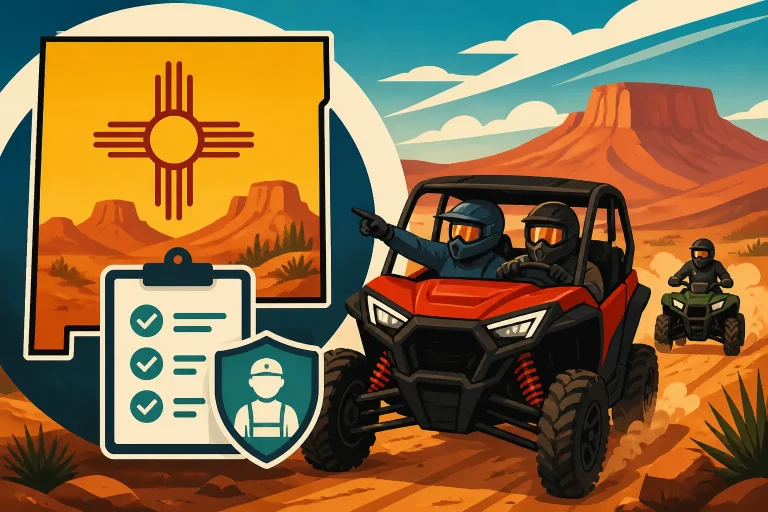
For a 15-year-old, the practical checklist is straightforward: confirm the youth safety-permit requirement, verify any claimed credential-based exception, follow supervision rules, check the machine’s paperwork, and confirm that the route is open. Bring the teen’s required proof and protective gear, and choose a ride suited to their ability.
Because permits, forms, and rules can change, check current official instructions before the trip. If there is uncertainty about a learner’s permit, motorcycle credential, supervision arrangement, or machine type, ask the responsible agency for clarification rather than relying on another rider’s interpretation. A little checking beforehand can prevent a turned-back ride and help keep the outing focused on safe riding.
Disclaimer
This article is for general informational purposes only and does not constitute professional advice. Laws, prices and regulations vary by location and change over time. Consult a qualified professional for guidance on your specific situation.