New Mexico’s Paved Street Opt-In
The open roads of New Mexico beckon, but for many ATV and UTV enthusiasts, the dream of seamlessly connecting trails or running into town for supplies is often met with a confusing maze of regulations. It’s incredibly frustrating to know there are legal ways to ride your machine on paved roads, yet the exact steps feel shrouded in mystery, leaving you wondering if your off-highway vehicle (OHV) can ever truly be "street legal." This comprehensive guide is here to demystify New Mexico’s paved street opt-in, breaking down everything you need to know to legally take your quad or side-by-side from dirt to asphalt.
Understanding New Mexico's "Street Legal" Ambiguity
Let's be honest, the term "street legal" for an ATV or UTV in New Mexico can feel like a contradiction in terms. You bought an off-highway vehicle, after all. But the reality in our vast, trail-rich state is that sometimes, the best way to get from one epic riding spot to another, or simply to grab lunch in a small town, involves a stretch of paved road. The confusion surrounding this issue is palpable, and it often leads to riders feeling uncertain, or worse, unintentionally breaking the law.
The Common Misconception About ATVs on Pavement
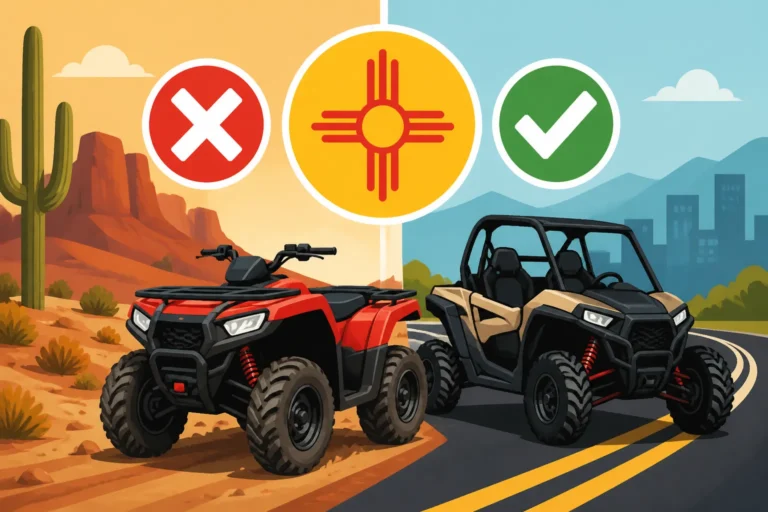
Many riders, especially those new to the state or the sport, assume that if their machine has a basic OHV registration decal, it's good to go on any paved road. This is a significant misconception that can lead to fines and headaches. A standard yellow OHV decal signifies that your machine is legally registered for off-highway use, period. It doesn't grant you carte blanche to cruise down Main Street or connect between federal lands on a state highway. The rules are much more nuanced than that, and ignoring them can turn a fun ride into a costly lesson. You see folks riding on pavement in some areas, and it makes you wonder, "Why can't I?" The answer often lies in specific local ordinances or the proper state-level "opt-in" that many don't even know exists.
Why a Traditional License Plate Isn't Enough
Unlike a car or motorcycle, an ATV or UTV isn't automatically granted road privileges just because it's titled and registered. You won't just walk into the MVD, get a regular car plate, and be on your way. The state of New Mexico recognizes that OHVs have a different design, different safety considerations, and a different primary purpose than on-highway vehicles. Therefore, a separate, specific system is in place for those who wish to extend their OHV's use to certain paved roads. This system requires not just a special plate, but also specific equipment and adherence to additional rules. It’s not about transforming your quad into a car; it’s about carefully regulating its limited use on a shared paved infrastructure.
The Frustration of Disconnected Trails
Picture this: You're out exploring some incredible BLM land or a section of national forest, and the perfect next trail is just across a short stretch of county road. Or maybe you want to ride from your campsite directly to a gas station or a small cafe in a nearby town. Without the paved street opt-in, you're faced with the tedious and time-consuming process of loading your machine back onto a trailer, driving a short distance, and then unloading again. This breaks the flow of your adventure and can be incredibly frustrating. It's why many riders desperately seek a way to legally bridge these gaps, longing for the freedom to ride continuously without interruption. The good news is that New Mexico has listened to these frustrations and provided a pathway, albeit a detailed one, to connect those dots.
What Exactly is the Paved Street Opt-In?
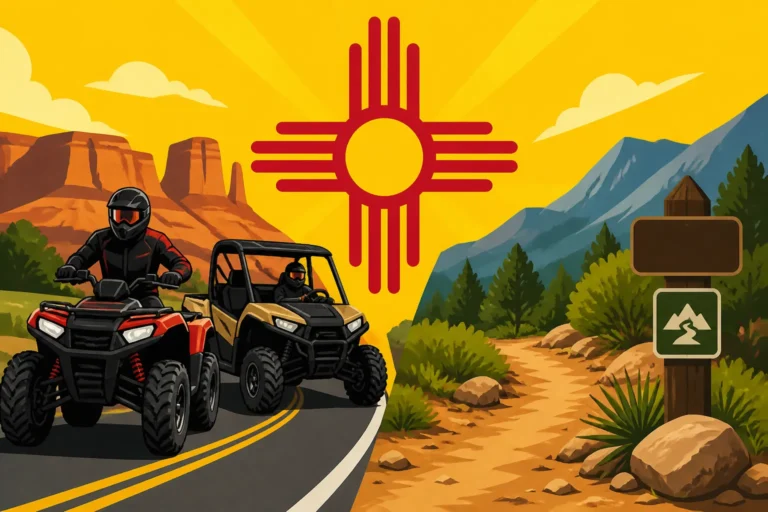
New Mexico's paved street opt-in is the state's solution to allow registered off-highway vehicles to legally operate on certain paved public roads. It's not a blanket "street legal" status that lets you drive anywhere, but rather a conditional permission designed to facilitate access to trails, services, and residences. This system acknowledges the growing popularity and utility of ATVs and UTVs for recreation, utility, and connecting communities in our rural landscape. It's a pragmatic approach that attempts to balance rider freedom with public safety.
Defining the Legal Framework for OHV Road Use
The backbone of New Mexico's OHV paved road use is rooted in specific legislation, most notably changes enacted in 2017. This legislation created the framework for what we now know as the "opt-in" system. Essentially, it allows counties and municipalities to choose to open their paved roads to OHV traffic, under specific conditions. It doesn't force them to; it simply gives them the power to do so via resolution or ordinance. For the state, it means that if your OHV meets certain equipment, registration, and insurance requirements, you can access these locally-opened roads. It's a partnership between state regulations and local governance, meaning your ability to ride on pavement can change from one town limit to the next. Understanding this hierarchy of rules is crucial.
The Purpose of the Green Decal and Paved Road Plate
At the heart of the state's opt-in system are two key identifiers: the green decal and the paved road plate.
The green decal is your first step. Unlike the yellow decal which is solely for off-highway use, the green decal signals that your OHV is registered for both off-highway and on-highway use. It means you've acknowledged and met the initial state-level requirements to even consider pavement riding. Think of it as your entry ticket to the system. You'll apply for this through the MVD, just like your initial [New Mexico's First OHV Registration].
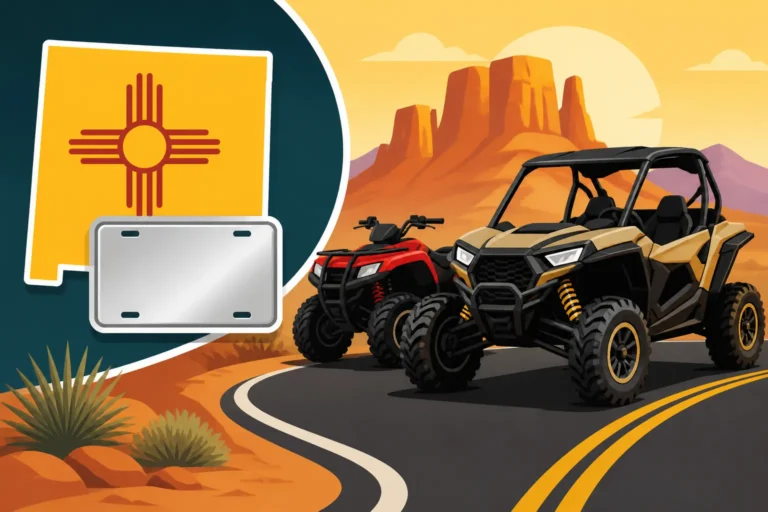
The paved road plate is the second, equally vital component. This is a physical license plate, distinct from a standard vehicle plate, that must be displayed on your OHV when operating on pavement. It's the final visual cue to law enforcement and other drivers that your machine is authorized for limited road use. Without this plate, even with a green decal, you're not fully compliant for paved road use. This dual system ensures that machines venturing onto pavement are clearly identified and have met the stricter criteria. For more details, check out [New Mexico's Paved Road Plate].
The Evolution of New Mexico's OHV Road Laws
The current system isn't something that appeared overnight. New Mexico's OHV road laws have evolved significantly over the years, often in response to rider demand, safety concerns, and the changing landscape of OHV technology. There was a time when paved road stickers were an option, but that program has since concluded, making way for the current plate system. These changes reflect a continuous effort to create a safer, more navigable environment for riders while also protecting other road users. Understanding this evolution helps riders appreciate the current regulations as a well-considered framework, rather than arbitrary rules. The aim is to create clarity and consistency across the state, even as local jurisdictions maintain the right to opt-in or out.
The Specific Requirements for Opting In
So, you're ready to embrace the paved street opt-in and gain that much-desired flexibility. Great! But before you hit the MVD, it’s critical to understand that this isn’t just about getting a different sticker. There are concrete, non-negotiable requirements that your machine, and you as the operator, must meet. Skipping any of these steps could render your "street legal" attempt invalid and open you up to penalties. It’s all about proving your OHV is as safe as possible for interacting with traditional vehicle traffic.
Mandatory Equipment for Paved Road Riding
This is where your OHV starts to look a bit more like a traditional road vehicle. For the safety of everyone on the road, New Mexico law mandates specific equipment for OHVs operating on pavement. If your machine doesn't have these, you'll need to install them. This often means some aftermarket additions, but many manufacturers are now building UTVs with some of these features standard, knowing riders want this capability.
Here’s a breakdown of what you'll need:
- Headlights and Taillights: Your OHV must have at least one headlight that illuminates objects at 150 feet and at least one taillight visible from 200 feet to the rear. This is crucial for visibility, especially during dawn, dusk, or in adverse weather.
- Brakes: Functional brakes on all wheels, capable of stopping your vehicle safely. This is standard on most OHVs, but always good to confirm they are in top working order.
- Mirrors: At least one rearview mirror is required. This allows you to see traffic approaching from behind without constantly turning your head, which can be dangerous on pavement. Companies like SuperATV offer a wide range of aftermarket mirrors that can easily be installed to meet this requirement.
- Horn: A working horn or warning device. This is vital for alerting other drivers or pedestrians to your presence.
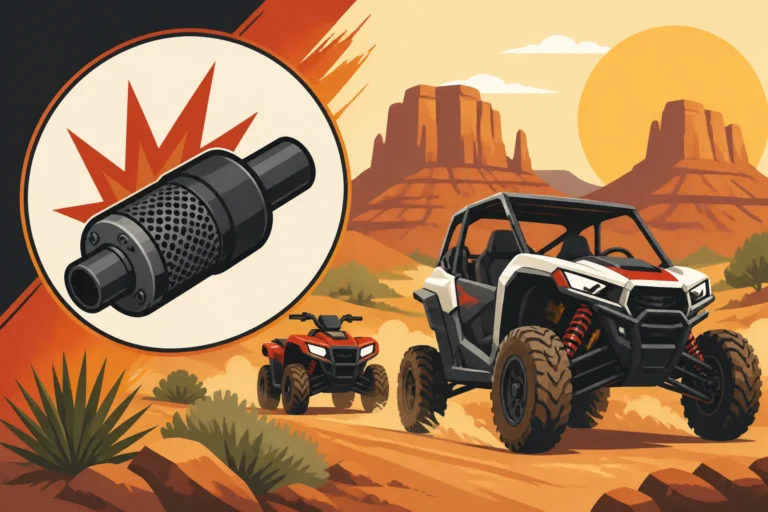
- Muffler and Spark Arrester: While generally required for off-road use, it's particularly important for paved road riding that your muffler keeps noise levels within legal limits (typically 96 decibels). A spark arrester is also crucial if you plan to access public lands that require them, which often connect via paved roads.
- Tires: Your tires must be specifically designed for highway use or be of a type that will not damage paved surfaces. This usually means not running aggressive mud tires on asphalt, as they wear quickly and can be unstable.
It's a good idea to check out the full list of [New Mexico Equipment Rules for Road Use] to ensure you're completely compliant.
Insurance and Driver's License Obligations
Operating any vehicle on a public road comes with responsibilities, and an OHV is no exception.
- Insurance: You absolutely must carry proof of financial responsibility (liability insurance) when operating your OHV on paved public roads. This protects you and others in case of an accident. The minimum coverage amounts are typically the same as for a car. Without this, you're not just risking a fine; you're risking significant financial hardship if something goes wrong. Ensure your policy specifically covers on-highway use for your OHV. Consult [New Mexico's Mandatory Financial Responsibility Act] for precise details.
- Driver's License: Just like driving a car, you need a valid driver's license to operate an OHV on paved public roads. This means a standard New Mexico driver's license, not just an OHV safety permit. This requirement ensures that you have demonstrated basic driving competency and knowledge of road rules. This is covered in more detail in [A Driver's License on a New Mexico Paved Road].
Understanding the Decal and Plate System
Let's reiterate the crucial role of the decals and plate. When you successfully opt-in, you’ll receive a green decal and a separate paved road plate. The green decal essentially replaces your yellow one, signifying your machine is cleared for both on and off-highway use. It typically mounts on the left-rear fender of an ATV or the left-rear quarter panel of a side-by-side. The paved road plate, much like a car's license plate, must be affixed to the rear of your OHV. [Why New Mexico Wants Both Decals for Pavement] explains the full reasoning behind this dual identifier system. It's about clear, immediate identification for law enforcement and other drivers that your machine is following the rules.
Navigating Which Roads Are Open (and Which Aren't)
This is perhaps the most critical, and often confusing, aspect of New Mexico's paved street opt-in: not all paved roads are created equal when it comes to OHV use. Just because your machine is equipped and registered doesn't mean you can go wherever you please. Understanding the distinction between local control and state highways is paramount to avoiding fines and staying safe.
City Streets and County Roads: The Local Control Factor
The key to riding on paved city streets and county roads lies in local ordinances. New Mexico state law allows, but does not mandate, that counties and municipalities open their paved roads to OHVs. This means it's entirely up to your local county commission or city council to pass a resolution or ordinance permitting OHV use on their specific paved roads.
- County Roads: Many rural counties in New Mexico have recognized the utility and recreational value of OHVs and have opted to open many of their paved county roads. This is a game-changer for connecting trails and accessing remote areas. However, you must always verify the specific ordinance for the county you are riding in. Some might open all, some might open only certain roads, and some might not open any. [New Mexico Rules for Riding a County Road] provides deeper insight into this.
- City Streets: Riding on city streets is even more localized. A town within a county that has open county roads might still have its own ordinance prohibiting OHVs on its paved streets. For example, some small towns enthusiastically welcome OHVs, viewing them as a boost for tourism, while others may restrict them to certain routes or ban them entirely due to traffic concerns or noise. Always, always check local municipal rules before riding onto paved city streets. Don't assume anything.
State Highways and Interstate Crossings: Strict Limitations
Here's a crucial point that causes a lot of confusion: New Mexico state highways (those designated as NM XX, US XX, or I-XX) are generally off-limits for OHV travel, even with a paved road plate. The state's opt-in system is primarily designed for local roads. You might see a state highway sign and think "paved road," but these fall under different regulations.
- State Highway Travel: Direct travel along state highways is typically prohibited for OHVs. This is due to safety concerns regarding speed differentials, traffic volume, and the design of these roads.
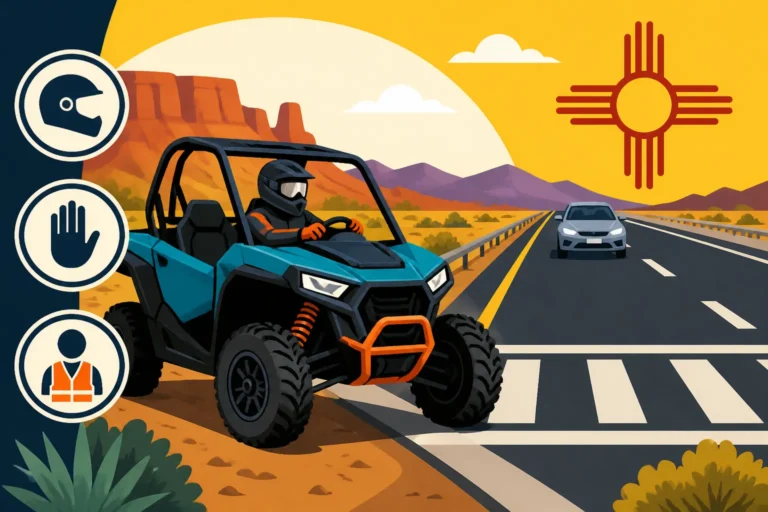
- Crossing a State Highway: There are specific, limited exceptions for crossing a state highway. You might be allowed to cross a state highway at a designated intersection to get from one section of trail to another. When doing so, you must always stop fully, yield to all traffic, and cross the highway as perpendicularly and directly as possible. You cannot ride down the shoulder or use the highway as a travel route.
- Interstate Freeways: Interstate highways (I-XX) are an absolute no-go. You cannot ride your OHV on an interstate, nor can you even cross an interstate freeway. These are high-speed, controlled-access roads explicitly designed for motor vehicles, not OHVs.
The takeaway? Stick to locally opened county and city roads, and be extremely cautious and informed about state highway crossings.
Specific Town Ordinances and Their Impact (e.g., Red River)
Some towns have very specific and often unique ordinances regarding OHV use, especially those that are popular OHV destinations. A prime example is Red River, a beloved mountain town in northern New Mexico.
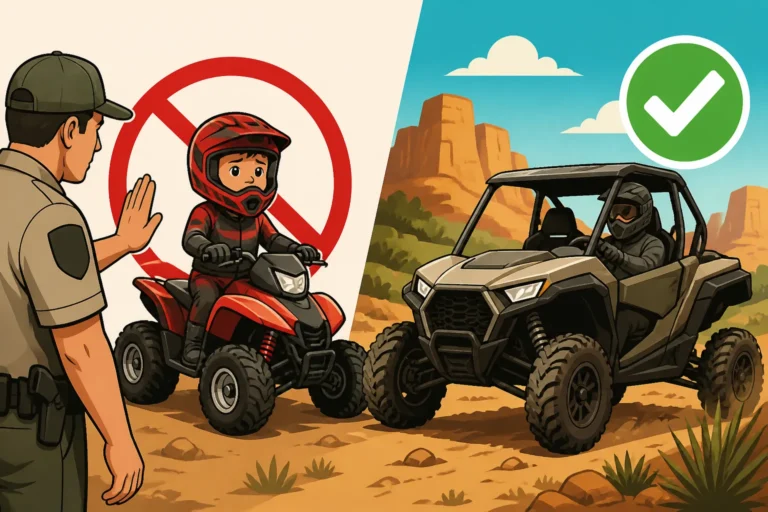
- Red River's Approach: Red River has specific rules allowing certain types of OHVs (primarily side-by-sides, or ROVs) on most of its town streets. However, there are nuances, like specific curfews (e.g., no riding between 7 p.m. and 8 a.m.) and certain sections of main street (like NM 38) that might be off-limits. They also have rules about parking and generally restrict ATVs (quads) while allowing ROVs. This creates a specific experience for riders in Red River, allowing them to access restaurants and shops directly from their machines, but within a regulated framework. Learn more about [Red River's ROV-Only Streets] to avoid surprises there.
The lesson from places like Red River is clear: even if a county opens its roads, individual towns within that county can (and often do) have their own stricter or different rules. Always, always do your homework for the specific area you plan to ride. A quick call to the local sheriff's office or city hall can save you a lot of trouble.
The Process: How to Get Your OHV Road-Ready
Now that you understand the "why" and "what" of the paved street opt-in, let's talk about the "how." The process involves a few distinct steps, primarily interacting with the New Mexico Motor Vehicle Division (MVD) and ensuring your machine is up to snuff. It can feel like a bit of bureaucracy, but it's a structured path to legal road use.
MVD Registration and the Green Decal Application
Your journey to paved road use begins at the MVD. This is where you’ll essentially upgrade your OHV’s registration status.
- Gather Your Paperwork: You'll need proof of ownership (title or Manufacturer's Statement of Origin (MSO)), proof of New Mexico residency (if applicable), and your current yellow OHV registration decal if you have one. If you're buying a used machine, make sure you have a proper [New Mexico ATV Bill of Sale Requirements] or the signed-over title.
- Head to the MVD: While some OHV registration can be done online for renewals, applying for the green decal and paved road plate usually requires an in-person visit to an MVD office. Be prepared for potentially longer wait times, especially if you go during peak hours. You can typically find a list of [New Mexico OHV Registration at MVD] offices on their website.
- Request the Green Decal: Inform the MVD agent that you wish to register your OHV for on-highway use, which means applying for the green decal. They will guide you through the necessary forms. This process essentially acknowledges that you intend to comply with all additional requirements for paved road use.
- Proof of Insurance: You will likely need to show proof of your OHV liability insurance that covers on-highway operation at this point. It’s best to have this ready, as it’s a non-negotiable requirement.
- Fees: Be prepared to pay the associated fees for the new registration decal and the paved road plate. These are separate from your regular biennial OHV registration fees.
The MVD agent will process your application, and if everything is in order, you’ll receive your green decal. Remember to carry all your [New Mexico OHV Registration Paperwork] with you when you ride.
Acquiring the Paved Road Plate
Once your MVD registration for on-highway use is processed and you have your green decal, you'll also receive the physical paved road plate.
- Placement: The paved road plate must be securely mounted on the rear of your OHV, in a visible location. It should be illuminated at night, similar to a car's license plate. Make sure it's not obstructed by luggage, accessories, or mud. The regulations are quite specific about placement, so ensure you comply.
- Titling: It's important to note that you generally need to have your OHV titled in New Mexico before you can get the paved road plate. If you bought your machine without a title or need to transfer one, that's a prerequisite. [Titling an Off-Highway Vehicle in New Mexico] outlines these steps.
Ensuring Your Machine Meets Equipment Standards
This step often happens concurrently with or just before your MVD visit. You need to verify that your OHV has all the mandatory equipment discussed earlier (headlights, taillights, brake lights, mirrors, horn, etc.) before you plan to ride on pavement.
- Pre-Ride Check: Before every ride that involves paved roads, do a quick inspection. Are your lights working? Is your horn sounding? Are your mirrors adjusted correctly?
- Aftermarket Additions: If your OHV didn't come with all the necessary equipment, you'll need to purchase and install aftermarket parts. Many reputable companies specialize in OHV accessories, including those designed for street legality. For instance, SuperATV offers a wide array of lighting kits, mirrors, and horn kits that can help bring your machine into compliance. Don't cheap out on these; quality components are crucial for safety and reliability. A well-equipped machine is not just about legal compliance, it's about your safety and the safety of others.
| Requirement | Description | Why it's Important |
|---|---|---|
| Green Decal | State-issued sticker indicating on/off-highway registration. | Visual proof of legal registration for paved road use. |
| Paved Road Plate | Physical license plate displayed on the rear. | Clear identification for law enforcement and other drivers. |
| Headlights | At least one, visible 150 ft forward. | Visibility for you and other drivers, especially in low light. |
| Taillights | At least one, visible 200 ft rearward. | Ensures you are seen from behind. |
| Brake Lights | Functional, activates when brakes are applied. | Alerts following traffic when you are slowing or stopping. |
| Rearview Mirrors | At least one (some recommend two for better visibility). | Essential for seeing traffic behind you. |
| Horn | Audible warning device. | To alert others of your presence. |
| Muffler | Keeps noise within legal limits (96 decibels). | Reduces noise pollution, adheres to community standards. |
| Spark Arrester | Prevents sparks from exiting exhaust (required on most public lands). | Fire prevention, especially important when connecting trails. |
| DOT-Approved Tires | Tires suitable for paved surfaces. | Safety, handling, and wear on asphalt. |
| Liability Insurance | Proof of financial responsibility for accidents. | Financial protection in case of an incident. |
| Valid Driver's License | State-issued license to operate a motor vehicle. | Proof of basic driving competency. |
Common Pitfalls and How to Avoid Them
Even with the best intentions, it's easy to stumble over the nuances of New Mexico's OHV road laws. Many riders have found themselves in a bind because they overlooked a detail, misinterpreted a rule, or simply assumed. Let's delve into some common traps and how you can steer clear of them, ensuring your paved road adventures remain enjoyable and legal.
Forgetting Your Paperwork or Essential Gear
This is a classic oversight, and it can quickly ruin your day. You've gone through all the effort to get your green decal and paved road plate, you've added all the required equipment, but then you leave your proof of insurance at home or forget to put on your helmet if you're under 18.
- Carry Everything: When riding on paved roads, always carry your OHV registration (the physical document, not just the decal), proof of insurance, and your valid driver's license. Keep them in a waterproof bag or compartment on your machine. A sheriff's deputy or local police officer will ask for these, just as they would for a car.
- Gear Check: Before you even leave your staging area, do a quick checklist. Are all your lights working? Horn? Mirrors in place? If you're riding a dirt bike or ATV and you're under 18, is your helmet on and properly secured? Even if you're an adult, eye protection is highly recommended on pavement to shield against debris from other vehicles. Forgetting something as simple as a working headlight could lead to [New Mexico Fines for an Unregistered OHV] or for equipment violations.
Misunderstanding Local Ordinances
As we've discussed, local control is a huge factor. Assuming that because one county has opened its roads, all counties or towns have done the same, is a recipe for trouble. This is perhaps the most frequent pitfall for riders.
- Research Your Route: Before embarking on a ride that involves paved roads, do your homework. Look up the specific county's OHV ordinances and any city ordinances for towns you plan to enter. Many counties post these on their official websites. If in doubt, a quick, polite phone call to the local county sheriff's department or city hall can clarify things.
- Signs Are Your Friends: Pay attention to road signage. Some areas will have signs explicitly stating "OHV Permitted on Roadway" or, conversely, "No OHV Access." These signs are there for a reason and are legally binding. Ignoring them is not an option.
- Example Scenario: Imagine you're riding in Sierra County, which has opened many of its roads. You then decide to dip into the town of Truth or Consequences. While Sierra County itself is largely open, Truth or Consequences might have specific restrictions on its main streets. Without checking, you could easily find yourself in violation.
The Consequences of Non-Compliance
Breaking the rules isn't just about a slap on the wrist. New Mexico takes its OHV regulations seriously, and the penalties for non-compliance can range from inconvenient to financially significant.
- Fines: The most immediate consequence is often a citation and a fine. [New Mexico Fines for Illegal Road Riding] can vary depending on the specific offense, but they can quickly add up, especially if you're cited for multiple violations (e.g., no plate, no insurance, no proper equipment).
- Vehicle Impoundment: In some cases, severe or repeated violations, or riding under the influence, could lead to your OHV being impounded, incurring towing and storage fees on top of any fines.
- Safety Risks: Beyond the legal and financial penalties, the biggest consequence of non-compliance is the increased risk to your safety and the safety of others. Operating an improperly equipped or uninsured OHV on a paved road exposes you to higher chances of accidents and makes you financially vulnerable if an accident occurs.
Always prioritize safety and legality. It’s far better to spend a bit of time on preparation and research than to face the negative repercussions of being unprepared.
Benefits and Best Practices for Paved Road Use
Despite the detailed requirements, the New Mexico paved street opt-in offers significant advantages for OHV riders. It unlocks new possibilities for exploration and convenience. But with this added freedom comes the responsibility to ride safely and courteously. Adopting best practices ensures a positive experience for everyone on the road.
Connecting Trail Systems and Accessing Amenities
The primary benefit of the paved street opt-in is the ability to connect disparate trail systems. No longer are you strictly confined to the dirt; a short hop on a paved county road can link two incredible off-road areas, dramatically expanding your riding options.
- Seamless Transitions: Imagine riding a challenging trail, emerging onto a quiet county road, and then seamlessly transitioning to another trail system without the hassle of trailering. This is the dream the opt-in makes possible. It opens up longer, more varied routes and allows for true point-to-point adventures.
- Access to Services: Beyond connecting trails, the opt-in allows you to access vital amenities. Need to refuel? Grab a snack? Pick up a part? In many rural areas, the only way to do so is via a short trip on a paved road into a small town. This convenience enhances the overall riding experience, making longer trips more feasible and enjoyable.
- Community Integration: In towns that have embraced OHV use, the ability to ride directly into town, park, and enjoy local businesses can foster a strong sense of community between riders and residents, benefiting local economies.
Safety Considerations on Pavement
Riding an OHV on pavement is fundamentally different from riding off-road, and it requires a different safety mindset.
- Vehicle Dynamics: OHVs are designed for rough terrain, not high-speed cornering on asphalt. Their suspension, tire characteristics, and higher center of gravity can make them less stable and more prone to rollover on paved roads, especially at speed or during sharp turns. Always reduce your speed on pavement, particularly around curves.
- Road Hazards: Paved roads have different hazards than trails. Watch out for potholes, gravel at intersections (especially after rain), oil slicks, and other vehicles. Be extra vigilant for debris that could puncture tires.
- Visibility: You are smaller than cars and trucks. Assume other drivers don't see you. Wear bright clothing, use your headlights and taillights even during the day, and use hand signals or turn signals well in advance of a turn. SuperATV, for example, offers various light bars and turn signal kits that can significantly improve your visibility to other motorists.
- Distracted Drivers: Be acutely aware of distracted drivers in traditional vehicles. They may not be looking for an OHV on the road. Maintain extra following distance and be prepared to react defensively.
- Helmet and Eye Protection: While not strictly mandated for adults on pavement, a helmet is always a smart choice for any OHV riding, especially when sharing roads with cars. Eye protection, such as goggles or a face shield, is critical to protect your vision from wind, dust, and road debris. [New Mexico Helmet Law for ATV Riders] outlines rules for minors, but safety is for everyone.
Riding Etiquette and Sharing the Road
When you take your OHV onto paved roads, you become an ambassador for the entire OHV community. Your actions reflect on all riders. Good etiquette is essential for maintaining positive relationships with other road users and local communities.
- Follow Traffic Laws: This might seem obvious, but it's crucial. Obey all speed limits, traffic signals, stop signs, and yield signs. Use appropriate hand signals or turn signals. Don't weave in and out of traffic.
- Be Respectful of Noise: While your muffler must be within legal limits, be mindful of noise, especially in residential areas. Avoid unnecessary revving.
- Stay in Your Lane: Don't hog the road. Ride as far to the right as safely possible, especially on two-lane roads without shoulders, to allow other vehicles to pass safely.
- Avoid Aggressive Driving: Aggressive riding on pavement creates a negative perception of OHV riders and can jeopardize future road access. Be courteous, patient, and predictable.
- Cleanliness: Try to avoid tracking excessive mud or dirt onto paved roads from trails. While sometimes unavoidable, being mindful helps prevent creating hazards for other vehicles and keeps the roads cleaner.
- Wave and Acknowledge: A friendly wave to other drivers, pedestrians, or homeowners can go a long way in fostering goodwill. It shows you're a responsible member of the community.
By adhering to these best practices, you not only ensure your own safety and legal compliance but also contribute to a positive public image for OHV enthusiasts in New Mexico.
Looking Ahead: Future of OHV Road Use in New Mexico
The landscape of OHV recreation is dynamic, and New Mexico's laws are not set in stone. As the popularity of ATVs and UTVs continues to grow, so too do the discussions around their integration into public road systems. Staying informed and engaged is key to understanding potential changes and advocating for the future of riding.
Potential Changes and Ongoing Discussions
Legislation and local ordinances are living documents, often subject to review, amendment, and expansion. What's true today might evolve tomorrow.
- Expanding Access: There's ongoing advocacy from rider groups to expand OHV access to more paved county and city roads, and potentially to more state roads where traffic conditions allow for safe operation. This often involves discussions about road design, speed limits, and enforcement.
- Safety Enhancements: As technology advances, there may be discussions around mandating additional safety equipment for OHVs on pavement, or stricter training requirements.
- Environmental Concerns: Increased OHV use, even on paved roads, can sometimes bring environmental concerns, especially regarding dust, noise, and erosion if riders stray from designated areas. These concerns can influence future regulations.
- Specific Vehicle Types: The distinction between ATVs (quads) and ROVs (side-by-sides) is often a topic of discussion, with some municipalities being more permissive towards one type over the other, as seen in [Why Red River Bans ATVs but Allows ROVs]. This could lead to more nuanced rules for different machine types.
Advocacy for OHV Rider Rights
For the OHV community to continue enjoying and potentially expanding paved road access, active advocacy is crucial.
- Join Rider Associations: Becoming a member of state or local OHV rider associations gives you a voice. These organizations actively monitor legislative proposals, lobby lawmakers, and educate the public on responsible OHV use.
- Engage with Local Government: Attend local county commission or city council meetings when OHV-related topics are on the agenda. Write letters, send emails, or speak during public comment periods. Your personal stories and perspectives can make a difference in shaping local ordinances.
- Promote Responsible Riding: The best advocacy comes from riders themselves demonstrating responsible behavior. When riders consistently follow the rules, respect private property, and practice good trail etiquette, it builds trust and makes a stronger case for continued and expanded access.
Staying Informed About Regulations
Given the potential for change, it’s imperative for riders to stay on top of current regulations.
- Official Sources: Regularly check the New Mexico MVD website for updates on state laws. For local rules, consult official county and city government websites.
- Rider Community: Engage with local OHV clubs and online forums. These communities are often the first to hear about proposed changes or new ordinances and can provide valuable insights and discussions.
- Local Media: Keep an eye on local news sources in areas where you frequently ride, as they often report on new ordinances or changes to existing ones.
The future of OHV paved road use in New Mexico is largely in the hands of its riders. By understanding the current system, riding responsibly, and actively participating in the conversation, you can help ensure that the freedom to connect trails and explore our beautiful state by OHV continues for years to come.
Disclaimer
This article is for general informational purposes only and does not constitute professional advice. Laws, prices and regulations vary by location and change over time. Consult a qualified professional for guidance on your specific situation.