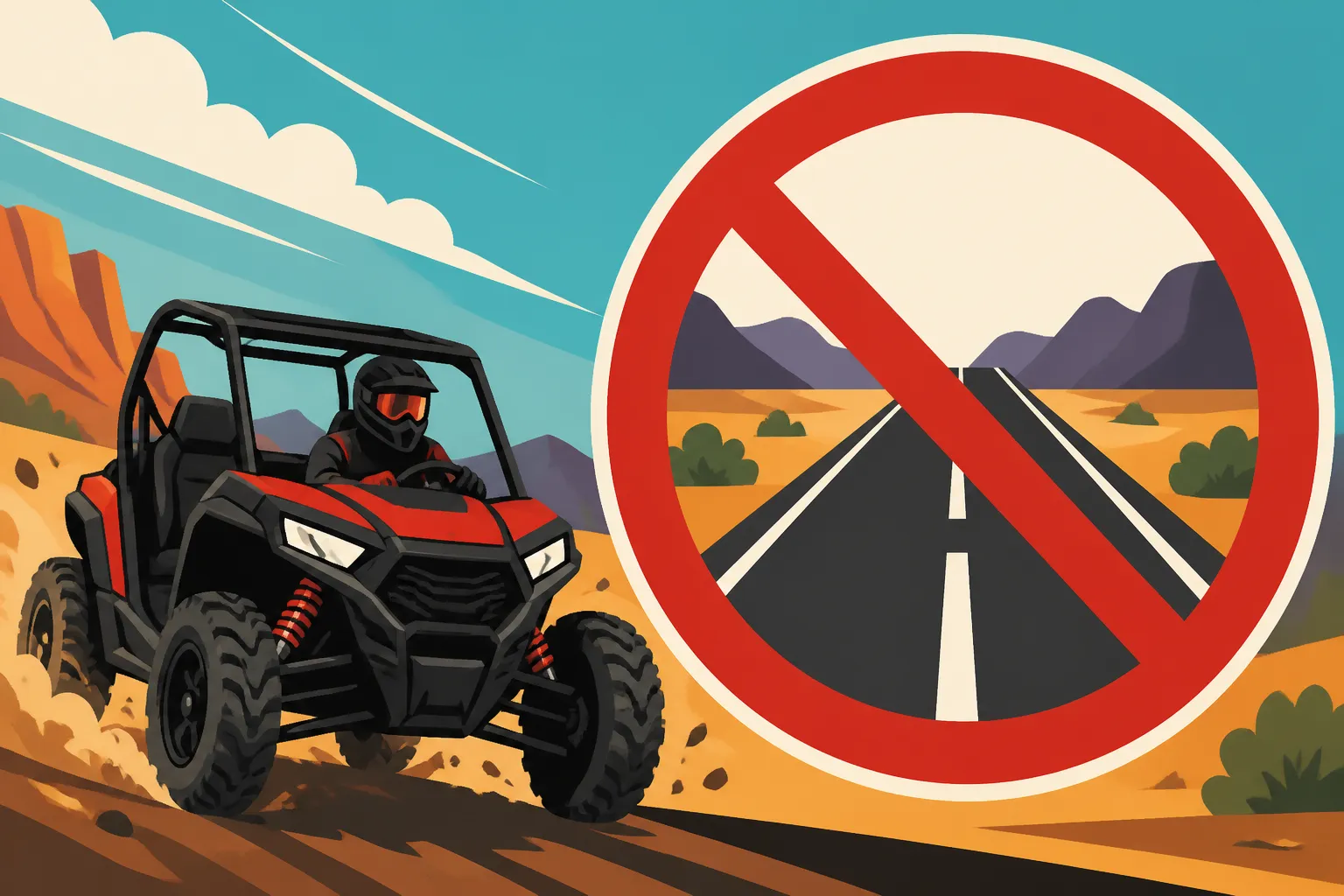
Why New Mexico State Highways Are Off Limits
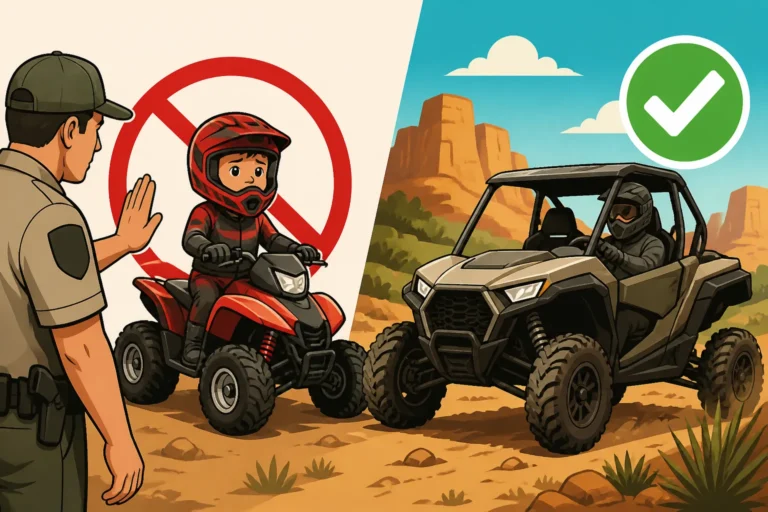
It’s a scene many of us have experienced: you're out riding your ATV or UTV, enjoying the freedom of the New Mexico landscape, when you come across a beautifully paved state highway. Your gut reaction might be, "Why can't I just hop on for a short stretch? It looks so inviting!" This frustration is completely understandable, especially when you see open county roads nearby. But the truth is, New Mexico state highways are fundamentally off-limits to off-highway vehicles, and this comprehensive guide is here to shed light on exactly why, covering everything from legal distinctions to safety concerns and what your alternatives are for paved riding.
The Fundamental Divide: Off-Highway vs. On-Highway
Understanding why state highways are a no-go for your ATV or UTV starts with recognizing the core differences in how vehicles are classified and intended for use in New Mexico. It's not just an arbitrary rule; it's rooted in the very nature of these machines and the infrastructure they're meant to interact with.
What Defines an Off-Highway Vehicle in New Mexico?
In New Mexico, an Off-Highway Vehicle (OHV) is legally defined by its design. These are machines primarily manufactured for off-highway use, including ATVs (all-terrain vehicles), UTVs or side-by-sides, dirt bikes, and even snowmobiles (though we don't see much snowmobiling in the Land of Enchantment!). The key here is "off-highway." They're built for rugged terrain, tight turns, climbing hills, and navigating trails – not for sustained speeds or the demands of asphalt highways. Think knobby tires, high ground clearance, shorter wheelbases, and suspensions designed to absorb impacts from rocks and ruts, not for smooth, high-speed cornering. This fundamental design means they simply don't meet the safety and performance standards required for regular highway travel alongside passenger cars and heavy trucks. The New Mexico Motor Vehicle Division (MVD) classifies these machines distinctly, and that classification guides all the rules surrounding their operation.
The Legal Framework for Pavement Use
New Mexico actually has a pretty progressive "opt-in" system when it comes to OHV use on some paved roads. This means that counties and municipalities have the authority to pass ordinances or resolutions allowing OHVs on roads under their jurisdiction. It's why you might find certain city streets or county roads perfectly legal for your side-by-side, especially in areas like Red River or Sierra County, which has largely opened its county road system. Riders need to secure a [New Mexico's Green On and Off-Highway Decal] if they intend to ride on these open paved county or city roads, signaling that their machine is equipped for such use and that they understand the additional responsibilities that come with it. However, this "opt-in" framework has very clear boundaries. It's a local decision, and that authority simply does not extend to state highways. These are managed by the New Mexico Department of Transportation (NMDOT), which operates under a different set of regulations that prioritize the safety and flow of traditional highway traffic.
Why State Highways Are Different
State highways are the backbone of New Mexico's transportation network. They're designed for high-speed travel, efficient movement of goods and people, and handle significantly higher volumes of traffic than most local roads. Their engineering reflects this: wider lanes, broader shoulders (if any), gentler curves, and long sight lines are all optimized for vehicles traveling at 55 mph or more. When you introduce a slower, less stable OHV into this environment, it creates a massive speed differential, a huge safety hazard for both the OHV rider and other motorists. Furthermore, the average state highway often lacks the immediate access to emergency services that local roads might have, and the sheer volume of traffic makes any incident far more dangerous and disruptive. The legal distinction for state highways ensures a consistent safety standard across major transportation corridors, which OHVs simply aren't built to meet.
Safety Concerns and Highway Engineering
The restrictions on OHVs on state highways aren't just about administrative categories; they're deeply rooted in critical safety considerations and the fundamental differences in how these vehicles are engineered compared to street-legal cars and trucks.
Speed Differentials and Collision Risk
Imagine trying to drive a bicycle on the interstate. The speed difference alone would be incredibly dangerous, right? That’s essentially the core issue with OHVs on state highways. Even a powerful UTV running at its top speed of 50-60 mph is still significantly slower than most highway traffic, which often moves at 75 mph or more. This speed differential drastically reduces reaction time for other drivers. A car approaching an OHV from behind has less time to see it, process the speed difference, and react safely, leading to a much higher risk of rear-end collisions. For the OHV rider, the force of a collision with a full-sized vehicle at highway speeds can be catastrophic. The robust chassis of a truck offers little protection to the open cabin of most OHVs. This is why laws like [New Mexico Fines for Illegal Road Riding] exist, not just to punish, but to prevent these incredibly dangerous situations.
Structural and Equipment Limitations of OHVs
Off-highway vehicles, by their very design, are not built for paved road travel. Their knobby tires are fantastic for gripping dirt, rocks, and mud, but they offer poor traction and quick wear on asphalt, especially at speed. They can also affect handling, making the machine feel squirrely or less stable. The suspension, optimized for absorbing trail impacts, can feel soft and prone to excessive body roll on smooth pavement, particularly when cornering at higher speeds. Most OHVs lack essential safety equipment found on street-legal vehicles, such as DOT-approved headlights and taillights with proper turn signals, side mirrors, and a fully enclosed cabin with crumple zones. While aftermarket kits, like those from SuperATV, can add some of these features, they don't fundamentally change the vehicle's underlying design or crash-worthiness for highway use. The brakes, while effective off-road, might not be designed for the sustained, high-speed stops required on a highway.
Visibility Issues
Beyond speed and equipment, visibility is a massive concern. OHVs are simply smaller and sit lower than most highway traffic. A side-by-side or ATV can easily disappear into a truck's blind spot or be hard to spot in heavy traffic, especially at dawn, dusk, or in adverse weather conditions. Even with headlights on, their single or dual small lights might not be as conspicuous as the larger, brighter light arrays of cars and trucks. The lack of standard turn signals on many OHVs makes it incredibly difficult for other drivers to anticipate their movements. Imagine trying to signal a lane change or an upcoming turn on a busy highway with hand signals or small, non-standard lights – it’s a recipe for confusion and danger. This reduced visibility significantly amplifies the collision risk, making state highways an unsuitable environment for OHVs.
New Mexico's "Opt-In" System: Where It Works and Where It Doesn't
New Mexico has established a unique system that allows for some OHV use on paved roads, but it's crucial to understand the nuances of where this "opt-in" system applies and, more importantly, where it absolutely does not. This distinction is key to staying legal and safe while exploring the state.
County and Municipal Road Openings
The "opt-in" system is a fantastic example of local control, empowering individual counties and municipalities to assess their own needs and traffic patterns. Many communities across New Mexico have recognized the economic and recreational benefits of allowing OHVs on certain paved roads within their jurisdiction. For instance, towns like Red River have embraced OHVs, especially UTVs, allowing them on many town streets to facilitate access to trails and local businesses. Similarly, you'll find areas where counties, like [Sierra County's Open County Roads], have opened up large portions of their paved road networks. These decisions are typically made through formal ordinances or resolutions, often after community input and a careful review of safety considerations. When riding on these designated open roads, OHVs must still adhere to specific rules, including displaying the correct [New Mexico's Green On and Off-Highway Decal] and having the necessary safety equipment. Riders are expected to know and follow the specific rules for each county or town they visit.
The Specific Exclusion of State Highways
Despite the local "opt-in" flexibility, state highways remain universally off-limits to OHVs in New Mexico. This is not a local decision; it's a statewide regulation that reflects the different purpose and management of these major arteries. State highways are the responsibility of the New Mexico Department of Transportation (NMDOT), and their regulations supersede any local ordinances when it comes to these specific roads. The reasons, as we've discussed, boil down to inherent safety concerns due to speed differentials, vehicle design limitations, and the sheer volume of high-speed traffic. Even if a county opens up all its county roads, the moment you hit a state highway, the rules change. There is no "opt-in" provision for OHVs on NMDOT-maintained state highways, making it illegal to operate your ATV or UTV on them, regardless of how short the stretch might be or how modified your machine is.
Different Decals for Different Uses
New Mexico's decal system really helps illustrate the distinction between off-highway and on-highway use, even for OHVs. When you register an OHV, you primarily get a [New Mexico's Yellow Off-Highway Decal]. This decal signifies that your machine is registered for off-highway use on public lands and designated trails. It does not grant you permission to ride on any paved roads. If you intend to ride on those special county or municipal paved roads that have opted in, you then need to obtain the [New Mexico's Green On and Off-Highway Decal]. This green decal requires your vehicle to meet additional equipment requirements, such as mirrors, a horn, and proper lighting, which often involves adding aftermarket parts from places like SuperATV. It's a clear signal that your OHV is equipped for limited on-pavement use in specific, allowed areas. The key takeaway is that neither of these decals, not even the green one, grants you permission to ride on New Mexico state highways. They represent a tiered system of access, with state highways firmly at the top of the "no-go" list for OHVs.
Equipment and Legal Requirements for Pavement Riding (Where Permitted)
While state highways are off-limits, it's important to understand the equipment and legal requirements if you plan to ride your OHV on those local paved roads that do allow it. Even on permitted routes, there's a strict standard you need to meet to ensure safety and stay within the bounds of the law.
Mandatory Safety Gear and Vehicle Modifications
For any OHV operating on a paved public road in New Mexico (where permitted by local ordinance), certain safety gear and vehicle modifications are non-negotiable. First and foremost, helmets are generally required for all riders and passengers under the age of 18, and highly recommended for everyone else. Beyond that, [New Mexico Helmet Law for ATV Riders] specifically outlines these requirements. Eye protection is also mandatory for all riders and passengers on paved surfaces. Your machine itself needs to be up to snuff. This includes a working headlight that projects at least 150 feet, and a taillight visible from at least 200 feet. Turn signals, a horn, and at least one rearview mirror are also required so you can clearly communicate your intentions to other drivers and be aware of your surroundings. And, of course, your OHV must have a functional braking system. Many riders turn to aftermarket suppliers like SuperATV for these kinds of modifications, which can include robust LED lighting kits, durable mirrors, and loud horns that are vital for road safety.
Insurance and Licensing for Paved Roads
Just like operating a car, riding your OHV on any paved public road in New Mexico requires proof of financial responsibility. This usually means carrying liability insurance. The [New Mexico ATV Insurance Requirement] mandates a minimum level of coverage to protect against damages or injuries you might cause to others. This isn't just a suggestion; it's a legal necessity. If you get pulled over or are involved in an incident on a paved road, proof of insurance will be requested, and riding without it can lead to significant penalties.
Furthermore, a valid driver's license is essential. While you might not need one to ride strictly off-road, the moment you put rubber on pavement, even on an approved county road, you become subject to standard motor vehicle licensing laws. The [New Mexico Driver's License Rules for OHVs] state that anyone operating an OHV on a public street or highway (meaning an approved county or city road) must possess a valid driver's license. This ensures that riders have demonstrated a basic level of driving competence and understanding of traffic laws before sharing the road with other vehicles.
Why Even a Modified OHV Doesn't Qualify for State Highways
This is where the line really becomes firm. Even if you've gone above and beyond, installing every street-legal kit available from a reputable vendor like SuperATV – turn signals, horn, DOT-approved tires, windshield, and more – your ATV or UTV is still legally classified as an Off-Highway Vehicle. The modifications make it safer and compliant for those specific local paved roads that have opted in, but they do not magically transform it into a street-legal vehicle eligible for state highways. The reason is that state highways fall under a different jurisdiction and a more stringent set of vehicle construction and safety standards that OHVs, at their core, are simply not designed to meet. It's not about the individual components you add; it's about the fundamental chassis, frame, engine, and overall vehicle type that the manufacturer designated as "off-highway." So, while modifications are great for approved local roads, they don't open up state highways.
Navigating the Landscape: Crossing and Alternative Routes
So, state highways are off-limits for riding, but what if you need to get to the other side? Or what if you just want to find awesome places to ride legally? New Mexico offers specific rules for crossing and a plethora of alternative routes to keep you on the right side of the law and safely enjoying your OHV.
The Perpendicular Crossing Rule
You might encounter situations where a fantastic trail continues directly across a state highway, or you need to access an open county road on the opposite side. New Mexico law does provide a specific, limited allowance for OHVs to cross state highways, but it comes with strict conditions. This is known as the [New Mexico's Perpendicular Crossing Rule]. The rule states that you can cross a state highway only if you do so at approximately a ninety-degree angle (perpendicularly) to the roadway. You must come to a complete stop before entering the roadway, yield to all oncoming traffic, and proceed directly across the shortest possible distance. This isn't an invitation to ride on the highway, even for a short stretch; it's strictly for traversing it from one side to the other. Think of it like a pedestrian crossing – you cross, you don't walk down the middle. This rule is designed to minimize your time exposed to highway traffic and reduce the risk of collisions.
Designated Routes and Forest Roads
While state highways are out, New Mexico boasts an incredible network of legal and exciting places to ride. The vast majority of OHV recreation happens on designated routes on public lands. This includes countless miles of forest roads within New Mexico's national forests, like the Carson National Forest or the Gila National Forest. The [New Mexico Rules for Riding a Forest Road] are important to understand, as many of these roads are unpaved and specifically managed for mixed-use, including OHVs. Similarly, Bureau of Land Management (BLM) lands offer extensive riding opportunities, with [New Mexico Rules for Riding a BLM Road] guiding access to vast desert and mesa landscapes. These federal lands often have travel management plans that designate specific trails and roads open to OHVs, and these are where your off-highway machine truly shines. You can explore incredible scenery, access remote areas, and enjoy the true essence of off-roading without the dangers and legal worries of paved highways.
Avoiding Fines and Staying Legal
It cannot be stressed enough: violating OHV laws in New Mexico, especially by riding on prohibited state highways, can lead to substantial penalties. These aren't just minor slaps on the wrist; [New Mexico Fines for an Unregistered OHV] or for illegal operation can range from hundreds of dollars to impoundment of your machine, and possibly even more severe consequences if an accident occurs. Always assume a road is closed to OHVs unless you have explicit confirmation otherwise, ideally from a sign, map, or local ordinance. Before heading out, especially if you plan on mixing some paved riding with your off-road adventures, take the time to research the specific areas you'll be in. Check county and city websites for their OHV ordinances, consult forest service or BLM maps for designated routes, and keep an eye out for signage. A little planning goes a long way in ensuring a fun, safe, and legal riding experience.
Road Type Comparison for OHVs
To make things a little clearer, here's a quick comparison of different road types and how they generally apply to OHV use in New Mexico:
| Road Type | Generally Allowed for OHVs? | Key Conditions / Restrictions | Decal Needed | Governing Authority |
|---|---|---|---|---|
| State Highways | No | Strictly Prohibited for Riding. May only be crossed perpendicularly at 90-degree angle, yielding to all traffic. | Neither | New Mexico Department of Transportation (NMDOT) |
| County Roads | Sometimes | Only if county has an "opt-in" ordinance. Must meet [New Mexico Equipment Rules for Road Use] and have insurance/license. | Green On & Off-Highway Decal (plus Yellow for trails) | County Government |
| City/Town Streets | Sometimes | Only if municipality has an "opt-in" ordinance (e.g., Red River). Must meet equipment, insurance, and license requirements. | Green On & Off-Highway Decal (plus Yellow for trails) | Municipal Government |
| Forest Roads | Yes | Typically open to OHVs unless specifically closed or designated otherwise. Check USFS maps and local rules. | Yellow Off-Highway Decal | U.S. Forest Service |
| BLM Roads | Yes | Typically open to OHVs unless specifically closed or designated otherwise. Check BLM travel management plans. | Yellow Off-Highway Decal | Bureau of Land Management |
| Private Roads | Yes | Only with explicit permission from the landowner. | Yellow Off-Highway Decal (or none, if on private land only) | Private Landowner |
This table serves as a general guide. Always verify specific regulations for your intended riding area before you head out!
Future Outlook and Advocacy
The landscape of OHV regulations is always evolving, and New Mexico is no exception. While state highways remain a firm no-go, understanding the ongoing discussions and how you can advocate for responsible change is part of being a good steward of the sport.
Ongoing Debates and Legislative Efforts
The topic of OHV access is frequently debated in various forms, from local town council meetings to state legislative sessions. There's a constant push and pull between expanding recreational opportunities for OHV enthusiasts and ensuring public safety and environmental protection. While there haven't been recent significant moves to open state highways to OHVs, discussions often revolve around streamlining the "opt-in" process for counties and municipalities, clarifying equipment requirements, or addressing specific areas of concern like noise or trail impacts. These discussions are healthy for the sport, as they help refine laws to better serve both riders and the wider community. It's a complex balancing act that requires input from various stakeholders, including riders, law enforcement, environmental groups, and residents.
How Riders Can Advocate for Change
If you're passionate about expanding safe and legal OHV access, advocacy is key. Joining local or statewide OHV clubs is one of the most effective ways to make your voice heard. These organizations often have direct lines of communication with lawmakers and land managers, allowing them to present organized and informed arguments for responsible access. Attending public meetings, writing letters to your elected officials, and participating in surveys are all ways you can contribute. The goal isn't to demand access blindly, but to advocate for well-planned, sustainable solutions that consider safety, environmental impact, and the rights of all citizens. Showing up, educating yourself, and presenting a united front for responsible riding can make a real difference in shaping future policies.
The Importance of Responsible Riding
Ultimately, the best advocacy for OHV access, even on paved roads, is through responsible riding. Adhering to existing rules, riding only on designated trails and approved roads, respecting private property, and practicing good trail etiquette helps build a positive image for the OHV community. When riders demonstrate a commitment to safety, environmental stewardship, and courteous behavior, it fosters trust with landowners, public officials, and other recreational users. Conversely, illegal riding, trail damage, or disrespectful behavior can quickly erode that trust, leading to tighter restrictions and fewer opportunities for everyone. By being a responsible rider, you not only ensure your own enjoyment but also contribute to the long-term viability and growth of OHV recreation in New Mexico.
Disclaimer
This article is for general informational purposes only and does not constitute professional advice. Laws, prices and regulations vary by location and change over time. Consult a qualified professional for guidance on your specific situation.