Riders From States Without Registration
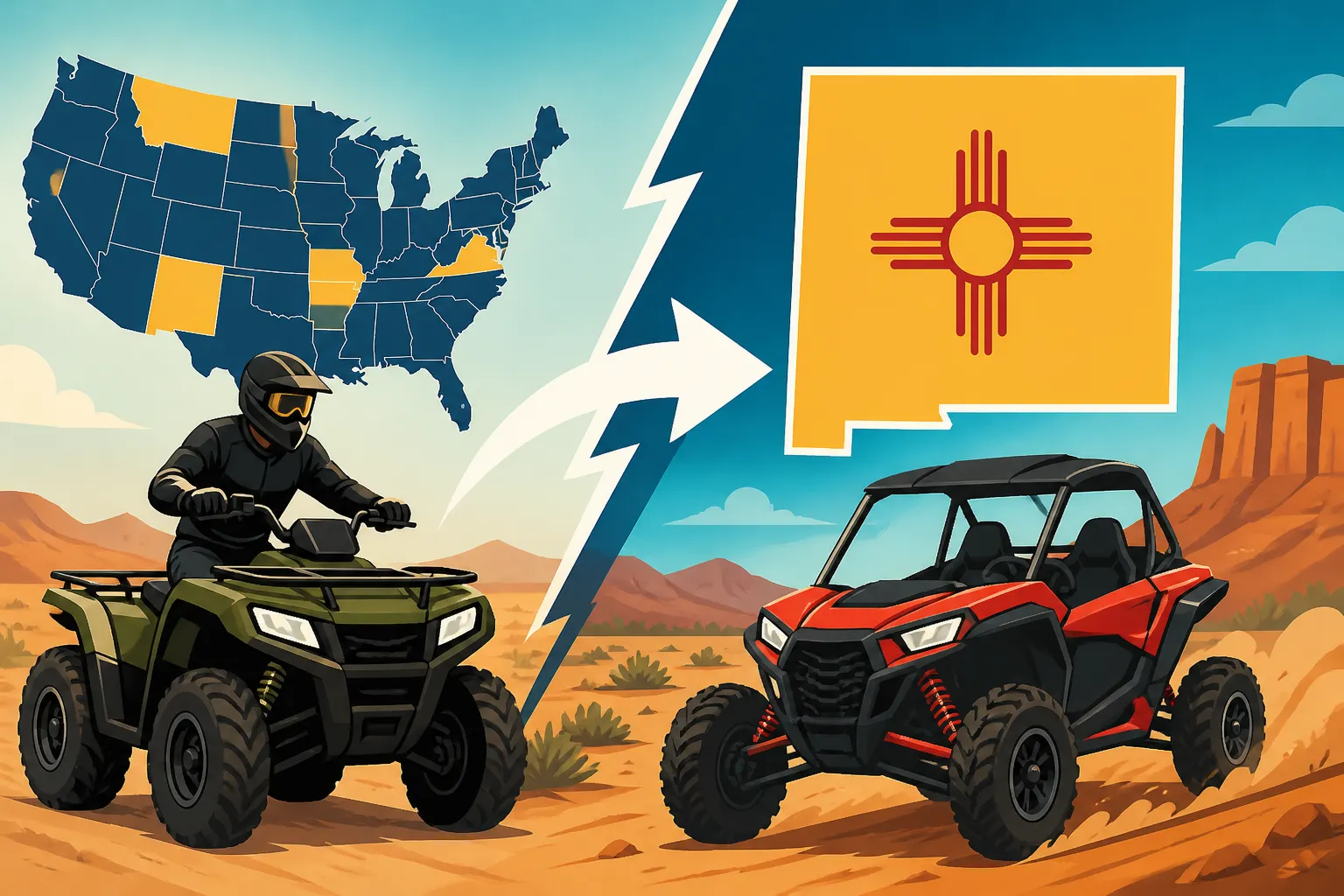
If your home state does not register off-highway vehicles, New Mexico may require a separate permit before you ride public land. The key is whether your state has a qualifying OHV program—not simply where you bought the machine. Here’s how to check your status, choose a permit, and avoid confusing permission to ride with permission to use a road.
Why Your Home State’s OHV Rules Matter
New Mexico recognizes qualifying out-of-state OHV registrations and permits under its reciprocity rules. If your machine is currently registered or permitted in a state whose program New Mexico accepts, you generally do not need to buy a New Mexico nonresident OHV permit just to ride there. The rules are different for a rider whose home state does not have an OHV registration or permit program that qualifies for reciprocity.
In that situation, New Mexico requires a nonresident permit for an off-highway vehicle used on public land. The permit gives the visiting machine the required New Mexico authorization for OHV use. It is not a replacement for a registration or permit your home state requires, and it does not change the machine’s legal status back home.
The important question is not just, “Does my state issue a title?” A title documents ownership; an OHV registration or permit authorizes certain use. A state may title vehicles without requiring off-highway machines to be registered for riding. New Mexico’s reciprocity question concerns the state’s OHV program, not simply whether you have a title, bill of sale, license plate, or vehicle paperwork.
New Mexico recognizes qualifying registrations from many other states, but not every state uses the same system or terminology. If your home state does not have a qualifying OHV program, expect to need a New Mexico permit rather than assuming that a title or receipt is enough. For a broader explanation of how recognition works, see New Mexico OHV Reciprocity Rules and Riding New Mexico With an Out-of-State Registration.
A practical way to sort out your situation is to identify what your machine has, then check whether New Mexico accepts that document:
| What your machine has | Likely next step in New Mexico |
|---|---|
| Current OHV registration or permit from a state New Mexico recognizes | Carry proof of that current registration or permit and confirm it qualifies |
| Title only, with no qualifying home-state OHV registration or permit | Check whether your state is treated as having no qualifying OHV program; a New Mexico nonresident permit may be required |
| No registration because your state does not require one for that machine | Check New Mexico’s current list of states without a qualifying program and obtain the required permit if applicable |
| Expired home-state registration or permit | Do not assume reciprocity applies; renew it or confirm whether you need a New Mexico permit |
| Rental or borrowed machine | Ask the owner or rental provider which permit or registration covers the machine and confirm the paperwork is valid |
“Likely next step” is deliberate: vehicle categories and program rules can differ, and an outdated document may not qualify. Check the current official New Mexico permit information before travelling, especially if you are relying on a registration from a state with a different system.
The state list matters. New Mexico identifies states that do not have a qualifying OHV program, and a machine registered or based in one of those states may need a New Mexico nonresident permit. Do not rely on an old forum post, another rider’s recollection, or a list copied into a travel article without checking that it is still current. If you are unsure whether your state qualifies, contact the official permit provider and describe the machine and the exact document you carry.
Choosing the Right New Mexico Permit
New Mexico offers nonresident permit options intended for visitors who need authorization for a limited stay or a longer period. The names, validity periods, fees, and purchasing methods can change, so check the official New Mexico permit service for current details before paying. The right choice depends mainly on how long you expect to ride in the state and whether you may return later while the permit remains valid.
A shorter-duration permit may suit a one-off visit, such as a holiday or a riding weekend. A longer-duration option may be more convenient if you make repeated trips or plan an extended stay. Compare the current validity periods against your travel dates rather than choosing based only on the initial cost. If your plans are uncertain, confirm whether a permit can be extended, replaced, or refunded; do not assume that it can.
The permit is associated with the OHV, so check the purchase instructions for what vehicle details you need. Have the machine’s identifying information available, including its vehicle identification number if requested. Make sure the information is legible and matches the machine. A typing error can create a headache if a ranger or officer needs to verify the permit during a ride.
Before you buy, answer these questions:
- Does my home state have a qualifying OHV registration or permit program? If it does, confirm whether New Mexico accepts the specific document you have.
- Is my document current? Expired registration may not provide a valid basis for reciprocity.
- How long will I ride in New Mexico? Match the permit period to the trip, and consider whether you will return before it expires.
- Which machine needs the permit? Confirm how the permit applies to each vehicle you plan to take.
- Will I ride on pavement? A nonresident OHV permit does not automatically authorize paved-road use. Road access has separate requirements.
- Is the riding location open to OHVs? A permit does not open a closed route or grant access to land where riding is restricted.
Visitors often confuse the nonresident OHV permit with the separate permit associated with certain paved-road use. Those are not interchangeable. A permit that authorizes OHV use on public land does not by itself make a machine street legal or allow it onto any road. For the distinction between these authorizations, see New Mexico’s Nonresident OHV Permit and New Mexico’s $7 Paved Road Permit.
The paved-road question is especially important because authorization depends on more than a decal or permit. New Mexico limits where off-highway vehicles may use pavement, and a local road may be open only under specific conditions. State highways are not automatically available to OHVs. Check New Mexico’s Paved Street Opt-In and Why New Mexico State Highways Are Off Limits before planning a route that includes a street or road.
Buying the Permit and Carrying Proof
A visiting rider should arrange the permit before heading onto public land. New Mexico provides ways to purchase permits remotely and through authorized channels, but availability and procedures can change. Use the current official instructions rather than assuming a particular office, retailer, or website still sells the permit.
When buying, enter the machine information carefully and save the confirmation. If the permit is issued electronically, keep a usable copy on your phone and consider carrying a printed copy as a backup. A phone battery can run down, a screen can break, and reception may be poor at a staging area. Follow the official instructions about whether a printed permit, displayed decal, or other proof is required.
Carry the paperwork that supports your right to ride. Depending on your situation, that may include:
- The New Mexico nonresident permit and its identifying details.
- A current home-state OHV registration or permit, if you are relying on reciprocity.
- Ownership documents or permission to use a borrowed machine, when relevant.
- The machine’s VIN or other identifying information.
- Any separate authorization required for the land or route you plan to use.
- A youth safety permit, when the rider’s age makes one necessary.
Do not treat an email receipt as a guaranteed substitute for the required permit document or display. Read the purchase instructions to learn what must be carried or attached to the machine. If the decal is required, place it where New Mexico specifies for that vehicle type and keep the identifying information readable. Mounting requirements vary by machine, so check New Mexico OHV Decal Placement Rules rather than choosing a convenient spot.
Keep proof accessible, not buried under luggage or locked in a tow vehicle miles away. At a roadside or trailhead check, you may be asked to show the permit or registration. A picture of an unreadable document, a permit tied to a different machine, or a decal hidden by equipment may not resolve the issue quickly. Before leaving home, check that the VIN on the machine matches the information submitted with the permit.
If you buy a permit in advance and then change machines, do not assume the authorization transfers automatically. Check the provider’s instructions before using the permit on another vehicle. The same applies if a machine is sold, borrowed, or rented. The permit’s relationship to the vehicle—not just the rider—can matter. For rentals, see New Mexico Rules for a Rented Machine and ask the rental provider what documentation comes with the machine.
A useful pre-trip check is to take a photo of the permit and paperwork, store a copy offline, and keep the original or required display in the place specified by New Mexico. This gives you a backup without relying on cell service. It also makes it easier to confirm, before unloading, that you brought the right document for the right machine.
What the Permit Does and Does Not Allow
A New Mexico nonresident OHV permit addresses the state’s permit requirement for a visiting machine whose home state does not have a qualifying OHV program. It does not grant unrestricted access across New Mexico. You still need to follow land-manager rules, route designations, closures, safety requirements, and any separate permissions that apply to your destination.
On federal land, for example, a permit does not authorize riding wherever you can physically drive. Forest roads and Bureau of Land Management routes may be open or closed to OHVs according to local travel plans. A trail can close seasonally, after a fire, or for another management reason. Use current maps and signs, and stay on routes open to your machine. See Designated Routes and Travel Management in New Mexico and [New Mexico Rules for Riding a National Forest] before you set out.
Private, tribal, and state trust lands have their own access rules. A New Mexico OHV permit is not permission to cross private property, enter tribal land, or ride on state trust land without the required authorization. A road that looks public may cross land with restrictions, and permission to use one section does not necessarily extend to the next. Check the land status and obtain permission where needed. The articles [New Mexico Rules for Riding Tribal Land] and Riding State Trust Land With a Permit explain why an OHV permit alone is not enough in those situations.
The permit also does not make an ATV or UTV street legal. New Mexico’s paved-road rules are separate from the nonresident OHV permit requirement. They can depend on the road, local authorization, vehicle equipment, insurance, and other conditions. A machine permitted for OHV use may still be prohibited from riding on a particular street, state highway, or roadway. Review Street Legal ATVs in New Mexico: The Short Answer before assuming that a road connection between trails is allowed.
Riders should also separate vehicle authorization from rider requirements. A visiting adult may not need the same safety credential as a minor, and youth rules can depend on age and circumstances. A parent or accompanying adult should check the current requirements for each young rider rather than assuming that the vehicle’s permit covers everyone aboard. Start with New Mexico’s Safety Permit Age Rules and [New Mexico Supervision Rules for Young Riders].
Finally, the permit does not replace safe equipment or lawful operation. Rules for helmets, eye protection, passengers, noise, lighting, and spark arresters may apply depending on the rider, machine, and location. Conditions on the route can add practical hazards that paperwork cannot address. Check what your ride requires and carry the equipment you need, especially if you will travel far from a road or cell coverage.
A Practical Checklist for Visitors
A few minutes of preparation can prevent a trip from turning into a permit problem at the trailhead. Use this checklist when you are packing a machine from a state that may not require OHV registration.
Before you leave home
- Look up whether New Mexico currently treats your home state as having a qualifying OHV program.
- Check whether your registration or permit is current and whether New Mexico accepts it.
- If you do not have a qualifying home-state document, confirm whether you need a New Mexico nonresident permit.
- Choose a permit period that covers your expected riding dates and check the provider’s current price and terms.
- Record the machine’s VIN and verify that it matches the permit paperwork.
- Ask the seller, lender, or rental company about any existing permit, but confirm its validity yourself.
- Identify the land manager and the routes you intend to ride.
- Check for closures and separate access rules for private, tribal, or state trust land.
- Review paved-road restrictions if your route might leave a designated OHV area.
At the staging area
- Confirm the permit is for the machine you unloaded.
- Make the required document or decal available and readable.
- Keep your home-state registration or other proof with you if you are relying on reciprocity.
- Check signs and maps for route restrictions before riding.
- Make sure each rider has any required safety credential and protective equipment.
- Do not follow another vehicle onto a route unless you know it is open to your machine.
If your status is unclear
Pause before riding and ask the official permit provider to resolve the question. Explain your home state, the vehicle type, the document you have, and whether that document is current. A specific answer is more useful than asking only whether “out-of-state machines” need a permit, because the rule can hinge on the state’s OHV program and the kind of proof issued.
Keep the answer and the permit instructions with your travel documents. If the official guidance says you need a New Mexico permit, buy it through an authorized channel before riding. If it says your current home-state registration qualifies, carry that proof and make sure it remains valid for the trip.
A rider who discovers a missing permit after reaching the trailhead should not assume that a receipt, title, or verbal explanation will be accepted. Check whether you can purchase the required authorization before using the route. If not, postpone the ride until the paperwork is in order. That is less frustrating than a citation, a forced turnaround, or a dispute about whether the machine was authorized.
Frequently Asked Questions
Do riders from every state need a New Mexico nonresident OHV permit?
No. New Mexico recognizes qualifying OHV registrations or permits from many states. Riders from a state without a qualifying OHV program may need a New Mexico nonresident permit. Check the current state list and verify that your own document is valid.
Is a title enough if my state does not register ATVs?
Not necessarily. A title generally documents ownership; it is not automatically an OHV registration or permit. Ask the official New Mexico permit provider whether your state’s program qualifies and what authorization your machine needs.
Does the nonresident permit allow me to ride on roads?
No. The nonresident OHV permit does not by itself authorize paved-road use or make a machine street legal. Road access has separate requirements, and some roads remain off-limits.
Do I need one permit for every machine?
Check the current permit instructions for how authorization is issued and what vehicle information it covers. Do not assume that one permit automatically covers multiple machines or transfers to a different vehicle.
Can I ride anywhere on public land once I have the permit?
No. You must still use routes open to OHVs and follow closures and land-manager rules. A permit does not grant access to restricted federal, tribal, private, or state trust land.
Disclaimer
This article is for general informational purposes only and does not constitute professional advice. Laws, prices and regulations vary by location and change over time. Consult a qualified professional for guidance on your specific situation.