Carrying Proof on a Desert Ride
A desert ride can put you far from your trailer, phone signal, and paperwork drawer. If an officer checks your machine, you need to show that its registration or visitor permit is valid and that you have any other required documents. The key is knowing which proof applies to your situation, keeping it accessible, and not treating a permit as permission to ride anywhere.
Know which proof applies to your machine
New Mexico riders and visitors may have different paperwork obligations. Start by identifying how the machine is covered before deciding what to carry.
If your ATV or UTV is registered in New Mexico, bring the registration paperwork and make sure the required decal is properly displayed. A decal helps identify the machine, but it may not answer every question about the registration. Keep the paperwork that connects the vehicle and its current registration together. For details about the documents involved, see New Mexico OHV Registration Paperwork.
Visitors should check whether New Mexico recognizes their home-state registration. The state has broad reciprocity, but the answer depends on the registration or permit system where the machine is based. Do not assume that a license plate, bill of sale, or old registration paper automatically counts as valid OHV coverage. The overview at New Mexico OHV Reciprocity Rules can help you identify the issue, and Do Visitors Need a New Mexico OHV Permit? explains when a visitor permit may be needed.
If your home state does not have a qualifying OHV registration or permit program, you may need a New Mexico nonresident permit. Carry proof of that permit while riding, and confirm that it is current and applies to the machine you brought. See New Mexico’s Nonresident OHV Permit for more on the visitor option. Buying a permit does not register the machine in your home state, prove ownership, or make a restricted route open to OHVs.
| Rider or machine situation | Proof to have available | What to check |
|---|---|---|
| New Mexico-registered machine | Current registration paperwork and the required displayed decal | The paperwork and decal correspond to the same machine |
| Machine registered in another state | Current home-state OHV registration or permit proof | New Mexico recognizes that type of coverage |
| Machine from a state without qualifying OHV coverage | Current New Mexico nonresident permit proof | The permit covers this machine and is still valid |
| Rider under 18 | Required youth safety permit or other applicable credential | The rider meets the current age and credential rules |
| Riding on pavement where road use is allowed | Required insurance proof and any other applicable documents | The route is legally open and the machine meets road-use rules |
| Rental or borrowed machine | The machine’s registration or permit proof, plus any rider documents | The rental or owner’s paperwork does not replace the rider’s own obligations |
This table is a starting point, not a substitute for checking the rules that apply to your particular machine and route. A document can be genuine and still be the wrong kind of coverage for the ride you are taking.
Keep different documents in their proper roles
Registration or a permit addresses whether the OHV has the required coverage to be operated under applicable rules. A title or bill of sale relates to ownership. An insurance card provides evidence of insurance, where required. A youth safety credential relates to the rider, not the machine.
Those documents are not interchangeable. For example, a bill of sale may help explain how you acquired a quad, but it is not a substitute for required registration or a visitor permit. Similarly, a displayed decal does not prove that a young rider has completed any required safety steps.
For an out-of-state machine, keep the document that shows its current home-state OHV status, not just a vehicle registration that may relate to road use. If you are uncertain which document New Mexico accepts, check the current requirements before the trip rather than trying to settle the question at a trailhead.
Pack proof so you can show it quickly
Desert riding is hard on paper. Heat, dust, sweat, water bottles, and repeated handling can turn a clean registration into a torn or unreadable scrap. Put essential documents somewhere protected and accessible, rather than loose in a pocket or under gear in the cargo area.
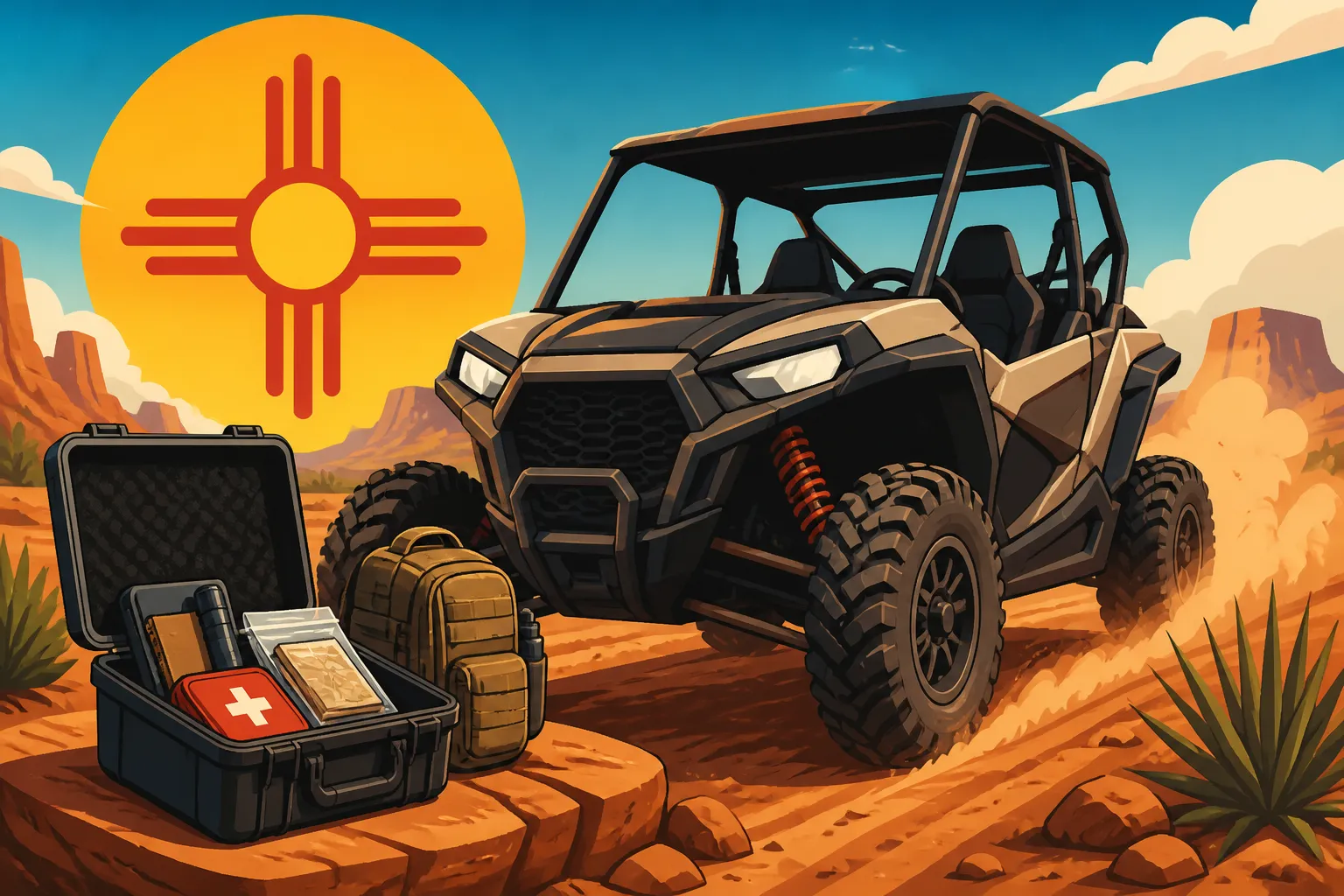
A practical setup is a small waterproof document sleeve or pouch stored in a secure compartment. If you use a phone wallet or paper organizer, make sure it will not slide out when the machine jolts over rough ground. A basic sleeve from a camping or outdoor retailer, including Amazon, can help protect papers, but the important features are secure closure, legible documents, and a place you can reach without unloading the machine.
Consider carrying:
- The current registration or visitor permit proof that applies to the machine.
- Any required safety credential for a young rider.
- Proof of insurance if the ride includes a road segment where insurance is required.
- A phone number for the registered owner or rental provider, if someone else owns the machine.
- A copy of relevant paperwork stored separately from the original.
A backup copy can be useful if the original is damaged or misplaced, but do not assume a photo or digital copy will be accepted in place of required physical proof. Requirements and enforcement practices can differ by document and situation. If the agency responsible for the permit or registration says a specific format is acceptable, follow that direction; otherwise, carrying the actual document is the safer plan.
Keep the proof with the person who may be asked to produce it. If a group is riding together, do not put every machine’s documents in one person’s backpack. That rider might be separated from the group, stop at a different staging area, or have to leave early. Give each operator access to the paperwork for their machine.
Before leaving home, check that the document is readable. Confirm the machine identifier, permit or registration status, and any dates or terms shown. If the machine is newly acquired, borrowed, or rented, resolve mismatches before heading out. A paper that belongs to a similar-looking machine will not establish coverage for yours.
For a permit that can be represented by a card or number, keep the proof in a format you can retrieve without relying on cell service. Carrying Your Permit Number on a Card covers the practical side of carrying permit information, while New Mexico OHV Safety Permit Requirements is useful when a rider’s age makes a safety credential relevant.
Carry extra proof for young riders and road segments
The machine’s paperwork is only part of the picture. A roadside or public-land check may involve the operator as well as the vehicle, so make sure each rider has any credential required for their age and circumstances.
New Mexico has safety permit rules for young OHV riders. Requirements can depend on the rider’s age and qualifications, so check the current rule for each person who will operate a machine. Do not rely on an adult’s permit, another child’s card, or a parent’s registration paperwork to cover a different rider. Keep the youth credential available during the ride, not back at camp or in the tow vehicle.
If a teenager will ride a rental or borrowed ATV, ask the provider or owner what documentation the machine comes with, then separately verify the rider’s own requirements. The machine’s permit does not automatically satisfy a rider-specific safety requirement. Likewise, an adult accompanying a minor should understand what supervision is required, rather than assuming that simply riding in the same group meets the rule.
Road use creates another layer. Most desert rides are off-road, but routes may involve a permitted paved segment or a crossing. A registration or visitor permit alone does not establish that an OHV can legally use that pavement. The machine, road, rider, and route all have to meet the applicable rules. Where financial responsibility or insurance is required, carry proof that can be shown if asked. New Mexico ATV Insurance Requirement explains the insurance issue, and New Mexico Paved Road Plate Requirements is relevant when a paved-road plate may apply.
Before planning a road segment, verify that it is actually open to OHVs. New Mexico’s road-use rules vary by road type and local authorization; a county road or town street is not automatically open just because it is paved. Also check the machine’s equipment and the rider’s qualifications. More detail is available in New Mexico Rules for Riding a City Street and New Mexico Rules for Riding a County Road.
A good rule of thumb is to carry the paperwork that proves both the machine’s coverage and the rider’s eligibility. If a ride stays off pavement, insurance documentation may not be the central issue, but registration or permit proof and any required youth credential still matter. If the route touches pavement, check the additional road-use requirements before departure.
Remember: proof does not grant access to every trail
Having the right registration or permit does not mean you can ride every open-looking track in the desert. Land ownership, route designation, closures, and local rules still control where an OHV may travel. A document check and an access check are two separate parts of trip planning.
On federal land, follow the travel-management rules for that specific area. A visible two-track is not automatically an authorized route, and a valid registration does not make a closed route legal to ride. Check current maps, signs, and closure notices before setting out. New Mexico Rules for Riding Federal Land provides a useful overview of the distinction between having machine paperwork and being allowed on a particular route.
State trust land has its own access requirements, and tribal lands may require permission from the appropriate authority. Do not treat a state registration or visitor permit as a land-access permit. See State Trust Land and Its Own Permit before planning a route across trust land, and seek permission before entering tribal or private property.
Desert conditions can also make it difficult to return to the vehicle or reach a staffed office. Save maps and route information before leaving cell coverage, and tell someone where you plan to ride. Carry enough water and basic repair supplies for the conditions. Paperwork is important, but it will not help if it is buried under cargo when an officer asks to see it or if the group has followed an unauthorized track into a remote area.
A simple pre-ride check helps keep the administrative side manageable:
- Match each machine to its current registration or permit proof.
- Confirm that any out-of-state registration qualifies for New Mexico reciprocity, or obtain the required visitor permit.
- Check each young rider’s applicable safety credential and age-related rules.
- Add insurance proof and road-use documents if the planned route includes pavement.
- Protect the papers, keep them accessible, and save a backup copy separately.
- Check route access, land rules, and closures independently of the paperwork.
If a document is missing, damaged, expired, or unclear, resolve it before leaving for a remote ride. Contact the relevant registration or permit provider for current instructions. For a rental machine, ask the rental business what machine documents it supplies and what the rider must bring personally. A short check before departure is easier than trying to explain a paperwork gap at a roadside stop.
Disclaimer
This article is for general informational purposes only and does not constitute professional advice. Laws, prices and regulations vary by location and change over time. Consult a qualified professional for guidance on your specific situation.