Do Rented Machines Come With the OHV Permit?
Renting an ATV or UTV in New Mexico raises a practical question before you reach the trail: does the machine already have the required OHV permit, or do you need to buy one? Usually, the rental company should explain what its machine carries. Here’s how to check, what reciprocity means for visitors, and which rules still apply to you as the rider.
The machine may already have the required paperwork
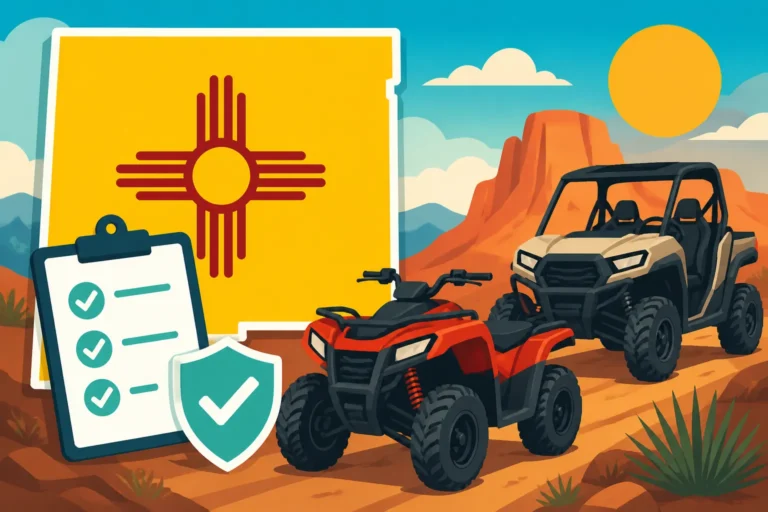
In New Mexico, the OHV paperwork requirement generally concerns the machine being operated, not just the person who rents it. A rental ATV or UTV may already have New Mexico registration or a permit that covers its use on public land. The rental company should be able to tell you what applies to the specific machine and show you how to confirm it.
That does not mean every rental automatically comes with everything needed for every ride. A machine might be registered but not authorized for a particular kind of road use. It might also be subject to restrictions on where it can go, regardless of its paperwork. Check the machine’s status and your planned route rather than assuming “rental” means “ready for any public road or trail.”
Ask the rental company these questions before you leave:
- Is this exact machine currently registered or permitted for the public land we plan to ride?
- What document, decal, or other proof should be on the machine or carried with us?
- Does the paperwork cover New Mexico public-land riding, or is an additional permit needed?
- Are there route, road, or land-access restrictions for this machine?
- Who should we contact if an officer asks to see proof?
If the company says the machine needs a New Mexico nonresident permit, ask whether the company will provide it or expects you to obtain it. Don’t buy a permit until you know what the rental already has and whether the machine qualifies for reciprocity. For permit basics, see New Mexico’s Nonresident OHV Permit and New Mexico OHV Permits Explained.
| What you’re checking | What to confirm with the rental company |
|---|---|
| Machine’s OHV status | Whether the ATV or UTV has current registration or a permit for the planned public-land ride |
| Proof | What document or decal shows compliance, and whether you should carry paperwork |
| Reciprocity | Whether the machine’s valid out-of-state registration is recognized in New Mexico |
| Rider requirements | Whether a separate safety permit or other rule applies to the rider |
| Route access | Whether the machine may use the specific road, trail, or land you plan to visit |
A rental agreement is not necessarily proof that the vehicle meets every public-land requirement. If you can’t get a clear answer, pause before riding onto public land. Ask the company to identify the paperwork for that machine or choose a provider that can explain it. More detail on rental responsibilities is available in New Mexico Rules for a Rented Machine and Riding a Rented Quad on New Mexico Public Land.
How reciprocity affects a rented ATV or UTV
New Mexico recognizes qualifying OHV registrations from other states under its reciprocity rules. That can matter when a rental company uses a machine registered outside New Mexico. If its registration is valid and recognized, a separate New Mexico nonresident permit may not be needed for that machine. But don’t assume that any out-of-state plate, sticker, or registration counts: eligibility depends on the state and the status of the registration.
For a rental, the key question is not simply where the company is based or where you live. Ask what registration or permit is attached to the specific machine you’ll use. A visitor who brings their own OHV may need to check their home-state paperwork and New Mexico’s recognition rules. A renter should ask the rental company to make the same check for its fleet. New Mexico’s Broad OHV Reciprocity explains the general idea, while Any Valid OHV Registration Counts in New Mexico is useful for understanding why the word “valid” matters.
If the rental company can’t confirm that its out-of-state registration qualifies, ask whether the machine needs a New Mexico nonresident permit and who is responsible for obtaining it. If the company tells you to buy one yourself, check the current instructions from the official permit provider and make sure the permit will cover the machine and the dates of your ride. New Mexico’s permit options and eligibility can differ, so don’t rely on a friend’s experience with a different vehicle or rental.
A permit or registration is not an all-access pass. It does not establish that a particular trail is open, that the machine can use a town street, or that you may cross any highway. Public-land routes may have their own restrictions, and local road access can depend on the road’s owner and applicable rules. Before setting out, confirm both the machine’s paperwork and the status of the route. For federal land, see [New Mexico Rules for Riding a National Forest] and New Mexico Rules for Riding BLM Land.
It also helps to separate three different things that can sound similar:
- OHV registration or permit: The paperwork required for the machine to be operated where OHV rules apply.
- Rider safety permit: A separate requirement that may apply to a rider under 18, even when the rented machine already has the correct registration or permit.
- Paved-road authorization: A separate matter from general OHV registration. A decal or permit for public-land riding does not automatically make a road legal for OHV use.
If someone in your group is a minor, ask the rental company what it checks and what the rider must carry. The adult booking the rental should not assume that the machine’s permit satisfies a young rider’s separate requirements. See New Mexico’s Safety Permit for Under-18 Riders for the rider-side rules.
What to check before you leave the rental counter
A quick paperwork check can prevent confusion at a trailhead or roadside stop. Ask the staff to show you the machine’s current registration or permit, identify the relevant decal if one is displayed, and explain what proof you should keep with you. Make sure the machine you’re shown is the one you’re renting; fleet paperwork can be easy to mix up when several vehicles are being prepared at once.
Before signing or departing, check these points:
- Match the paperwork to the machine. Confirm that the vehicle identification or other identifying details correspond to the rental machine, and that the paperwork is current.
- Ask what the registration covers. Confirm whether it is New Mexico registration, a New Mexico permit, or an out-of-state registration that the company says is recognized.
- Find out what to carry. Ask whether proof needs to stay with the machine, in a storage compartment, or with the operator. Keep it protected from water and damage.
- Confirm the route. Ask whether the planned area allows the machine type and whether any access limits apply. A route that appears on a map may still be closed or restricted.
- Check rider-specific rules. Confirm age, supervision, passenger, helmet, and safety-permit requirements for everyone who will ride.
- Get a direct answer about extra permits. If the company says you need to buy one, ask which permit, for which machine, and whether the company can confirm that in writing.
If you buy a permit yourself, keep the receipt and follow the official directions for displaying or carrying it. Buying the wrong permit, or buying one when the machine already has qualifying paperwork, can mean paying unnecessarily without fixing the actual issue. For purchase options, see [Buying a New Mexico Permit Online]. If you’re unsure what proof an officer may ask for, Carrying Proof on a Desert Ride offers a useful checklist.
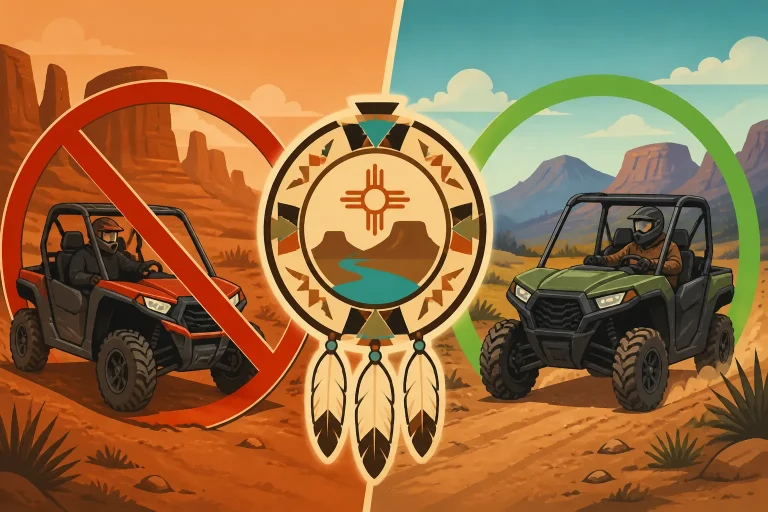
The rental company’s staff can also clarify whether its machine is limited to designated trails, forest roads, or another approved area. These limits may reflect the machine’s equipment, the company’s rental terms, land rules, or a combination of them. Follow the specific route guidance you’re given and check for current closures before riding. A permit does not override a closed-route sign or grant permission to use private or tribal land.
What the permit does not replace
Even when the rental machine has the right OHV paperwork, the rider remains responsible for operating it legally and safely. Registration or a permit does not take the place of age-related safety requirements, required protective equipment, or rules about passengers. It also does not guarantee that an ATV or UTV is allowed on a particular paved street.
New Mexico’s public-road rules can be especially confusing for visitors. Some road access may depend on local authorization and the type of machine; state highways are not automatically open to OHVs. A valid OHV permit should never be treated as permission to ride from a rental shop to a trailhead on pavement. Confirm the lawful route with the rental company and use a trailer when required. New Mexico Paved Road Plate Requirements and New Mexico Rules for Riding a City Street cover separate road-use questions.
Before the ride, make sure every driver understands the rental company’s instructions, where the machine may go, and what to do if the group encounters a closure or a request for paperwork. Keep proof accessible, not buried under gear. If the machine’s registration or permit is missing, unreadable, or inconsistent with what the company told you, contact the company before continuing.
The practical answer is: a rental may come with the required OHV paperwork, but verify it for the exact machine and your planned ride. Ask about reciprocity if the machine is registered outside New Mexico, and remember that a machine permit does not satisfy separate rider rules or create permission to use every road.
Disclaimer
This article is for general informational purposes only and does not constitute professional advice. Laws, prices and regulations vary by location and change over time. Consult a qualified professional for guidance on your specific situation.