Why a Second Citation Costs More Than the First
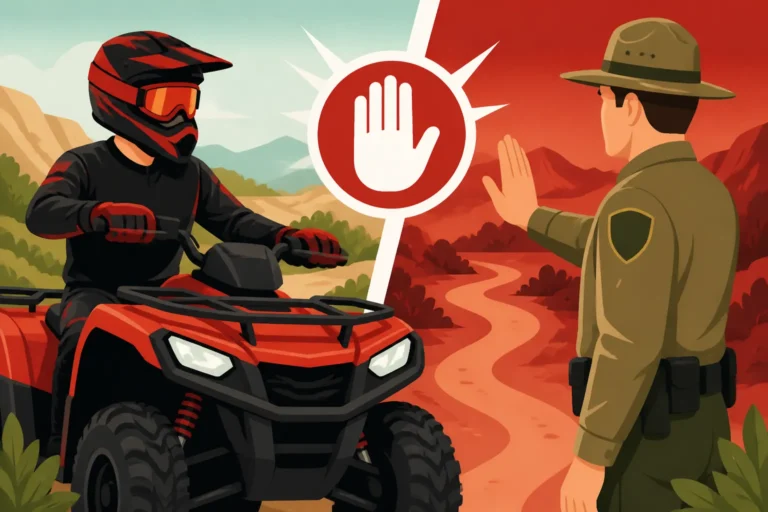
There’s almost nothing quite as disheartening as that moment when a New Mexico Game and Fish officer, a BLM ranger, or even local law enforcement pulls you over on your ATV or UTV. You know you’re in for a citation, and it stings. But what’s even worse, and often a nasty surprise, is finding out that a second citation for an off-highway vehicle (OHV) violation in our beautiful state doesn't just double the pain; it significantly amplifies it. This comprehensive guide is here to unravel why repeat offenses lead to much stiffer penalties in New Mexico, what kind of violations can put you in this escalating bind, and most importantly, how to stay on the right side of the law to avoid that painful second (or third!) strike.
The Escalating Cost of Repeat Offenses in New Mexico
It's a tough lesson many riders learn the hard way: the legal system, especially when it comes to regulating recreational activities like OHV riding, is designed to deter repeat offenders. Getting caught once is a mistake, an oversight, or maybe just bad luck. Getting caught twice, particularly for similar infractions, signals a pattern that authorities tend to view much more seriously. This isn't just about collecting more money; it's about promoting safety, preserving our natural landscapes, and ensuring compliance with the rules that keep everyone's outdoor experiences positive and sustainable.
Understanding New Mexico's Progressive Penalty System
The idea behind a progressive penalty system is straightforward: the consequences for breaking a rule increase with each subsequent violation. Think of it like a series of warnings that get louder and more expensive. For OHV riders in New Mexico, the first citation might feel like a slap on the wrist, a costly one, sure, but perhaps manageable. You pay your fine, maybe attend a court hearing, and promise yourself you'll be more careful next time. However, if that "next time" leads to another run-in with law enforcement, the state's statutes often mandate a significantly higher baseline fine. This isn't just a slight bump; it can be a substantial leap that catches many riders off guard.
The state isn't just being punitive for the sake of it. The progressive system is rooted in the idea of deterrence. If the first fine didn't change behavior, perhaps a much larger second fine will. It also acknowledges that repeat violations often indicate a disregard for public safety or environmental regulations, which can have wider implications for other riders and the delicate ecosystems we enjoy. New Mexico wants to ensure that our stunning landscapes remain accessible and safe for everyone, and that means encouraging responsible riding.
Beyond the immediate financial hit, the progressive nature of these penalties can sometimes lead to additional requirements. A first-time offender might just pay a fine, but a second-time offender could be looking at mandatory safety courses, community service, or even temporary bans from certain riding areas. It's a clear message: one strike is a warning, two strikes start to build a case for more severe intervention to ensure compliance.
Specific Financial Jumps: Beyond Just the Fine Amount
When we talk about the "cost" of a citation, most people only think of the number written on the ticket itself. However, the true financial impact of an OHV citation, especially a second one, extends far beyond that initial figure. You might be looking at a range of additional fees and surcharges that quickly swell the total amount due. Court costs, for example, are almost always added on top of the base fine. These administrative fees cover the processing of your case and can vary depending on the jurisdiction.
Then there are state-mandated surcharges. New Mexico, like many states, levies various fees that are directed towards specific funds, such as victim compensation, court automation, or even OHV-specific programs. These aren't optional; they're calculated as a percentage of your base fine or as flat fees, and they apply to every citation. When your base fine jumps significantly for a second offense, so do any surcharges tied to that amount. It's a cascading effect that can turn a "couple hundred dollar" fine into something much more daunting very quickly.
And let's not forget the potential long-term financial impacts. A repeat OHV offense could flag you as a higher risk to insurance companies, leading to increased premiums for your OHV liability coverage, particularly if the offense involved an accident or reckless behavior. In some cases, insurers might even decline to renew your policy, leaving you scrambling for new coverage if you plan to ride on designated paved roads where [New Mexico OHV Registration and Liability Insurance] is mandatory. It's a domino effect that can hit your wallet long after the initial fine is paid.
Common New Mexico OHV Violations That Lead to Escalation
It's easy to get caught up in the excitement of hitting the trails, but forgetting about the rules can quickly lead to trouble. Many of the citations that escalate in cost are for common infractions that riders often overlook or simply aren't aware of. Understanding these categories is the first step toward avoiding that dreaded second ticket.
Registration and Permit Lapses
One of the most frequent reasons riders get pulled over is for issues with their OHV's registration or permits. In New Mexico, it's not enough to simply own a machine; it must be properly registered for public land use. If you’re a resident, this means having a current registration through the MVD and the appropriate decal displayed. If you're a visitor, you need to understand [New Mexico's Nonresident OHV Permit] requirements. A first offense for an unregistered OHV might result in a fine, but a second one will likely be much higher, signaling to authorities that you've ignored the previous warning.
This also extends to the physical decals themselves. New Mexico utilizes [New Mexico's Yellow and Green Decals] to signify different types of riding access. The yellow decal is for off-highway use only, while the green decal allows for both off-highway and approved paved road use. Riding with an expired decal or no decal at all is a clear violation. An officer can easily spot a missing or expired decal, and if they've already cited you for it once, expect the fine to jump dramatically on a second stop. Keeping track of [When a New Mexico OHV Registration Expires] is crucial, and it’s always best practice to handle your [New Mexico's First OHV Registration] promptly and correctly.
It's not just the state registration that can cause issues. For those utilizing certain federal lands like those managed by the Bureau of Land Management (BLM) or the Forest Service, additional permits or understanding of specific area rules might be necessary. While not always directly tied to a state citation, repeat offenses for improper permits or ignoring area-specific rules could lead to other forms of penalties or even being asked to leave the area, impacting your future riding opportunities.
Illegal Road Use and Equipment Violations
New Mexico has specific and often strict rules about where OHVs can and cannot be ridden, especially concerning paved roads. Many riders mistakenly believe their ATV or UTV is "street legal" everywhere, but the reality is much more nuanced. Knowing [Are ATVs Street Legal in New Mexico?] is essential. A first citation for riding illegally on a paved road that isn't designated for OHV use can be costly, but a second offense for the same violation will demonstrate a clear disregard for traffic laws and safety, leading to a much steeper penalty.
Equipment violations are another common area for repeat citations. If you're riding on paved roads, even those legally open to OHVs, you'll need specific equipment like headlights and taillights that meet specific visibility standards, as outlined in [New Mexico Headlight and Taillight Rules]. Mirrors are also required for road use, as discussed in [Mirrors and Brakes for New Mexico Road Use]. A first warning or citation might be given for a missing mirror or a non-functional headlight, but ignoring that and getting pulled over again for the same equipment flaw tells the officer you didn't take the initial incident seriously.
Then there are the safety equipment rules. For instance, [New Mexico Helmet Law for Riders Under 18] is strictly enforced, and [New Mexico Eye Protection Requirement] applies to all riders on paved surfaces and is highly recommended off-road. If you’re cited because a minor in your group isn’t wearing a helmet and you disregard that warning, a subsequent citation will undoubtedly be harsher. Aftermarket modifications, while often appealing, must also meet legal requirements for sound limits and spark arresters, especially on public lands. Products from reputable brands like SuperATV often come with compliance information, helping riders select accessories that meet legal standards.
Age, Supervision, and Passenger Rules
Rules regarding who can ride, how old they need to be, and who needs supervision are in place for safety, especially concerning minors. Failing to adhere to these can lead to citations that escalate quickly. New Mexico has specific regulations governing [New Mexico Minimum Age to Ride Off-Road] and requires a [New Mexico Safety Permit for a Minor] for anyone under 18 riding on public land. An adult must also provide direct visual supervision for younger riders. If you're cited for allowing an unsupervised minor to ride, or for a minor without a safety permit, that first penalty is a warning. A second citation, however, will be seen as a direct defiance of safety regulations designed to protect children.
Passenger rules are another area that can lead to repeat offenses. Many OHVs are designed for a single rider, or have specific limits on how many passengers can be carried. Carrying an extra person, especially if the machine isn't designed for it, is a safety hazard and a violation. [New Mexico Rules for Carrying a Passenger] are clear. If you receive a citation for exceeding passenger limits or carrying a passenger unsafely (e.g., a child too young or riding on an inappropriate part of the machine), and then repeat the offense, expect a significant increase in fines and potentially other legal consequences.
These regulations are in place for very good reasons. They protect riders, especially the most vulnerable ones, and contribute to a safer environment for everyone recreating outdoors. Ignoring them, particularly after being educated through a citation, shows a pattern of negligence that the state will address with increasingly severe penalties.
The Broader Impact of Multiple Citations
While the financial burden of escalating fines is certainly a major concern, repeat OHV citations in New Mexico can have far-reaching consequences that extend beyond just your bank account. These broader impacts can affect your ability to drive, your insurance rates, and even your future access to the very trails you love to ride. It's about much more than just a ticket; it's about your standing as a responsible recreationalist.
Beyond the Wallet: Licenses, Insurance, and Legal Troubles
For some types of OHV violations, particularly those involving reckless behavior, operating under the influence, or those occurring on paved roads, repeated offenses can impact your state driving privileges. While OHV operation is distinct from driving a car, egregious or repeated violations might be reported to the MVD and could, in extreme cases, lead to points on your driver's license or even a temporary suspension. This is especially true if the violation involves a breach of traffic laws that apply to all vehicle operators.
Your insurance situation can also become significantly more complicated. After a second citation, especially for a serious offense, your current OHV insurance provider might see you as a high-risk client. This could lead to substantially higher premiums upon renewal or, in the worst-case scenario, the cancellation of your policy. Finding new insurance can be a headache, and coverage, if you can get it, will likely be much more expensive. This is a critical factor if you ride on any designated paved roads in New Mexico, as liability insurance is a non-negotiable requirement for that privilege.
In severe or chronic cases, repeat offenders could face more serious legal troubles. While rare for minor infractions, repeated violations that demonstrate a blatant disregard for the law, public safety, or environmental protection could lead to charges that go beyond simple citations. This might involve mandated court appearances, community service, or even, in extreme cases of repeated illegal operation, the impoundment of your OHV. Imagine your prized machine being seized because of a pattern of non-compliance – a truly devastating consequence.
Reputation and Access to Riding Areas
While not codified in law, your reputation within the riding community and with land management agencies can suffer from repeat violations. Rangers and law enforcement personnel who patrol specific areas often recognize repeat offenders. This can lead to increased scrutiny every time you visit an area, making your future riding experiences less enjoyable. If you’re consistently causing problems, you might even find yourself informally (or formally) barred from certain popular riding areas or organized events.
Furthermore, a pattern of irresponsible riding by a few individuals can have a negative collective impact on all riders. When agencies see frequent violations, it can lead to tighter restrictions, increased enforcement, or even the closure of trails and riding areas for everyone. Land access is a privilege, not a right, and it can be easily curtailed if the OHV community as a whole doesn't demonstrate a commitment to responsible use. When individuals continually disregard the rules, it provides ammunition for those who advocate for stricter bans, ultimately hurting the entire OHV sport in New Mexico.
Avoiding the Second Strike: Proactive Steps for New Mexico Riders
The good news is that avoiding escalating fines and the broader negative impacts of repeat citations is entirely within your control. It comes down to a proactive approach, a commitment to education, and a habit of responsible riding. Don't wait until you're facing a stiffer penalty; take these steps now to ensure your New Mexico OHV adventures remain fun and free from unnecessary legal hassles.
Know the Rules Before You Ride
This is perhaps the most fundamental and effective step: educate yourself thoroughly on all applicable laws and regulations before you even put your key in the ignition. New Mexico's OHV laws are comprehensive, covering everything from registration and titling to safety equipment and where you can legally ride. Always check the New Mexico Motor Vehicle Division (MVD) website for current registration and titling requirements, and consult the New Mexico Department of Game and Fish (NMDG&F) for safety and riding regulations.
Beyond state-level rules, be aware that federal lands (BLM, Forest Service) and even local counties and municipalities can have their own specific ordinances. For example, some areas might have seasonal closures, as detailed in [New Mexico Trail Closures to Check First], or specific noise restrictions. Make it a habit to check the websites of the specific land management agency for the area you plan to visit. Printing out or saving digital copies of trail maps and regulations can be a lifesaver if you encounter an officer in the field. Knowledge is your best defense against citations.
Don't just rely on what you think you know or what a buddy told you. Laws can change, and interpretations can vary. A quick search online for "New Mexico OHV laws" or "rules for riding [specific area name]" should be part of your pre-ride checklist. Being able to confidently articulate your understanding of the rules if questioned by an officer often goes a long way.
Regular Maintenance and Equipment Checks
Many citations stem from equipment failures or a lack of required safety gear. Before every ride, especially if you haven't been out in a while, conduct a thorough pre-ride inspection of your machine. Check that your registration decal (yellow or green) is current and properly affixed, as outlined in [New Mexico's Yellow Off-Highway Decal] and [New Mexico's Green On and Off-Highway Decal]. Ensure all lights (headlights, taillights, brake lights) are operational, particularly if you plan on riding near dusk or on designated paved roads.
Confirm that your mirrors, horn, and brakes are all in good working order if required for road-legal operation. For machines ridden on federal land, verify that your spark arrester is intact and properly functioning to prevent wildfires. Consider investing in high-quality, compliant aftermarket parts from reputable sources like SuperATV to replace worn components or to upgrade your machine with legal and safety-enhancing accessories. They often provide detailed product specifications that can help ensure you meet local regulations.
And don't forget the personal safety equipment! Always carry and wear appropriate helmets, especially for riders under 18, as mandated by [New Mexico Helmet Law for Riders Under 18]. Ensure everyone in your party has adequate eye protection, which is legally required on paved roads and a smart choice everywhere else, per [New Mexico Eye Protection Requirement]. A well-maintained machine and proper gear not only keep you safer but also signal to law enforcement that you're a responsible rider, reducing the likelihood of a stop for minor issues.
Education and Responsible Riding Practices
Beyond the legal minimums, embracing responsible riding practices is key to avoiding citations altogether. Consider taking an OHV safety course, even if you’re an experienced adult rider and [New Mexico OHV Safety Permit Requirements] don't mandate it for you. These courses offer valuable insights into safe operation, trail etiquette, and a deeper understanding of environmental impacts. It's a great way to brush up on skills and learn about new regulations.
Always ride sober. Operating an OHV under the influence of alcohol or drugs carries severe penalties, similar to those for cars, and repeat offenses will escalate dramatically. Respect private property; always know where you are riding and obtain permission before entering private land. Adhere to speed limits, stay on designated trails, and practice minimal impact techniques to preserve the environment. If you’re bringing children, ensure you understand and follow all rules regarding age, supervision, and [New Mexico Rules for Carrying a Passenger].
Finally, be courteous to other trail users, whether they are hikers, mountain bikers, or other OHV riders. A positive image for the OHV community is crucial for maintaining access to our beloved trails. By actively demonstrating respect for the rules, the land, and other people, you significantly reduce your chances of ever encountering a law enforcement officer in a negative capacity. Ride smart, ride safe, and enjoy the incredible landscapes New Mexico has to offer.
| Violation Type (Example) | First Offense (Typical Shape) | Second Offense (Typical Shape) | Additional Consequences (Potential) |
|---|---|---|---|
| Unregistered OHV | Moderate fine + court fees | Significantly higher fine + court fees | Possible vehicle impoundment, increased scrutiny |
| Minor Riding Without Safety Permit | Initial fine for parent/guardian | Much higher fine, potential for mandated safety course | Possible temporary loss of riding privileges for minor |
| Illegal Paved Road Use | Moderate fine, warning or immediate penalty | Substantially increased fine, potential license points (if applicable) | Increased insurance premiums, driver's license suspension (if applicable) |
| Missing Required Equipment (e.g., lights) | Warning or small fine | Higher fine, mandatory fix-it ticket | Machine rendered unusable until fixed |
Disclaimer
This article is for general informational purposes only and does not constitute professional advice. Laws, prices and regulations vary by location and change over time. Consult a qualified professional for guidance on your specific situation.