New Mexico Golf Cart Street Rules
You've just bought a charming little golf cart, maybe for zipping around your property or taking a leisurely cruise from your driveway to the golf course. But then the thought strikes you: wouldn't it be fantastic to take it into town, to grab groceries, or visit a neighbor a few blocks away? It’s a common dream, but trying to figure out exactly what's legal and what's not for golf carts on New Mexico's public roads can feel like navigating a maze blindfolded. This guide is here to untangle the often-confusing rules and help you understand when your golf cart can legally share the asphalt with cars, and when it needs to stick to private land.
The Core Distinction: Golf Cart Versus Low-Speed Vehicle (LSV)
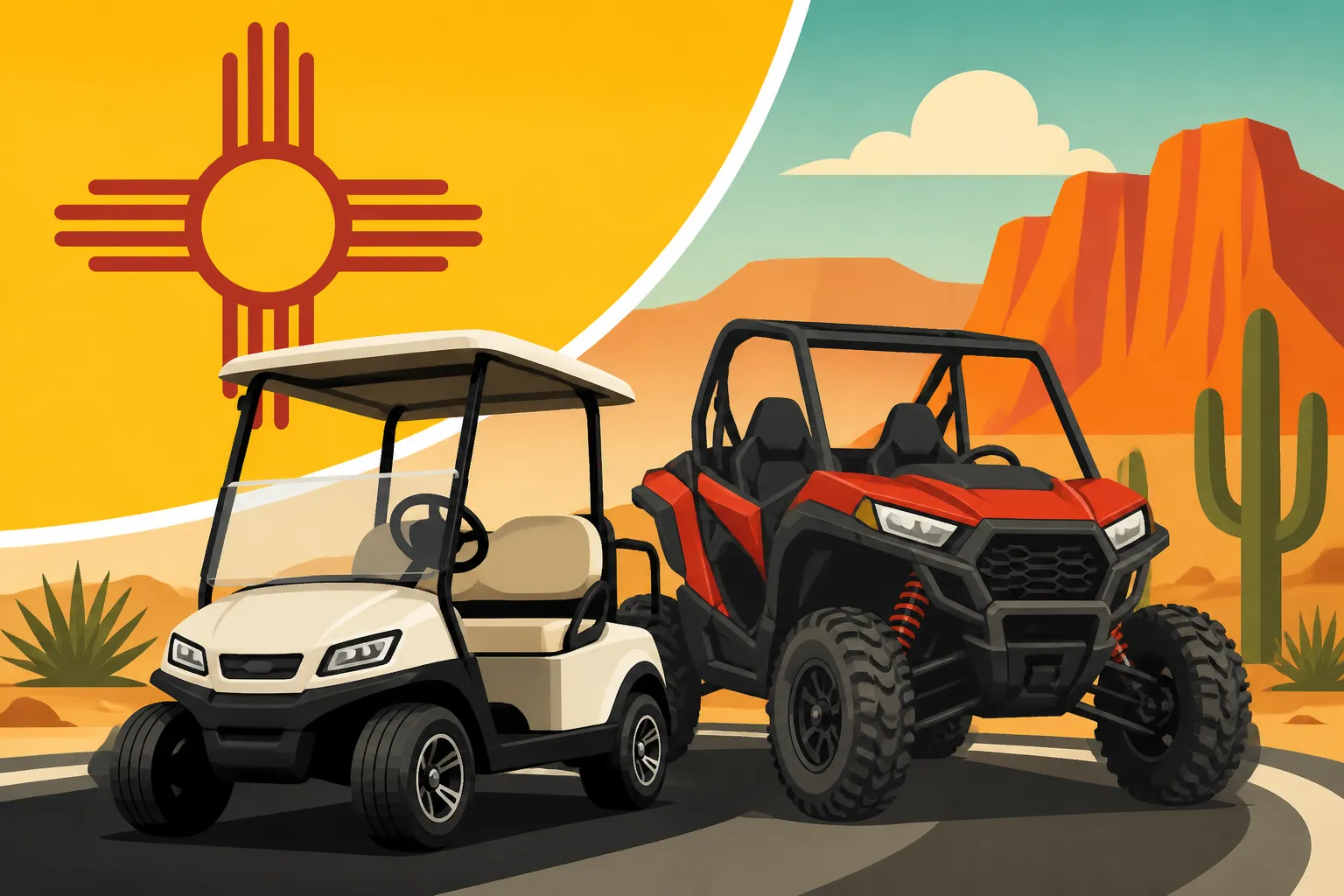
The first, and arguably most important, thing to understand when you're thinking about driving your golf cart on New Mexico streets is that the state doesn't really see all "golf carts" the same way. There's a crucial legal distinction between what most people call a golf cart and what the law defines as a "Low-Speed Vehicle," or LSV. This isn't just semantics; it's the difference between legal road use and a potential citation.
What Exactly is a Golf Cart in New Mexico?
In its simplest form, what we colloquially call a golf cart is typically a small, electric-powered vehicle designed for transporting people and their golf clubs around a golf course. These machines are engineered for low speeds, quiet operation, and use on relatively flat, manicured terrain. Think about your average golf cart: it might have a simple headlight, maybe some basic taillights, and often no turn signals, seatbelts, or a windshield made of safety glass. They're built for function within a very specific, controlled environment.
Because of this specific design, standard golf carts don't typically meet the safety and equipment standards required for operating on public roads alongside cars and trucks. The lack of robust braking systems, crumple zones, and comprehensive lighting means they're just not ready for the rigors of mixed traffic. The frustration of wanting to use your convenient little cart for more than just the links is completely understandable, especially if your community has quiet streets or short distances you want to cover. You see people doing it in some places, and you wonder, "Why not here?" The answer almost always comes down to how the vehicle is legally categorized.
Understanding the Low-Speed Vehicle (LSV) Category
This is where the magic (or rather, the legal compliance) happens. A Low-Speed Vehicle (LSV) is a specific type of four-wheeled vehicle that looks a lot like a golf cart but has been manufactured or significantly modified to meet federal and state safety standards for operation on public roads. The key difference isn't just appearance; it's the underlying construction and the presence of essential safety features that qualify it for street use.
New Mexico, like many other states, has adopted regulations that define what an LSV is and what it needs to have. These vehicles are designed to bridge the gap between golf course utility and limited urban mobility. They are essentially a class of street-legal vehicles distinct from both regular automobiles and traditional off-highway vehicles (OHVs) like ATVs and UTVs. If you want to take your "golf cart" on city streets, you're almost certainly going to need it to be classified and equipped as an LSV. Without this designation and the accompanying features, that charming cart remains off-limits for public road adventures, leaving you to trailer it or keep it on private property.
Equipping Your Cart for New Mexico Roads: The LSV Requirements
So, you're thinking about making your golf cart street-legal, or perhaps you're considering buying one that already claims to be an LSV. It's not as simple as slapping a license plate on it. New Mexico has very specific requirements for what constitutes a legal Low-Speed Vehicle, and these go far beyond what a typical golf cart offers. Missing even one item can mean the difference between a pleasant cruise and a ticket.
Essential Safety Gear for LSVs
To be considered a true Low-Speed Vehicle in New Mexico, your cart needs to be outfitted with a comprehensive suite of safety equipment, much like a conventional car. This isn't just about being seen; it's about being able to signal, stop, and protect occupants. First and foremost, you'll need functional headlights and taillights, bright enough to be seen in all conditions, especially at dusk or dawn. Brake lights are crucial, activating when you press the pedal to warn drivers behind you. Beyond that, front and rear turn signals are an absolute must for communicating your intentions on the road.
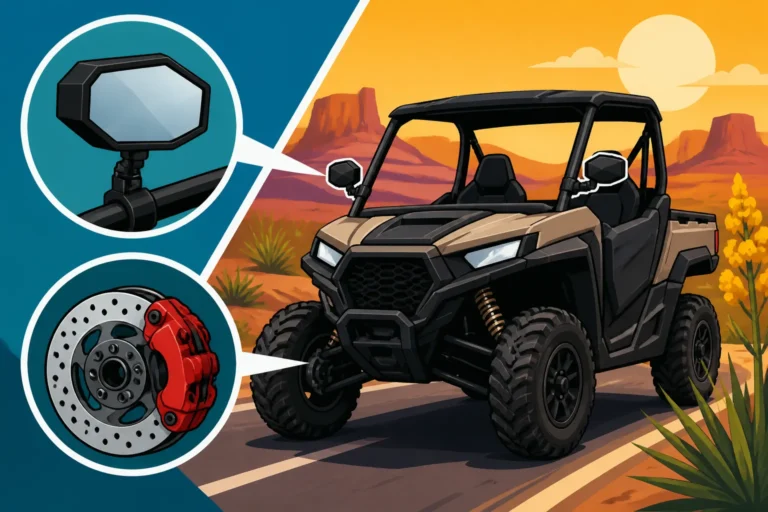
But it doesn't stop there. An LSV also needs a windshield made of safety glass – not the flimsy plastic many golf carts come with – along with an automatic windshield wiper system. Seatbelts are mandatory for all seating positions, providing crucial restraint in case of an impact. You'll also need a rearview mirror, plus exterior mirrors on both the driver and passenger sides to give you a full view of traffic. A functional parking brake is essential for securing the vehicle, a horn for audible warnings, and reflectors on both the front and rear. If your golf cart doesn't have all of these from the factory, you're looking at significant upgrades. Companies like SuperATV offer a range of aftermarket parts, from lighting kits to mirrors, that can help you meet some of these stringent requirements, but it's a considerable investment to bring a standard golf cart up to LSV spec.
Speed Limits and Road Restrictions for LSVs
Even with all the right safety gear, an LSV isn't a freeway cruiser. New Mexico law places strict limitations on where these vehicles can be driven, primarily dictated by speed. An LSV, by definition, has a top speed that generally doesn't exceed 25 miles per hour. This speed limitation is a key factor in determining which roads are safe and legal for their use.
You can typically operate an LSV on public streets where the posted speed limit is 35 miles per hour or less. This means your journey will be confined to residential streets, local business districts, and slower arterial roads. You absolutely cannot take an LSV on interstates, freeways, or any road where the speed limit exceeds 35 mph, even for a short distance. Imagine trying to drive your LSV down a busy four-lane thoroughfare with cars zipping past at 45 or 55 mph – it would be incredibly dangerous and illegal. So, while an LSV offers local convenience, it won't be your vehicle for long-distance travel or high-speed commutes. Always check the posted speed limits carefully, as this dictates where your LSV can legally roll.
Title, Registration, and Insurance
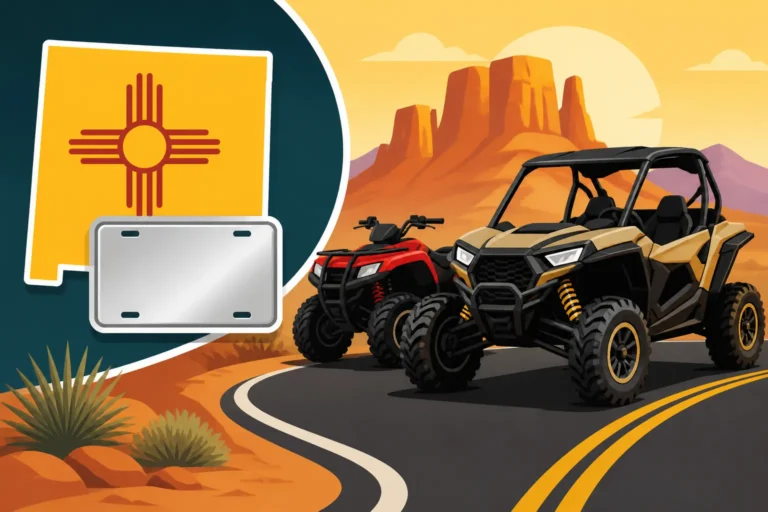
Just like any other street-legal motor vehicle in New Mexico, a Low-Speed Vehicle requires proper documentation and financial responsibility. This isn't like owning a piece of lawn equipment; it's a vehicle on the road. First, your LSV must have an MVD-issued title. This establishes legal ownership and is a fundamental step for registration. Once titled, it then needs to be registered with the Motor Vehicle Division, and you'll receive a license plate that must be displayed, typically on the rear of the vehicle. This registration is critical; without it, even a fully equipped LSV is not legal for public road use. This differs significantly from how [New Mexico OHV Title Requirements] and [New Mexico OHV Registration and Liability Insurance] apply to traditional off-highway vehicles, but the underlying principle of state-level oversight is the same.
Beyond the paperwork, insurance is non-negotiable. New Mexico's Mandatory Financial Responsibility Act applies to LSVs just as it does to cars and trucks. This means you must carry liability insurance with minimum coverage limits to protect against damages or injuries you might cause in an accident. Proof of insurance must always be carried in the vehicle, and you should be prepared to present it if requested by law enforcement. Skipping out on the title, registration, or insurance could lead to significant fines, impoundment of your vehicle, and serious legal headaches if an incident occurs.
Navigating Local Ordinances and Practicalities
Even after your golf cart has been transformed into a fully compliant Low-Speed Vehicle with all the right equipment, title, and registration, your journey onto the public streets isn't always a simple open road. New Mexico's regulations provide the framework, but local jurisdictions — your city or county — often have the final say on which specific roads within their boundaries are actually open to LSVs.
The Role of Cities and Counties in Opening Roads
While the state sets the general rules for LSVs, allowing them on roads with speed limits of 35 mph or less, individual cities and counties have the authority to further restrict or permit their use within their own limits. This can create a patchwork of rules across the state. One town might enthusiastically embrace LSVs as a way to reduce traffic and promote community access, designating specific routes or even entire neighborhoods as golf cart-friendly. Another town, perhaps due to higher traffic volumes or narrower streets, might choose to prohibit them on nearly all public roads. This local control means that even if your LSV meets all state requirements, you can't just assume every street in every New Mexico community is open to you.
It's a common source of frustration for residents, who might see LSVs cruising around in a neighboring community and wonder why their own town hasn't adopted similar policies. Before you hit the road, it is absolutely essential to check with your specific city or county government for their local ordinances regarding LSV use. A quick call to the city clerk's office or a search on the municipal website can save you a lot of trouble. This local control is similar to how [Why New Mexico Counties Open Only Their Own Streets] for OHVs, where counties can pass resolutions to permit use on their roads, but cities within those counties can maintain their own prohibitions. So, for [New Mexico Rules for Riding a City Street] in an LSV, always verify the specific local rules.
Driver Requirements and Operational Rules
Operating an LSV on a New Mexico public road means you're essentially driving a motor vehicle, and as such, you need to meet standard driver requirements. The primary rule here is that the operator of an LSV must possess a valid driver's license. This isn't a casual ride for unlicensed drivers; the same rules that apply to operating a car apply to operating an LSV on public roads. So, if you're thinking of letting a teenager who only has a learner's permit take it for a spin on city streets, think again. [A Driver's License on a New Mexico Paved Road] is a prerequisite.
While New Mexico does not typically mandate helmets for LSV occupants (unlike some OHV scenarios), seatbelt use is absolutely mandatory for everyone in the vehicle. This reinforces the idea that LSVs are treated more like cars than recreational machines when on the road. Distracted driving laws, such as those prohibiting cell phone use while driving, also apply. Furthermore, you must always carry proof of your vehicle's registration and your insurance card, ready to present to law enforcement. Remember, you're expected to follow all traffic laws, including speed limits, stop signs, and traffic signals. This isn't just a friendly cruise; it's driving a regulated vehicle, and [New Mexico's Mandatory Financial Responsibility Act] is a serious commitment.
When a Golf Cart is Just a Golf Cart
Let's be blunt: if your "golf cart" doesn't meet all the stringent requirements to be classified as a Low-Speed Vehicle, titled, registered, insured, and operated by a licensed driver according to local ordinances, then it is, legally speaking, just a golf cart. And a golf cart, in New Mexico, is generally restricted to private property, golf courses, or designated private communities where golf cart use is specifically permitted. This means taking your unmodified golf cart onto any public street, even for a short hop, could lead to a host of problems.
The consequences of illegal street use can range from a simple warning to significant fines. You could face citations for operating an unregistered vehicle, driving without a license, or lacking mandatory safety equipment. In some cases, your vehicle could even be impounded, creating a huge headache and additional costs to retrieve it. Beyond the legal ramifications, there's the very real and serious safety risk. An unmodified golf cart simply isn't designed to protect its occupants in a collision with a car or truck, and its lack of proper lighting and signaling makes it a hazard in mixed traffic. It's truly not worth the risk, both legally and for your personal safety, to ignore these distinctions. In fact, [New Mexico Fines for an Unregistered OHV] can be steep, and similar penalties would apply to an illegally operated golf cart.
Comparing LSVs with OHVs and Other Options
When you're looking for a vehicle to traverse the local roads in New Mexico, it's easy to get confused by the array of options: golf carts, Low-Speed Vehicles (LSVs), and Off-Highway Vehicles (OHVs) like ATVs and UTVs. While they might all seem like small, open-air machines, their legal definitions and permissible uses are distinct. Understanding these differences is key to choosing the right machine for your needs and avoiding legal pitfalls.
LSV vs. Off-Highway Vehicle (OHV) Street Use
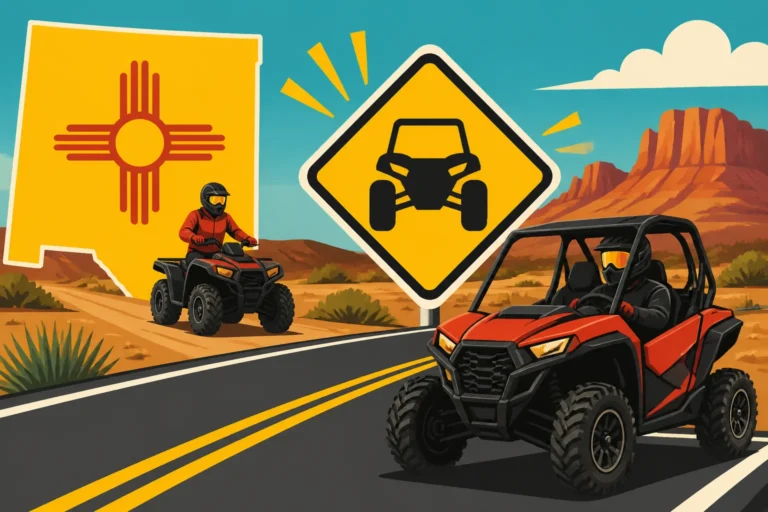
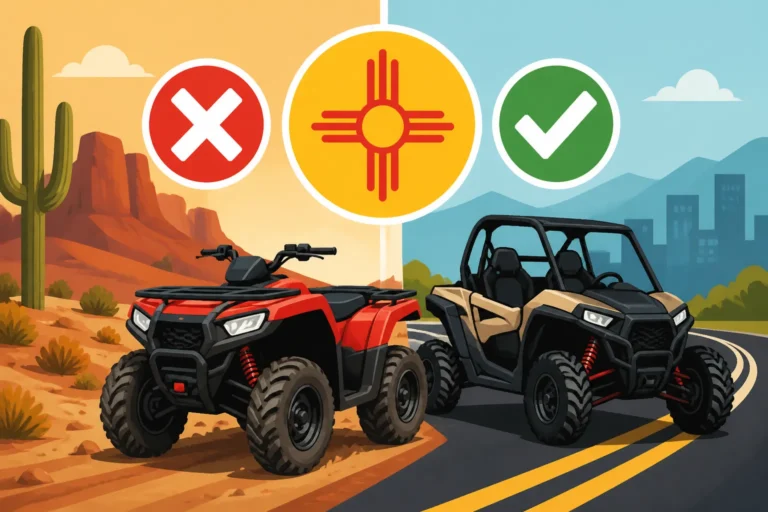
It's common for people to lump all these vehicles together, especially when they see them being used on streets. However, in New Mexico, the rules for LSVs are quite different from those governing the street-legal use of Off-Highway Vehicles (OHVs) such as ATVs, UTVs, and side-by-sides. For an OHV to be street-legal in New Mexico, it requires a special "green" decal, signifying it meets the requirements for both off-highway and on-highway use. This green decal, as explained in [New Mexico's Green On and Off-Highway Decal], allows an OHV to operate on roads with speed limits of 45 mph or less, provided it also has specific equipment like headlights, taillights, brake lights, a horn, mirrors, and a spark arrester.
The key differences are crucial: LSVs are restricted to roads 35 mph or less, typically have a lower top speed (25 mph), and are usually battery-electric. OHVs with the green decal can go up to 45 mph roads and are often gasoline-powered. The equipment requirements, while similar in function, have distinct legal interpretations for each vehicle class. For instance, the safety standards for the chassis and occupant protection for an LSV are more akin to automotive standards, whereas an OHV's primary design is for off-road performance. Confusing the two can lead to riding your LSV on roads it shouldn't be on, or missing critical registration for your OHV. You can see how this leads to different cost structures too, for example, [New Mexico UTV Rental Prices] reflect the capability and legal standing of those machines.
The Practicality and Cost of Converting a Golf Cart
If you already own a standard golf cart and are considering converting it into a street-legal Low-Speed Vehicle, you need to go into this with your eyes wide open about the practicalities and, most importantly, the costs involved. It's often not just a simple matter of adding a few accessories; it can be a significant undertaking. As we discussed, you'll need everything from DOT-approved headlights and taillights, brake lights, and turn signals to a safety glass windshield with a wiper, seatbelts for all passengers, and rearview and side mirrors. You might also need a speedometer, a horn, and a parking brake.
Many standard golf carts are not designed with the robust electrical systems to handle all these additional components, potentially requiring upgrades to the battery and wiring. Furthermore, the suspension and braking systems on a typical golf cart are not built for sustained road speeds or emergency stops in traffic, and while not strictly mandated for LSV conversion, you might find yourself needing to upgrade these for safety and peace of mind. All these parts, from a heavy-duty windshield to a full lighting kit from a brand like SuperATV, can add up quickly. It's not uncommon for the total investment in parts and labor to convert a basic golf cart to an LSV to approach, or even exceed, the cost of a used, purpose-built LSV or a fully street-legal UTV. It’s worth doing a thorough cost analysis before diving in, or you might find yourself in over your head.
Advantages and Disadvantages of LSV Use
Deciding whether an LSV is the right choice for your New Mexico lifestyle involves weighing its distinct advantages against its limitations. On the "pro" side, LSVs offer incredible convenience for short-distance travel within communities, especially those with many local amenities. They are often electric, making them an environmentally friendly option with lower operating costs compared to gasoline vehicles. Cruising around in an open-air LSV can be a fun and social way to get around, fostering a sense of community on quiet streets. They're also often easier to park in congested areas.
However, the disadvantages are significant. The primary limitation is their restricted speed and road access. Being confined to roads with a 35 mph or less speed limit means your travel radius is limited, and you can't use them for higher-speed commutes or on major arterial roads. Safety in mixed traffic is another concern; even with all the required equipment, an LSV offers less protection than a full-sized car. The initial cost of converting a golf cart, or purchasing a new LSV, can be substantial. For some, an OHV with a [New Mexico's Paved Road Plate] or green decal might offer more versatility across different types of terrain and roads, even if they come with their own set of rules and limitations. Ultimately, the best choice depends on your specific needs, where you plan to ride, and how far you need to go.
| Feature | Standard Golf Cart | Low-Speed Vehicle (LSV) | Green-Decal OHV (ATV/UTV) |
|---|---|---|---|
| Primary Use | Golf courses, private land | Local streets (short trips) | Off-road trails, local streets |
| Top Speed | Typically <20 mph | Up to 25 mph (by definition) | Varies, can exceed 25 mph |
| Street Legal | No (generally) | Yes, with specific equipment and registration | Yes, with green decal and specific equipment |
| Road Speed Limit | N/A | ≤ 35 mph | ≤ 45 mph |
| Driver's License | Not required (private) | Required | Required (for street use) |
| Title/Registration | Not required (private) | Required | Required (for street use) |
| Insurance | Not required (private) | Required (liability) | Required (liability for street use) |
| Safety Equipment | Basic lights (optional) | Head/tail/brake/turn lights, windshield, seatbelts, mirrors, horn, parking brake | Head/tail/brake lights, horn, mirrors, spark arrester (for street use) |
| Common Fuel Type | Electric, Gas | Electric | Gasoline |
Disclaimer
This article is for general informational purposes only and does not constitute professional advice. Laws, prices and regulations vary by location and change over time. Consult a qualified professional for guidance on your specific situation.