Mirrors and Brakes for New Mexico Road Use
It can feel like a maze trying to figure out exactly what your ATV or UTV needs to be legal on New Mexico's paved roads. Many of us just want to get from our campsite to a trailhead, or access a small town, but the equipment rules for mirrors and brakes can be confusing and lead to costly fines if you're not careful. This guide will walk you through the specific requirements for these crucial safety components, ensuring your off-highway vehicle is ready for the pavement, and helping you understand what to look for and maintain.
Understanding New Mexico's Paved Road Opt-In for OHVs
Riding an off-highway vehicle (OHV) in New Mexico offers incredible freedom to explore our stunning landscapes, from the high desert mesas to the mountain forests. However, taking that machine from the dirt onto a paved public road, even for a short stretch, involves a whole new set of rules and equipment requirements. It’s not just about slapping on a license plate; it’s about making sure your machine is safe and visible enough to share the road with cars, trucks, and motorcycles. The state has put these rules in place for a good reason: to protect you and everyone else on the road.
Before you even think about mirrors and brakes, it’s important to understand the fundamental shift in how your OHV is viewed by the law once it touches asphalt. Off-road, it's about agility, power, and handling diverse terrain. On a paved road, it's about predictability, visibility, and the ability to stop and maneuver safely in traffic. This distinction is crucial, and it's why specific equipment modifications are not just recommendations but legal necessities. Ignoring these can not only lead to citations but, more importantly, put you and others at serious risk.
Why the Rules Exist for Pavement
The primary reason for stricter equipment rules on paved roads is, quite simply, safety. An ATV or UTV designed for rugged trails behaves differently and presents a different profile than a typical street vehicle. Their suspension might be softer, their tires knobbier, and their overall footprint often narrower or wider in ways that aren't common for street vehicles. When you're sharing the road with vehicles that can weigh thousands of pounds more and travel at much higher speeds, every safety feature becomes amplified in importance.
Consider the scenario of sudden braking. On a dirt trail, you might slide a bit, but there's generally more room for error. On a paved road, especially with traffic behind you, an unexpected stop demands precise and powerful braking to avoid a collision. Similarly, mirrors are paramount for understanding your surroundings on a busy road. While you might glance over your shoulder frequently off-road, the speed and density of traffic on pavement make properly adjusted mirrors indispensable for lane changes, turns, and simply being aware of what's coming up behind you.
These regulations aren't meant to make your life harder; they're designed to bridge the gap between an off-road beast and a street-legal conveyance, allowing you to enjoy the convenience of paved road access without compromising safety. It’s about ensuring that your machine can integrate seamlessly and safely into the flow of traffic, even if it's just for a mile or two to get to the next epic trail system.
The Basics of the Paved Road Plate and Green Decal
Before you dive into the specifics of mirrors and brakes, you need to ensure your OHV is properly registered for paved road use in New Mexico. This isn't just a suggestion; it's the foundation of legal road access. The state of New Mexico has a specific system for off-highway vehicles that allows them to "opt-in" for paved road use, distinguishing them from machines that are strictly for off-road trails.
The cornerstone of this system is the specialized registration. Every OHV in New Mexico needs a registration decal, which expires every two years, as detailed in [Why New Mexico Renews Every Two Years]. For those planning to ride on paved roads, you'll need a specific type: the green decal. This "on and off-highway" decal signifies that your machine is compliant with the requirements for both environments. You can learn more about this crucial distinction in [New Mexico's Green On and Off-Highway Decal].
In addition to the green decal, you might also need a [New Mexico's Paved Road Plate], which provides a clear, visible indicator that your machine is authorized for street use. This combination of the correct registration decal and, in some cases, a plate, acts as your official permission slip to ride on designated paved roads. Without these, even with all the right equipment, you could still face legal issues. It’s always best to start with the correct paperwork before you invest time and money into modifying your machine.
Mirror Requirements for On-Road ATV & UTV Use in New Mexico
When you’re out on the trails, your field of vision is mostly about what’s directly in front of you and perhaps what's immediately to your sides as you navigate obstacles. On a paved road, however, your spatial awareness needs to expand dramatically. You need to know what's happening behind you, to your left, and to your right at all times, especially when slowing down, stopping, or making turns. This is precisely where proper mirrors become not just a convenience, but a critical safety feature and a legal requirement in New Mexico.
Many stock ATVs and UTVs don't come equipped with mirrors adequate for paved road use, because they aren't primarily designed for it. This means riders often need to add or upgrade their mirror setup to comply with state law. The goal is to provide you with a clear, unobstructed view of the traffic behind you without having to constantly turn your head, which can be dangerous when focused on the road ahead.
What the Law Says About Mirrors
New Mexico law is pretty clear when it comes to mirrors for OHVs operating on paved roads: you need at least one rearview mirror. While some states require two, New Mexico specifies "a mirror," which generally means a single mirror positioned to give you a clear view of the road behind you. This mirror must be functional and securely mounted, capable of reflecting a view of the highway for at least 200 feet to the rear of your vehicle.
For most UTVs, this usually translates to a robust center rearview mirror or a well-placed side mirror. For ATVs, which often have a more open cockpit, a single bar-end mirror or a clamp-on side mirror that provides that crucial rearward visibility is acceptable. The key is "unobstructed view" – you shouldn't have to strain or contort yourself to see what's happening behind you. Think about it from a police officer's perspective during a roadside check: can they clearly see that you have a functional mirror that provides the required view? If not, you could be risking a citation.
It's also important that the mirror stays in place and provides a stable image. A mirror that vibrates excessively or constantly shifts out of position isn't providing a "clear and unobstructed" view and defeats the purpose. So, when you're installing or checking your mirrors, make sure they are tightened down properly and hold their position reliably, even over bumps or at road speeds.
Types of Mirrors and Installation Considerations
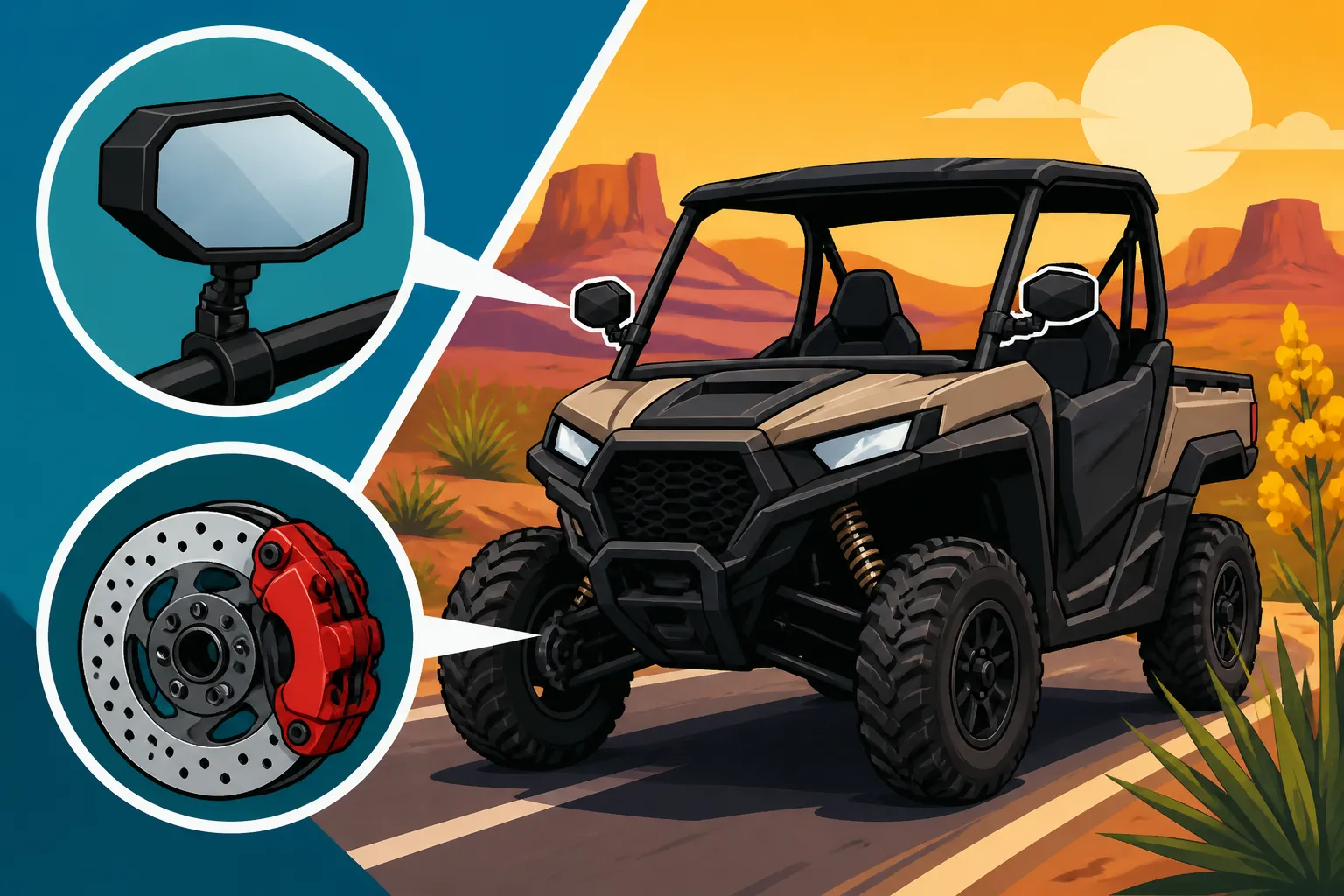
When choosing mirrors for your ATV or UTV, you have a few options, and the best choice often depends on your specific machine and riding style. For UTVs, a popular and often effective solution is a wide-angle rearview mirror mounted on the roll cage. These offer a broad view behind you, minimizing blind spots. Brands like SuperATV offer a range of roll-cage mounted mirrors that are designed to withstand the rigors of off-road use while providing excellent visibility for paved road transitions. Many riders also opt for side mirrors, one on each side, which provide a more car-like experience and excellent peripheral vision, especially helpful when checking blind spots before merging or turning.
For ATVs, handlebar-mounted mirrors are common. These can attach directly to your handlebars or clamp onto a bar-end. It's crucial to select mirrors that are durable enough to handle vibrations and potential impacts without breaking or losing their adjustment. You'll want to experiment with placement to ensure you get that 200-foot rearward view without your arms or body obstructing it. Always make sure they're tightly secured to prevent them from bouncing around on rough terrain or shifting during a road ride.
Regardless of the type you choose, prioritize clear, non-distorted glass and a sturdy mounting system. Adjustable ball joints are a huge plus, allowing you to fine-tune the angle for your riding position. Before every road excursion, take a moment to check your mirrors. Are they clean? Are they securely fastened? Do they give you that unobstructed view behind you? This quick check can make all the difference in staying safe and legal.
Brake System Requirements for New Mexico Paved Roads
Just as seeing what’s behind you is critical, so is your ability to stop safely and effectively. On the trail, you might rely on engine braking, careful throttle control, and sliding to manage your speed. On a paved road, these techniques are not only ineffective but potentially dangerous. New Mexico law requires your OHV to have a fully functional and effective brake system that meets specific standards for road use. This isn't just about slowing down; it's about making a controlled, swift stop when necessary, especially in emergency situations where a split-second decision can prevent a serious accident.
The brake system on your ATV or UTV is designed to handle the stresses of off-road riding, but road use introduces different demands. Consistent braking at higher speeds and repeated stops can put more wear and tear on your components. Therefore, a thorough understanding of what constitutes a legal and safe brake system, along with diligent maintenance, is paramount for anyone planning to take their OHV onto New Mexico’s paved surfaces. Neglecting your brakes is not only illegal but a direct threat to your safety and the safety of others.
Essential Brake Performance Standards
New Mexico law mandates that any vehicle operating on public roads, including properly equipped OHVs, must have an adequate brake system. While specific technical specifications like stopping distances from certain speeds aren't typically spelled out in the OHV regulations themselves, the underlying principle is that your brakes must be capable of stopping your vehicle safely and effectively under all normal operating conditions. This means your brake system must be in good working order, providing reliable stopping power.
For most ATVs and UTVs, this translates to a hydraulic disc brake system, either on all four wheels or a combination of disc and drum brakes. It’s crucial that all components – brake pads, rotors, calipers, master cylinder, and brake lines – are in excellent condition. Any sign of wear, leakage, or sponginess in the brake pedal or lever indicates a problem that must be addressed immediately. The goal is a firm, responsive brake feel that instills confidence in your ability to bring your machine to a quick and controlled halt.
Beyond just stopping, the brakes must allow for stable deceleration. Your OHV shouldn't pull sharply to one side when braking, nor should the brakes lock up prematurely under normal pressure. These are all indicators of a brake system that is not performing to the necessary standards for paved road safety. When you engage your brakes, the force should be evenly distributed, and the vehicle should remain stable and controllable throughout the deceleration.
Inspecting and Maintaining Your OHV's Brakes for Road Legality
Regular inspection and diligent maintenance are not just good practice; they are essential for keeping your OHV's brakes road-legal and safe. Before every ride that involves paved roads, you should perform a quick but thorough check of your brake system. Start by visually inspecting your brake pads. Are they worn down past the minimum thickness? If so, they need to be replaced. Check your rotors for any deep grooves, warping, or excessive rust that could impede braking performance.
Next, check your brake fluid reservoir. Is the fluid level appropriate? If it's low, it could indicate a leak or excessively worn pads. Brake fluid should also be clear, not dark and murky; if it's discolored, it's time for a flush and refill, as old fluid can lose its effectiveness. Follow the brake lines from the master cylinder to the calipers, looking for any signs of leaks, cracks, or chafing. Any damage to a brake line is a serious safety hazard and requires immediate repair.
Finally, test the brake pedal or lever. Does it feel firm and responsive, or is it spongy and does it go too close to the floor or handlebar? A spongy feel often indicates air in the lines, which means bleeding the brakes is necessary. Take your OHV for a short, slow test ride on a safe, private area to ensure the brakes engage smoothly, stop the vehicle effectively, and don't cause any pulling or locking. Maintaining your brakes is an ongoing commitment, but it's one that directly contributes to your safety and compliance with New Mexico road laws.
Beyond Mirrors and Brakes: Other Key Equipment for New Mexico Road Use
While mirrors and brakes are absolutely critical for safe and legal paved road use in New Mexico, they are part of a larger picture. Your off-highway vehicle needs a suite of other specific equipment to truly be considered road-ready and compliant with state law. Think of it as preparing your machine for two different worlds – the rugged trail and the structured pavement. Each world has its own demands, and for road use, visibility, audibility, and environmental considerations all come into play.
Failing to equip your OHV with these additional necessary components can lead to the same legal trouble as neglecting your mirrors or brakes. More importantly, it can put you at risk on the road where you're sharing space with much larger and faster vehicles. This section will cover other vital equipment requirements, ensuring you have a comprehensive understanding of what it takes to legally and safely navigate New Mexico's paved roads with your ATV or UTV.
Lighting Requirements for Visibility
Visibility is paramount when riding on paved roads, especially at dusk, dawn, or during adverse weather conditions. New Mexico law has specific requirements for lighting on any vehicle operating on public roads, and this includes your OHV once it ventures onto the asphalt. You'll need properly functioning headlights, taillights, and brake lights. [New Mexico Headlight and Taillight Rules] specifies the general requirements.
Your headlight must be capable of illuminating persons and vehicles at a distance of at least 150 feet ahead. This means a single, dim headlight designed for trail riding likely won't cut it. You might need to upgrade to a brighter LED or halogen bulb, or even add auxiliary lights to meet this standard. [The 150-Foot Headlight Rule] ensures you can see potential hazards and be seen by oncoming traffic. Similarly, your taillight must be visible from a distance of 200 feet to the rear, especially important for preventing rear-end collisions. [The 200-Foot Taillight Rule] is there to protect you from traffic approaching from behind.
Beyond standard headlights and taillights, many riders also opt for turn signals. While not always explicitly required for OHVs by specific state statute (as some laws defer to motorcycle requirements which might not always mandate them in certain contexts, it's safer to have them), they are highly recommended for clear communication with other drivers. It's a common-sense safety feature that helps prevent misunderstandings and accidents when turning or changing lanes. Your brake lights, of course, must activate reliably when you apply the brakes, clearly indicating your deceleration to following vehicles.
Sound Limits and Spark Arresters
New Mexico also regulates the sound output of vehicles on public roads, and OHVs are no exception. Excessively loud exhausts can be a nuisance and are subject to citations. The law generally sets a maximum sound limit, often around 96 decibels when measured under specific conditions. [New Mexico's 96 Decibel Ceiling] exists to ensure that vehicles don't create undue noise pollution. Many aftermarket exhausts designed for maximum performance off-road can exceed this limit, so if you've modified your exhaust, it's crucial to ensure it still complies when you hit the pavement.
Beyond sound, if you plan on riding on public lands accessible via paved roads, such as many Forest Service or BLM roads, your OHV must be equipped with a spark arrester. While this is more of an environmental and fire prevention requirement for off-road use, it's still something to be aware of when accessing those areas. [Spark Arresters on New Mexico Public Land] are vital for preventing wildfires by containing sparks that might exit your exhaust. It's a small component, but it plays a huge role in protecting our natural resources, and its absence can lead to fines from land management agencies.
Ensuring your OHV is equipped with a compliant exhaust system and a spark arrester not only helps you meet legal requirements but also demonstrates responsible riding. It’s about being a good neighbor on the road and a good steward of the land, preserving the riding areas we all love for future generations.
Practical Considerations for Riding Your OHV on New Mexico Roads
Getting your ATV or UTV physically equipped with the right mirrors, brakes, and lights is a huge step toward legal paved road use in New Mexico. However, owning the right gear is only part of the equation. Safe and legal road riding also requires understanding the broader responsibilities that come with operating a motor vehicle on public thoroughfares. It's about being prepared, knowing the rules of the road, and ensuring you, as the operator, are also compliant with licensing and insurance requirements.
Transitioning from aggressive trail riding to defensive road riding demands a shift in mindset and a careful review of all the small details that can make a big difference in safety and legality. You don't want to find yourself pulled over for an easily avoidable oversight, nor do you want to be unprepared for the distinct challenges that paved roads present compared to the dirt. This section aims to tie all these practical considerations together, offering a holistic view of what you need to do before you roll onto that asphalt.
Pre-Ride Checklist for Paved Road Trips
Before you ever leave your driveway or campsite to hit a paved road, it's incredibly helpful to run through a quick pre-ride checklist. This ensures you haven't forgotten anything and that all your critical safety equipment is in working order. Think of it like a pilot's pre-flight check – it covers all the bases for a safe journey.
Here’s a practical checklist you can use:
- Registration & Decals: Is your green "on and off-highway" decal current and properly displayed? Do you have your paved road plate if required for your machine? Is your registration card easily accessible?
- Mirrors: Are all required mirrors securely mounted, clean, and properly adjusted to give you an unobstructed view of at least 200 feet behind you?
- Brakes: Do both front and rear brakes (if applicable) feel firm and responsive? Are the brake lights activating correctly? Have you checked brake fluid levels and pad wear recently?
- Lights: Are your headlights working and bright enough for 150 feet of forward visibility? Are your taillights visible from 200 feet behind? If you have them, are your turn signals functioning?
- Tires: Are your tires inflated to the correct pressure for paved road use (often higher than off-road pressures)? Check for any damage or excessive wear.
- Fuel: Do you have enough fuel for your intended trip, considering that OHVs can be less fuel-efficient on pavement than dedicated street vehicles?
- Safety Gear: Do you have your helmet and eye protection ready? (More on this below.)
- Documentation: Do you have your driver's license and proof of insurance with you?
Running through this list every time will save you headaches and ensure you're ready for whatever the road throws your way.
Driver's License, Insurance, and Safety Gear
Beyond the machine itself, you, the operator, also have responsibilities when taking your OHV onto New Mexico's paved roads. First and foremost, you must possess a valid driver's license. Just like driving any other motor vehicle, operating an OHV on pavement requires that you are licensed to do so. [A Driver's License on a New Mexico Paved Road] is a non-negotiable requirement. This means no riding on public roads with just an OHV safety permit if you're under 18 and don't have a provisional or full driver's license.
Secondly, financial responsibility is crucial. New Mexico requires all motor vehicles operating on public roads to carry liability insurance. This means your OHV, when used on pavement, must be insured. [New Mexico's Mandatory Financial Responsibility Act] applies here. This insurance protects you and others in case of an accident. Always carry proof of insurance with you, as an officer may ask for it during a stop. [Insurance New Mexico Requires on Pavement] is a critical element of being road-legal.
Finally, while your OHV might be equipped for the road, you need to be equipped too. New Mexico has specific helmet laws. For riders under 18, a helmet is always required, whether on or off-road. For adult riders on pavement, while not always strictly mandated for adults by OHV-specific road statutes in all contexts, wearing a helmet is always the safest choice. More universally, eye protection is required for all riders at any age when operating an OHV on paved roads. [New Mexico Helmet Law for ATV Riders] and [Eye Protection at Any Age on Pavement] are important guidelines. Goggles or a helmet with a visor will protect your eyes from wind, dust, and debris, which can be much more prevalent at road speeds.
| Feature | Off-Road Use (Typical) | Paved Road Use (Required in NM) |
|---|---|---|
| Mirrors | Optional | At least one rearview mirror, clear 200 ft view |
| Brakes | Functional for terrain | Fully functional, effective stopping, stable deceleration |
| Headlights | For visibility on trail | Illuminates 150 ft ahead |
| Taillights | For visibility on trail | Visible 200 ft to the rear |
| Brake Lights | Often integrated | Activates reliably when brakes applied |
| Turn Signals | Optional | Highly recommended for clear communication |
| Exhaust Sound | Variable | Must be within 96 decibel limit |
| Spark Arrester | Required on public lands | Required for public land access (even via road) |
| Registration | Yellow Off-Highway Decal | Green On & Off-Highway Decal + Paved Road Plate (if applicable) |
| Driver's License | Not always required (off-road) | Required for operator |
| Insurance | Not always required (off-road) | Required (liability) |
| Helmet | Under 18 always, adults optional (off-road) | Under 18 always, highly recommended for adults |
| Eye Protection | Recommended | Required for all riders |
Disclaimer
This article is for general informational purposes only and does not constitute professional advice. Laws, prices and regulations vary by location and change over time. Consult a qualified professional for guidance on your specific situation.