New Mexico Helmet Law for ATV Riders
There's a lot of open country and incredible trails in New Mexico, which is fantastic for ATV and UTV enthusiasts. But when it comes to knowing exactly when and where you need to wear a helmet, things can get a little muddled, especially with different rules for age groups and riding surfaces. This guide is here to clear up all that confusion, helping you understand the specific helmet laws for ATV riders across the Land of Enchantment so you can ride safely and legally.
Understanding New Mexico's General Helmet Requirements for OHVs
When you're out enjoying the vast landscapes of New Mexico on your ATV, it's easy to get caught up in the thrill of the ride. However, being aware of the baseline helmet requirements is crucial, not just for compliance but for your own safety and the safety of those riding with you. The rules can differ quite a bit depending on who's on the machine and where you're riding, so let's break it down.
The Baseline: When Helmets Are Always Required
Here’s the deal: New Mexico takes the safety of its younger riders very seriously, and for good reason. Accidents can happen in an instant, and a helmet is your best defense against head injuries. Because of this, the state has a very clear and unwavering rule: if you are under the age of 18, wearing an approved helmet is absolutely mandatory whenever you're operating or riding as a passenger on an off-highway vehicle (OHV) on public land. This isn't a suggestion; it's a non-negotiable legal requirement designed to protect our most vulnerable riders.
This rule applies universally across all public lands in New Mexico—whether you're tearing up the sand dunes at Mescalero Sands, navigating the trails of the Carson National Forest, or exploring the open desert on BLM land around Truth or Consequences. It covers all types of OHVs, including ATVs, UTVs, side-by-sides, dirt bikes, and even smaller youth machines. There's no exception based on the type of public land or the specific trail you're on. The law is designed to create a consistent safety standard for all young riders enjoying New Mexico's outdoor recreation opportunities. Failing to adhere to this can lead to penalties for both the young rider and their parent or guardian, which is something no one wants when they're trying to have a fun day out. You can find more specific details on this in our guide on [New Mexico Helmet Law for Riders Under 18].
The Adult Exception: When Helmets Are Optional (Mostly)
Now, for those of us who are 18 years of age or older, the helmet law on off-road terrain is a bit different. When you’re riding purely off-road, away from paved public roads, New Mexico law does not strictly mandate that adults wear a helmet. This might come as a surprise to some, especially if you’re used to stricter regulations in other states or even for street motorcycles. However, this distinction is important.
While the law gives adults the choice off-road, it's really important to pause and think about the implications of that choice. We've all seen those unexpected bumps, hidden rocks, or sudden swerves that can send you tumbling. A helmet provides critical protection in these situations. Even a low-speed tip-over can result in a serious head injury if you’re not protected. Many experienced riders will tell you that even when it's not legally required, wearing a helmet is just common sense when you're navigating unpredictable terrain. The landscape in New Mexico can be incredibly diverse and challenging, from loose sand and rocky climbs to dense forest trails. For these reasons, while optional for adults off-road, wearing a helmet is strongly recommended by safety experts and seasoned riders alike. This guide, focusing on [New Mexico Helmet Law for ATV Riders], aims to provide you with all the necessary information to make an informed decision for your own safety.
Helmet Rules for Paved Road Use in New Mexico
This is where things can get a little more intricate and often trip people up. While off-road helmet rules have clear age distinctions, bringing your ATV or UTV onto a paved public road in New Mexico introduces a whole new set of requirements, regardless of your age. It’s crucial to understand these distinctions, especially if you plan on using the state’s paved road opt-in options.
The Paved Road Opt-In: Helmets and Eye Protection
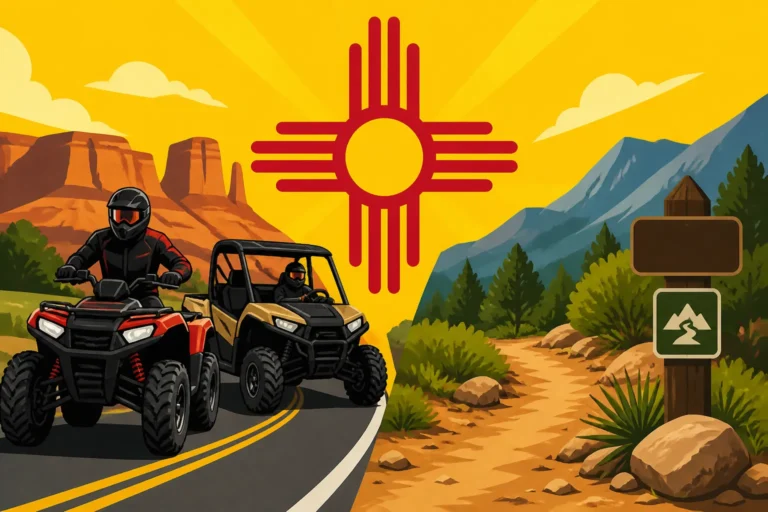
If you're thinking about using your OHV to connect trails, access services, or simply ride on a permitted paved public road, you need to be aware of the specific safety equipment required. When an OHV is operated on a paved public road or highway where its use is permitted—which usually means roads opened by a county or municipality under the [New Mexico's Paved Street Opt-In] law—the helmet rules become universal: everybody on that machine, regardless of age, must wear a helmet. This applies to the operator and any passengers.
This change in requirement is directly tied to the nature of paved roads. Higher speeds, harder surfaces, and interaction with other motor vehicles significantly increase the risk and severity of injuries in an accident. The state's intent here is to offer the highest level of protection to everyone when an OHV is mixing with regular traffic. Moreover, it's not just about helmets. If your OHV does not have a windshield that meets certain safety standards, then all riders on paved roads are also required to wear appropriate eye protection. This could be goggles, a face shield integrated into your helmet, or impact-resistant glasses. Dust, debris, and even insects can be a major hazard at road speeds, and maintaining clear vision is critical for safety. Our detailed guide on [New Mexico Eye Protection Requirement] delves deeper into these specifics.
Exceptions for Enclosed Cabs and Street Legal Machines
It's important to clarify that there are a few nuances to these paved road rules, although they might not apply to your typical ATV or open-cab UTV. Some larger, more utility-focused UTVs, especially those that come equipped with fully enclosed cabs and three-point seatbelts, might fall under different classifications similar to conventional automobiles. In such cases, if the vehicle provides the same level of occupant protection as a passenger car (e.g., a fully enclosed cab, doors, windshield, and proper seatbelts), then the helmet requirement might be waived, much like you don't need a helmet in your pickup truck.
However, for the vast majority of ATVs and the common open-cab side-by-sides, this exception does not apply. If your machine is open to the elements, helmets are a must on paved roads. Furthermore, it's important not to confuse an OHV with a paved road plate with a truly "street legal" vehicle like a golf cart or a low-speed vehicle (LSV). These categories have their own distinct definitions and regulations regarding equipment and where they can operate, and their helmet requirements might differ. For the purposes of a standard ATV or UTV taking advantage of the paved road opt-in, assume that helmets and eye protection are required for everyone aboard. Understanding the full scope of [New Mexico Equipment Rules for Road Use] is essential before venturing onto any paved surface.
Practical Advice and Safety Considerations
Knowing the law is one thing, but making smart, practical choices for your safety on the trails and roads of New Mexico is another. A helmet is more than just a piece of required gear; it's a vital safety tool that can literally save your life or prevent a debilitating injury. Let’s dive into some practical considerations to ensure you’re always prepared.
Choosing the Right Helmet
Selecting the right helmet isn't just about grabbing the first one you see; it's about finding one that offers optimal protection, comfort, and visibility for OHV riding. There are several types of helmets, each with its own advantages:
- Full-Face Helmets: These offer the most comprehensive protection, covering your entire head and face. They are excellent for high-speed riding and provide good protection against dust and debris. Many include built-in face shields.
- Open-Face Helmets (3/4 helmets): These cover the top, back, and sides of your head, but leave your face exposed. If you choose an open-face helmet, you absolutely must pair it with goggles or safety glasses, especially on paved roads where eye protection is mandatory if there's no windshield.
- Motocross/Off-Road Helmets: These are typically full-face helmets but often have a more aggressive chin bar for ventilation and a peak (visor) to deflect roost and sun. They are designed to be worn with goggles. These are a popular choice for serious off-road riders because of their ventilation and specialized design for dusty, active riding.
- Modular Helmets: These are a hybrid, offering the full-face protection with a chin bar that can flip up. They provide versatility but are often heavier and more complex.
Regardless of the style you choose, always look for helmets that are certified by recognized safety standards. The most common certifications you'll see are DOT (Department of Transportation), Snell, and ECE (Economic Commission for Europe). These certifications mean the helmet has passed rigorous impact and penetration tests. A good helmet should fit snugly all around your head, without being uncomfortably tight or causing pressure points. It shouldn't move freely when you shake your head. A proper fit is crucial for the helmet to do its job effectively. Consider features like good ventilation to prevent overheating, especially during hot New Mexico summers, and removable, washable liners for hygiene. Many riders also invest in helmet-compatible communication systems, which SuperATV offers, to stay connected with their riding group, enhancing both safety and enjoyment on longer treks.
Enforcement and Penalties
It's natural to wonder about the consequences of not following these rules. New Mexico law enforcement takes OHV safety seriously, and that includes helmet compliance. If you or a minor riding with you are caught without the legally required helmet, you can face fines. These penalties are designed to deter non-compliance and reinforce the importance of safety. For instance, [New Mexico Fines for an OHV Violation] can range in cost, and those costs can escalate for repeat offenses.
Beyond the immediate financial penalty, there's the added layer of parental responsibility. If a rider under 18 is found without a helmet, their parent or guardian can also be held liable and may face fines. This dual responsibility highlights how seriously the state views the protection of young riders. You can read more about this in our article [New Mexico Penalties for a Parent]. Law enforcement agencies you might encounter on the trails or roads include local police, county sheriff's deputies, New Mexico State Police, and federal officers from the Bureau of Land Management (BLM) or the U.S. Forest Service, depending on where you're riding. These officers have the authority to pull over OHV operators and issue citations for violations of the state's OHV laws, including helmet requirements. Always carry proof of any required permits or registrations, and be prepared to show your safety equipment is compliant. Staying informed and compliant ensures your riding adventures in New Mexico remain safe and enjoyable, free from unnecessary legal headaches.
| Rider Age | Off-Road/Trail (Public Land) | Paved Public Road (If Permitted) | Eye Protection on Paved Road (If No Windshield) |
|---|---|---|---|
| Under 18 | Required | Required | Required |
| 18 and Over | Recommended (Optional) | Required | Required |
Disclaimer
This article is for general informational purposes only and does not constitute professional advice. Laws, prices and regulations vary by location and change over time. Consult a qualified professional for guidance on your specific situation.