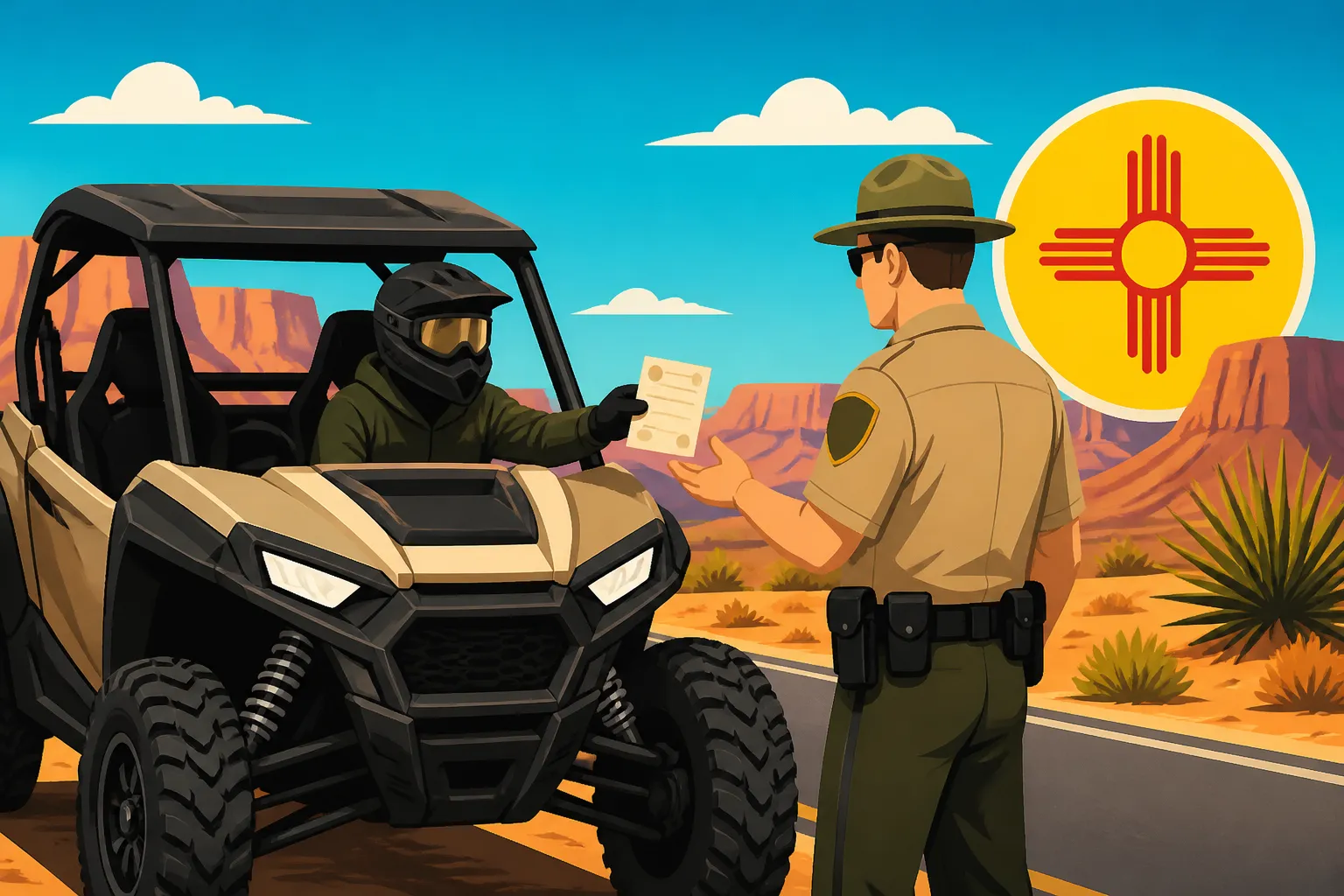
Showing Registration at a Roadside Stop
It's happened to all of us. You're out enjoying a fantastic ride on your ATV or UTV in the beautiful New Mexico landscape, cruising along a dirt county road or maybe even a designated paved route, when you see those flashing lights in your rearview. Your heart might do a little flutter, and the first thought that often pops up is, "Do I have everything I need?" This guide is here to walk you through exactly what New Mexico law enforcement expects when they pull you over on your off-highway vehicle and how to ensure you're always prepared.
The Essentials: What a New Mexico Officer Wants to See
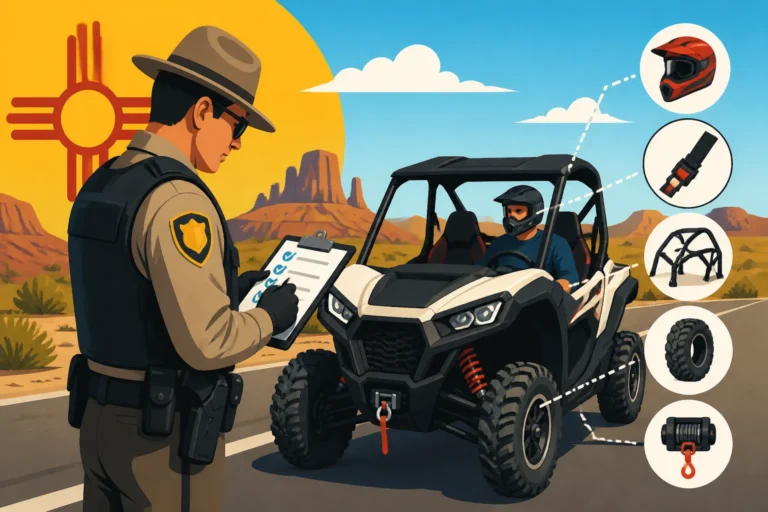
When a law enforcement officer pulls you over, whether it's a State Police officer, a Sheriff's Deputy, a Forest Service Ranger, or a BLM agent, they're primarily looking to ensure you're operating your machine legally and safely. Just like with a regular car, there are specific documents they'll ask for, and knowing what they are and having them readily accessible can make the encounter smooth and stress-free. It's not about catching you out; it's about ensuring everyone is following the rules that keep our trails open and safe.
Your New Mexico OHV Registration
This is absolutely number one on their list. Every off-highway vehicle (OHV) in New Mexico that operates on public land, which includes most county roads, forest roads, and BLM land, needs to be registered with the New Mexico Motor Vehicle Division (MVD). This isn't just a suggestion; it's a requirement. The registration proves that your machine is recognized by the state and that you've paid the necessary fees to contribute to trail maintenance and OHV programs.
When you go to renew your OHV registration, you'll receive updated decals that you need to affix to your machine. These decals, usually a specific color like yellow or green depending on your riding privileges, are visual proof that your registration is current. [New Mexico's Yellow and Green Decals] explains the difference. But the officer isn't just looking at the decal from a distance; they want to see the actual registration document. This document contains vital information such as the vehicle identification number (VIN), your name, the expiration date, and sometimes even the make and model of your OHV. Having the physical paper, or a clear digital copy on your phone, is crucial. For instance, if you've recently purchased a used machine, you'll want to ensure you've properly handled the [New Mexico OHV Registration on a Private Sale] to avoid any hiccups.
Proof of Financial Responsibility (Insurance)
If you're operating your OHV on any paved public road in New Mexico, even just crossing a highway, you are required to have proof of financial responsibility, which almost always means liability insurance. [New Mexico ATV Insurance Requirement] goes into more detail. This is a big one because it protects not only you but also other road users in case of an accident. While off-road riding on dirt trails might not strictly require insurance in all cases, the moment you touch asphalt that's open to other vehicles, the rules change.
Think about it: you're making a quick dash across a paved county road to get to the next section of trail, and suddenly, another vehicle doesn't see you. Accidents happen. Having an insurance card, either physical or digital, that clearly shows your policy number, effective dates, and coverage limits is essential. The officer will verify that your policy meets the state's minimum liability requirements. It's not just about avoiding a ticket; it's about being responsible. Many riders opt for accessories from companies like SuperATV that offer secure storage solutions on their UTVs, making it easy to keep these important documents safe and dry, rather than letting them get ruined by dust or moisture.
Your Driver's License or Permit
If you're riding your OHV on a paved road, you absolutely need a valid driver's license. This aligns with the requirements for operating any motor vehicle on public roads. Even if you're just using your OHV to get from your campsite to a trailhead on a paved portion of a county road, that license is a must-have. [A Driver's License on a New Mexico Paved Road] covers this in detail.
For off-road use only, the rules are a bit different, especially for younger riders. While an adult typically doesn't need a special permit for purely off-road riding, minors do. If you're under 18 and riding on public land, you need to have completed an approved OHV safety course and carry your New Mexico OHV Safety Permit. [New Mexico OHV Safety Permit Requirements] elaborates on this. An officer will definitely ask to see this if they encounter a young rider. It's about ensuring that those under 18 have the foundational knowledge to ride safely and responsibly.
The Roadside Stop: What to Expect and How to Respond
So, you've been flagged down. Your first instinct might be to panic, but staying calm and cooperative is the best approach. Law enforcement officers are trained to observe your demeanor, and a calm, polite interaction will almost always lead to a better outcome.
Pulling Over Safely and Presenting Documents
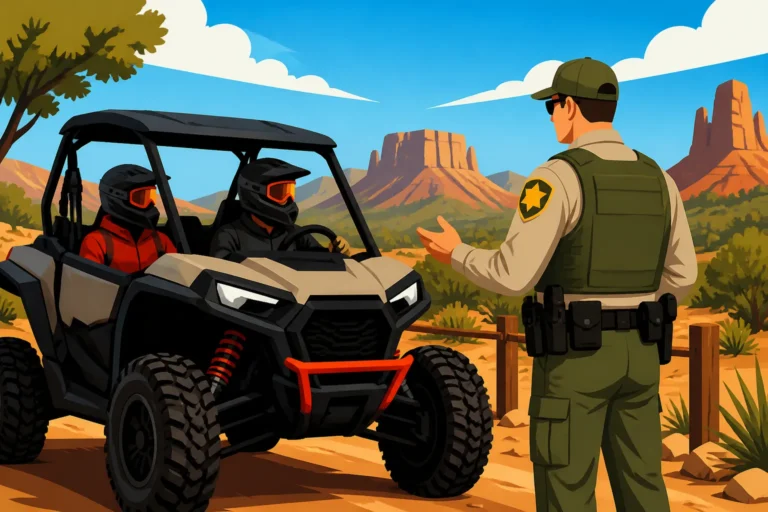
When you see those lights, signal your intention to pull over and do so safely and promptly. Find a clear, level spot away from traffic, if possible. Turn off your engine and remove your helmet (if you're wearing one) so the officer can see your face and hear you clearly. Keep your hands visible, ideally on the handlebars or steering wheel. Reaching into a storage compartment without announcing it can cause unnecessary concern.
When the officer approaches, they will typically introduce themselves and state the reason for the stop. This is your cue to listen attentively and respond respectfully. When they ask for your registration, insurance, and license, clearly state where your documents are located. For example, "Officer, my registration and insurance card are in this waterproof pouch on my dash, and my license is in my wallet." Then, slowly retrieve them. Having them organized and easily accessible, perhaps in a glove box or a dedicated document holder often found on UTV accessories from SuperATV, will make the process much smoother. Avoid fumbling or making sudden movements.
Common Questions and Inspections
Beyond the documents, an officer might have a few other questions or make some visual inspections, especially if you're riding on roads open to other traffic. They might ask about your destination, where you started, or if you're aware of specific local ordinances. Answer truthfully and concisely.
They will also likely perform a quick visual inspection of your machine to ensure it meets basic safety and equipment requirements. For instance, if you're on a paved road, they'll check for working headlights, taillights, and turn signals. [New Mexico Headlight and Taillight Rules] outlines these. Mirrors are also critical for road use. [Mirrors and Brakes for New Mexico Road Use] covers those necessities. They might also check for a spark arrester if you're on public lands where that's required, or even check your muffler's sound level. [New Mexico's 96 Decibel Ceiling] sets that standard. If you're a young rider, they might confirm that you're wearing appropriate head protection, as [New Mexico Helmet Law for Riders Under 18] mandates.
Consequences of Non-Compliance and How to Avoid Them
No one wants to get a ticket or, worse, have their riding day cut short because of a preventable issue. Understanding the potential consequences of not having your documents or operating an unregistered machine can be a powerful motivator to always be prepared.
Fines and Penalties
Operating an unregistered OHV on public lands in New Mexico can lead to significant fines. An officer isn't just going to give you a warning in most cases, especially if it's a clear violation. These fines can add up quickly. [New Mexico Fines for an Unregistered OHV] highlights the monetary penalties you could face. Beyond the initial fine, recurring offenses often carry steeper penalties.
Similarly, riding on paved roads without the required insurance or a valid driver's license also incurs fines, and these can sometimes be more severe, including potential points on your driving record. It's simply not worth the risk. Always double-check your registration expiration date and make sure your insurance is current before you even load your machine onto the trailer. A good practice is to set a reminder on your phone for renewal dates, so you never miss them.
Impoundment or Towing
In some serious cases, if your OHV is found to be unregistered, or if you're operating it recklessly or without proper licensing on public roads, an officer has the discretion to impound your vehicle. This is not just a major inconvenience; it comes with towing fees, storage fees, and the hassle of getting your machine back, which can be an expensive and time-consuming ordeal. Imagine your planned weekend trip turning into a scramble to retrieve your UTV from an impound lot – definitely not the kind of adventure you signed up for.
To avoid this, treat your OHV's paperwork with the same seriousness you treat your car's. Keep a dedicated folder for your OHV documents at home, and a waterproof, easily accessible pouch on your machine when you ride. Many riders prefer sturdy, lockable storage boxes or bags, often available from brands like SuperATV, which are perfect for keeping these critical papers secure and protected from the elements. This proactive approach ensures you're always ready, no matter where your New Mexico adventure takes you.
What to Do If You've Lost Your Documents
Life happens. Sometimes documents get lost, damaged, or misplaced. If you find yourself in a situation where you've been pulled over and can't produce your physical registration or permit, explain the situation calmly to the officer. They may be able to verify your registration electronically, though this isn't guaranteed, especially in remote areas with limited connectivity.
Your best bet is to proactively replace any lost documents. For a lost OHV decal or registration card, you can typically apply for a replacement through the MVD. [Replacing a Lost New Mexico Decal] provides information on this process. For a lost driver's license, you'll need to go through the standard MVD procedures for a replacement. While a digital copy of your insurance might be acceptable, it's always wise to have a physical card as a backup, especially in areas where cell signal is spotty, which is common on many New Mexico trails. Remember, being upfront and cooperative, and having a plan for replacement, is much better than trying to make excuses.
| Document Type | Purpose | When Needed | Key Information to Verify |
|---|---|---|---|
| OHV Registration Card | Proof of state recognition and fee payment | All public land riding | VIN, owner name, expiration date |
| New Mexico OHV Decal | Visual proof of current registration | All public land riding | Color (Yellow/Green), number, year |
| Proof of Liability Insurance | Financial responsibility for accidents | All paved public road use | Policy number, effective dates, coverage limits |
| Driver's License | Legal authorization to operate vehicle | All paved public road use | Your photo, license number, expiration date |
| OHV Safety Permit (for minors) | Proof of safety course completion | All public land riding (under 18) | Rider's name, permit number, date issued |
Disclaimer
This article is for general informational purposes only and does not constitute professional advice. Laws, prices and regulations vary by location and change over time. Consult a qualified professional for guidance on your specific situation.