Meeting a Deputy at a Trailhead Checkpoint
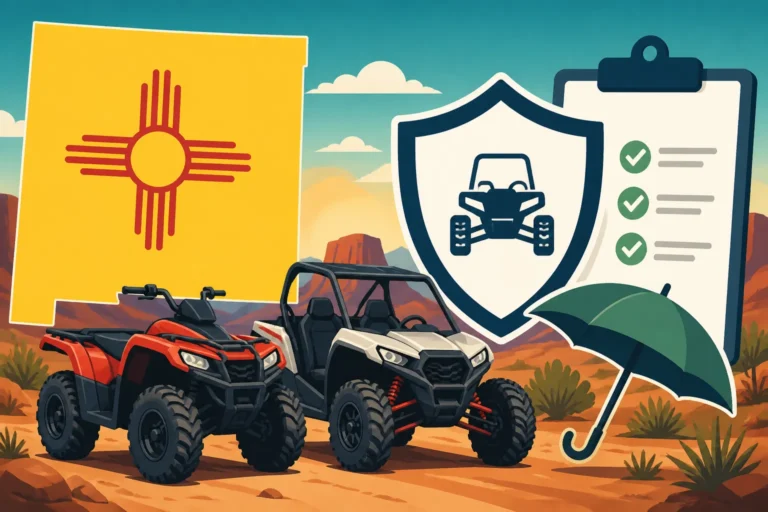
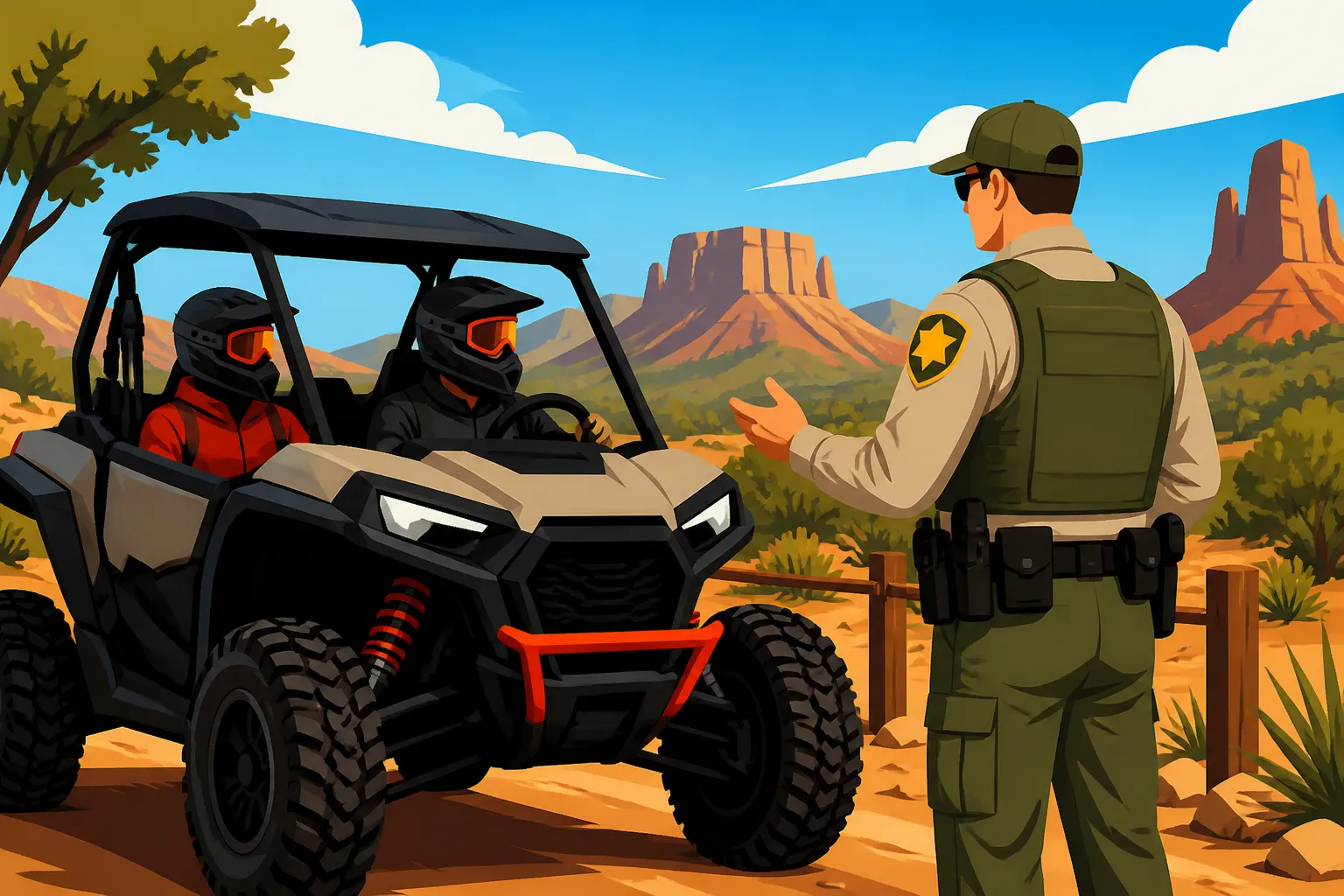
Picture this: you're all geared up, trailer hitched, machine unloaded, and just as you're about to hit that perfect New Mexico trail, you see it—a deputy's vehicle at the trailhead. Your heart might do a little flutter, wondering what they're looking for and if you've got everything squared away. This guide is here to walk you through exactly what New Mexico law enforcement checks at these common trailhead checkpoints, so you can ride with confidence and keep your focus on the adventure, not the anxiety.
Why Law Enforcement Conducts Trailhead Checkpoints in New Mexico
It's natural to feel a little jolt when you see a deputy at the entrance to your favorite riding spot. Many of us have been there, quickly running through a mental checklist: "Is my registration current? Do I have my helmet? Did I forget anything?" The truth is, these checkpoints aren't usually set up to catch people doing something wrong, but rather to ensure everyone is riding safely and legally, which ultimately protects both riders and the environment. New Mexico is an incredible state for off-highway vehicle (OHV) riding, with vast open lands and beautiful trails, but with that freedom comes the responsibility to adhere to state regulations. Law enforcement agencies, whether it's the New Mexico State Police, county sheriffs, or even federal land rangers on BLM or Forest Service land, are primarily focused on promoting safety, preventing accidents, and preserving the trails for everyone to enjoy.
They're not just looking for the big stuff; sometimes it's the small details that can prevent a larger issue. For instance, ensuring all riders, especially minors, have the proper safety certifications helps reduce injuries. Making sure machines have spark arresters prevents wildfires, which is a massive concern in our dry climate. And confirming that machines are properly registered means that the fees collected go back into maintaining and improving the very trails we all love to ride. So, while it might feel like an interruption to your ride, these checkpoints are a vital part of keeping New Mexico's OHV community vibrant and safe for years to come.
Ensuring Proper Registration and Decals
One of the first things a deputy will ask to see at a trailhead checkpoint is proof of your OHV's registration and current decals. This is fundamental in New Mexico. Every OHV operated on public land, regardless of where it was purchased or how often it's ridden, needs to be registered with the Motor Vehicle Division (MVD). This isn't just about collecting fees; it's about accountability and ensuring that if something goes wrong, there's a record of the machine and its owner.
When you register your machine, you'll receive a registration card and a decal. This decal needs to be clearly displayed on your OHV, and the specific placement varies by machine type. For example, a quad's decal typically goes on the left rear fender, while a side-by-side's might be on the left rear quarter panel. [New Mexico OHV Decal Placement Rules] covers these specifics. These decals come in different colors – yellow for off-highway use only, and green for machines that have opted into paved road use. A deputy will check that you have the correct, unexpired decal for the type of riding you're doing. If you're heading onto a county road that's open to OHVs, having a green decal is crucial. Otherwise, you might face a fine for illegal road use, even if it's just a short stretch connecting trails. [New Mexico's Yellow Off-Highway Decal] and [New Mexico's Green On and Off-Highway Decal] provide more detail on these distinctions.
Verifying Safety Permits for Minor Riders
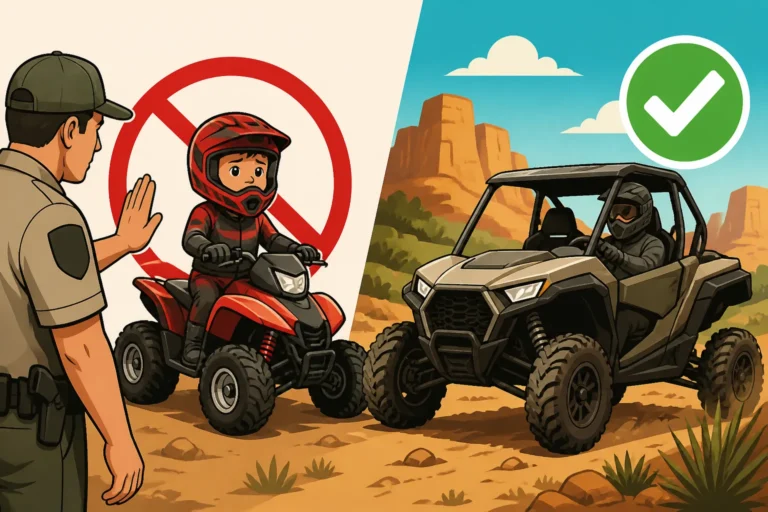
New Mexico has specific requirements when it comes to younger riders. If anyone under the age of 18 is operating an OHV on public land, they are required to have an OHV Safety Permit. This isn't just a suggestion; it's a legal mandate designed to ensure that young riders have a basic understanding of safe operation and trail etiquette. A deputy will absolutely be looking for this, and an underage rider without a permit can lead to a citation for both the rider and the supervising adult.
The safety permit signifies that the rider has successfully completed an approved OHV safety course. These courses cover everything from basic machine controls and proper riding techniques to environmental responsibility and understanding trail signs. It's about building good habits early and giving young riders the knowledge they need to make smart decisions on the trail. If you have a teenager or younger child who loves to ride, make sure they have their permit card on them. Even if they have a driver's license or a motorcycle endorsement, the OHV Safety Permit is still a separate requirement for off-highway riding under 18. This helps ensure that regardless of their other driving experience, they've specifically learned the unique aspects of OHV operation. [New Mexico OHV Safety Permit Requirements] gives you all the details on getting this crucial certification.
Checking for Required Equipment and Compliance
Beyond registration and permits, deputies at a checkpoint will also inspect your OHV for certain equipment requirements. These checks are all about safety and environmental protection, making sure your machine is ready for the trail and won't cause harm.
First off, they'll likely check for a spark arrester. If you're riding on federal lands (like BLM or National Forest), a U.S. Forest Service approved spark arrester is mandatory to prevent wildfires. Many aftermarket exhaust systems, even high-performance ones from brands like SuperATV, come with integrated spark arresters, but it's always good to double-check that it's in place and functioning. Next up is sound. New Mexico has a 96-decibel sound limit for OHVs. While it might be tempting to modify your exhaust for a louder growl, exceeding this limit can lead to a fine and disturbs wildlife and other trail users. A quick sound check might be part of the inspection, especially if your machine sounds particularly loud. [New Mexico Sound Limit for ATVs] and [New Mexico Spark Arrester Requirement] are great resources to understand these rules.
If you plan on riding on any paved county or city roads that have been opened to OHVs, the equipment list expands significantly. You'll need working headlights and taillights, at least one rear-view mirror (many riders opt for two for better visibility, and you can find robust options from companies like SuperATV), and a horn. These are the same basic requirements you'd expect for any street-legal vehicle, designed to make your OHV visible and maneuverable in traffic. Ensuring your machine is properly equipped for the type of riding you intend to do is a key part of avoiding any issues at a checkpoint.
What Documents to Have on Hand
When you roll up to a trailhead checkpoint and a deputy asks to speak with you, having your paperwork organized and ready makes the whole process smooth and quick. Fumbling through a messy glove box or digging deep into a backpack can make an already slightly nerve-wracking situation more stressful. Think of it like going through a TSA checkpoint at the airport: the more prepared you are, the faster you get through.
It's a really good habit to keep all your essential OHV documents in a waterproof bag or pouch, easily accessible on your machine or in your riding gear. This protects them from dust, moisture, and getting lost. Consider laminating copies of important cards like your safety permit (if applicable) or your insurance card, keeping the originals in a safer spot, but always being able to produce the actual documents if requested. A simple plastic sleeve can save you a lot of grief in the long run, especially out on the dusty trails of New Mexico. Being able to quickly and clearly present what's being asked for shows responsibility and can significantly shorten your interaction with law enforcement.
Proof of Registration and Ownership
The most fundamental document you'll need is your current OHV registration card. This is issued by the New Mexico MVD and confirms that your machine is legally registered to operate in the state. The card typically includes details like your vehicle identification number (VIN), the year, make, and model of your OHV, and the expiration date of the registration. It's crucial that this registration is current; an expired registration is a common reason for citations at checkpoints.
Beyond the registration card, it's also a good idea to have some form of proof of ownership. While not always explicitly requested, having a copy of your title or a bill of sale can be helpful, especially if there's any question about who owns the machine. This is particularly relevant if you're riding a machine that's borrowed or recently purchased. While [New Mexico OHV Registration Paperwork] covers the primary documents needed for registration, carrying proof of current registration is your ongoing responsibility. Remember, the registration card is the official document confirming your right to operate the OHV on public lands, so keep it close!
Driver's License and Insurance (for Paved Road Use)
If your OHV is equipped with a green decal, signifying it's eligible for limited paved road use in New Mexico, then your documentation requirements expand to include items typically associated with street-legal vehicles. This means you absolutely need to have a valid driver's license on your person. Just like driving your truck or car, operating an OHV on a paved road requires you to be a licensed driver.
Furthermore, you will need proof of financial responsibility, which generally means an insurance card for your OHV. New Mexico's Mandatory Financial Responsibility Act applies to OHVs operating on paved public roads, requiring a minimum amount of liability coverage. This protects you and others in case of an accident. A deputy will very likely ask to see both your driver's license and your insurance card if you indicate you're using or intending to use paved roads. Even if you only plan to cross a highway or connect between dirt roads on a paved section, these documents are non-negotiable. [New Mexico OHV Registration and Liability Insurance] details the specifics of these requirements and why they are so important for safe and legal riding.
OHV Safety Permit (for Riders Under 18)
As mentioned earlier, if you or anyone in your riding group is under 18 years old and operating an OHV, their OHV Safety Permit is a mandatory document to carry. This isn't just a requirement for out-of-state visitors; it applies to all New Mexico residents under 18 as well. The permit card is tangible proof that the rider has successfully completed an approved safety course, demonstrating a foundational understanding of safe OHV operation.
A deputy will specifically ask for this permit if they see a minor operating a machine. It's a key part of New Mexico's effort to reduce accidents and ensure young riders are competent and responsible. Keep the permit card in a safe, accessible place, perhaps with the registration card. For parents or guardians supervising young riders, understanding this requirement and ensuring compliance is crucial, as penalties can apply to the supervising adult. [New Mexico OHV Safety Permit Requirements] outlines the process for obtaining this permit and the importance of having it readily available for inspection.
Common Issues and How to Avoid Them at a Checkpoint
Nobody wants their riding day cut short by a citation or a conversation with law enforcement that could have been avoided. Many of the issues deputies find at trailhead checkpoints are quite common and, thankfully, easy to prevent with a little preparation. It often comes down to simply knowing the rules and making sure your machine and your paperwork align with them. A quick pre-ride checklist can save you a lot of headache and keep you on the trail.
Forgetting a document or having an expired decal can feel like a minor oversight, but it can lead to real consequences, including fines. These checkpoints are designed to be educational as much as they are enforcement-based, but ignorance of the law is rarely an excuse. By understanding the common pitfalls, you can ensure your New Mexico riding experience is smooth, safe, and entirely legal. Let's look at some of the most frequent issues and how to steer clear of them.
Expired Registration or Decals
This is arguably the most common issue encountered at checkpoints. Many riders simply forget that their OHV registration, just like vehicle registration, has an expiration date. In New Mexico, OHV registrations typically last for two years. Life gets busy, and it's easy to let it slip your mind until you're already at the trailhead. An expired registration means your machine isn't legally cleared to be on public land, and a deputy will likely issue a citation.
To avoid this, make it a habit to check your registration card for the expiration date. Set a reminder on your phone a month or two before it's due. Renewing your registration is typically a straightforward process through the MVD, and doing it online or by mail means you won't have to interrupt your riding plans. Also, ensure your physical decal is still securely attached to your machine and readable. Over time, sun and weather can fade or peel decals, making them unreadable, which can also be an issue. If your decal is damaged or lost, you can often order a replacement from the MVD. [Renewing a New Mexico OHV Registration] gives a full breakdown of how to keep your registration current and valid.
Missing or Incorrect Decal Placement
Beyond just having a current decal, its correct placement is also subject to scrutiny. New Mexico has specific rules for where your registration decal needs to be displayed on different types of OHVs. For instance, on an ATV, the decal usually goes on the left rear fender. For a side-by-side (UTV or ROV), it's typically on the left rear quarter panel. Dirt bikes have their own specific spot, often on the left fork leg. If your decal isn't placed according to these rules, it can make it difficult for law enforcement to quickly verify your registration, potentially leading to questions or even a citation.
Equally important is having the correct type of decal for your intended use. If you have a yellow "off-highway only" decal but you're attempting to ride on a county road that is open to OHVs, you're in violation. For any paved road use, even just crossing a state highway, you need the green "on and off-highway" decal. Riders sometimes confuse the two or think one covers all bases, but that's not the case. Always double-check [New Mexico OHV Decal Placement Rules] to ensure your decal is in the right spot and [New Mexico's Yellow Off-Highway Decal] and [New Mexico's Green On and Off-Highway Decal] to confirm you have the right color for your adventure.
Lack of Safety Permits for Underage Riders
This is a specific pain point for families or groups riding with younger members. It's easy to assume that if a child is a skilled rider or has a learner's permit for a car, they don't need the OHV Safety Permit. However, New Mexico law is clear: any rider under 18 on public land needs this specific permit. If a deputy encounters an underage rider without it, both the rider and the adult supervising them can face penalties.
The solution here is simple: if you have a rider under 18, make sure they complete an approved OHV safety course and carry their permit card with them. There are online and in-person options for these courses, making it fairly accessible. It's not just about avoiding a fine; it's about ensuring our younger generation learns to ride safely and responsibly. This permit is a testament to their understanding of those crucial safety principles. [New Mexico OHV Safety Permit Requirements] is your go-to resource for ensuring all young riders are properly certified.
Equipment Not Meeting Road Use Standards
For those planning to take advantage of New Mexico's "street legal opt-in" to ride on opened county or city roads, having the green decal is just one piece of the puzzle. Your OHV must also meet specific equipment standards to be considered street-legal for these designated roads. This includes functional headlights, taillights visible from a certain distance, working brake lights, at least one rearview mirror, and a horn. Many riders install turn signals and a license plate bracket, even though a traditional license plate isn't issued for OHVs.
A deputy at a checkpoint will be looking for these items if you have a green decal and plan to ride on pavement. Having a green decal but missing a mirror, for example, could still lead to a citation for illegal road use. Ensure any aftermarket accessories, even high-quality ones from companies like SuperATV, are compliant with New Mexico law. For example, if you've added a light bar, make sure your headlights and taillights are still distinct and visible as per regulations. [New Mexico Paved Road Plate Requirements] and [New Mexico Equipment Rules for Road Use] provide a thorough list of what your machine needs to have to legally hit those paved roads.
Interacting with Law Enforcement at a Checkpoint
Facing a deputy at a trailhead checkpoint can be a little intimidating, even if you know you're fully compliant. It's human nature to feel a bit on edge when being stopped by law enforcement. However, maintaining a calm, respectful demeanor and knowing how to communicate effectively can make the entire interaction go smoothly and quickly, getting you back to your ride without unnecessary delay or stress. Remember, these officers are primarily there to ensure public safety, and a positive interaction benefits everyone involved.
Approaching the checkpoint with an attitude of cooperation and respect sets a good tone. Just like any roadside stop, a deputy will likely assess your overall behavior and responsiveness. Being prepared, polite, and articulate can make a big difference in how the interaction proceeds.
Maintaining Composure and Respect
When a deputy signals you to stop at a trailhead checkpoint, the first and most important thing is to remain calm and respectful. Pull your OHV over safely and follow any instructions they give you. Turn off your engine, remove your helmet (if it's safe to do so), and keep your hands visible. This immediately shows cooperation and helps the deputy feel safe, which in turn leads to a more relaxed interaction.
Answer their questions clearly and concisely. There's no need to offer excessive information or speculate. If they ask for your registration, provide it promptly. If you're unsure about something, it's okay to say, "I'm not sure, officer," rather than guessing or making something up. Remember that a deputy is a professional performing their duty, and treating them with respect goes a long way. They are human too, and a positive, cooperative interaction is always preferable to a confrontational one. This approach helps ensure a quick and uneventful stop, allowing you to get back to enjoying New Mexico's trails.
Knowing What to Present and When
A deputy at a checkpoint will typically begin by asking for your identification, registration, and potentially your OHV Safety Permit if you're a minor or riding with one. Have these documents ready and easily accessible, ideally in a waterproof pouch as discussed earlier. Present them calmly when asked.
Here's a quick checklist of what they might ask for, depending on your age and riding intentions:
- For all riders:
- Proof of current OHV registration (the card, not just the decal)
- For riders under 18:
- OHV Safety Permit
- For riders planning paved road use (with a green decal):
- Valid driver's license
- Proof of OHV liability insurance
Beyond paperwork, be prepared for a visual inspection of your machine. This might include a check for a spark arrester, proper decal placement, and for those on paved roads, working lights, mirrors, and a horn. If you've modified your machine with aftermarket parts, such as a sturdy bumper or new lighting from SuperATV, ensure they don't impede visibility of your decals or lights, and that they comply with any local regulations. Being able to quickly show that your machine meets all requirements demonstrates your preparedness and responsibility.
Addressing Concerns and Receiving Instructions
If a deputy identifies a potential issue with your documentation or your OHV, listen carefully to their explanation. They will usually inform you of the specific violation or concern. This is your opportunity to understand the problem and, if appropriate, ask clarifying questions in a polite manner. Avoid arguing or becoming defensive, as this rarely leads to a positive outcome.
If a citation is issued, accept it calmly. You'll have the opportunity to address it through the legal process if you believe there's been a mistake. More often than not, if it's a minor issue and you're respectful, a deputy might just offer a warning or provide instructions on how to rectify the problem. They might direct you to a resource, like the MVD website for renewals, or tell you where to find specific information about equipment requirements. Remember, their primary goal is safety. By being cooperative and receptive to their instructions, you're not only helping yourself but also contributing to a safer and more enjoyable riding environment for everyone in New Mexico.
| Document / Item | Always Needed for Public Land (All Ages) | Needed for Under 18 Riders | Needed for Paved Road Use (Green Decal) |
|---|---|---|---|
| Current OHV Registration Card | Yes | Yes | Yes |
| Valid OHV Decal (Yellow/Green) | Yes | Yes | Yes (Green for pavement) |
| OHV Safety Permit | No | Yes | Yes (if under 18) |
| Valid Driver's License | No | No | Yes |
| Proof of OHV Insurance | No | No | Yes |
| Spark Arrester | Yes (on federal lands) | Yes (on federal lands) | Yes (on federal lands) |
| Headlights & Taillights | No | No | Yes |
| Rearview Mirror | No | No | Yes (at least one) |
| Horn | No | No | Yes |
Disclaimer
This article is for general informational purposes only and does not constitute professional advice. Laws, prices and regulations vary by location and change over time. Consult a qualified professional for guidance on your specific situation.