What a New Mexico Officer Checks Roadside
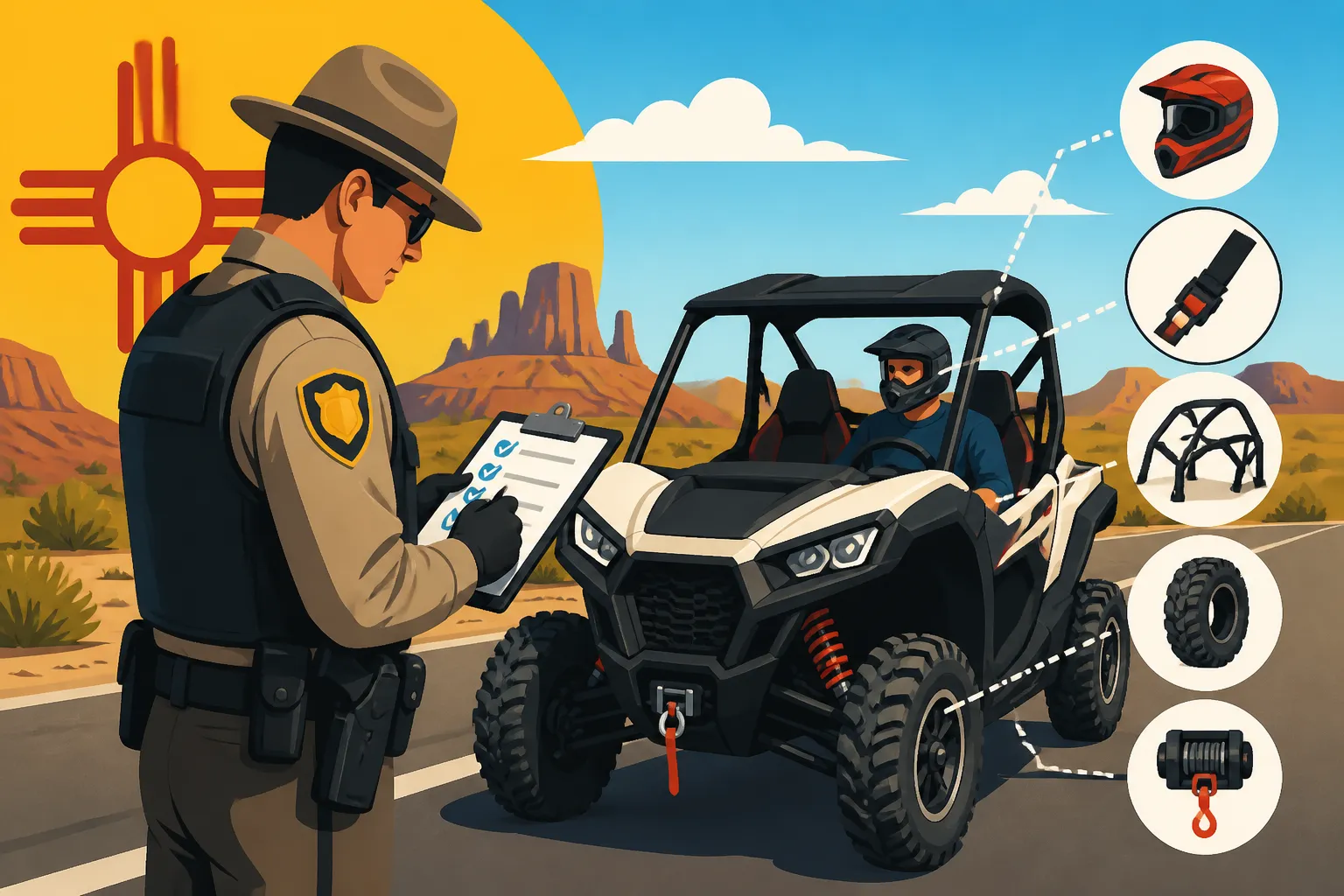
It’s a scenario no off-highway vehicle (OHV) enthusiast wants to face: seeing those flashing lights in your rearview mirror while you're out enjoying New Mexico’s incredible landscapes. Whether you're cruising a county road to get to a trailhead or just making a quick hop across a paved street, the anxiety of a roadside stop can be real. This comprehensive guide will walk you through exactly what a New Mexico officer is looking for when they pull over an ATV or UTV, helping you understand the rules and ride with confidence.
Understanding the Officer's Primary Concerns
When an officer approaches your off-highway vehicle, their initial focus is usually on ensuring that both you and your machine are operating legally and safely within New Mexico's regulations. They're not just looking for something to ticket; they're ensuring public safety and compliance with the state's very specific OHV laws. It can feel a bit daunting, especially with New Mexico's layered rules, but knowing what they're checking for can demystify the process entirely.
Ensuring Your Machine is Legally Registered
One of the first things an officer will look for is proper registration. In New Mexico, nearly all off-highway vehicles, including ATVs and UTVs, that are used on public lands or public roads must be registered with the Motor Vehicle Division (MVD). This isn't just a formality; it's how the state tracks machines and, importantly, collects funds that often go back into maintaining our beloved trails. If you're riding without a current registration, it's a quick way to find yourself in a bind.
The registration process provides you with two crucial items: a registration certificate and decals. For New Mexico residents, you'll typically have either a yellow decal for off-highway use only or a green decal if your machine is also equipped for paved road travel. These decals are more than just stickers; they're proof of your compliance. An officer will absolutely be checking for the presence of these, and if you're riding an out-of-state machine, they'll want to see your home state's registration as well, thanks to New Mexico's reciprocity laws. Make sure your registration is always current, as an expired decal or certificate is just as problematic as having none at all. You can learn more about these specific requirements by checking out [New Mexico's Yellow and Green Decals] and [New Mexico's Green On and Off-Highway Decal].
It’s easy to forget about renewal dates amidst all the excitement of riding. However, New Mexico’s OHV registration renews every two years, and it's essential to keep track of that expiration. If you've just bought a used machine, remember that the registration clock resets upon change of ownership, so even if the previous owner said it was "good for another year," you'll need to re-register it yourself. Keeping your paperwork in order, whether it's the physical certificate in a waterproof pouch on your machine or a digital copy accessible on your phone, is paramount to a smooth roadside encounter.
Checking for Proper Decal Placement
Once an officer confirms you have the necessary registration, their next step is often to check that your decal is correctly affixed to your machine. This isn't just about aesthetics; specific placement ensures the decal is visible and easily identifiable, which helps officers quickly verify compliance without having to ask for your paperwork immediately. Each type of OHV has a designated spot, and deviations can lead to questions or even a citation.
For ATVs (All-Terrain Vehicles), the decal is required to be placed on the left rear fender. It needs to be visible, so avoid putting it in a spot where mud, gear, or accessories might obscure it. For many quad riders, this is second nature, but if you're new to the sport or just bought a machine, it’s an important detail to remember. There's a specific reason for this placement, and knowing [Where the Decal Goes on an ATV's Left Rear] can save you some hassle.
If you’re riding a side-by-side or ROV (Recreational Off-Highway Vehicle), the rules are slightly different. The decal should be placed on the left rear quarter panel, again, in a spot that’s clearly visible. These machines often have more bodywork and places to stick things, but resisting the urge to put it on a windshield or a less obvious spot is key. For those with dirt bikes, the decal typically goes on the left fork leg. Understanding [Where the Decal Goes on an ROV Quarter Panel] or [Sticking the Decal on a Dirt Bike's Fork Leg] ensures you're meeting the visual requirements. An officer doesn't want to play hide-and-seek with your decal; they want to see it clearly at a glance.
Verifying Age and Supervision Requirements
New Mexico has clear rules regarding who can ride OHVs and under what conditions, especially for younger operators. An officer is trained to observe the age of riders and passengers, ensuring that minors are not only riding legally but safely. This is a big one for family outings, and parents need to be extra vigilant about these rules.
For riders under the age of 18, a New Mexico OHV Safety Permit is generally required to operate an OHV on public lands or public roads. This permit signifies that the rider has completed an approved safety course, which is designed to teach essential riding skills and safety practices. An officer may ask to see this permit, so if you have a young rider, make sure they have it on them, or you have proof of its existence. There are some exceptions, such as a valid driver's license for older teens, but the safety permit is the primary document for most youth. This is crucial information, especially when considering [New Mexico Rules for Riders Under 18] and [New Mexico Safety Permit for a Minor].
Beyond the permit, supervision rules are also a point of focus. For instance, riders under a certain age may require direct visual supervision by an adult. This means the supervising adult must be able to see the minor rider at all times, not just be somewhere in the general vicinity. These rules are in place for the safety of our youngest riders, and an officer will take them seriously. Knowing [New Mexico Supervision Rules for Young Riders] is essential if you're heading out with kids. Officers want to ensure everyone is having a safe and responsible time, and these age and supervision checks are a critical part of that.
Equipment and Safety Compliance
Beyond registration and rider qualifications, the physical condition and equipment of your ATV or UTV are under scrutiny during a roadside stop. New Mexico has specific requirements for lighting, sound, and other safety features, especially if you're venturing onto roads. These aren't just suggestions; they are mandates designed to protect you, your passengers, and others on the trail or street.
Headlights, Taillights, and Reflectors
Visibility is paramount, especially when riding at dusk, dawn, or during adverse weather conditions. An officer will check to ensure your machine is equipped with functional headlights and taillights. If you’re riding on any public road, even just crossing it, these lights are crucial for making your presence known to other vehicles. They’re not just for you to see; they’re for you to be seen.
New Mexico law specifies the visibility requirements for these lights. A headlight must be capable of illuminating persons and vehicles at least 150 feet ahead, and a taillight must be visible from a distance of 200 feet to the rear. This isn't just a "does it turn on?" check; it's about actual functionality and brightness. If your lights are dim, broken, or covered in mud to the point of being ineffective, an officer might consider you out of compliance. For a deep dive into these specifics, refer to [New Mexico Headlight and Taillight Rules], [The 150-Foot Headlight Rule], and [The 200-Foot Taillight Rule]. Regular maintenance, checking bulbs, and keeping your light lenses clean are simple steps to avoid issues.
Muffler, Spark Arrester, and Sound Limits
Nobody likes a super loud machine tearing up the tranquility of our New Mexico wilderness or disturbing residential areas. Consequently, sound levels and exhaust systems are a common point of inspection. All OHVs operating on public land must be equipped with a muffler that is in good working order and effectively prevents excessive or unusual noise. This means no straight pipes or illegally modified exhaust systems.
Furthermore, if you're on public lands managed by the federal government (like BLM land or National Forests), your machine must have a spark arrester. This device is critical for preventing wildfires, a major concern in our often-dry state. An officer, especially a Forest Ranger or BLM agent, will absolutely be checking for this. The law also sets a specific sound limit: 96 decibels. If your machine is roaring louder than that, it could lead to a citation. Many aftermarket exhaust systems are designed to meet these regulations, but it's always good to verify compliance. Reputable brands like SuperATV offer a range of exhaust components that are built with these regulations in mind, helping riders stay compliant while perhaps even enhancing performance within legal limits. Make sure you understand [New Mexico's 96 Decibel Ceiling] and [Spark Arresters on New Mexico Public Land].
Brakes and Mirrors for Road Use
While powerful brakes are a given for off-road safety, specific requirements come into play when you take your OHV onto paved roads. All OHVs used on public roads in New Mexico must have at least one brake system capable of stopping the machine safely. This sounds basic, but an officer will want to see that your brakes are responsive and properly maintained. Worn pads, leaking fluid, or non-functional brakes are immediate red flags.
In addition to reliable brakes, if you plan to operate your OHV on paved roads, it must be equipped with at least one rearview mirror. This mirror needs to be mounted in a way that provides you with a clear view of the road to the rear for a distance of at least 200 feet. This requirement is purely for safety, allowing you to monitor traffic behind you and make safe lane changes or turns. Many OHVs come with mirrors as standard, but if yours doesn't, or if they're broken, investing in a good set is crucial before hitting any paved surface. You can find detailed information on these requirements in [Mirrors and Brakes for New Mexico Road Use]. It's about being a responsible road user, just like in any other vehicle.
Road Riding Specifics: What Changes on Pavement
New Mexico offers some unique opportunities for OHV riders to connect trails or access amenities by riding on paved roads, but this privilege comes with a distinct set of rules. When an officer sees you on a paved public road, they're not just looking at your off-road compliance; they're also checking if you meet the additional requirements that apply to street-legal vehicles. This is where things get a bit more nuanced.
Proof of Insurance and Driver's License
This is perhaps one of the most significant shifts in requirements when you transition from dirt to asphalt. If you're operating your ATV or UTV on a paved public street or highway that has been designated as open to OHVs, you absolutely must carry proof of financial responsibility. This means having liability insurance, just like you would for a car or truck. An officer will ask for this without hesitation. If you can't provide it, you're looking at a pretty substantial fine.
The insurance policy needs to meet New Mexico's minimum liability coverage requirements. This ensures that if you're involved in an accident, there's coverage for damages or injuries you might cause to others. Your off-road-only policy likely won't cut it for paved road use, so make sure your insurance provider knows you intend to ride on designated streets and adjusts your policy accordingly. Furthermore, you must possess a valid driver's license. No temporary permits, no learner's permits without a licensed adult present. This license confirms you've passed a driver's test and understand the rules of the road. For more details on these vital requirements, consult [New Mexico ATV Insurance Requirement] and [A Driver's License on a New Mexico Paved Road].
Helmet and Eye Protection Rules
While helmets are always a good idea for any OHV rider, New Mexico law makes them mandatory under specific circumstances, especially on paved roads. For any rider or passenger under the age of 18, wearing an approved helmet is required on any public road or public land. This isn't negotiable; an officer will definitely be looking for helmets on young riders.
Beyond helmets, eye protection is also a must for all riders and passengers on paved roads, regardless of age. This could be a visor integrated into a helmet or goggles. The goal is to protect your eyes from debris, wind, and insects that could impair your vision and cause an accident. Even if you're just crossing a paved road, these rules apply. It's a quick and easy check for an officer and an equally easy way to avoid a ticket. If you want to dive deeper into these safety mandates, check out [New Mexico Helmet Law for ATV Riders] and [New Mexico Eye Protection Requirement].
Paved Road Plate Versus Decals
New Mexico has evolved its system for allowing OHVs on paved roads. For a long time, riders used a special paved road sticker in conjunction with their off-highway decal. However, that program has been phased out. Now, if you want to operate your OHV on designated paved roads, you'll need to obtain a special "paved road plate" from the MVD.
This plate is distinct from your regular off-highway registration decal. It signifies that your machine has met all the additional requirements for road use, including insurance, mirrors, and appropriate lighting. An officer seeing you on a paved road will be looking for this plate, typically mounted at the rear of your machine. While the green decal indicates you can equip your machine for paved road use, the paved road plate is the actual proof of having done so and legally being allowed on those specific streets. Don't confuse the green decal with the ability to simply ride anywhere on pavement. For historical context and current requirements, look into [New Mexico's Paved Road Plate] and [Plates That Replaced the Old Stickers]. It's a critical distinction that many riders sometimes miss.
Operational Conduct and Impairment Checks
A roadside stop isn't just about the static compliance of your vehicle and documents; it also involves an officer's assessment of your behavior and how you're operating the machine. New Mexico laws govern how OHVs can be ridden, where they can go, and what substances you can consume while operating them. These are areas where an officer's observation can lead to a quick determination of whether a violation has occurred.
Observing Riding Behavior and Route Compliance
Officers are trained to look for signs of reckless driving, excessive speed, or riding in prohibited areas. This includes staying on designated trails and roads and not venturing onto private property without permission. If you're pulled over, the officer likely observed something in your riding that caught their attention – maybe you were kicking up too much dust, riding too fast for the conditions, or crossing a highway improperly.
New Mexico has strict rules about where OHVs can and cannot go. While many county roads are open, state highways and interstates are generally off-limits, with only specific perpendicular crossings allowed. Riding on closed roads, wilderness areas, or private land without permission are serious offenses. An officer will want to know where you're coming from and where you're headed to verify you're adhering to these route restrictions. Even something as seemingly minor as failing to stop completely before entering a paved roadway can draw attention. Being familiar with [New Mexico Rules for Riding a Closed Road] and [New Mexico Rules for Crossing a Highway] is vital for maintaining good operational conduct.
Impairment and Open Container Laws
Just like operating a car or truck, driving an ATV or UTV under the influence of alcohol or drugs is illegal in New Mexico. OHV operators are subject to the same DWI (Driving While Intoxicated) laws as drivers of conventional vehicles. An officer will observe your demeanor, speech, and coordination for any signs of impairment. If they suspect you've been drinking or using drugs, they can administer field sobriety tests.
Furthermore, New Mexico's open container laws apply to OHVs. It's illegal to have an open container of an alcoholic beverage in the passenger area of an OHV while it's being operated on public lands or roads. This means that even if you're not impaired, simply having an open beer in a cup holder could lead to a citation. These laws are in place for everyone's safety, as impaired judgment and reduced reaction times can have devastating consequences, especially on an OHV. Knowing [New Mexico DWI Rules for ATV Riders] and [New Mexico Open Container Rules on an ATV] is crucial for responsible riding. Play it safe: if you're going to drink, don't ride.
Dealing with a Roadside Stop
Getting pulled over can be a nerve-wracking experience, no matter what you’re driving. But approaching an OHV stop with respect and preparation can make the process much smoother. Remember, the officer is doing their job, and your cooperation can significantly impact the outcome.
Staying Calm and Cooperating
When you see those lights, the first and most important thing to do is remain calm and safely pull over your OHV to the side of the road or trail in a visible and secure location. Turn off your engine, remove your helmet if you're wearing one, and keep your hands visible. Avoid sudden movements or reaching into bags without first telling the officer what you're doing. A polite and cooperative attitude goes a long way. The officer's primary concern is safety, both yours and theirs.
Answer any questions honestly and directly. If you're unsure about something, it's okay to say so. Avoid arguing or becoming confrontational. While it’s natural to feel frustrated, expressing it aggressively won't help your situation. Remember, the goal is to get back to enjoying your ride, and a calm, respectful interaction increases the chances of a positive resolution. Many times, an officer just wants to verify compliance and ensure you understand the rules.
Presenting Necessary Documentation
Before you even head out, you should have all your required documents organized and readily accessible. When an officer asks for them, you'll be able to produce them without fumbling around. This includes:
- OHV Registration: Your current New Mexico MVD registration certificate.
- Decals/Plate: Ensure your yellow or green decal is correctly placed, or your paved road plate is clearly visible if on asphalt.
- Proof of Insurance: If you're on a paved road, your current liability insurance card.
- Driver's License: If you're on a paved road, your valid New Mexico driver's license.
- OHV Safety Permit: If you're under 18, your OHV safety permit.
It’s a good idea to keep these documents in a waterproof bag or container securely attached to your machine, or in a pocket that you can easily access. Providing these promptly and correctly demonstrates your understanding of the law and your commitment to responsible riding. For more details on what to present, take a look at [Showing Registration at a Roadside Stop]. Having your ducks in a row makes the officer's job easier, which, in turn, makes your experience less stressful.
Here's a quick reference table to help you remember the key differences in requirements:
| Item | Off-Road (Public Land) Requirements | Paved Road (Designated Streets) Requirements |
|---|---|---|
| Registration | New Mexico MVD registration (Yellow or Green Decal) | New Mexico MVD registration (Green Decal) AND Paved Road Plate |
| Decal/Plate Placement | Specific to machine type (e.g., left rear fender for ATV) | Decal specific to machine, Paved Road Plate visible at rear |
| Insurance | Not typically required | Mandatory liability insurance |
| Driver's License | Not required for off-road use | Mandatory valid driver's license |
| OHV Safety Permit | Required for riders under 18 | Required for riders under 18 |
| Helmet | Required for riders/passengers under 18 | Required for riders/passengers under 18 |
| Eye Protection | Not always required, but highly recommended | Mandatory for all riders/passengers |
| Headlights | Required for night riding | Mandatory, visible 150 ft ahead |
| Taillights | Required for night riding | Mandatory, visible 200 ft to rear |
| Brakes | Functional | Functional, capable of safe stop |
| Rearview Mirror | Not typically required | Mandatory, visible 200 ft to rear |
| Muffler/Spark Arrester | Required (spark arrester on federal land) | Required (sound limits apply) |
| Open Container | Illegal | Illegal |
| Impairment | Illegal (DWI laws apply) | Illegal (DWI laws apply) |
Riding ATVs and UTVs in New Mexico is an incredible experience, offering access to some of the most breathtaking landscapes in the country. By understanding and adhering to the state's OHV laws, you can ensure that your adventures are not only thrilling but also safe and compliant. A little preparation and knowledge go a long way in making every roadside stop a quick, pleasant, and uneventful encounter, letting you get back to what you love most: hitting the trails.
Disclaimer
This article is for general informational purposes only and does not constitute professional advice. Laws, prices and regulations vary by location and change over time. Consult a qualified professional for guidance on your specific situation.