Rattlesnakes at a Staging Area
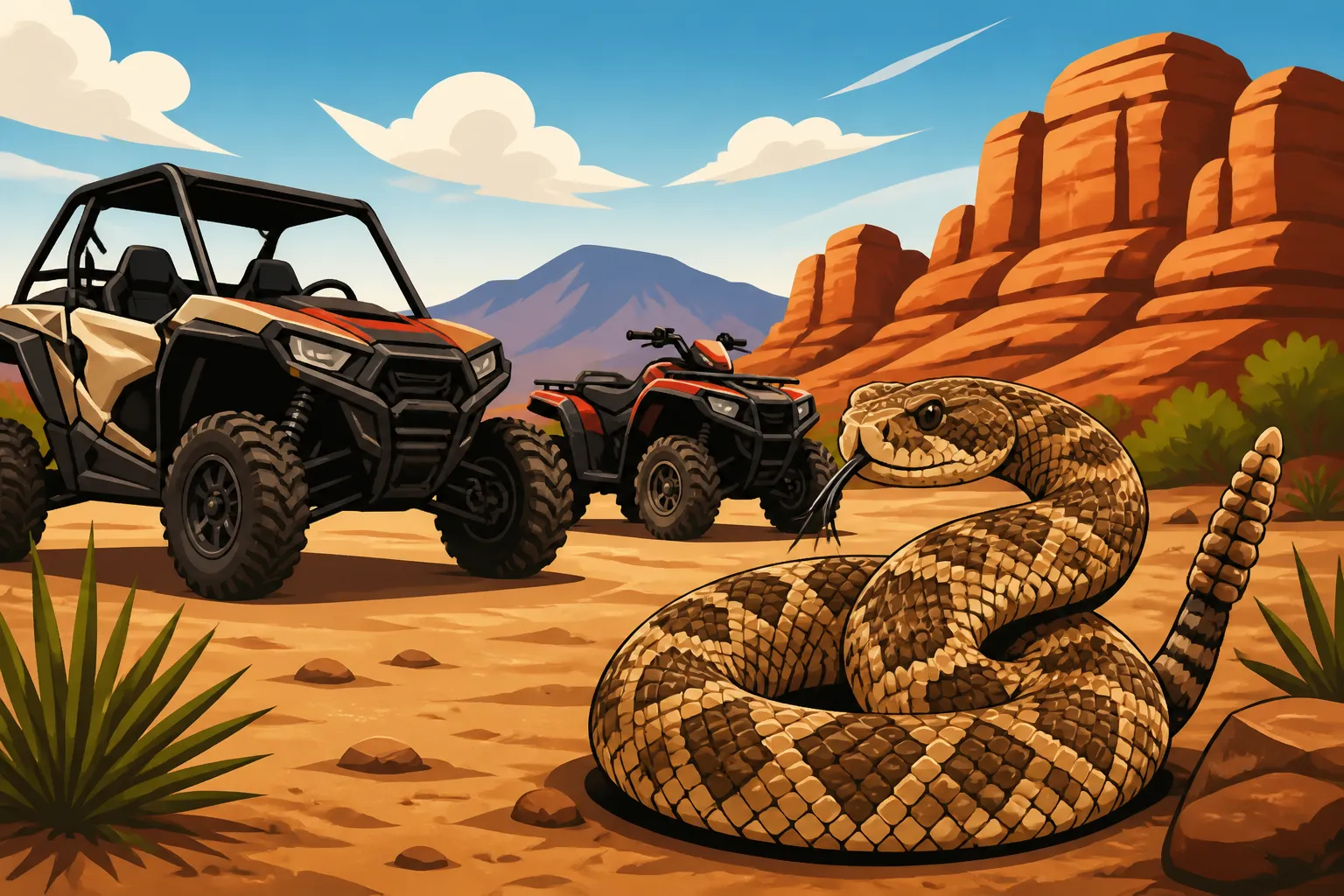
A rattlesnake beside a trailer, under a picnic table, or near a parked ATV can turn an ordinary New Mexico ride into a stressful situation fast. The safest response is simple: give the snake space, keep people and pets away, and let it leave without trying to move or harm it. This guide covers how to spot likely hazards, respond calmly, and get help if someone is bitten.
Why rattlesnakes may be near an OHV staging area
Understand the places snakes use for shelter
A staging area can look open and exposed while still offering exactly the kind of cover a snake may use: rocks, brush, stacked wood, shaded ground, or gaps beneath equipment. Snakes may also cross a parking area while moving between shelter and places where they can find prey. Their presence does not mean a site is unsafe, but it is a reason to watch where you step and reach.
New Mexico’s varied landscapes bring riders into different kinds of snake habitat, from desert and scrub to higher-elevation country. Around southern riding areas such as Red Sands near Alamogordo, the ground may include brush, rocks, and warm open terrain. Near Farmington, staging and trail environments around Glade Run and Chokecherry Canyon can look quite different, but the same basic habit applies: scan before stepping into cover or reaching into a hidden space.
Snakes are not looking for a confrontation with people. Most bites happen when someone gets too close, surprises a snake, or tries to handle it. If you see one, do not crowd it to identify its species or take a close-up photo. Back away slowly, tell others where it is, and leave it a clear path to move off.
For broader trip planning, New Mexico OHV Areas Near Las Cruces and Glade Run and Chokecherry Canyon at Farmington can help you explore the kinds of destinations riders visit. Whatever the landscape, check the ground as carefully at the staging area as you do on the trail.
Know when and where to be especially alert
Warm weather can make snake encounters more likely, but there is no single calendar date when every snake becomes active or inactive. Conditions vary with elevation, weather, and the immediate habitat. A cool morning does not guarantee that a snake will be absent, and a hot afternoon does not mean every shaded spot contains one. Treat brush, rock piles, and dark gaps as places to inspect from a safe distance throughout the riding season.
Pay extra attention when unloading, walking around a trailer, or setting down a helmet or bag. A snake may be difficult to see against gravel, dry leaves, or uneven ground. Look before stepping over a log or placing a hand near a tire, under a bench, or between stored gear. Avoid reaching blindly beneath a vehicle or into vegetation to retrieve a dropped item.
The same awareness matters at camp and along the route. Before settling in at a riding area, choose a spot where you can see the ground and keep bags, boots, and food containers off the brush line. For a wider view of trip preparation and outdoor hazards, see New Mexico Trail Etiquette on Shared Ground and Camping Near New Mexico Riding Areas.
How to prevent an encounter while loading and staging
Make a deliberate arrival routine
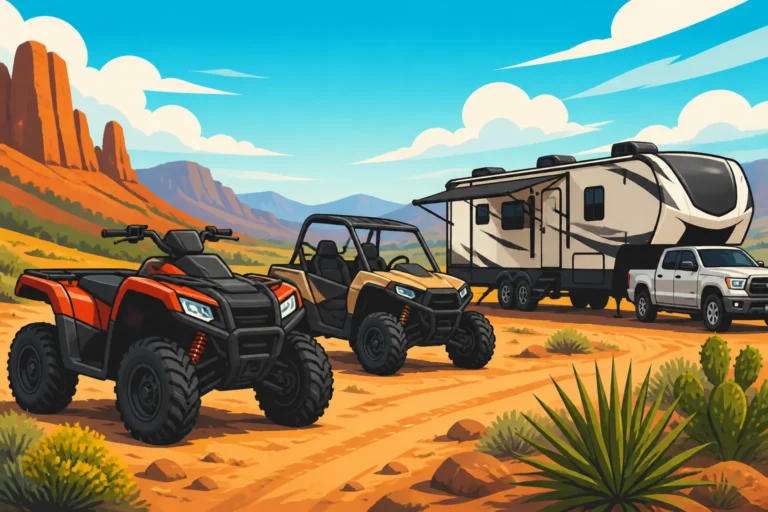
After pulling into a staging area, pause before unloading. Look around the trailer, vehicle tires, nearby brush, rocks, and shaded patches. Choose a clear place for helmets, tools, and riding gear rather than setting everything beside tall grass or a pile of debris. A quick visual check is more useful than hurriedly stepping into an area you have not inspected.
Keep the staging area orderly. Move slowly around parked machines, and ask children to stay close while adults unload. Do not let anyone poke sticks into crevices, lift rocks, or explore under a trailer. If you need to retrieve an item from a space you cannot see into, use a light and inspect from a safe position rather than reaching in by feel.
A simple routine can help a group avoid the chaos that often comes with arriving at a busy trailhead:
- Park in a clear, visible space and scan the ground before opening doors or tailgates.
- Tell passengers to wait in the vehicle or another inspected area while you check around the trailer.
- Put gear on a clear surface, not in brush or beneath rocks.
- Keep food, bags, and spare clothing closed and organized.
- Before loading up to leave, check around tires and equipment without putting your hands into hidden gaps.
If you use a digital map such as onX Offroad to organize a route or find a trailhead, remember that a route map does not show whether a snake is near your parking spot. Use mapping tools for navigation, then rely on direct observation and sensible spacing at the site. New Mexico Trail Maps Worth Carrying offers more context on preparing for navigation in riding country.
Keep children, dogs, and gear out of hidden spaces
Children may be curious about a snake and may not recognize how quickly a close approach can become dangerous. Give them a clear rule before the ride: if they see a snake, stop, back away, and tell an adult. Do not encourage them to take a picture, throw rocks, or try to scare it away. Adults should supervise children closely when walking between vehicles, especially around brush and rocky edges.
Dogs can investigate before their owners notice what has caught their attention. Keep a dog close and under control at the staging area, and do not let it sniff around rock piles or vegetation. If a dog is bitten, contact a veterinarian or emergency veterinary clinic promptly. Do not wait for visible symptoms or try to treat the bite yourself. For more preparation around pets in hot, exposed riding country, see Bringing a Dog on a Summer Desert Ride.
Wear sturdy footwear when walking around an unfamiliar staging area, and use a flashlight when checking dark spaces. Gloves can protect hands during ordinary equipment handling, but they are not permission to reach into places you cannot see. A boot, tool, or gloved hand cannot make it safe to disturb a snake.
| Staging-area situation | Safer response | Avoid |
|---|---|---|
| Snake visible beside a vehicle | Move people and pets away, then give it room to leave | Crowding it or trying to move it |
| Gear dropped near brush | Inspect from a safe distance before retrieving it | Reaching in blindly |
| Child wants a closer look | Call the child back and explain where to stand | Allowing a close photo or an attempt to touch it |
| Dog investigates a rock pile | Call the dog away and keep it restrained | Letting the dog continue sniffing |
| Snake beneath a trailer | Keep clear and wait for it to move away | Crawling underneath or poking at it |
What to do when you see a rattlesnake
Give it space and let it move away
If you spot a rattlesnake, stop walking and tell others to do the same. Slowly increase the distance between the group and the snake. Do not try to pin it, pick it up, trap it, or kill it. A snake that appears still may still defend itself if someone approaches or startles it.
Give it a way out. Keep people and pets back, and avoid standing between the snake and nearby cover. If the snake is close to a vehicle or trailer, do not crawl under the equipment or attempt to chase it away. Wait from a safe location until it has moved off, or ask the appropriate site manager or local authority for help if it remains in a place where people cannot safely pass.
The urge to take a photo is understandable, especially when everyone is startled, but getting closer for a better view adds risk. If you can take a picture from where you already are without approaching, do so only if it does not delay getting people to safety. Never try to capture the snake for identification.
A navigation app such as onX Offroad may help a group understand where it is in relation to a route or trailhead, but it cannot assess the animal’s behavior or make the area safe. Keep the focus on creating distance, warning others, and avoiding the snake’s path.
Decide whether to contact someone
If the snake is moving away from a clear area, the safest response is often to leave it alone. Do not turn a passing encounter into a confrontation by trying to clear the site yourself. If it is in a high-traffic location, trapped, or preventing people from moving safely, contact the site manager, land-management office, or local wildlife authority for direction. Keep the group at a distance while you wait.
If you are riding on public land, follow posted rules and respect the area rather than disturbing wildlife. At destinations such as Red Sands OHV Area in Southern New Mexico, riders should also account for the setting around the parking and unloading area, not only the marked riding route. Before a trip, check New Mexico Trail Closures to Check First and any site-specific notices so the group knows where to go and whom to contact if a problem arises.
If the snake is near a busy access point, use a calm, clear warning rather than causing a rush. Tell arriving riders to pause and take another safe route around the area, if one is available. Do not block an animal’s escape route or encourage a crowd to gather.
What to do if someone is bitten
Get emergency medical help immediately
A suspected rattlesnake bite is an emergency, even if the person feels okay at first or the bite marks are hard to see. Call 911 or get emergency medical care immediately. Do not wait to see whether swelling or other symptoms develop. Tell responders the bite location and when it happened, and share a description of the snake only if someone observed it from a safe distance. Do not try to catch or kill the snake to identify it.
Move the person away from the snake without creating another exposure. Help them stay as calm and still as possible while arranging care. Remove rings, watches, or other tight items from the affected limb before swelling increases, if they can be removed easily. Keep the bitten area still and avoid unnecessary walking or movement. Follow the dispatcher’s instructions and get professional care as quickly as possible.
Do not cut the bite, try to suck out venom, apply ice, use a tourniquet, or attempt to capture the snake. Home remedies and improvised treatments can cause additional harm or delay the care that matters. Do not give alcohol or medication unless medical professionals direct you to do so.
Keep the group safe while help is coming
At a remote trailhead, one person should stay with the injured rider while another contacts emergency services and provides clear directions to the staging area. If phone service is unreliable, use the group’s emergency communication plan. The person coordinating help should be ready to explain the access road, nearest identifiable landmark, and the route responders can take. This is one reason it helps to share your riding plan before leaving home and carry a way to navigate back to the access point.
If using onX Offroad or another map app, share or record the location only if doing so is quick and does not interfere with emergency care. Keep a charged phone or other communication device accessible rather than buried in a bag. For longer rides in remote country, Carrying Water in the Southern Desert and other preparation topics are useful, but water and supplies do not replace emergency medical treatment for a bite.
After the person is in professional care, keep other riders and pets away from the area where the snake was seen. Do not resume unloading or gathering gear beside the animal. If the snake remains near the staging area, contact the site manager or appropriate local authority and follow their instructions.
Disclaimer
This article is for general informational purposes only and does not constitute professional advice. Laws, prices and regulations vary by location and change over time. Consult a qualified professional for guidance on your specific situation.