New Mexico Riding Areas With RV Parking
A long motorhome and toy hauler can turn a New Mexico riding weekend into a parking puzzle: a trailhead may have room for a pickup but nowhere sensible to leave an RV. This guide explains how to assess RV access near popular riding areas, where to be cautious, and what to check before towing out.
What to Check Before Taking an RV to a Riding Area
Separate RV parking from camping
“RV parking” can mean several different things: a day-use lot where a truck and trailer can unload, an overnight campsite, or a campground with hookups. Those options are not interchangeable. A staging area might welcome trailers for the day but prohibit overnight stays, while a dispersed campsite might permit overnight camping without offering a level pad, water, or a quick route to unload.
Before you go, confirm the rules for the exact place where you plan to park—not just the general riding area. Check whether overnight camping is allowed, whether the site is intended for RVs, and whether your rig can reach it without crossing soft sand, narrow turns, or a rough two-track road. For federal land, look for the current land manager’s access and camping information. A map app such as onX Offroad can help you understand the surrounding roads and terrain, but it does not replace posted restrictions or land-manager guidance.
Measure the whole setup, not just the RV
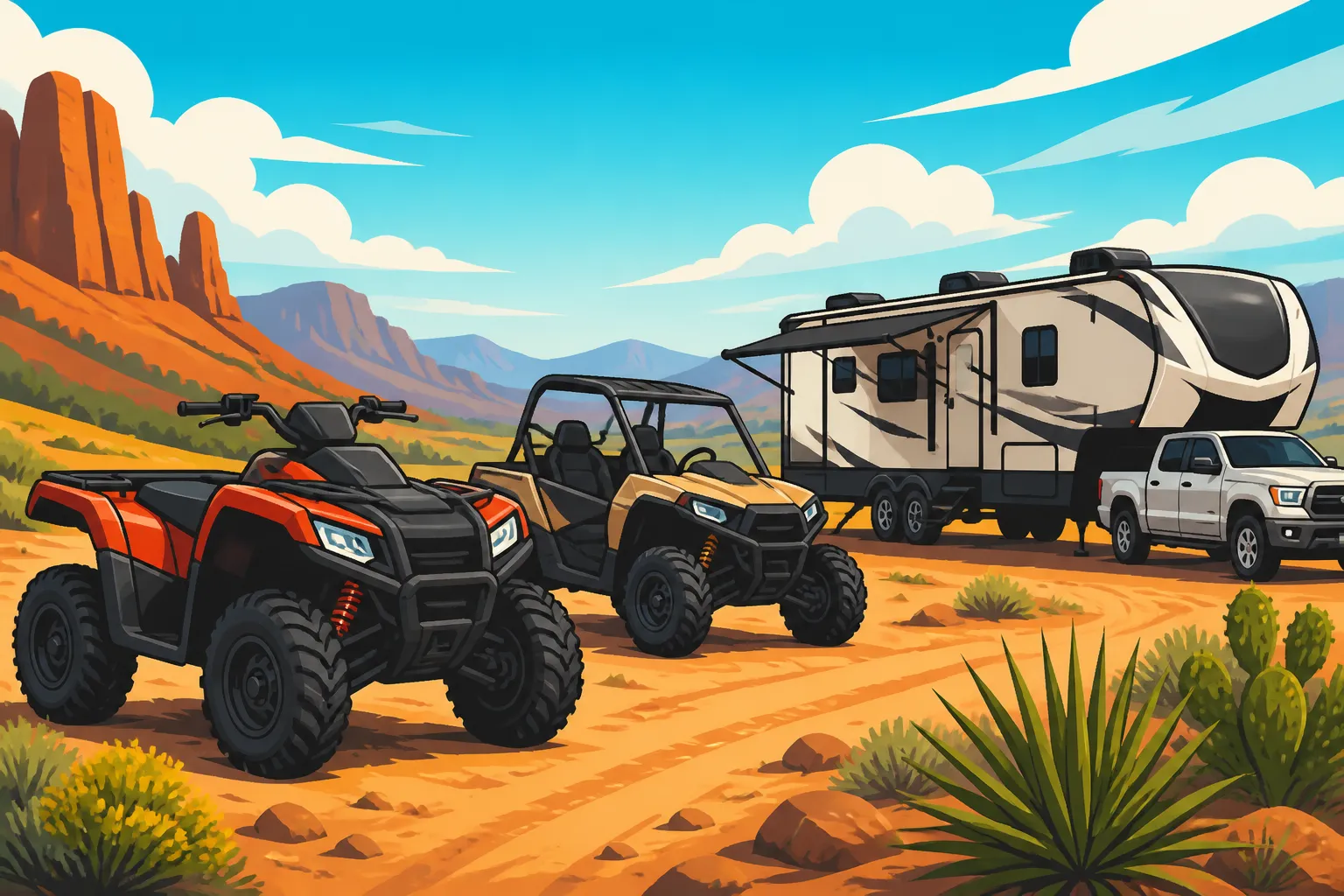
A motorhome towing an enclosed trailer needs more room than either vehicle alone. Consider the combined length, turning radius, clearance, and whether you can turn around without backing a long distance. A road that looks manageable in a pickup may feel very different with a trailer behind you.
If your setup is too large for a trailhead, look for an established campground or RV park in a nearby town and tow your ATV or UTV to the staging area with a separate vehicle. That adds a step, but it can prevent a stressful situation where you reach a sandy or crowded access road and cannot turn around. For local planning, [Camping Near New Mexico Riding Areas] can help you think through the difference between staying close to the trails and camping directly beside them.
| Riding area | Nearby town or region | RV planning approach | Main thing to verify |
|---|---|---|---|
| Red Sands | Near US 54 in southern New Mexico | Treat the ride area as a potentially basic staging destination; arrange overnight RV parking separately unless confirmed | Road and parking conditions, overnight rules, and turning space |
| Haystack Mountain | Near Roswell | Check current access and staging details, then compare them with nearby overnight options | Whether your RV and trailer fit the intended parking area |
| Glade Run and Chokecherry Canyon | Near Farmington | Confirm the permitted camping location and access route before bringing a large rig | Camping permission, site suitability, and the approach road |
| Mescalero Sands | Southeastern New Mexico | Plan conservatively and avoid taking a large RV onto soft or uncertain access roads | Surface conditions, safe parking, and a suitable place to unload |
New Mexico Riding Areas to Research for RV Access
Red Sands near US 54
Red Sands is a well-known southern New Mexico riding destination, and its open desert setting can make it look deceptively easy to reach with a large rig. The important question is not only whether you can get near the riding area. It is whether there is a suitable place for your RV and trailer to park, unload, and turn around without blocking access or getting stuck.
Treat Red Sands as a place where you should confirm the current approach and staging conditions before towing in. Desert surfaces can change with weather and traffic, and a firm road at one time may become soft or rutted later. If you do not have clear confirmation that your full setup can park safely, consider staying in or near a nearby community and towing the machines to the riding area. That is often less convenient than camping beside the trail, but it keeps the RV on roads and in parking areas better suited to it.
Also plan for a more self-sufficient visit. Do not assume the riding area has water, waste disposal, hookups, or other RV services. For local trip planning, [Red Sands OHV Area in Southern New Mexico] and [Getting to Red Sands Off New Mexico's US 54] provide useful context about the destination and its approach. Before leaving pavement, check your fuel, water, tire condition, and route back to a place where the RV can be parked securely.
Haystack Mountain near Roswell
Haystack Mountain is a popular eastern New Mexico OHV destination near Roswell. Its location makes it a practical option for riders who want to pair a day on the trails with services in town, but do not assume that proximity to Roswell means the riding area itself has full-service RV camping. Verify what parking and overnight options are actually available for your dates and vehicle size.
For a large motorhome or toy hauler, call or check with the relevant land manager before committing to the approach. Ask whether the area has a place intended for oversized vehicles, whether overnight stays are allowed, and whether your trailer can turn around in the designated area. If the answer is unclear, use a nearby RV campground or other authorized overnight location as your base and make a separate trip to the riding area.
Haystack is also a good example of why riders should distinguish a day-use visit from an RV camping plan. You may be able to ride there comfortably while still choosing to sleep elsewhere. [New Mexico's 1,920-Acre Haystack Mountain] and [Getting to Haystack Off US 70] can help you orient your trip around the area and its access. Confirm local conditions before towing, especially if rain or other weather may have affected unpaved roads.
Glade Run and Chokecherry Canyon near Farmington
Glade Run and Chokecherry Canyon offer a different kind of trip, with riding opportunities around the Farmington area. The landscape and trail network make it tempting to bring an RV close to the action, but camping permission, road access, and RV suitability are separate questions. A place where camping is allowed may still be a poor fit for a long motorhome or a heavy trailer.
Check the designated camping arrangements and any permit requirements before setting out. Then assess the access road and the specific spot you plan to use. A site that works for a pickup camper may not have enough turning room for a large fifth wheel. Bring a backup plan in Farmington in case the intended dispersed site is full, unsuitable, or inaccessible.
It helps to map more than the route to the riding area. Identify where you will park, where you will unload, how you will reach the trails, and how you will return to your overnight spot. [New Mexico's 19,000-Acre Glade Run], [Chokecherry Canyon's Open Area], and [Why Glade Run Camping Needs a Free BLM Permit] are useful starting points for understanding the area and its camping considerations. Use onX Offroad or another mapping tool to review the route, then compare that plan with current land-manager information and any signs on the ground.
How to Choose a Comfortable RV Base
Decide whether you want to camp at the trail or nearby
Camping directly beside a riding area can save time, especially when you want an early start. It can also mean rougher access, fewer services, limited shade, and less certainty about space. A nearby RV park or established campground may offer easier parking and a more predictable overnight setup, even if it means driving or towing to the staging area each day.
Think about the needs of everyone in your group, not only the riders. A family may value bathrooms, a place to recharge devices, and a level place to sleep after a dusty day. A group focused on riding may prefer a more remote site and be comfortable carrying extra water and supplies. If you are traveling with children, pets, or riders new to the area, a dependable base can make the trip feel much less hectic.
For a broader comparison of places to stay, see [New Mexico OHV Camping Spots] and [New Mexico Dispersed Camping for Riders]. These topics can help you build a backup plan rather than relying on a single informal parking spot.
Match the road and site to your rig
A route’s distance is not a good measure of whether it is RV-friendly. A short unpaved road can be a poor choice if it is sandy, sharply rutted, narrow, or difficult to turn around on. Before towing, check the route description, recent land-manager notices, and weather conditions. If you are uncertain, scout the road in a smaller vehicle before bringing the full setup.
At the destination, look for a firm, legal place to park that does not block gates, trail access, roads, or other users. Avoid driving onto vegetation or creating a new parking area simply because the existing space is crowded. If the surface is soft, do not assume that four-wheel drive will solve the problem; a heavy RV can sink quickly, and a recovery can be complicated.
When you review maps, remember that a line shown as a road does not guarantee it is open or suitable for your vehicle. onX Offroad can be useful for tracing nearby routes and comparing options, but confirm that the route is open and that RV access is allowed. For more route-planning context, [New Mexico Trail Maps Worth Carrying] is a helpful companion topic.
A Practical Plan for an RV Riding Weekend
Call ahead and ask specific questions
A quick, specific check can save hours of backtracking. Instead of asking only whether there is “RV parking,” explain the size and type of your setup: motorhome, travel trailer, fifth wheel, toy hauler, or truck and enclosed trailer. Ask whether parking is day-use or overnight, whether the site has a size restriction, and whether the approach is suitable for your rig.
Also ask whether the location requires a reservation, permit, or separate camping authorization. Find out what services are available rather than assuming there will be water, toilets, electrical hookups, or waste disposal. Keep a second option in mind in case the site is full or weather has made access difficult.
Prepare for remote conditions
Even a short ride in New Mexico can take you away from services. Carry enough drinking water for the group, plus extra for delays. Check fuel range for both the tow vehicle and the machines, and avoid planning a route that depends on a single fuel stop being open. Dust, heat, wind, and sudden weather changes can affect comfort and visibility, so pack layers and eye protection.
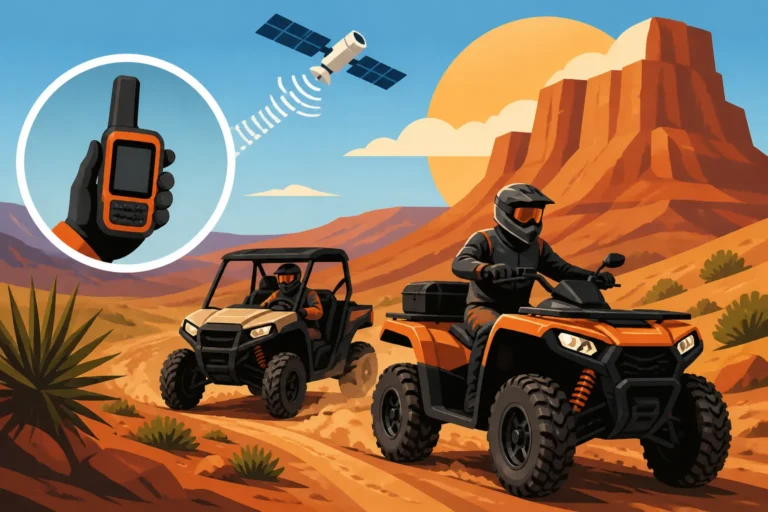
Before leaving the RV, tell someone where you plan to ride and when you expect to return. Keep a charged phone, but do not rely on cell coverage everywhere. If the route includes remote terrain, consider carrying an appropriate navigation backup and a way to communicate in an emergency. [New Mexico Trail Etiquette on Shared Ground] is also worth reviewing: responsible parking and riding help keep access open for everyone.
A good RV riding plan is flexible. If the road is softer than expected, the staging area is crowded, or a sign indicates a restriction, do not force the original plan. Park somewhere authorized, unload only where permitted, and choose a safer option. The best trip is not the one that gets the largest rig closest to the trail; it is the one where you can ride, camp, and leave without damaging the land or putting your group in a difficult spot.
Disclaimer
This article is for general informational purposes only and does not constitute professional advice. Laws, prices and regulations vary by location and change over time. Consult a qualified professional for guidance on your specific situation.