New Mexico Rules for Hunting From an ATV
Using an ATV or UTV to reach a New Mexico hunting area can save time, but it does not automatically make the route legal or permit hunting from the machine. The key is to separate vehicle access from hunting activity, then check the rules for the land, route, species, and season before you go.
Separate riding from hunting
An ATV can be a way to travel to a hunting area without being a lawful place from which to hunt. Riding to a trailhead, camp, or permitted route is different from using a motorized vehicle to pursue, locate, or shoot wildlife. Do not assume that stopping the machine, switching off the engine, or stepping beside it makes an otherwise prohibited activity acceptable.
New Mexico hunting rules can vary by species, season, location, and special authorization. The regulations for the animal you plan to hunt should be your starting point, not a general assumption about what an ATV allows. Check current rules from the state wildlife agency, including any restrictions on hunting from or near a motor vehicle, pursuing game with a motorized vehicle, and recovering harvested animals. A disability-related authorization, where applicable, may have specific conditions; it should not be treated as a general exception for other riders.
It also helps to distinguish three different situations:
| Situation | What to check |
|---|---|
| Riding to a lawful hunting area | OHV registration or permit, land access, route designation, and seasonal closures |
| Hunting after leaving the ATV | Hunting license, tag, season, location, weapon rules, and any restrictions on proximity to a vehicle |
| Using the ATV to locate, pursue, shoot, or retrieve game | Species-specific hunting rules and any required authorization; do not assume ordinary access rules allow it |
A hunting license or tag does not, by itself, authorize ATV use on a closed road or off a designated route. Likewise, an OHV registration or visitor permit does not authorize hunting, entry onto private or tribal land, or travel across restricted ground. Treat these as separate permissions. For an overview of visitor requirements, see New Mexico OHV Registration for a Nonresident and New Mexico OHV Reciprocity Rules.
Vehicle access is not permission to hunt from the vehicle
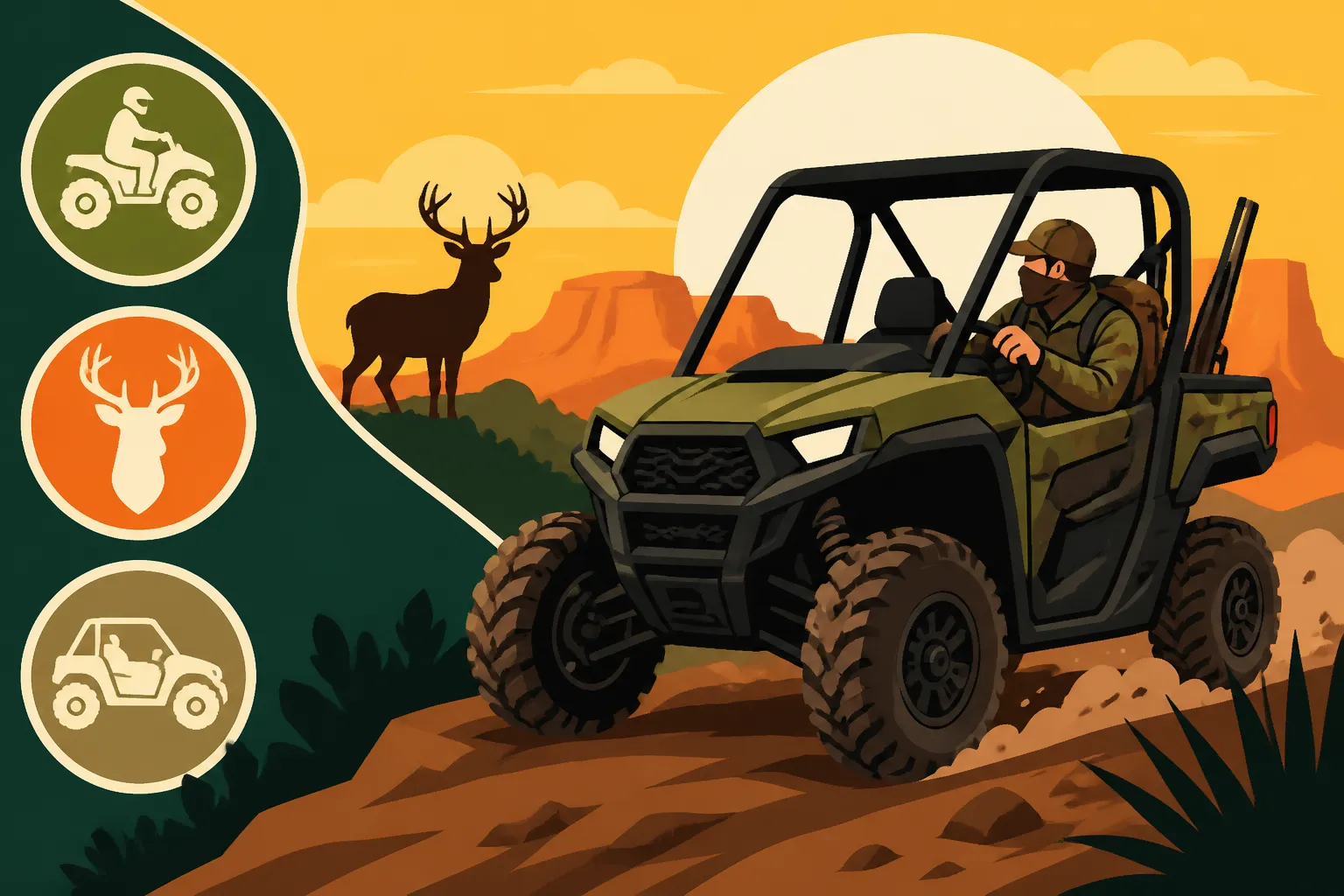
The phrase “hunting from an ATV” can mean several things. A hunter may mean riding in to camp, carrying gear to a legal access point, scouting from an allowed route, or actually trying to hunt while seated on or operating the machine. Those are not interchangeable. The last activities raise additional wildlife-law questions and may be prohibited unless a specific rule or authorization says otherwise.
Do not use an ATV to chase wildlife, push animals toward another hunter, circle them, or keep moving to get a shot. Even where an ATV is allowed on the route, using it to pursue game can violate hunting rules. A stop on the route does not necessarily change the nature of the activity. If the plan depends on using the vehicle as part of the hunt rather than simply as transportation, confirm that the exact conduct is allowed before relying on it.
The same caution applies to locating animals. Riding a legal route for access is different from using a motorized vehicle to search for or follow game where regulations prohibit that conduct. If a rule is unclear, ask the relevant wildlife or land-management office about the specific species, unit, road, and proposed activity. Do not rely on a rider’s account from a different season or location.
Game retrieval has its own limits
Getting a legally harvested animal out of the field is not automatically permitted just because the ATV can reach it. Rules may distinguish between travel on a designated route and driving off-route to retrieve game. They may also impose different conditions by species or management area. Before the hunt, check the current requirements for retrieval, including whether the machine may leave the route and whether a particular authorization is needed. See New Mexico Rules for Retrieving Game by UTV for issues to verify.
Make a recovery plan that works without assuming you can drive to the animal. Consider the terrain, distance to a legal route, daylight, weather, and the weight of the load. If you cannot explain where the ATV will travel and what rule permits that travel, the plan needs more checking.
Confirm the route and land access before unloading
New Mexico land may be managed by different agencies, and the same road can have different restrictions from a nearby trail. A road that looks rideable on a map is not necessarily open to ATVs, and a road open to vehicles may not authorize travel beyond it. Check the land manager’s current route information and any temporary closure notices before the trip.
On federal land, follow the applicable travel-management map and route signs. Stay on routes designated for your vehicle type; do not treat a two-track, game trail, wash, or old road as permission to ride there. Forest roads can have seasonal or emergency closures, while BLM areas may use designated routes and other travel restrictions. The rules are not interchangeable, so check the specific unit. The articles [New Mexico Rules for Riding a National Forest], New Mexico Rules for Riding BLM Land, and New Mexico Rules for Riding a Designated Route cover the access questions to sort out.
Other land requires separate attention:
- Private land: Get permission from the owner or authorized manager. A gate being open, a visible track, or a hunting permission slip does not necessarily give you ATV access.
- Tribal land: Do not assume that a public map, nearby road, or state hunting license grants entry. Check the tribe’s access requirements and obtain permission where required. See New Mexico Rules for Riding Tribal Land.
- State trust land: Check whether the location is open to the intended activity and whether a separate access permit applies. Hunting permission and vehicle access may be separate requirements.
- County or ranch roads: Confirm that the road is open to your machine and that you have permission to use it. An access route across a ranch or grazing area does not give you permission to leave it or disturb livestock. New Mexico Rules for Riding a Ranch Road explains why route access and land access need to be checked separately.
Do not use a map app’s suggested route as proof that the route is legal. Maps can show roads that are closed, private, restricted by a seasonal order, or unsuitable for your machine. Compare the route with the land manager’s current map and signs at the site. If signs and an older map appear to conflict, stop and ask the managing office rather than guessing.
Check OHV paperwork separately
Before leaving home, confirm that the machine has the registration, decal, or visitor permit required for your circumstances. New Mexico’s rules can depend on whether the machine is registered in the state, registered elsewhere, or from a state without a qualifying OHV program. Reciprocity is a question about OHV requirements, not hunting privileges or land access.
Keep the required proof with you and make sure the machine’s decal or other identifying mark is placed where the rules require it. A trailer ride to the trailhead does not remove requirements that apply once the ATV is operated on public land. If you are visiting, check New Mexico’s Nonresident OHV Permit and New Mexico OHV Registration for a Nonresident before the trip, especially if the machine’s home-state status is unclear.
Handle firearms, passengers, and harvested game carefully
Firearms and motor vehicles create safety and legal issues even when the route itself is open. Check current New Mexico rules for carrying a firearm on an ATV, as well as the rules that apply to the species and method of take. A firearm that is lawful to possess during the hunt may still need to be carried or secured in a particular way while the machine is moving. Avoid assuming that a general hunting rule answers the vehicle-specific question. New Mexico Rules for Carrying a Firearm on an ATV is a useful subject to check before loading the machine.
Keep the muzzle controlled and pointed in a safe direction when handling or transporting a firearm. Secure equipment so it cannot shift, fall, or interfere with steering or braking. Do not handle a firearm while the ATV is moving, and do not allow a passenger to carry an unsecured firearm in a way that creates a risk to the rider or others. Follow any rules that apply to loaded firearms in or on motor vehicles, and check whether the same restrictions apply to your route and situation.
If the ATV has a passenger seat, use it only as designed. Do not carry a passenger on a machine that is not made for one, and do not let cargo or a harvested animal block the operator’s controls or view. A heavy or uneven load can change how the machine handles, particularly on a slope, in sand, or on rough ground. When a load is too large to carry safely, arrange another lawful way to move it rather than risking a rollover or loss of control.
Plan for the return trip before the hunt begins. Identify where the machine can legally be parked, where a harvested animal can be loaded, and whether the route is suitable for the added weight. Do not leave the designated route simply because the animal is nearby or the terrain appears passable. If legal recovery requires walking the animal to a route or using another method, follow that plan.
Use a pre-trip check to avoid costly assumptions
A short check before departure can reveal a problem that would otherwise surface at a gate, trail junction, or roadside stop. Confirm both the hunting requirements and the ATV requirements, and keep the two checklists separate.
- Confirm the hunting rules. Check the current season, license and tag requirements, unit boundaries, weapon rules, and any restrictions on hunting from or near a motor vehicle for the species you plan to pursue.
- Confirm whether the ATV activity is allowed. Decide whether the machine is only transporting you to a lawful access point or whether you plan to use it to scout, pursue, or retrieve game. Verify the rules for each activity rather than treating them as one permission.
- Check land ownership and route status. Use current maps or information from the land manager. Confirm that the route is open to your vehicle type and that you have the required permission for private, tribal, or trust land.
- Check machine paperwork. Verify the applicable registration, decal, or permit and carry the required proof. Do not assume that your hunting license or a home-state vehicle document replaces New Mexico OHV requirements.
- Plan firearm and cargo transport. Secure firearms and equipment, keep loads within the ATV’s capacity, and ensure nothing interferes with controls, visibility, or passenger safety.
- Prepare for closures and changing conditions. Check for fire restrictions, temporary closures, weather, and road conditions. A route that was open on a prior visit may not be open now. See New Mexico Rules for Riding During Fire Season for the kinds of restrictions that can affect a trip.
- Make a recovery plan. Identify how you will retrieve a harvested animal without leaving a lawful route or exceeding the machine’s safe load. Check the rules before the hunt, not after the animal is down.
If any part of the plan depends on a special exception, get clear confirmation from the agency or land manager responsible for that rule. Be ready to describe the specific location, route, species, machine, and activity. General advice such as “ATVs are allowed there” does not answer whether you can hunt from the machine, ride off-route, or use it to retrieve a particular animal.
The safest practical rule is straightforward: use an ATV only where and how it is authorized, and treat hunting from the vehicle, motorized pursuit, and game retrieval as separate questions. That approach helps protect the hunt, the access area, and the people sharing the route.
Disclaimer
This article is for general informational purposes only and does not constitute professional advice. Laws, prices and regulations vary by location and change over time. Consult a qualified professional for guidance on your specific situation.