New Mexico Fines for No OHV Permit
New Mexico’s OHV permit rules can be confusing when a machine is registered in another state, and a missing permit can lead to a citation. The key is to check whether your home-state registration is recognized, understand which permit applies to your ride, and deal promptly with any ticket you receive.
What a no-permit citation can mean
A citation for riding without an OHV permit usually means an officer believes the machine was being operated where a New Mexico permit or recognized registration was required. The exact consequences depend on the violation and the circumstances. Don’t assume every rider needs the same document: New Mexico residents, visitors with out-of-state registrations, and visitors from states without an OHV registration program can have different requirements.
It also helps to separate an OHV permit from other documents and rules. A permit or registration relates to the machine’s legal status for riding in covered places. It is not the same as a rider’s safety permit, proof of insurance for paved-road use, or permission to ride on land that is otherwise closed or restricted.
| Situation | What to check | Why it matters |
|---|---|---|
| New Mexico resident | Whether the machine has the required New Mexico registration and decal | A visitor permit is not a substitute for a resident’s registration requirements |
| Visitor with an out-of-state registration | Whether New Mexico recognizes that registration | Reciprocity may mean no separate New Mexico nonresident permit is needed |
| Visitor from a state without an OHV program | Whether a New Mexico nonresident permit is required | The rider may need to buy a permit before riding |
| Rider under 18 | Whether the rider also needs a safety permit and supervision | The rider’s requirement is separate from the machine’s permit |
| Any rider on restricted land | Whether the route or property is open and whether permission is required | A permit does not grant access to closed or private land |
A ticket may involve more than the missing document. For example, the officer may also cite a rider for operating on a closed route, riding without required safety equipment, or failing to meet a separate requirement for paved-road use. Read each citation separately, because resolving one issue does not automatically resolve another.
The amount due, the response deadline, and the process for contesting a citation should be stated on the ticket or explained by the court or agency identified on it. Fees and penalties can change, so don’t rely on an old ticket, a friend’s recollection, or an online discussion for current figures. Confirm the amount and deadline with the issuing agency or the court handling the citation.
Who needs a New Mexico OHV permit
Start by identifying who owns or registered the machine, where it is registered, and where you plan to ride. New Mexico’s requirements differ according to those details. The state’s New Mexico OHV Reciprocity Rules explain why an out-of-state registration may count, while New Mexico’s Nonresident OHV Permit covers the permit visitors may need when their home state’s status does not qualify for reciprocity.
New Mexico residents
Residents generally need to meet New Mexico’s registration requirements for an OHV used in places where registration is required. Buying a nonresident permit is not a shortcut around resident registration rules. If you have recently moved, bought a used machine, or are unsure whether your paperwork is complete, check the applicable registration process before riding.
A registration paper and a decal may both matter. Carry the required paperwork and make sure the decal is attached where it belongs for your machine type. A missing, damaged, or unreadable decal can create a practical problem during an enforcement stop even if you believe the machine was registered. For related details, see Where New Mexico Decals Mount by Vehicle Type and New Mexico OHV Decal Placement Rules.
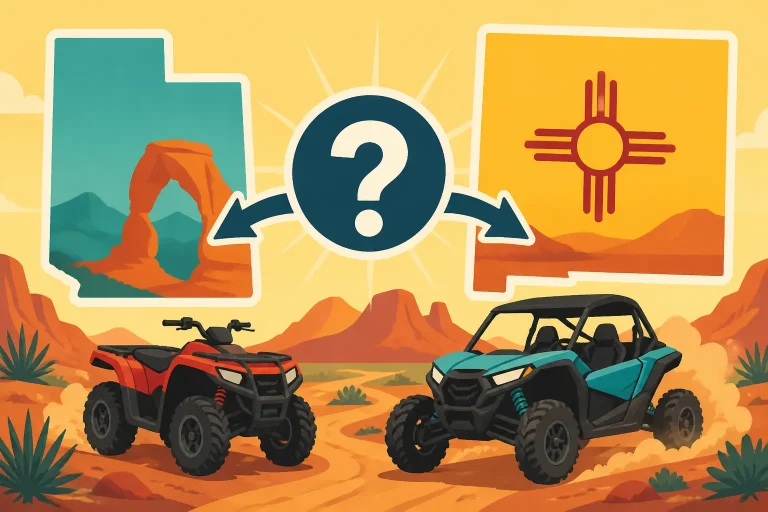
Visitors with an out-of-state registration
New Mexico recognizes some out-of-state OHV registrations under its reciprocity rules. That means a visitor may not need to buy a separate New Mexico nonresident permit if the home-state registration qualifies. Recognition is not something to guess at based only on a vehicle plate, a bill of sale, or a registration from another kind of vehicle. Carry proof that clearly identifies the machine and its current registration status.
The rules can be different for visitors from states that do not operate an OHV registration program. New Mexico’s Riders From States Without Registration explains this distinction. If you are unsure about your state’s status, confirm it before the trip and arrange the required New Mexico permit before riding. A permit bought after a stop may not undo an earlier violation.
Young riders and separate safety requirements
A machine can have the proper permit or registration while its young rider still lacks a required safety permit. Those are separate checks. Review New Mexico’s Safety Permit for Under-18 Riders if a rider under 18 will be operating the machine, and confirm any supervision or age rules that apply to the planned ride.
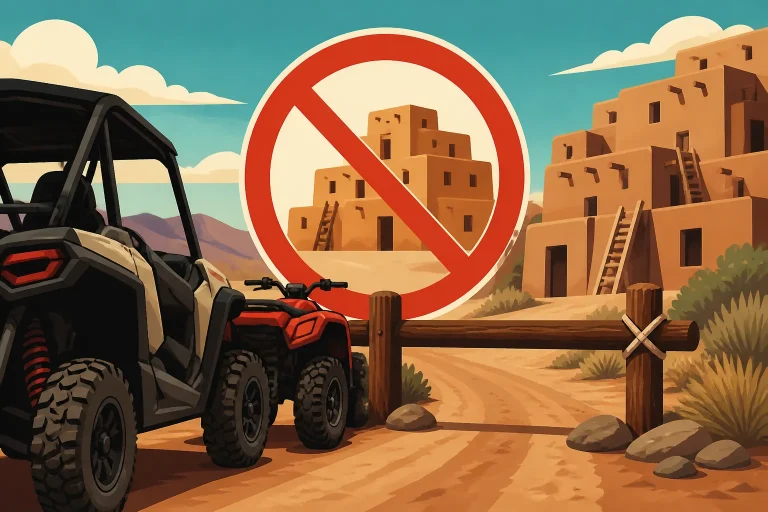
Likewise, a machine permit does not authorize riding anywhere. Public land may have designated routes, seasonal closures, or other restrictions. Private and tribal lands can require permission, and a state permit does not replace that permission. Check the rules for the specific land manager and route, including the New Mexico Rules for Riding a Designated Route.
What to do if you receive a citation
A citation is a formal notice, not something to set aside until the next ride. The paperwork should identify the alleged violation and explain how to respond. Follow the instructions on the citation, and contact the listed court or agency if a deadline, payment method, or appearance requirement is unclear.
- Read every part of the citation. Note the alleged violation, date, location, response deadline, and the agency or court named on the form. If you received more than one citation, track each one separately.
- Gather the relevant documents. Collect the machine’s registration or permit, proof of purchase if relevant, and any paperwork showing the registration was valid on the date in question. Keep copies or clear photographs for your records.
- Check whether reciprocity applies. If you are a visitor, verify that New Mexico recognizes your home-state registration for the machine involved. If you believe the officer missed a valid document, ask the agency or court how to submit it.
- Ask how to resolve or contest the citation. The options and procedures depend on the citation and the authority handling it. Do not assume that paying, emailing a document, or buying a permit is the right response without checking the instructions.
- Keep proof of what you do. Save confirmation of payment, correspondence, permits, and any paperwork showing that the matter was resolved. If you contact an office by phone, record the date and the information you were given.
- Do not miss the stated deadline. If you need more time or cannot follow the instructions, contact the listed office as soon as possible. Ignoring a citation can create additional problems beyond the original permit issue.
If the citation seems to describe the wrong machine, wrong registration status, or wrong location, explain the issue through the process stated on the ticket. Bring clear supporting documents rather than relying on a verbal explanation alone. For a more complicated dispute, or one with consequences you do not understand, consider asking a qualified legal professional for advice.
One common mistake is assuming that a newly purchased permit automatically clears an earlier ride. A permit may bring the machine into compliance for future riding, but whether it affects a past citation is a separate question for the agency or court. Keep the purchase confirmation, but still follow the citation’s response instructions.
How to avoid a permit violation on your next ride
Before loading an ATV or UTV, check the rider’s requirements and the machine’s paperwork as two separate tasks. Confirm that the permit or registration is valid for the person and machine using it, that the required decal is mounted correctly, and that you can produce the supporting document during a stop. Visitors should verify reciprocity before traveling rather than waiting until they reach a trailhead.
Then confirm that your planned route is open to the kind of machine you are bringing. A valid permit does not open a closed forest road, authorize travel across private property, or replace permission for tribal land. Land managers can use travel plans, signs, closures, and seasonal restrictions to control where OHVs may go. A route that was open on a previous trip may have changed.
A simple pre-ride check can reduce confusion:
- Identify whether the rider is a New Mexico resident or a visitor.
- Confirm whether the machine has New Mexico registration, recognized out-of-state registration, or needs a New Mexico nonresident permit.
- Check that the decal is present, readable, and placed as required.
- Carry the registration or permit proof where it can be reached without unloading the machine.
- Check any separate safety-permit requirements for riders under 18.
- Verify route access, land permissions, and current closures.
- Review any additional requirements for paved-road use rather than assuming an OHV permit covers them.
If you are buying a used machine or borrowing one, ask who is responsible for its registration and request the paperwork before riding. A key, bill of sale, or seller’s assurance is not necessarily proof that the machine has the required current registration. For a purchase, Buying a Used ATV in New Mexico and New Mexico OHV Registration Paperwork can help you identify questions to settle before the ride.
For a visitor, the safest approach is to confirm the specific machine’s status rather than relying on a general statement that “out-of-state registration is accepted.” Reciprocity depends on the applicable rules and the registration presented. If your state has no qualifying OHV registration program, arrange the New Mexico permit in advance and keep its proof with you.
The practical takeaway is straightforward: a permit citation is easier to prevent than to untangle afterward. Check the machine’s registration or permit, the rider’s separate requirements, and the route’s access rules before riding. If a citation does arrive, use the deadline and contact information on the paperwork, and verify current amounts and procedures with the authority handling it.
Disclaimer
This article is for general informational purposes only and does not constitute professional advice. Laws, prices and regulations vary by location and change over time. Consult a qualified professional for guidance on your specific situation.