Buying a Permit at a Field Office
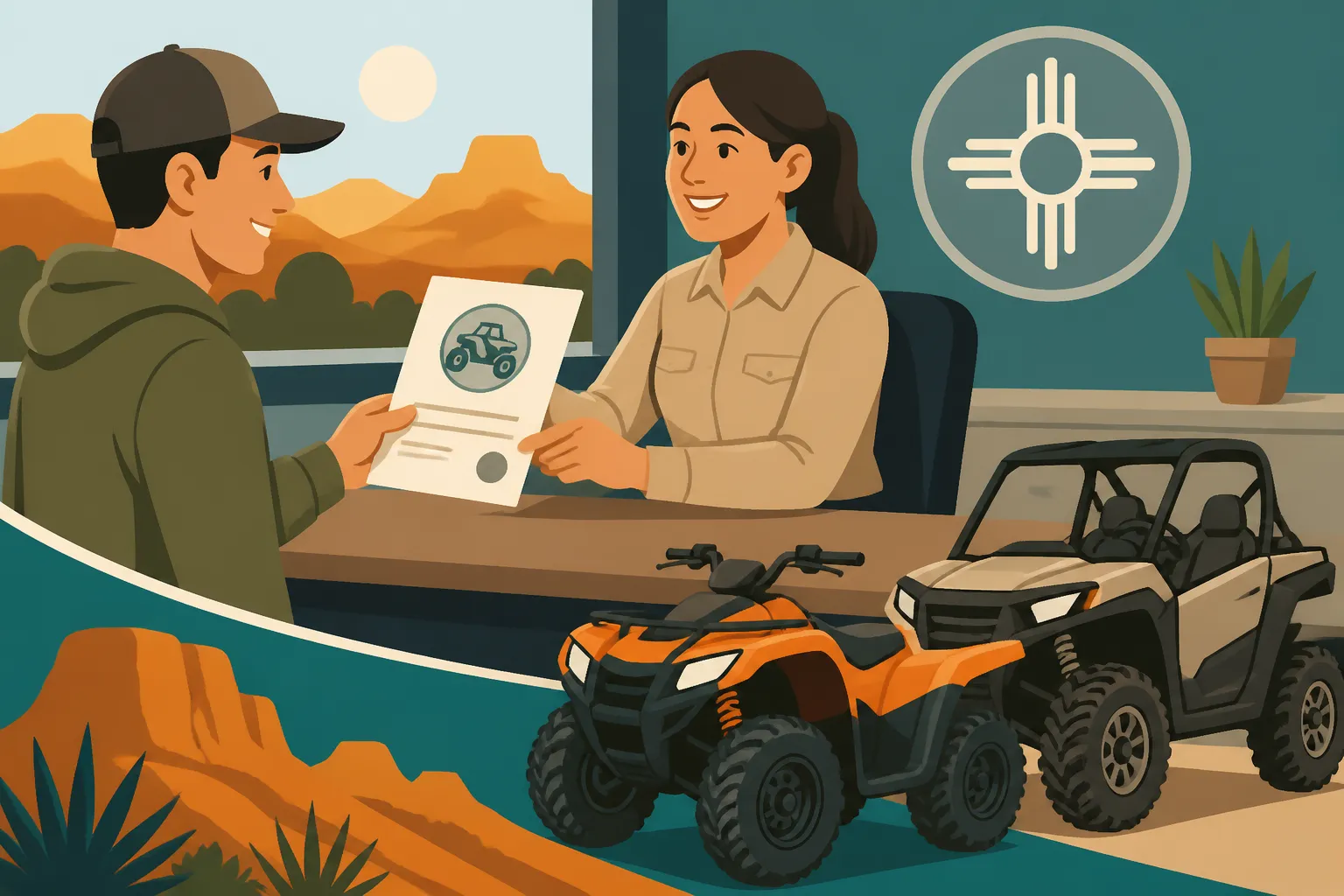
Buying a New Mexico OHV permit at a field office can be convenient, especially if you want to sort out paperwork before heading to a trail. The catch is that “field office” can mean different things, and not every land-management office sells state permits. Confirm the seller, your reciprocity status and the documents to bring before making the drive.
First confirm that you need a New Mexico permit
New Mexico generally requires an out-of-state rider to have a state OHV permit unless the machine’s home-state registration qualifies for reciprocity. A state agency field office that sells permits can help with the purchase, but it cannot make an unneeded permit necessary or replace a valid registration from a qualifying state.
Start with Do Visitors Need a New Mexico OHV Permit? and New Mexico OHV Reciprocity Rules. The key question is whether your machine has current registration from a state whose program New Mexico recognizes. Do not assume that a license plate, bill of sale or registration from any state automatically qualifies. If you are unsure, bring proof of the machine’s current status and ask the permit seller or the state agency to confirm before paying.
| Your situation | What to check before visiting an office |
|---|---|
| Your machine has current out-of-state OHV registration | Confirm that New Mexico recognizes the registration for reciprocity, and bring the registration document. |
| Your home state does not have a qualifying OHV registration program | Ask which New Mexico nonresident permit applies to your trip and machine. |
| You are renting or borrowing a machine | Confirm whether the machine already has the required permit and who is responsible for carrying proof. |
| A rider is under 18 | Check the separate safety-permit and supervision rules; buying an OHV permit does not satisfy them. |
| You plan to ride paved roads | Check the separate road-use rules and any required authorization. An OHV permit by itself does not make every road legal to ride. |
For reciprocity questions, carry the actual registration document rather than relying only on a verbal description of your state’s rules. Proof of a Home-State Registration explains what to have available if you need to show why you believe your machine qualifies.
An OHV permit is also different from registering or titling a New Mexico machine. Visitors who qualify for reciprocity do not need to treat a trip as a New Mexico resident registration transaction. Conversely, buying a nonresident permit does not give a New Mexico resident a substitute for required registration. If you are moving to the state or registering a machine kept there, see Registering After Moving to New Mexico.
Find the right office before you drive
The phrase “field office” can refer to a state agency office, a federal land office or another local office. Those offices do not necessarily sell the same permits. A federal land office may provide route maps, closure information or recreation guidance without being a sales point for the New Mexico nonresident OHV permit.
Before setting out, contact the office and ask directly whether it sells the New Mexico nonresident OHV permit over the counter. Confirm that it has the permit type you need and can issue it during the hours you plan to visit. Which Offices Sell an OHV Permit Over the Counter is a useful starting point, but call the specific location rather than assuming every listed office offers the same service.
When you call, ask:
- Is this a state OHV permit sales location, or only a land-management office?
- Can the office issue the permit in person today?
- What proof of ownership, registration or machine information should I bring?
- Is the permit issued as a decal, a document, or both?
- Does the office accept the payment method you plan to use?
- Are there seasonal hours, appointment requirements or temporary closures?
- Can the office confirm whether my state registration qualifies for reciprocity?
These questions help avoid a common mix-up: a visitor arrives at a ranger or public-lands office expecting to buy a state permit, but the office only handles access to the land it manages. For official purchase alternatives, compare the in-person option with [Buying a New Mexico Permit Online] and Buying a New Mexico Permit by Phone. Those methods may be more practical if the nearest counter is far away or has limited hours.
Do not rely on a general map listing or an old trip note as proof that a counter is currently open or selling permits. Permit sales can be handled differently from trail information, and a location’s services may change. A quick call is usually the simplest way to confirm.
What to bring and what to do at the counter
The exact documents a seller asks for can vary by transaction, so confirm before your visit. In general, be ready to identify the machine and explain whether you are buying a permit because it lacks qualifying home-state registration.
Useful items to have with you include:
- The machine’s current registration, if it has one.
- Ownership or purchase paperwork, if available.
- The machine’s identifying information, including its VIN if requested.
- Your contact details and the information needed to complete the purchase.
- Proof of payment or an accepted payment method.
- Any existing New Mexico permit information if you are replacing, renewing or asking about a permit already associated with the machine.
If your machine is registered in another state, do not leave the registration document in a vehicle at the trailhead. Having it available lets the seller check the details and gives you a way to support a reciprocity claim while riding. More detail on the documents that can help is covered in Carrying Proof on a Desert Ride.
At the counter, describe your actual plan rather than asking only for “a sticker.” Tell the staff whether you are visiting from out of state, whether your machine is registered, where you expect to ride and whether anyone under 18 will be operating it. That context can help distinguish a New Mexico nonresident OHV permit from a separate land-access requirement or a road-use authorization.
Before leaving, check the information you receive. Make sure the permit is for the right machine or use, confirm any start or expiration details, and follow the instructions for displaying it. If it is a decal, do not choose a mounting spot based on convenience alone; placement rules can depend on machine type. See New Mexico OHV Decal Placement Rules if you need to understand where a decal belongs.
Keep any receipt and permit documentation together. If a problem comes up later, the paperwork can help establish what you bought and when. Ask the counter staff what to do if the decal is damaged, lost or difficult to read, rather than trying to recreate or alter it yourself.
Understand what the permit does and does not cover
A New Mexico nonresident OHV permit addresses a state OHV permit requirement. It is not a blanket license to ride anywhere in New Mexico. Public land managers set their own access rules, routes can be closed, and some land requires a different permit or specific permission.
Before riding, check the rules for the land you intend to use. On federal land, stay on routes open to your type of vehicle and follow local closures; a state OHV permit does not open a closed road. New Mexico Rules for Riding Federal Land and New Mexico Rules for Riding a Designated Route can help you separate the permit question from the route question. State trust land and tribal land also have distinct access requirements, so do not assume that a state OHV permit grants entry there.
Road use is another separate issue. A permit does not make an ATV or UTV street legal, and it does not automatically authorize travel on a paved road. New Mexico’s paved-road rules depend on the road, the machine and the applicable local requirements. Check New Mexico’s Paved Street Opt-In before planning to ride pavement, and confirm any required insurance, equipment and road-use authorization.
For a rider under 18, the permit is not a substitute for the required safety credential or adult supervision. Review New Mexico’s Safety Permit for Under-18 Riders before taking a young rider out. If you are renting or borrowing a machine, confirm who is responsible for its permit and what proof must be carried; do not assume that a rental agreement alone settles the question.
Once you have the right permit, keep it with the machine’s paperwork and make sure the displayed decal remains legible. Carry registration or other proof when relying on reciprocity, and check route closures shortly before riding. These small checks help prevent the frustrating situation of having paid for the right state permit but still being unable to use the trail or road you planned to reach.
Disclaimer
This article is for general informational purposes only and does not constitute professional advice. Laws, prices and regulations vary by location and change over time. Consult a qualified professional for guidance on your specific situation.