Buying a New Mexico Permit by Phone
Buying a New Mexico OHV permit by phone can be useful when you are traveling, have a question about reciprocity, or would rather speak with someone than complete an online form. The key is to confirm that you actually need a permit, call the current official sales line, and have the right machine and registration details ready before you start.
First, make sure a New Mexico permit is what you need
New Mexico’s nonresident OHV permit is for qualifying off-highway vehicles used on public land in the state. It is not the same thing as registering a vehicle, getting a title, or earning a youth safety permit. Sorting out which requirement applies to you first can save a call and prevent you from buying a permit you do not need.
Check whether your home-state registration is honored
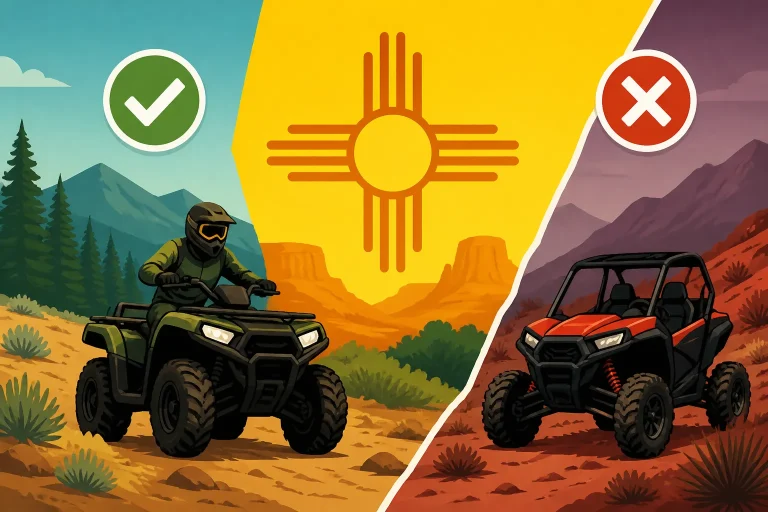
New Mexico recognizes some out-of-state OHV registrations under its reciprocity rules. If your ATV or UTV is properly registered in a state whose program New Mexico recognizes, you may not need to buy a separate New Mexico nonresident permit for that machine. The details depend on your home state and the status of the vehicle’s registration.
Before you call, check New Mexico OHV Reciprocity Rules and Any Valid OHV Registration Counts in New Mexico. Do not assume that an ordinary vehicle registration, county sticker, trail pass, or proof of insurance is equivalent to an OHV registration that New Mexico accepts. If you are not sure what your home-state document means, ask the permit representative to confirm whether it qualifies.
If your state does not have a qualifying OHV registration program, New Mexico may require a nonresident permit for the machine. What a Rider From a Non-Program State Must Buy explains the separate permit route. Visitors from nearby states should still verify their own situation rather than relying on what a friend or another rider was told. The machine’s paperwork and the state that issued it matter.
| Your situation | What to check before calling | Likely next step |
|---|---|---|
| Machine has a current OHV registration from another state | Whether New Mexico recognizes that state’s registration | Confirm reciprocity; you may not need a New Mexico permit |
| Machine comes from a state without an applicable OHV registration program | Whether a New Mexico nonresident permit is required | Ask which permit period or type fits your trip |
| Machine is borrowed or rented | Which registration or permit applies to that specific machine | Ask what proof must be carried and whose document counts |
| Machine has no current registration paperwork | Whether it can qualify for a permit and what documents are accepted | Get instructions before attempting to buy |
| Rider is under 18 | Whether a separate safety permit or supervision rule applies | Check the youth rules as well as the machine permit |
Use this as a preparation guide, not as a final eligibility decision. Reciprocity lists and permit procedures can change, so confirm the current rule with the official source before traveling.
Remember that a machine permit and a rider safety permit are different
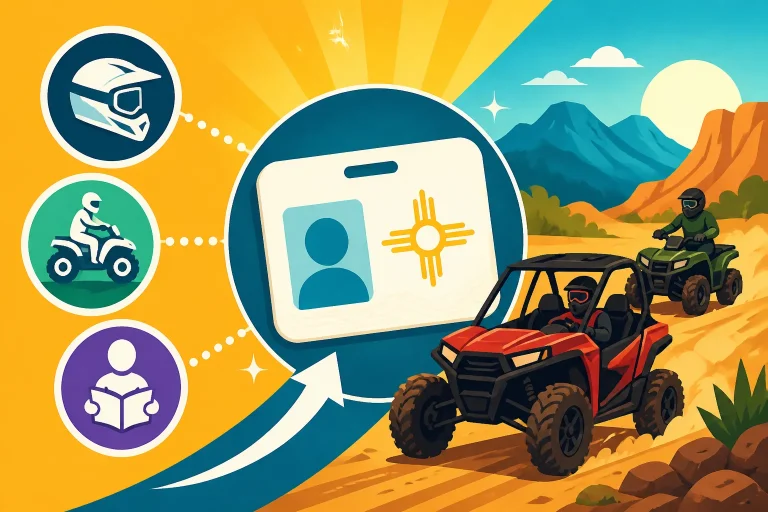
A nonresident OHV permit relates to the machine’s use in New Mexico. A safety permit is a separate requirement that can apply to young riders. Buying a machine permit by phone does not automatically satisfy a rider’s safety requirement, and a safety permit does not replace the machine’s required registration or permit.
If anyone riding is under 18, read New Mexico’s Safety Permit for Under-18 Riders before the trip. Ask about the rider’s age, any accepted safety course, and supervision rules separately from the machine’s registration status. That distinction is especially important when a parent buys or borrows a machine for a child.
Know where the permit requirement applies
A New Mexico OHV permit is not a blanket authorization to ride anywhere. A permit does not grant access to private property, tribal land, closed routes, or land where a separate permit or permission is required. Public-land managers may also limit travel to designated routes and apply their own closures.
If your route includes federal land, review New Mexico Rules for Riding Federal Land and the relevant local travel-management information. If it includes state trust land or tribal land, ask about the separate access rules. A permit purchase is only one part of trip planning; it does not override land-access restrictions.
How to buy a New Mexico permit by phone
The practical first step is to find the current phone number through an official New Mexico OHV or permit source. Do not rely on an old number copied from a forum, an outdated screenshot, or a search result that does not clearly identify the official seller. The line, hours, and available payment methods can change.
For the current call route and what to expect, see Calling the Permit Line. If you cannot confirm that a phone purchase is available, use the official source to ask whether the permit can be bought by phone, online, or at an authorized in-person location. Buying a New Mexico Permit Online and Which Offices Sell an OHV Permit Over the Counter cover those alternatives.
Prepare the machine and trip details
Before dialing, gather the information that helps the representative identify the right permit. You may not need every item for every purchase, but having it ready makes the conversation easier:
- Your home state and the type of OHV paperwork the machine carries
- The machine’s make, model, and year, if available
- The vehicle identification number, if the machine has one
- The owner’s name and contact information
- Whether the machine is an ATV, UTV, dirt bike, or another OHV type
- Your planned riding dates or approximate trip length
- The general type of public land or riding area you expect to visit
- The name of the person who will ride and that rider’s age, if relevant
- A payment method accepted by the official sales line
Have the paperwork in front of you, rather than trying to reconstruct it from memory. A photo of the registration document may help you read the correct terms, but do not assume that a photograph is acceptable proof on the trail. Ask what official documentation you must carry after purchase.
A simple notes page can help you keep the details straight. If you already carry ride documents in a small waterproof folder, add the permit confirmation and registration proof there after the call. Some riders use a document sleeve or organizer bought from a general retailer such as Amazon, but any secure, weather-resistant way to keep paperwork together will do.
Ask these questions before you pay
Do not treat the call as complete when you hear the total. Make sure you understand what you are buying and how you will receive proof. Ask the representative to clarify:
- Does my home-state registration qualify for reciprocity? Describe the document accurately and ask whether it is accepted for this specific machine.
- Which permit type fits my trip? Confirm the permit period and the date it starts or expires.
- Is the permit tied to the machine, the owner, or the rider? Do not guess based on another state’s system.
- What information will appear on the permit? Confirm that the machine details and owner information are entered correctly.
- How will I receive proof? Ask whether it is issued verbally, by email, by mail, or through another method, and whether there is any delay.
- What must I carry while riding? Confirm whether you need a printed document, a card, a confirmation number, or another form of proof.
- Can I buy for more than one machine in the same call? If so, ask whether each machine needs its own permit and what separate details are needed.
- What should I do if the confirmation does not arrive? Get a clear contact route or reference number before ending the call.
The answers matter because a successful payment does not necessarily mean you have received the document you need to show during a ride. If the representative gives you a confirmation number, write it down and repeat it back to check for mistakes.
Keep the purchase record
After paying, save the confirmation message, receipt, or reference number. If the proof is sent electronically, make sure it arrives while you still have reliable service and can correct a wrong email address. If the permit is mailed, ask how long delivery is expected to take and what you should do if it has not arrived before your trip.
For riders who keep travel papers on a phone, save an offline copy if the delivery format allows it. A phone can lose service, run out of battery, or be damaged on a dusty ride, so consider carrying a printed copy if the official instructions permit or require one. A small waterproof pouch or sleeve, including one you might find on Amazon, can help protect the paper from dust and moisture. Keep a second copy separate from the machine if you are traveling with a group.
What to expect during the call
A phone purchase is usually easier when you treat it like a document check rather than a quick checkout. The representative may need to determine whether you are eligible for a New Mexico permit at all, which permit fits, and how the machine’s paperwork affects the answer. That can take longer than simply providing a name and payment details.
Explain the registration clearly
Use the exact wording on your home-state paperwork. If it says “OHV registration,” “off-road registration,” or another specific term, read that wording rather than describing it loosely as a plate or sticker. If you have a plate, registration card, decal, or certificate, say which one you have.
This is particularly important if your machine is from a state with a different system. A license plate might refer to road registration, while a separate document could cover off-highway use. If you are uncertain, ask whether the representative wants the registration number, document type, or issuing state. For more on acceptable paperwork, see Proof of a Home-State Registration.
Do not omit a lapse or change in status. If the registration has expired, is in someone else’s name, or belongs to a prior owner, explain that before paying. A permit representative may not be able to resolve ownership or title issues during a routine phone sale, but the answer can help you avoid buying the wrong thing.
Be precise about the machine
ATVs, UTVs, dirt bikes, and other OHVs can have different identification and decal requirements. Tell the representative what the machine is, not just that it is an ATV if it is actually a side-by-side. If you do not know the model year or VIN, ask whether the number is required and whether there is another way to identify the vehicle.
For a borrowed or rental machine, do not assume your own permit can be applied to it. Ask whether the machine already has the required registration or permit and which proof the rider must carry. If you are renting, check with the rental provider before purchasing anything. A rental company may handle some machine requirements, but you should confirm rather than infer that the vehicle is covered.
Confirm dates and permit duration
Ask the representative to say the start and end dates clearly. If you are buying shortly before a trip, find out whether the permit begins immediately, on a selected date, or under another rule. Avoid planning around a verbal estimate of validity if the exact dates are available in the confirmation.
If your trip crosses a seasonal boundary or includes more than one visit, compare the available permit periods with your actual plans. Do not select a longer or shorter option based only on what another rider bought. The right choice depends on the current permit structure and when the permit takes effect. Any fee or duration information should be confirmed directly with the official seller, since those details can change.
Slow down before giving payment details
Before providing payment information, repeat the permit type, machine description, owner name, and dates. Ask for the total charge and any separate processing or delivery charges, if applicable. For a named provider, current prices and plan terms should not be assumed; verify the amount and how the cost is applied during the call.
If the call drops, do not immediately call back and make a second purchase. First check whether the transaction generated a confirmation or charge, then contact the official sales channel to determine whether the original purchase went through. Keep any transaction reference available. This simple pause can prevent duplicate purchases and make it easier to resolve a payment question.
If the phone line does not solve the problem
Not every situation can be handled by a standard permit sale. The machine may have incomplete paperwork, an unclear registration status, a VIN issue, or ownership information that does not match the person calling. If that happens, ask what the next step is before ending the call.
When the representative cannot confirm reciprocity
If the person on the phone cannot tell whether your state’s registration qualifies, ask what official document or office can make that determination. Be ready to provide the issuing state and the title of the document, but do not send sensitive personal information through an unverified channel.
You can also check the current official reciprocity information and compare it with your document. Start with New Mexico’s Nonresident OHV Permit and New Mexico OHV Reciprocity Rules. If the answer remains unclear, ask the official contact to confirm it in writing or direct you to the right program office. It is better to resolve that before leaving home than to rely on an assumption at a trailhead.
When the phone line is unavailable
If the line is closed, busy, or not accepting sales, check whether the official program offers an online purchase route or an authorized in-person seller. The method of purchase does not change the underlying eligibility rules, so make sure you are using the official channel whichever route you choose.
Do not buy a permit from an unrelated seller simply because a search result appears first. Confirm that the seller is authorized and that the permit is issued for the correct vehicle and period. If you choose an online route, save the receipt and read the delivery instructions before traveling. For the online process, see Buying a New Mexico Permit Online.
When the machine’s papers are incomplete
A missing registration card, unclear VIN, or mismatch between the owner and caller can make a phone purchase difficult. Do not guess at a VIN or give a number from a title that might belong to another machine. Ask what documentation is accepted and whether you need to resolve a registration or ownership issue first.
A permit is not a substitute for whatever registration or ownership documentation is required. If the machine was recently purchased, inherited, or borrowed, explain that situation. Keep the bill of sale, title, or other relevant paperwork available, but ask the official contact which documents matter for the permit question.
When a child is riding
If the machine will be ridden by a minor, ask separately about the safety permit and supervision requirements. Do not assume that the adult who paid for the machine’s permit has met the rider’s requirements. Keep the youth safety document with the rider or in the group’s ride paperwork, following the official instructions.
For practical trip readiness, keep the machine paperwork and rider paperwork in separate, clearly labeled sections. A simple folder or a small organizer can prevent a parent from mixing up the vehicle permit with the child’s safety record. Some families use a waterproof document holder from Amazon for this purpose; the important point is that the required documents remain readable and accessible.
Before you leave for the ride
A quick check at home is easier than trying to sort out paperwork at a remote staging area. Confirm that the permit matches the machine, the dates cover the trip, and the proof is available in the format required. If you bought permits for multiple vehicles, check each one independently rather than assuming all entries are correct.
Use this departure checklist:
- Verify the permit or registration is current for the planned ride.
- Confirm that the document identifies the correct machine, if it is machine-specific.
- Carry the proof required by the official instructions.
- Keep a receipt or confirmation number in a separate place.
- Check that each young rider has any required safety permit.
- Confirm that the riding area is open and that your route is allowed.
- Carry any separate access permit or permission required for the land you plan to use.
- Store paper copies somewhere protected from dust, water, and fuel.
A phone screenshot can be useful backup, but it is not automatically a substitute for required original or printed documentation. Follow the instructions given by the official seller and the land manager. If you are riding far from cell service, download or print the documents in advance and let your group know who is carrying them.
Finally, remember that a permit does not make a closed route open or turn private land into public riding space. Check the route, land boundaries, and current closures before unloading. If you are carrying documents in a phone case or organizer bought through Amazon, test that you can still access them quickly and that the papers do not get soaked or covered in trail dust.
Buying by phone can be a straightforward option when you have the right details ready and the official line can verify your situation. The most important steps are to check reciprocity first, ask exactly what permit applies, confirm how proof will be delivered, and carry the documentation required for the ride.
Disclaimer
This article is for general informational purposes only and does not constitute professional advice. Laws, prices and regulations vary by location and change over time. Consult a qualified professional for guidance on your specific situation.