New Mexico Rules for Opening a Gate
It's one of those situations that can make you scratch your head, isn't it? You're out enjoying a beautiful New Mexico trail on your ATV or UTV, soaking in the vast landscapes, only to come across an unexpected gate blocking your path. Do you open it? Can you? What if it's locked? This guide is here to help you navigate the common, and sometimes confusing, rules and etiquette surrounding gates on New Mexico's off-highway vehicle trails and roads, ensuring you ride respectfully and keep access open for everyone.
Understanding Why Gates Exist on New Mexico Trails and Roads
Before we dive into the "how-to," let's spend a moment on the "why." Understanding the purpose behind these gates can really shift your perspective and help you appreciate the importance of treating them correctly. It’s not just about an obstacle; it's about respecting land, livelihoods, and the delicate balance of access in our incredible state.
The Role of Private Land and Grazing Allotments
A huge chunk of New Mexico's stunning landscape, especially the open range and mountain foothills, is either privately owned or consists of public land that is leased out for grazing. Imagine a rancher, whose family has worked that land for generations, relying on those fences and gates to keep their cattle, sheep, or horses where they belong. A gate isn't just a barrier; it's an essential part of their operation, protecting their livestock and their livelihood.
When you're riding through areas like these, whether it's designated [New Mexico Rules for Riding a Ranch Road] or part of a larger [New Mexico Rules for Riding a Grazing Allotment], those gates are there for a reason. They mark property lines, contain animals, or are part of specific land management plans. Disregarding them can have significant, negative impacts on the ranchers and landowners who allow us to share these spaces. It's a privilege to ride through some of these areas, and respecting their infrastructure is key to keeping those privileges intact.
Different Types of Gates You'll Encounter
New Mexico's diverse terrain means you'll come across a variety of gates. Each has its own quirks, and understanding them can save you a bit of frustration. From simple wire gates to heavy-duty metal structures, they all serve the same basic purpose.
You might see a classic wire gate or "H-brace" gate, which consists of strands of barbed or smooth wire stretched between posts, secured by a loop over a sturdy wooden post. These can sometimes be tricky to open and close, especially if the wire is taut or rusty. Then there are wooden gates, often found on older ranches or private property, which can be heavy and might have simple latches or chains. Metal gates, typically made of pipe or tubing, are common on larger ranches and public lands, usually featuring robust chain latches or drop pins. Some are designed with spring-loaded hinges, making them a little easier to manage, while others are simply hung on heavy posts.
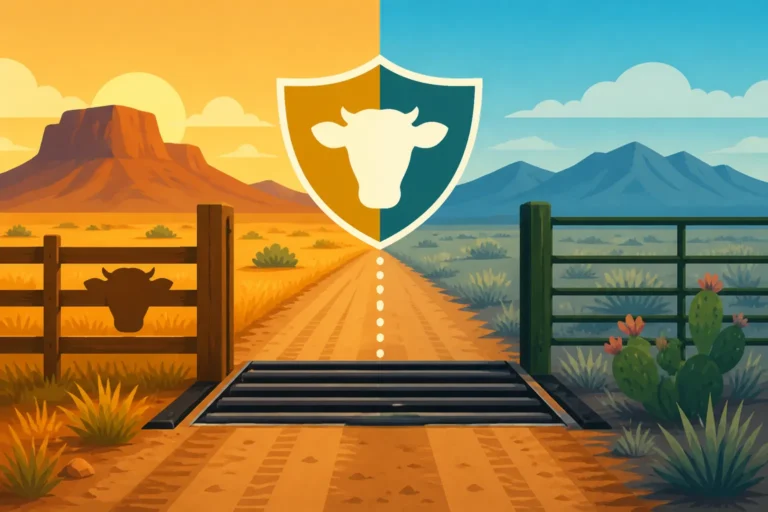
Beyond physical gates, you'll frequently encounter cattle guards. These are essentially grates built into the roadbed that livestock won't cross, but vehicles can drive right over. [What a Cattle Guard Marks on a Ranch Boundary] is often the transition point between different land management areas. While they don't require you to get off your machine, they serve the same function as a closed gate in terms of containing animals. Understanding these variations helps you approach each one with the right mindset and technique, ensuring you don't inadvertently damage them or leave them in a state that compromises their function.
The Golden Rule of New Mexico Gates: "Leave It As You Found It (or Better)"
This isn't just a polite suggestion; it's practically a commandment when you're riding New Mexico's trails. Adhering to this simple principle is the single most important thing you can do to ensure continued access to our amazing riding areas. It’s about being a responsible recreationalist and a good neighbor.
Always Close a Gate You Open
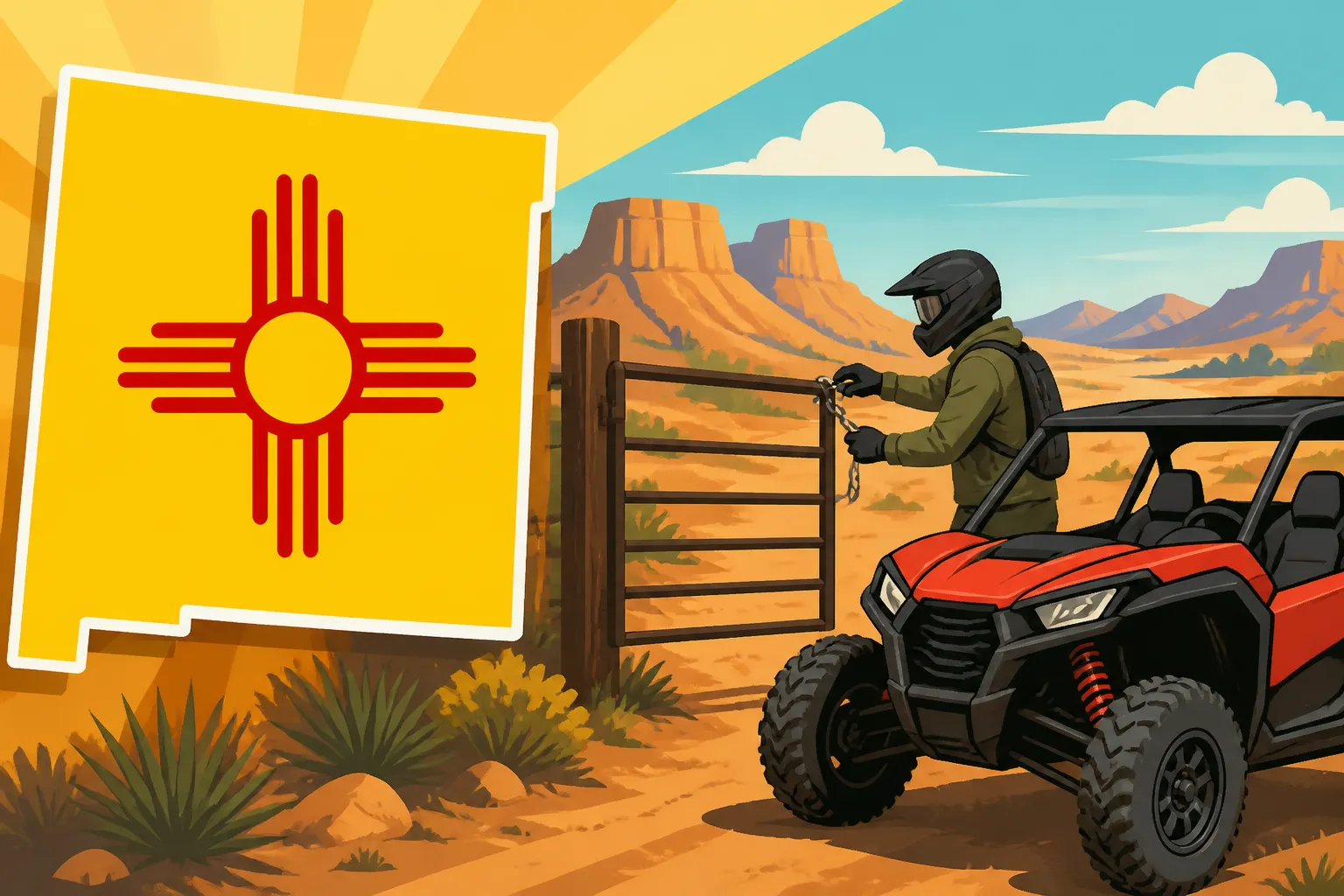
Let's be absolutely clear: if you open a gate to pass through, you must close it behind you. This isn't optional, and the consequences of neglecting this rule can be severe. Imagine leaving a gate open on a vast grazing allotment. It could mean hundreds of cattle wandering off, mixing with other herds, getting lost, or worse, ending up on a highway, creating a significant hazard for drivers and a huge financial loss for the rancher.
It’s not just livestock, either. An open gate can allow unauthorized vehicles onto private property, leading to vandalism or illegal dumping. This directly impacts [New Mexico Rules for Riding Private Land] and can quickly lead to access being revoked for everyone. Every time a gate is left open, it erodes trust between landowners, land managers, and the riding community. This could result in trails being permanently closed, which none of us want. So, take the extra minute, ensure the latch is secure, and double-check that the gate is properly closed. Your fellow riders, and the ranchers, will thank you.
What to Do When a Gate is Found Open
Sometimes, you might come across a gate that's already open. This can be a bit of a conundrum. Should you close it? Should you leave it? The "Leave it as you found it (or better)" rule still largely applies, but with a bit of situational awareness.
First, observe the scene. Are there vehicles, equipment, or people actively working in the area? A rancher might be moving livestock, working on fences, or performing other tasks that require the gate to remain open temporarily. In such cases, it's usually best to proceed cautiously and leave the gate as you found it. If you're unsure, and there's someone nearby, a quick, polite question can clear things up. Don't be afraid to strike up a conversation; most landowners are happy to share their knowledge with respectful riders.
However, if the gate appears to be accidentally open – perhaps the latch failed, or a previous rider simply forgot – then closing it is almost always the best course of action. This falls under the "or better" part of the rule. If you can make things safer or more secure, do it. This proactive approach helps to mitigate potential problems and shows a commitment to responsible land use. Just ensure that by closing it, you aren't inadvertently trapping someone or something on the wrong side. Use your best judgment, and when in doubt, default to closing it, especially if there are no signs of active work.
Practical Tips and Etiquette for Navigating Gates
Getting through a gate isn't rocket science, but doing it safely and respectfully involves a few key steps and considerations. Thinking ahead and having a plan, especially when riding with others, can make the process smooth and enjoyable rather than a hassle.
Approaching and Opening the Gate Safely
When you see a gate ahead, start thinking about your approach. Slow down well in advance. Consider the terrain – is it muddy, rocky, or sloped? You want to find a safe, stable spot to pull over and stop your machine. Engage the parking brake, and if you’re on a slope, put it in gear to ensure it won’t roll away while you’re off it. This is where a well-built UTV, perhaps with strong braking systems, really shines.
Before dismounting, take a moment to look around for any posted signs or specific instructions. Sometimes there will be notices about specific land use, closure information, or even a request to report issues to a particular phone number. Once you’re off your OHV, carefully assess the gate’s latch mechanism. Some are simple, while others might involve chains, pins, or spring-loaded catches. Open the gate wide enough for your machine to pass through comfortably, but not so wide that it swings wildly or scrapes against your vehicle. It might sound basic, but paying attention to these small details makes a big difference.
Group Riding and Gate Responsibilities
Riding with a group is fantastic, but it requires a bit more coordination when it comes to gates. It's often a good idea to designate a "gate opener" and a "gate closer" within your group, or simply have everyone understand their role. The lead rider should be the one to stop, dismount, and open the gate. Once it's open, they should hold it securely until everyone in the group has passed through. This ensures no one accidentally hits the gate as they ride by.
Once the last rider has gone through, it's the responsibility of the last person (or a designated "sweep" rider) to dismount and close the gate properly. This requires clear communication within the group. A simple hand signal or a quick shouted "Gate's clear, close it up!" can prevent misunderstandings. Waiting for everyone to pass before securing the gate is crucial for safety and adherence to the "close it behind you" rule. Don't assume someone else will do it; make it a collective responsibility. This sort of careful conduct contributes to positive perceptions of OHV users on [New Mexico Rules for Riding a Forest Road] and [New Mexico Rules for Riding BLM Land].
Tools and Gear That Can Help
While most gates are designed to be operated by hand, having a few simple items in your gear bag can make the process easier, cleaner, and safer. A good pair of work gloves is invaluable. Gates can be rusty, dirty, or have sharp edges, and gloves protect your hands. If you’re riding a robust side-by-side from a brand known for its utility, like a SuperATV-equipped UTV, you probably already have good storage options.
Sometimes, a gate's latch might be broken, or it might not stay securely closed. In these situations, a short length of rope, bungee cord, or a heavy-duty zip tie can be a lifesaver. You can use it to temporarily secure a gate that won't stay latched, fulfilling the "or better" part of the golden rule. While a winch on your machine (many SuperATV accessories include robust winch systems) isn't typically for opening gates, it can be a useful tool if you get into a situation where you need to move a heavy object near a gate or recover a stuck machine, allowing you to focus on the gate itself. Always carry a basic tool kit and perhaps even a multi-tool; you never know when a quick tightening or adjustment might be needed.
The Impact on Land Access and Trail Preservation
Every interaction you have with a gate, or any trail infrastructure, leaves an impression. Our collective behavior as OHV riders directly influences how landowners, land managers, and other recreational users view our community. Adhering to proper gate etiquette is not just about being polite; it’s about actively preserving our access to the incredible trails and open spaces New Mexico offers.
When riders consistently respect gates and private property, it fosters trust and goodwill. This positive relationship is vital for keeping existing trails open and potentially even opening new areas for us to explore. Conversely, a pattern of disrespect – leaving gates open, damaging property, or ignoring signs – can quickly lead to widespread closures. Landowners might decide they've had enough, and public land agencies may impose stricter regulations or outright bans. Think about the broader implications for [New Mexico Trespass Rules for Riders] and how crucial it is to always have permission or follow established rules. Being a responsible rider, which includes proper gate management, is an investment in the future of OHV riding in New Mexico.
A Quick Reference: New Mexico Gate Etiquette
| Action | Description | Why It's Important |
|---|---|---|
| Always Close It | If you open a gate to pass through, close and secure it behind you. Double-check the latch. | Prevents livestock escape, protects private property, maintains access for future riders. |
| Leave It As Found (or Better) | If a gate is found open, assess the situation. If it's not being actively worked, consider closing and securing it. If it seems deliberately open, leave it. | Respects active land management; closes accidental openings to prevent problems. |
| Approach Safely | Slow down, find stable ground, engage parking brake, and put your machine in gear before dismounting. | Prevents your OHV from rolling, ensures personal safety, gives time to observe surroundings. |
| Communicate in Groups | Designate someone to open and hold, and someone to close. Ensure clear signals that all riders have passed before securing. | Prevents accidents, ensures the gate is properly closed, fosters group responsibility. |
| Protect Your Hands | Wear work gloves to handle dirty, rusty, or potentially sharp gate components. | Prevents injuries and keeps hands clean. |
| Carry Basic Repair Items | A bungee cord, rope, or zip ties can temporarily secure a broken latch or gate that won't stay closed. | Allows you to leave the gate in a better, more secure state, even if it's damaged. |
| Respect All Signage | Always read and obey any signs posted on or near gates. They often contain critical information or warnings. | Ensures compliance with local regulations, alerts to specific hazards, and respects landowner requests. |
Disclaimer
This article is for general informational purposes only and does not constitute professional advice. Laws, prices and regulations vary by location and change over time. Consult a qualified professional for guidance on your specific situation.