Riding Etiquette on a Narrow Shelf Road
A narrow shelf road can turn a relaxed New Mexico ride into a stressful standoff when two machines meet above a steep drop, with nowhere obvious to pull over. Good etiquette starts before you reach that pinch point: know the route, ride at a pace that lets you stop, and communicate calmly. This guide explains how ATV and UTV riders can share exposed roads more safely.
Prepare Before You Ride a Shelf Road
Know what kind of route you are taking
A shelf road is cut into a hillside, with rising ground on one side and a steep slope or drop on the other. Some New Mexico routes are broad enough for careful two-way travel; others narrow sharply around a bend, rock outcrop, washout, or drainage. The road may feel manageable at the start and become much more exposed farther along.
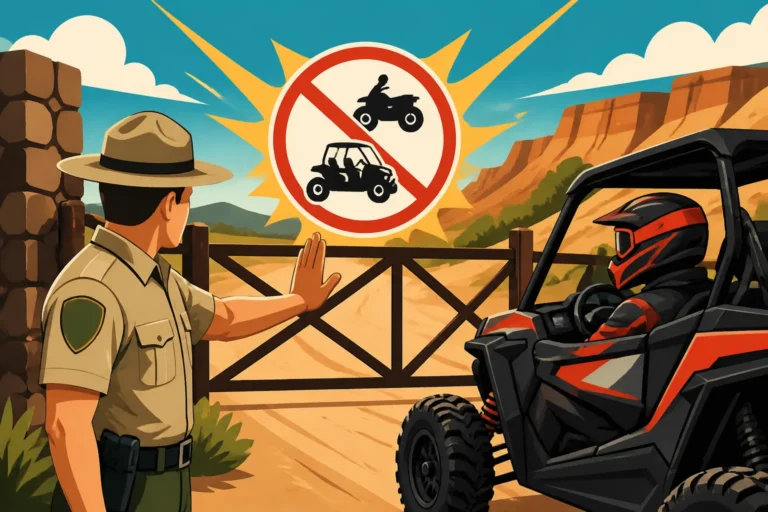
Before setting out, check the route’s current access information, closures, and allowed uses. A line on a digital map is not permission to ride every road or trail it displays. Use official land-management information to confirm access, and obey posted signs and barriers. Resources such as New Mexico Trail Maps Worth Carrying and Designated Routes and Travel Management in New Mexico can help you think through route planning and the limits of relying on a single map.
onX Offroad can be useful for reviewing route options and understanding the surrounding terrain before you leave. Treat it as a planning aid, not a substitute for posted restrictions, land-manager maps, or judgment on the ground. A route that looks simple on a screen may be too narrow for your machine, too exposed for your group, or inappropriate for the day’s conditions.
Match the route to your machine and group
A compact ATV and a wide side-by-side do not have the same room to maneuver. A UTV may fit through a section but leave little space for a safe meeting with another rider. Consider your machine’s width, turning room, ground clearance, tires, and how comfortably you can control it on a slope. If you are riding with a passenger, make sure they understand the plan for stopping and staying inside the machine.
Be realistic about the least experienced rider in your group. A confident driver may be comfortable with a narrow road, while a newer rider may tense up, brake abruptly, or fixate on the drop. That is not a character flaw; it is a predictable response to exposure. Choose a route where everyone can keep a controlled pace, and agree that anyone can ask to stop or turn around.
If the route may include narrow forest roads, review seasonal access and closures before leaving. New Mexico Forest Roads Closed December to May is a useful reminder that access can change with conditions and management decisions. For more on riding exposed mountain terrain, Riding a New Mexico Frontage Road and Riding Out of Red River on Forest Roads provide related route-planning context.
Set expectations before the first tight section
A short conversation in the staging area can prevent confusion later. Agree on who will lead, who will bring up the rear, how the group will signal a stop, and what to do if someone loses sight of the machine ahead. Decide that nobody will feel pressured to keep up or pass another rider in a questionable spot.
Spacing matters on a shelf road. Leave enough room to stop without being forced to brake hard if the rider ahead slows for rocks or a blind corner. At the same time, do not stretch the group so far apart that a rider at the back cannot hear or see a warning. If you need to stop, pull into a place with room for the entire group when possible rather than leaving one machine around a blind bend.
How to Handle Meeting Another Rider
Slow down and communicate early
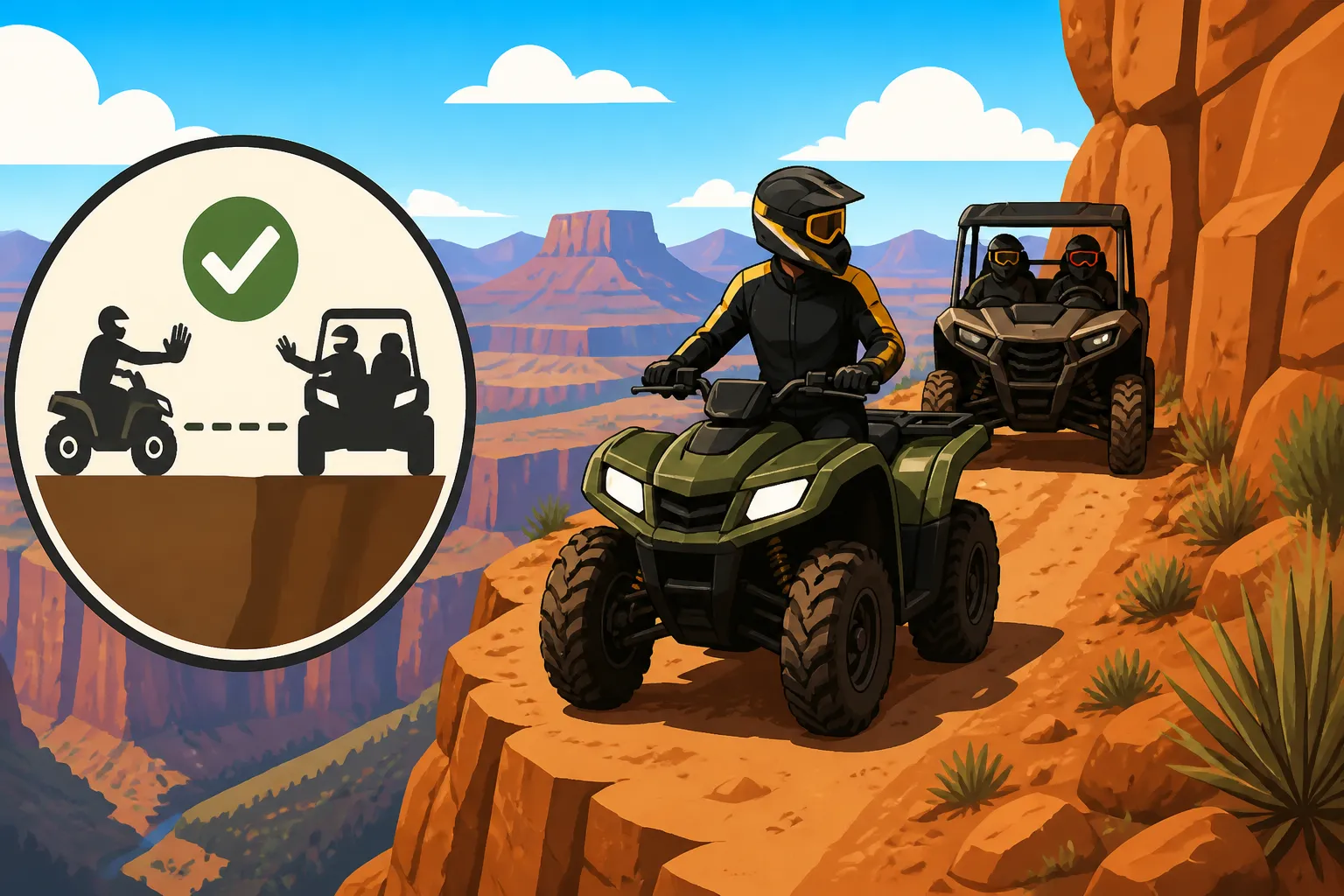
The safest encounter is one neither rider rushes. When you see an oncoming machine, reduce speed while you still have room to choose a stopping place. Make eye contact if practical, use a clear hand signal or a calm verbal exchange, and avoid assuming the other rider has seen you. Dust, helmets, engine noise, vegetation, and the curve itself can hide a machine until the last moment.
If you are approaching a blind bend, slow enough to stop within the distance you can see. Do not accelerate through a corner simply because the road looks empty from your current position. The other rider may be just beyond the bend, moving slowly, or stopped to deal with a problem.
Avoid crowding the other machine while you decide what to do. A rider who feels pushed toward the edge may make a rushed move. Keep your vehicle stable, use a controlled stop where the road is widest, and talk through the next move before either machine starts moving again.
Choose a passing place, not a contest
Do not try to squeeze past simply because both machines appear to fit. A small gap can disappear when a tire slips, a driver turns around a rock, or a UTV’s rear swings wider than expected. Look for a broad, firm place where both machines can pass with room between them and without putting either vehicle’s wheels near a soft shoulder or drop-off.
When one rider is closer to a safe pullout, it may make sense for that rider to stop there and let the other pass. The best choice depends on the road, traction, vehicle size, and the location of the safest space. Uphill-versus-downhill priority is often used as a courtesy, since a rider climbing may have less ability to restart on a steep grade. But it is not a reason to insist on moving when the road is unsafe. Local signs and conditions take precedence, and both riders should agree on a safe plan.
If neither vehicle can pass safely at the meeting point, one may need to reverse slowly to a wider section. Do not back toward an exposed edge without a clear view and enough space. Use a spotter when available, keep the spotter in a position where the driver can see them, and move in small, deliberate increments. If the situation feels unsafe, stop and reassess rather than trying to save a few minutes.
| Situation | Safer etiquette | Avoid |
|---|---|---|
| You see an oncoming machine | Slow early and identify a safe stopping or passing place | Charging toward the other rider to claim space |
| The road narrows around a blind bend | Stop where you can be seen and communicate before proceeding | Assuming the bend is clear |
| There is no safe passing room | Agree on who can carefully retreat to a wider section | Reversing quickly or edging toward a drop |
| A group is spread out | Keep enough spacing to stop and pass warnings along | Letting riders bunch up at a pinch point |
| Dust or poor visibility reduces sight distance | Reduce speed and increase following distance | Riding at the pace you would use on a clear road |
Give the more vulnerable position extra room
A rider closest to the drop-off may feel exposed even when the vehicle is technically on the road. Do not force that rider to move closer to the edge to make a pass easier for you. If the road has a wider inside shoulder, a stable turnout, or a clear spot farther ahead, use it rather than gambling on a tight squeeze.
Pay attention to loose gravel, mud, embedded rocks, and sloping shoulders. A tire can slide sideways even at low speed, particularly if the rider brakes sharply or turns abruptly. Do not treat the road’s visible tire tracks as proof that the entire surface is stable. If the shoulder crumbles or is soft, keep the vehicle on the firmest available line and wait for a better place to pass.
Keep Your Group Safe and Predictable
Ride at a pace that leaves room to react
On a narrow road, speed is not just about comfort. It determines whether you can stop for an oncoming vehicle, a fallen rock, a stopped group, or livestock around a bend. Ride slowly enough to stay in control and stop within the visible path ahead. Reduce speed further when the surface is loose, the road is shaded or damp, or dust is hanging in the air.
Leave a generous following gap. If the rider ahead stops unexpectedly, you should not have to swerve toward the edge or brake hard to avoid them. Keep the gap longer when visibility is poor, and do not ride in a tight line simply to keep the group together. A clear view of the road ahead is more valuable than a close formation.
Do not pass another machine unless there is enough width, visibility, and stable footing to do so safely. Passing on a shelf road can create pressure for the rider being overtaken, especially if they have nowhere to pull aside. If you need to stop, signal clearly and choose a spot that does not block the road or leave someone stopped around a blind corner.
Manage dust, noise, and roadside stops
Dust can make a narrow road feel even tighter. If you are following another machine through a dry section, back off rather than riding into the plume. If visibility drops, slow down or stop in a place where other riders can see you. Do not stop just beyond a blind bend without warning the rest of your group.
Keep conversations and machine movements predictable. Use simple hand signals, speak calmly, and avoid sudden turns or unnecessary revving. If you need to inspect a tire, check a map, or adjust gear, move to a wide turnout when possible. A quick stop in the road can become dangerous if another rider comes around the next bend without enough room to react.
onX Offroad may help your group understand where a route branches or where a planned turnaround might be, but do not try to operate a phone while driving. Pull over safely before checking your position. And if a route becomes narrower or more exposed than expected, the best decision may be to turn around at a safe, broad spot rather than continue because the map shows a route ahead.
Respect other users and the land
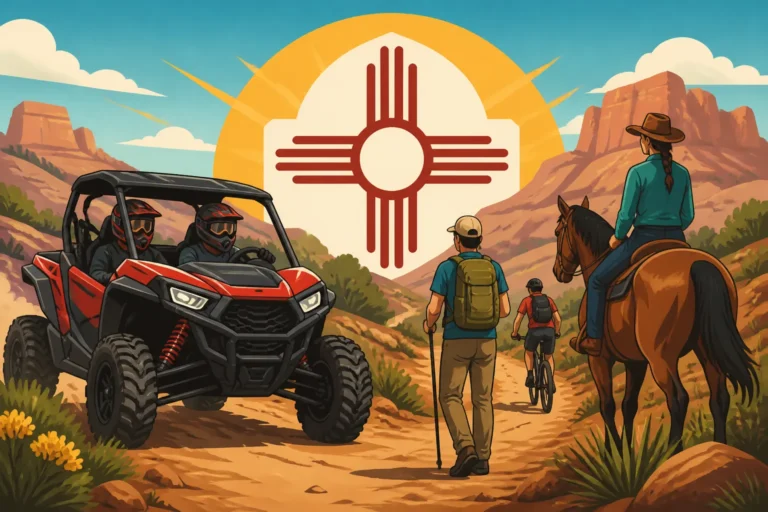
Shelf roads may be shared with hikers, horseback riders, cyclists, ranch vehicles, maintenance crews, or other motorized users. Slow down when approaching them and give them ample room. Dust and engine noise can startle animals, so approach livestock cautiously and follow any instructions from the person managing them. Keep your machine on the established route rather than widening the road to get around a difficult spot.
Close gates you open, and never assume a gate is meant to be left open just because you found it that way. Do not move rocks, cut vegetation, or drive around a closure to get past a damaged section. Those choices can worsen erosion, create new unauthorized tracks, or put you onto land where access is not allowed. New Mexico Trail Etiquette on Shared Ground and Riding a Grazing Allotment Politely offer useful reminders for sharing routes responsibly.
When to Stop, Turn Around, or Reconsider the Route
Recognize conditions that make a road a poor choice
A narrow shelf road may be a bad fit when the surface is wet, icy, washed out, badly rutted, or covered in loose rock. Weather can change road conditions quickly in New Mexico, especially during summer storms. A dry-looking route at the trailhead may have water moving through a drainage farther along. Check conditions before you leave and keep an eye on the sky as the ride progresses.
Also consider fatigue, visibility, and vehicle condition. A driver who is tired or anxious may have less capacity to manage a careful reverse or a tight meeting. A machine with steering, braking, tire, or overheating problems should not be taken deeper onto a route where there is little room to stop or recover. If someone in the group is uncomfortable, pause and discuss alternatives without teasing or pressuring them.
A plan to “just see how it looks” can become hard to reverse once the road narrows. Agree on a turnaround point before the ride, and treat it as a sensible option rather than a failure. A shorter ride with everyone relaxed is better than continuing into terrain that exceeds the group’s ability or equipment.
Turn around with care
Choose a wide, level, stable area for turning whenever possible. Do not attempt a multi-point turn near the edge or on a steep, loose slope. If there is no safe place to turn around, backtrack slowly to the last suitable area, using a spotter if needed. Keep passengers informed and have them remain secured in the vehicle according to its safety instructions.
If another rider is approaching while you are preparing to turn, stop and communicate. Do not make a sudden maneuver that places your machine across the road or leaves the other rider guessing. Let them pass only when there is safe space, then complete the turn where visibility and footing are better.
Use Meeting a Truck on a One-Lane Road as a related reminder that narrow-route encounters require patience and clear communication. The same basic habits apply whether you meet a larger vehicle, another ATV, or a side-by-side: slow down early, protect the person in the most exposed position, and choose a safe place before moving.
Make the next ride easier
After the ride, note where the route became unexpectedly narrow, where a turnaround was difficult, and whether the machine was a comfortable fit. Share practical observations with your group, but do not encourage other riders to bypass closures or treat an informal track as an approved route. If a road appears damaged or unsafe, follow the relevant land manager’s reporting process rather than trying to fix it yourself.
For the next trip, adjust the plan based on what you learned. A narrower machine, a smaller group, better spacing, or a different route may make the ride more enjoyable. Use onX Offroad or another map tool to compare options before leaving, then verify the route against official access information and posted signs. A shelf road rewards cautious decisions long before the first difficult pass.
Disclaimer
This article is for general informational purposes only and does not constitute professional advice. Laws, prices and regulations vary by location and change over time. Consult a qualified professional for guidance on your specific situation.