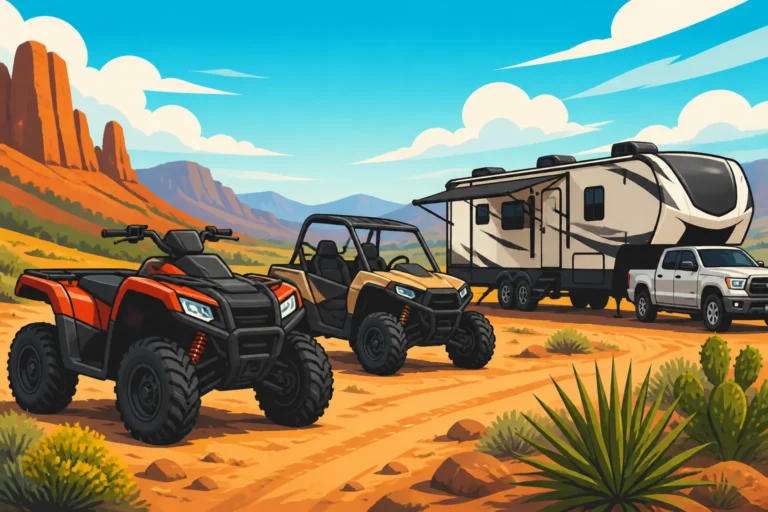
New Mexico Riding in July
July is a rewarding month for New Mexico ATV and UTV riding, but it can also turn a relaxed outing into a hot, stormy, or dusty day if you pick the wrong route or start too late. This guide explains how to choose a riding area, plan around summer weather, prepare your machine and crew, and avoid common July trail-day problems.
Choose a July riding area that fits the weather
New Mexico’s summer conditions change sharply with elevation and geography. A route near Farmington can feel very different from a forest road above Red River or a sandy trail south of Alamogordo. Before committing to a destination, think about the heat, shade, storm exposure, route difficulty, and how far you’ll be from help.
Compare terrain, elevation, and July conditions
| Riding area | Terrain and setting | July planning considerations |
|---|---|---|
| Red Sands OHV Area | Open desert terrain and dunes in southern New Mexico | Expect sun, loose sand, and limited shade. Start early and bring more water than you think you’ll need. |
| Glade Run and Chokecherry Canyon | Marked trails and open riding areas near Farmington | Check route information and land rules before setting out; dust, heat, and changing weather can affect the day. |
| Carson National Forest near Red River | Higher-elevation forest roads and mountain terrain | Conditions can vary by elevation. Watch for afternoon storms, lightning, muddy sections, and closures. |
| Caja del Rio near Santa Fe | High-desert mesas, open country, and volcanic terrain | Plan for exposed stretches, changing road conditions, and storms that may make washes or low spots unsafe. |
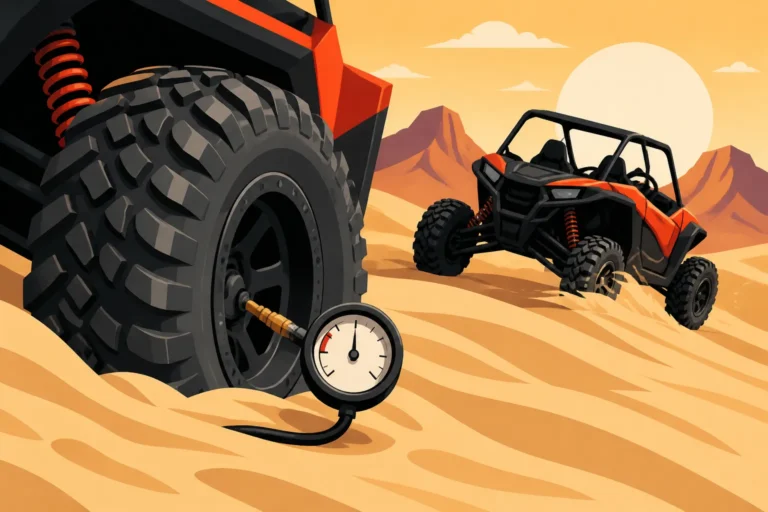
Desert riding areas can be tempting because they offer open terrain and room to spread out, but the lack of shade makes timing especially important. At places such as Red Sands, a ride that feels manageable in the morning may become exhausting under the midday sun. Deep or soft sand can also demand more effort from both the machine and rider, so build in breaks instead of treating the day as one continuous loop. For area-specific preparation, see [Red Sands OHV Area in Southern New Mexico] and [Riding Haystack Mountain for a Day].
Higher ground may offer cooler conditions, but it is not automatically an easier or safer choice. Mountain roads can be steep, rocky, muddy after rain, or exposed to lightning. A comfortable temperature at the trailhead does not guarantee comfortable conditions higher up—or a clear return route later in the afternoon. For mountain plans, look into [Riding the Carson National Forest at Red River] and [New Mexico Riding at High Elevation].
A map can help you compare route options, but don’t rely on a single source to decide whether a road is open. Use land-manager information and posted signs as your authority on access, closures, and permitted routes. If you use onX Offroad to plan, treat it as a navigation aid and cross-check the route on the ground. A line on a screen does not mean a route is open, passable, or appropriate for your machine.
Pick a ride length that leaves room for the return
A common July mistake is planning around the distance a group hopes to cover rather than the time it will take to ride safely. Heat, sand, dust, photo stops, slower riders, and unexpected route decisions all add time. A short loop with a clear turnaround point may be a better choice than a long ride that leaves everyone trying to get back during the hottest part of the day.
Be realistic about the slowest rider and least capable machine in the group. If someone is new to off-road riding, a wide side-by-side is following a narrow route, or a vehicle has a limited fuel range, plan around those constraints. It is much easier to add distance when everyone feels good than to shorten a ride once the group is tired and far from the staging area. [New Mexico Trails for Beginners] is a useful place to start when you’re choosing a suitable outing.
Before leaving, agree on a turnaround time and a simple regroup plan. If a rider gets separated in dusty conditions, stopping in a safe place and reuniting at a known junction is usually better than continuing in different directions. Save the planned route in advance, make sure everyone knows where the staging area is, and carry a paper or offline backup if your phone loses signal. onX Offroad can help you review route options before the trip, but your group should know the plan without needing a live connection.
Plan around heat, monsoon storms, and changing trail conditions
July is not just a hot-weather riding month. Summer storms can develop quickly, especially in the afternoon, and a dry route can change after a downpour. A good plan includes a way to shorten the ride, a clear response to lightning or flooding, and enough supplies to handle delays.
Start early and take heat seriously
For a desert ride, early starts are often the most comfortable option. They give you more time to ride before temperatures rise and make it easier to be back at the trailer, campsite, or town before the hottest hours. This matters even more when your route has little shade, soft sand, or long stretches between stops. Don’t wait until someone feels unwell to decide it is time to turn around.
Bring water for every rider, with extra available in the support vehicle or trailer. Drink regularly rather than waiting until you feel very thirsty, and take breaks in whatever shade is available. Water alone may not be enough during a long, sweaty ride; bring food and consider how your group will replace what it loses through exertion. Keep an eye on one another, because tired riders may downplay how poorly they feel or become less careful with the controls.
Clothing should protect against both sun and abrasion without making the rider overheat unnecessarily. Use a helmet and appropriate protective gear, plus eye protection that works in dusty conditions. A light layer that covers skin can be more comfortable than bare arms in direct sun. If you’re riding with children or inexperienced guests, keep the pace conservative and schedule breaks before they ask for one. [New Mexico Riding in Summer Monsoon] covers another July concern that deserves its own place in the plan: fast-changing storm conditions.
Treat afternoon storms as a route hazard
Monsoon weather can bring lightning, strong wind, heavy rain, and sudden runoff. The risk is not limited to the spot where rain is falling. Water can travel into a low crossing or arroyo from a storm several miles away, so a wash that looked dry on the way out may be unsafe on the return. Never ride into moving water or assume a shallow-looking crossing will stay shallow.
If thunder is audible or lightning is nearby, get off exposed ridges and open ground as safely as you can. Avoid waiting beneath an isolated tree or beside a tall, exposed object. If conditions deteriorate, prioritize reaching a safe location rather than sticking to the original route. A practical July plan includes an early turnaround, a sheltered option where appropriate, and a willingness to cancel or cut the ride short.
Rain can also make dirt roads slick, muddy, or deeply rutted. A route that is manageable when dry may become difficult for a novice rider or a machine with limited clearance. Check forecasts and land-manager notices before departure, then reassess the sky and trail as you ride. For more on the danger of water in desert terrain, see [Monsoon Afternoons and Flash Floods] and [Riding a Wash on State Trust Land].
Prepare your machine, route, and riding group
A good July ride begins before you unload. Check the machine, review the route, confirm access rules, and make sure each rider understands what to do if the group gets delayed or separated. A little preparation can prevent a small issue—such as a loose battery connection or an unclear junction—from becoming a stressful rescue situation.
Check the machine and carry practical supplies
Inspect tires, brakes, steering, lights, fuel, and fluids before the trip. Sand, heat, rocks, and long stretches of rough road can reveal problems that were easy to ignore in the driveway. Check that the machine has a suitable cooling system and that the intake and filters are clean for dusty conditions. If you are towing to the riding area, inspect the trailer and secure the machines before setting off.
Carry basic repair and recovery supplies appropriate to your vehicle and route. That might include a tire repair kit, tools that fit your machine, a tow strap, a first-aid kit, and a way to communicate if phones do not work. Keep the supplies accessible instead of buried beneath luggage. Make sure another person in the group knows where they are and how to use the essentials.
Fuel planning deserves special attention when riding far from a town or fuel stop. Estimate the route’s demands conservatively: soft sand, climbing, idling, and repeated stops can use more fuel than an easy road ride. Turn around while you still have a comfortable reserve rather than depending on a precise range estimate. For longer desert outings, [Fuel Range Between Desert Towns] and [Breaking Down Far From a Road] offer useful planning considerations.
Confirm access, permits, and route rules
New Mexico riding opportunities include different kinds of public and private land, and the rules are not interchangeable. A road shown on a map may cross land with separate access requirements, or connect to a route that is closed to motorized use. Confirm where the route goes, what permits or registrations apply, and whether your vehicle is allowed on that specific trail or road.
Check official information for closures before you leave and look again at signs when you arrive. Forest roads, public-land routes, and local riding areas may have seasonal, weather-related, fire-related, or resource-protection restrictions. Do not assume that a route is open just because it was open on a previous trip. For general planning, review [New Mexico Rules for Riding Federal Land] and [New Mexico Trail Closures to Check First].
Keep the route within your group’s experience and the machine’s capabilities. A wide side-by-side may not fit on a narrow trail, while a steep or rocky climb may be intimidating for a new rider. Agree that anyone can call for a stop if the route feels unsafe. onX Offroad may help you preview a route and keep track of your location, but follow current signs and land-manager directions if they differ from what you expected on the map.
Make the day safer and more enjoyable for everyone
July riding is more fun when the group has a shared plan, manageable expectations, and enough flexibility to respond to weather. That does not mean overplanning every minute. It means sorting out the important decisions—where you can ride, how long you’ll be out, and what you’ll do if conditions change—before you are tired, hot, or trying to make a decision at a trail junction.
Set clear group habits before leaving
Before riding, confirm who is leading, who is sweeping at the back, and where the group will regroup if visibility becomes poor. Leave enough distance to control dust, especially when the trail is dry and loose. The lead rider should slow down at junctions and wait where the route changes; the last rider should know the planned destination and have a reliable way to communicate with the rest of the group.
Ride at a pace that leaves room to react to other trail users, wildlife, livestock, and unexpected obstacles. Keep noise and dust considerate around homes, campsites, and other visitors. Close gates if you find them closed, and avoid cutting across vegetation to get around a difficult section. Small choices like these help protect access and reduce conflict with people who share the land.
If a rider is struggling, stop somewhere safe and reassess. Continuing because the group is “almost there” can make fatigue worse and increase the chance of a mistake. Consider turning back, splitting the route only when everyone understands the plan, or waiting for weather to pass from a safer location. A sensible turnaround is a successful ride, not a failed one.
Have a backup plan for closures and weather
Keep a second option in mind before you leave home. A nearby lower-risk route, a shorter loop, or a non-riding activity can save the day if a fire restriction, storm, heat, or closure makes the original plan unwise. Check notices from the relevant land manager and the riding area itself, since a general forecast will not tell you whether a particular access road or trail has closed.
Save maps for offline use and make sure at least one other person knows your destination and expected return. If using onX Offroad, download or prepare the route before entering areas with limited service, and cross-check important access details with current official information. Keep your phone charged, but don’t make it the only way the group can navigate or communicate.
Finally, leave yourself enough time to load safely and get home without rushing. Heat and a long day can make people careless at the end, when they are tying down machines or driving a trailer. Give everyone time to cool down, drink, inspect equipment, and check that nothing has been left behind. For trip-specific planning, [New Mexico Riding Seasons by Elevation] can help you think through how different parts of the state may suit a summer outing.
Disclaimer
This article is for general informational purposes only and does not constitute professional advice. Laws, prices and regulations vary by location and change over time. Consult a qualified professional for guidance on your specific situation.