Riding County Roads in Otero County
It's incredibly exciting to think about hitting the open road, or in our case, the unpaved county roads, to explore the beautiful landscapes of Otero County. But let's be honest, the moment you start wondering if your ATV or UTV is actually allowed on those roads, a whole heap of questions pop up. It's frustrating to feel like you're navigating a legal maze just to enjoy a ride. This guide is here to cut through that confusion, helping you understand the specific rules for riding your off-highway vehicle on county roads in Otero County, New Mexico, so you can ride with confidence and peace of mind.
Understanding Otero County's Stance on OHV Road Use
New Mexico is a fantastic state for off-highway vehicle enthusiasts, offering a diverse range of riding experiences from high mountains to desert dunes. However, what many riders don't realize is that while the state has overarching laws for OHV registration and operation, individual counties and municipalities often have the authority to enact their own ordinances regarding OHV use on their local roads. This means that rules can change significantly from one county line to the next, and what's perfectly legal in one area might get you a citation just down the road. Otero County is one such area where you need to be aware of the specific local regulations that govern where and how you can ride.
How Otero County Differs from State Law
The State of New Mexico provides a framework for OHV use, including registration requirements and general safety guidelines. For instance, the state allows OHVs to cross state highways under specific conditions and even permits limited paved road use with the proper registration and decals, like the [New Mexico's Green On and Off-Highway Decal]. However, this state allowance doesn't automatically open up every county or city street. Counties, like Otero County, have the power to accept, modify, or reject these state provisions for their own local road networks. They can designate specific roads as open or closed to OHVs, establish curfews, or even impose additional equipment requirements beyond what the state mandates. It’s crucial to understand that a county ordinance can be more restrictive than state law, and in those cases, the more restrictive local rule is the one you must follow when you're within that county's jurisdiction.
Many riders, myself included, have felt that pang of anxiety wondering if a seemingly innocuous dirt road is actually fair game or if it’s a quick ticket to a fine. It’s not always intuitive, and relying solely on what you know about state law can lead you astray in areas with local ordinances. Otero County is an excellent example of an area where you absolutely need to dig a little deeper than just the statewide OHV rules. They've taken steps to tailor OHV access to their local needs, considering factors like traffic safety, property owner concerns, and the unique characteristics of their road system.
Key Provisions of Otero County's OHV Ordinance
Otero County has indeed passed an ordinance that addresses the use of OHVs on its county roads. While I can't cite the exact, real-time wording of every ordinance or specific road names that might be open or closed, I can tell you the general shape of what such an ordinance typically covers. An ordinance like Otero County's O-18-95 usually details several key provisions designed to manage OHV traffic. These often include specifying which types of OHVs are permitted (ATVs, UTVs, dirt bikes), under what conditions, and during which hours. For example, some ordinances might open up all unpaved county roads unless specifically marked otherwise, while others might only open designated routes.
Common aspects covered by county ordinances often include:
- Designated Roads: Some ordinances list specific county roads or road networks that are open to OHV use, while others might declare all unpaved county roads open unless posted as closed. It's rare for all paved county roads to be open without significant restrictions.
- Operating Hours: Many ordinances impose curfews, limiting OHV operation to daylight hours or specific times, for noise considerations and safety, especially in residential areas or near towns.
- Speed Limits: Beyond standard posted limits, some ordinances might set a maximum speed for OHVs on county roads, often lower than typical vehicle speeds, to enhance safety.
- Equipment Requirements: While state law covers basics, a county might add stipulations, perhaps regarding reflective tape, additional lighting, or specific tire types for road use.
- Driver Requirements: Reinforcing state law, ordinances will typically require a valid driver's license for any paved road use and may reiterate age restrictions for operators.
- Penalties for Violations: The ordinance will outline the fines and other consequences for failing to comply with its provisions, which can sometimes be significant. [New Mexico Fines for an Unregistered OHV] or for illegal road use can be quite a deterrent.
It's critical that before you head out, you check the current Otero County ordinances. These are usually available through the county clerk's office or the county's official website. Knowing these details firsthand will prevent unwelcome surprises and ensure your adventure remains enjoyable and legal.
Navigating the Legal Requirements for Riding Otero County Roads
Riding OHVs on county roads, even unpaved ones, isn't quite the same as tearing through a designated off-road park. There's a layer of legal compliance you need to be aware of, starting with statewide registration and extending to specific equipment and driver requirements. Neglecting any of these can quickly turn a fun day into a costly one, and nobody wants that. It's about being a responsible rider and respecting the laws that allow us to enjoy these incredible landscapes.
Essential State-Level Registration and Decals
First and foremost, any OHV operated on public lands or roads in New Mexico must be properly registered with the Motor Vehicle Division (MVD). This isn't just a suggestion; it's the law. The registration process itself involves presenting your title, proof of ownership, and payment of the applicable fees. [Registering an OHV in New Mexico] is your first step. Once registered, your machine will be issued an OHV decal, which acts as your proof of registration.
New Mexico primarily issues two types of decals:
- The Yellow Off-Highway Decal: This is your basic registration decal, which permits you to operate your OHV on designated off-highway trails and areas. It signifies that your machine is legal for off-road use but generally keeps you off paved public roads. [New Mexico's Yellow Off-Highway Decal] is a must-have for any kind of public land riding.
- The Green On and Off-Highway Decal: This decal is the golden ticket for riders who want the option of using paved roads. It signifies that your OHV meets the stricter equipment and insurance requirements for on-highway operation. While Otero County's ordinance will dictate which county roads you can use, having the green decal means your machine is eligible under state law to be on paved roads if the county allows it. You can't just slap this on; there are specific requirements for your machine to qualify. [New Mexico's Green On and Off-Highway Decal] goes hand-in-hand with ensuring your machine is adequately equipped for road use.
Even if you primarily intend to ride on dirt or gravel county roads, understanding the distinction between these decals is crucial, especially if your route might involve any short stretches of pavement or crossing a paved road. Proper [New Mexico OHV Decal Placement Rules] are also important; make sure your decal is mounted correctly so it's clearly visible.
Required Equipment for Road-Legal OHVs
When operating an OHV on any public road, whether paved or unpaved, in New Mexico, your machine needs to meet specific equipment standards. This isn't just about safety; it's about making your OHV visible and controllable, like any other vehicle on the road. Even if Otero County's roads are mostly gravel, you're still sharing them, and these requirements are there for a reason.
Here’s a general checklist of what's typically required for road-legal OHVs in New Mexico:
- Headlights: You need at least one, capable of projecting light 150 feet in front of the vehicle. [New Mexico Headlight and Taillight Rules] specify exactly what's needed.
- Taillight: At least one red taillight, visible from 200 feet to the rear. This often goes hand-in-hand with brake lights.
- Brakes: Functional brakes on all wheels.
- Horn: An audible warning device.
- Muffler and Spark Arrester: A muffler to keep noise levels within limits (96 decibels is a common threshold), and a spark arrester is essential for preventing wildfires, especially on federal lands. [New Mexico Spark Arrester Requirement] is critical for environmental protection.
- Mirrors: At least one rearview mirror, if your machine is equipped with handlebars. If it's a side-by-side, usually two mirrors are required, giving you a clear view of traffic behind you. [New Mexico Mirror Requirements for Road Use] are vital for safety.
- Tires: Proper tires for road use, not just off-road knobbies that might be unsafe on harder surfaces.
Many aftermarket companies, like SuperATV, offer a wide range of accessories that can help you bring your OHV up to these road-legal standards. Whether you need an aftermarket mirror kit, a turn signal kit, or even DOT-approved tires, SuperATV provides options designed to integrate seamlessly with various makes and models, making the conversion process much smoother. Don't just assume your factory machine is ready for road use; a thorough check against state and local ordinances is always recommended.
Driver Licensing and Insurance
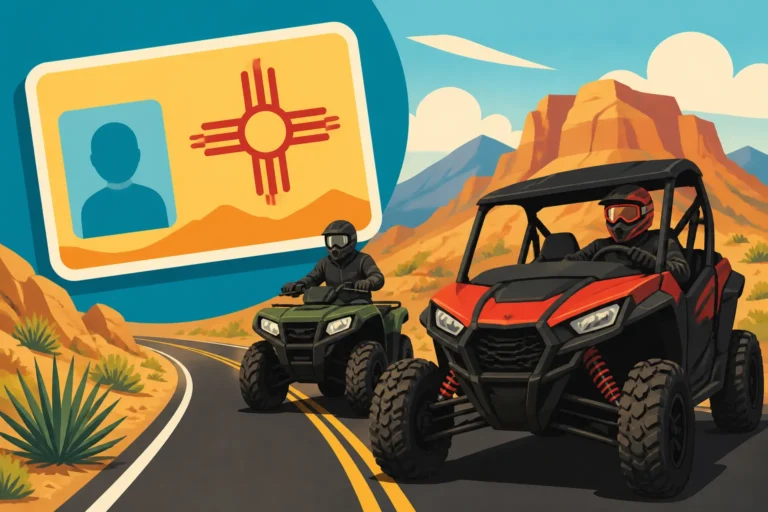
Beyond the machine itself, the operator also has responsibilities. If you plan to ride on any paved public road in New Mexico, even just crossing one, you generally need a valid driver's license. This applies whether it's a state highway or a paved county road where OHVs are permitted. The thinking here is that if you're mixing with regular traffic, you need to possess the same basic competency and licensing as other drivers.
Furthermore, New Mexico has a mandatory financial responsibility act, which means if your OHV is being operated on a paved public road, you must carry liability insurance. This is non-negotiable and provides crucial protection in case of an accident. [New Mexico ATV Insurance Requirement] details the minimum coverage amounts. It's smart to carry proof of insurance with you whenever you ride, as law enforcement can ask for it.
For riding solely on unpaved county roads that might be open to OHVs but don't involve paved sections, the driver's license and insurance requirements can sometimes differ, depending on the specific county ordinance and state definitions of "off-highway" versus "on-highway" use. However, for maximum flexibility and peace of mind, especially when exploring areas like Otero County where road types can change, it's always safest to ensure both you and your machine meet the higher standards for paved road use. This way, you're covered no matter what unexpected paved stretch or crossing you encounter.
| Requirement | State (General) | Otero County (Check Specific Ordinance) |
|---|---|---|
| Registration | Mandatory for all public land/road use | Mandatory (via MVD) |
| Yellow Decal | Required for off-highway public land use | Required for off-highway public land use |
| Green Decal | Required for paved road use (state-level eligibility) | Required if operating on any paved county roads where permitted |
| Headlights | Required for paved road use (150ft projection) | Generally required for any public road use |
| Taillight | Required for paved road use (200ft visibility) | Generally required for any public road use |
| Mirrors | Required for paved road use (1 or 2, depending) | Generally required for any public road use |
| Driver's License | Required for paved road use | Required for paved road use, potentially for some dirt roads |
| Liability Insurance | Required for paved road use | Required for paved road use, recommended for all public roads |
| Spark Arrester | Required on federal land and usually good practice | Generally required for all public land/road use |
Practical Tips for Riding Otero County's Diverse Terrain
Otero County offers incredible riding opportunities, from the Tularosa Basin's wide-open spaces to the foothills of the Sacramento Mountains. But with such diverse terrain comes the need for practical considerations beyond just the legalities. Riding safely and responsibly is about more than just following the rules; it's about being prepared, respectful, and mindful of your surroundings.
Respecting Private Property and Ranching Operations
One of the most crucial aspects of riding county roads, especially in areas like Otero County which has a strong ranching and agricultural presence, is understanding and respecting private property. Many county roads, even if publicly accessible, may traverse or border private land. This means you need to be acutely aware of where you are and always stay on the designated public right-of-way.
- Stay on the Road: Even if a dirt road seems to continue onto what looks like open land, if it's not explicitly marked as a public trail or road, assume it's private. Veering off a public road onto private property, even inadvertently, is trespassing and can lead to serious legal consequences, not to mention creating negative perceptions of OHV riders.
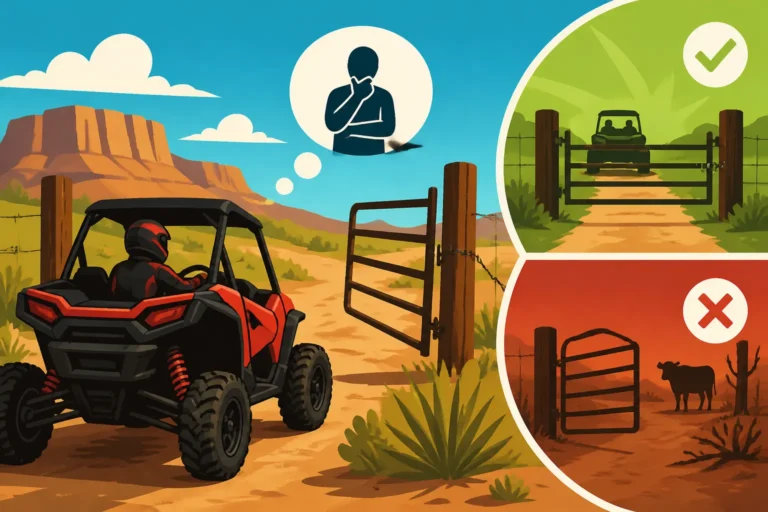
- Closed Gates: You will undoubtedly encounter gates across county roads in rural areas. These are often there to manage livestock or indicate a boundary. The cardinal rule is: leave gates as you find them. If a gate is open, leave it open. If it's closed, close it behind you. This is non-negotiable. [New Mexico Rules for Opening a Gate] exist precisely for these situations, and it’s a matter of courtesy and legal obligation.
- Livestock: You will likely encounter cattle, horses, or other livestock on or near county roads. Reduce your speed, give them a wide berth, and avoid startling them. Don't use your horn excessively. Ranchers depend on these animals, and disrupting them can cause significant problems. [New Mexico Rules for Riding Near Livestock] are important to remember.
Always remember that OHV access in any area is often a privilege, not an inherent right, and disrespecting private property is one of the quickest ways to jeopardize that access for everyone.
Safety and Preparedness for Otero County Adventures
The diverse terrain of Otero County means you need to be prepared for a variety of conditions. A sunny morning ride can quickly turn into a challenging situation if you're not ready.
- Check the Weather: New Mexico weather can be unpredictable. Flash floods are a real danger in arroyos and washes during monsoon season (typically July-September). Sudden dust storms can severely limit visibility. Check the forecast before you head out and be prepared to turn back if conditions deteriorate.
- Carry Essentials: Always carry plenty of water, especially in the warmer months. A basic tool kit, tire repair kit, first-aid kit, and a way to communicate (like a satellite messenger if you're out of cell service) are non-negotiable. Even a simple tow strap can be a lifesaver.
- Know Your Route: Carry maps – both paper and digital if possible – and know your planned route. Don't rely solely on GPS, as signal can be spotty in remote areas. Mark your starting point and turn-around times.
- Ride with a Buddy: Riding with another machine is always safer, especially in unfamiliar or remote territory. If something goes wrong, you have immediate assistance.
- Personal Protective Equipment: Always wear a helmet, eye protection, sturdy boots, gloves, and long sleeves/pants. Even a slow tip-over can result in injuries if you're not protected. New Mexico has specific [New Mexico Helmet Law for ATV Riders] and [New Mexico Eye Protection Requirement] for youth riders, and for any rider on paved roads.
Being prepared isn't about expecting the worst; it's about being ready for anything, which allows you to relax and truly enjoy the ride.
Dealing with Road Conditions and Shared Use
Otero County's unpaved roads can range from well-maintained gravel to deeply rutted, rocky tracks. Be prepared for varying conditions and remember that you're sharing these roads with others.
- Varying Surfaces: Gravel roads can be loose and slippery, especially on turns or descents. Watch out for washboards, potholes, and unexpected obstacles like rocks or branches. Adapt your speed and riding style to the surface.
- Dust: On dry days, OHVs can kick up a lot of dust. Maintain a safe following distance from other riders or vehicles, and be mindful of visibility for oncoming traffic. If passing, do so safely and quickly.
- Other Vehicles: County roads are used by local residents, ranchers, loggers, and other recreationalists. You might encounter pickup trucks, trailers, farm equipment, or even bicycles. Always yield to larger vehicles and be prepared to pull over to allow them to pass, especially on narrow sections. Slow down considerably when approaching homes or other vehicles.
- Wildlife: Otero County is home to deer, elk, javelina, and other wildlife. They can dart out onto the road unexpectedly, especially at dawn and dusk. Stay alert and keep your speed in check.
Riding responsibly means being a good ambassador for the OHV community. When you're respectful, prepared, and follow the rules, you help ensure that these fantastic riding opportunities remain open for everyone to enjoy for years to come.
Where to Find Information and Maps for Otero County Riding
The key to successfully navigating Otero County's roads on your OHV is having accurate and up-to-date information. While guides like this can provide a general overview, the specifics of local ordinances and road conditions can change. Knowing exactly where to look for official information is your best bet for avoiding issues.
Official Sources for Ordinance Details
When it comes to local laws, the official word always comes from the source. For Otero County's OHV ordinance, you'll want to consult the county clerk's office or the county's official website.
- Otero County Clerk's Office: This office is the custodian of all county ordinances. You can usually contact them by phone or visit in person during business hours to request a copy of the specific OHV ordinance (often referred to by its ordinance number, like O-18-95 mentioned earlier, or by topic). They can clarify details and ensure you have the most current version.
- Otero County Official Website: Many counties publish their ordinances online in a searchable database. Look for sections related to "County Ordinances," "Codes," or "Public Safety" on the main Otero County government website. A quick search using terms like "OHV ordinance Otero County" or "off-highway vehicle regulations Otero County" might lead you directly to the relevant document. Reading the exact text of the ordinance is the only way to be completely sure of the rules.
Local Resources and Community Knowledge
Beyond the official documents, tapping into local knowledge can provide invaluable insights into the practicalities of riding in Otero County.
- Local MVD Offices: While the MVD handles state-level registration, local offices often have a good general understanding of OHV rules in their area and might be able to point you to the correct county resources.
- Local OHV Clubs and Dealerships: Existing OHV clubs in the Otero County area are often a treasure trove of information. Members usually know which roads are open, which areas to avoid, and can offer tips on local conditions. Check online forums or local recreational directories for club listings. Likewise, local OHV dealerships (which might also sell SuperATV products!) often deal with registration and road-legal conversions regularly, so they're usually well-versed in local regulations and can offer practical advice.
- Land Management Agencies: If your ride takes you near or through federal lands like the Lincoln National Forest or Bureau of Land Management (BLM) areas, remember that these agencies have their own rules regarding OHV use on their roads and trails, which may differ from county regulations. Always check with the specific forest district or BLM field office for their designated travel routes and any seasonal closures. [New Mexico Rules for Riding a Forest Road] and [New Mexico Rules for Riding a BLM Road] apply here.
By combining the official legal documents with practical advice from those who know the area best, you'll be well-equipped to enjoy the stunning county roads of Otero County responsibly and safely.
Disclaimer
This article is for general informational purposes only and does not constitute professional advice. Laws, prices and regulations vary by location and change over time. Consult a qualified professional for guidance on your specific situation.