New Mexico Registration and Insurance Proof
There's nothing quite like the freedom of exploring New Mexico's stunning landscapes on your ATV or UTV. But let's be honest, the excitement can quickly turn into a headache if you're ever stopped by law enforcement and don't have the right paperwork to back up your ride. It’s a common frustration, feeling unsure about exactly what you need to carry. This guide is here to untangle the specifics of New Mexico's OHV registration and insurance requirements, ensuring you know exactly what proof to have on hand for a smooth and legal adventure.
The Essential Documents: What You Need to Carry
When you're out exploring the Land of Enchantment on your off-highway vehicle, whether it's tearing up a desert trail or cruising a designated county road, you absolutely need to have certain documents readily available. It’s not just a suggestion; it’s the law, and missing these can turn a fun day into a costly one. Think of it as your OHV's passport and visa – you wouldn’t travel internationally without them, and the same goes for navigating New Mexico’s varied terrain.
Proof of OHV Registration: Physical Decals and Paperwork
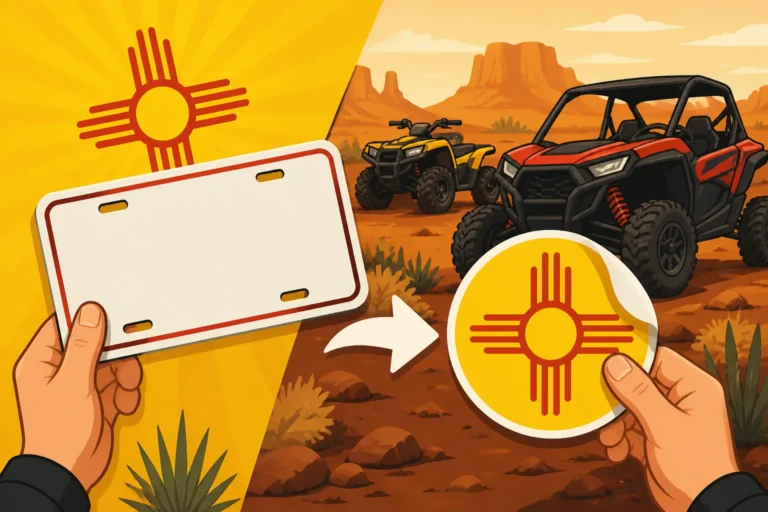
First and foremost, your OHV needs to be registered with the New Mexico Motor Vehicle Division (MVD), and you need tangible proof of that registration. This isn't just a mental note you've made; it involves specific items that an officer will look for. The most visible proof, of course, are the decals affixed to your machine. New Mexico uses a color-coded system to indicate different types of registration and approved riding areas. You'll either have a yellow decal for purely off-highway use, or a green decal if you've opted into the paved road program, allowing you to legally traverse designated public streets. In some cases, you might even carry both, depending on how and where you plan to ride. We'll dive into the specifics of [New Mexico's Yellow and Green Decals] a bit later, but for now, just know they are your first line of visible proof.
Beyond the sticky decals, you also need the physical registration card. This is a small piece of paper, often tucked into a wallet or a waterproof compartment on your machine, that lists your OHV's vehicle identification number (VIN), your name, the expiration date, and other pertinent details. While the decals signal to an officer that your machine is registered, the card confirms who it's registered to and that the registration is current. Imagine getting pulled over and being able to point to your decal, but then having nothing to back it up – that's where the card becomes indispensable. It’s always best practice to carry the original or a clear photocopy, especially if you lend your machine to a family member or friend. The MVD is the agency responsible for [Why MVD Registers New Mexico OHVs], so their paperwork is the definitive source.
Proof of Financial Responsibility: When Insurance is Required
This is a point of frequent confusion for many riders, and for good reason! Unlike street-legal cars and trucks, an OHV doesn't always require liability insurance in New Mexico. If you're strictly riding on private land or designated off-highway trails and areas where no paved road use is allowed, then you typically don't need a specific OHV insurance policy mandated by the state. However, the moment your wheels touch pavement – even for a quick crossing of a state highway or a jaunt down an open county road – everything changes.
New Mexico's Mandatory Financial Responsibility Act kicks in when an OHV operates on any paved public road or highway. This means if you're riding your UTV through an open county like Sierra County, or crossing a state highway to get to another trail system, you absolutely must have proof of liability insurance. This insurance isn't just a good idea; it's a legal requirement designed to protect other motorists and property in case you're involved in an accident on a public thoroughfare. The minimum coverage amounts are specific, designed to cover bodily injury and property damage, and failing to carry this proof can lead to significant fines, even if you never actually have an accident. Many insurance providers offer specific OHV policies, and it's vital to ensure your coverage meets the state's minimums.
Understanding New Mexico's Decal System
New Mexico has a clear, albeit sometimes confusing, system for identifying registered off-highway vehicles. It's not just about having a decal; it's about having the right decal for where you're riding. These little sticky squares tell a story to law enforcement, indicating your machine's registration status and what privileges it has on the roads and trails. Getting this wrong can be a real bummer, so let's break down the two main players: the yellow and the green decals.
The Yellow Off-Highway Decal: Trails and Dirt Roads Only
This is the most common decal you'll see on ATVs and UTVs in New Mexico, and for good reason. The yellow decal signifies that your machine is properly registered for off-highway use. This means you're good to go on designated trails within National Forests, BLM lands, state OHV parks like Red Sands, and unpaved county roads that are legally open to OHV traffic. It's your ticket to exploring the vast majority of New Mexico's incredible backcountry. Without this decal, you are essentially riding an unregistered machine on public land, which is a big no-no and can lead to fines.
The [New Mexico Yellow Decal Requirements] dictate not just that you have one, but also where it needs to be placed on your machine. For ATVs, it typically goes on the left rear fender. For side-by-sides, it’s usually on the left rear quarter panel. Dirt bikes have a specific spot on the left fork leg. The placement is crucial because it needs to be easily visible to any ranger or deputy who might be checking. These decals are valid for two years, and you'll typically receive new ones when you complete your biennial renewal with the MVD. It's important to keep them clean and clear; if your decal becomes damaged or unreadable due to sun exposure or trail debris, it essentially renders your registration invisible, and you'll need to look into [Replacing a Lost New Mexico Decal].
The Green On-and-Off Highway Decal: Pavement Privileges
Now, this is where things get interesting for those who want to use their OHV to connect trails via paved roads, run into town for supplies, or simply enjoy a ride through communities that have opened their streets. The green decal, sometimes referred to as the "paved road decal," grants you the privilege to operate your registered OHV on approved public streets and highways. This is a significant distinction because it means your machine, which is primarily designed for off-road, can now share the road with conventional vehicles under specific conditions.
However, the green decal isn't a magic pass that allows you to ride anywhere. It comes with additional responsibilities and requirements. If you have the green decal, you must also meet New Mexico's mandatory financial responsibility laws, meaning you need liability insurance. You also need a valid driver's license, and your OHV must comply with certain equipment requirements for road use, such as proper headlights, taillights, and mirrors. The idea behind the [New Mexico Green Decal Requirements] is to allow for practical connectivity and enjoyment, but only when done safely and with proper safeguards in place. It's common for riders who frequent areas like Red River or explore Sierra County to carry both the yellow and green decals, as this allows them to transition seamlessly from dirt trails to paved roads and back again, provided all other requirements are met. You essentially signal that you have both the off-road permission and the "paved road opt-in" for your machine.
Insurance Requirements for Paved Road Use
Navigating the insurance landscape for off-highway vehicles in New Mexico can feel a bit like crossing a arroyo after a rainstorm—you know you need to be careful, but the exact path isn't always clear. While your typical off-road adventure on designated trails might not require specific insurance, the moment your tires touch New Mexico's asphalt, the rules change dramatically. It's crucial to understand these requirements, not just to avoid fines, but to protect yourself and your assets.
Minimum Coverage Mandates for OHVs
When it comes to riding your ATV or UTV on New Mexico's paved roads, the state's Mandatory Financial Responsibility Act takes center stage. This isn't unique to OHVs; it's the same law that applies to all motor vehicles operating on public roads. It means you must have certain minimum liability coverages in place to legally ride on pavement. Specifically, you're generally looking at:
- Bodily Injury Liability: This covers expenses related to injuries you cause to other people in an accident. New Mexico typically requires a certain amount per person and a higher amount per accident. This means if you accidentally hit a pedestrian or another vehicle, your insurance helps cover their medical bills, lost wages, and pain and suffering, up to your policy limits.
- Property Damage Liability: This covers damage you cause to someone else's property in an accident. If you ding another car, knock over a mailbox, or damage a fence, this part of your policy steps in to pay for the repairs or replacement.
These coverages are absolutely paramount. Imagine a scenario where you're riding your UTV on a county road, misjudge a turn, and collide with a parked car. Without proper liability insurance, you could be personally on the hook for thousands, or even tens of thousands, of dollars in damages and medical bills. This isn't just about avoiding a ticket; it's about protecting your financial future. While you might consider additional coverages like collision for your own machine, or comprehensive for theft and other non-collision events, those are optional. The liability portion, however, is not, if you plan to use paved roads. For a deeper dive into the specifics, you can check out [What a Policy Must Cover for Paved Road Riding].
Carrying Your Proof of Insurance
Having the right insurance is only half the battle; the other half is being able to prove you have it when asked. During a roadside stop, an officer won't just take your word for it. You need tangible evidence that you're compliant with the law. The most common and accepted form of proof is your insurance ID card. This small card, usually provided by your insurance company, summarizes your policy, including the effective dates, the vehicle covered, and your policy number.
It's highly recommended that you carry this physical card with you whenever you're riding an OHV that could potentially touch pavement. Many riders opt to keep it in a waterproof bag or container, along with their registration card, tucked safely in their wallet or a secure compartment on the machine. While many states now accept digital proof of insurance on your smartphone, it's still wise to have a physical copy, especially given the dusty, sometimes remote conditions where OHVs are often ridden. A dead phone battery or a lack of cell signal shouldn't be the reason you can't prove your compliance. An officer will be looking for a current policy with at least the minimum liability coverage. If you don't have adequate proof, you could face fines for violating New Mexico's Mandatory Financial Responsibility Act, which are often steeper than those for an expired registration. Ensuring your OHV policy is up-to-date and accessible is just as important as keeping your machine properly maintained.
What Happens During a Roadside Stop or Trail Check
It's a moment no rider looks forward to: seeing those flashing lights or a ranger signaling you to stop. While most interactions with law enforcement on trails or roads are professional and brief, they can still be nerve-wracking if you're not prepared. Knowing what to expect and what documents to present can make all the difference, turning a potentially stressful situation into a quick check and getting you back on your way.
Presenting Your Documents to Law Enforcement
When an officer or game and fish ranger signals you to stop, the best approach is to pull over safely and calmly. Turn off your engine and keep your hands visible. They're primarily concerned with safety and compliance, and a cooperative attitude goes a long way. The first thing they'll typically ask for, after perhaps asking how your day is going, is your proof of registration and, if you're on a paved road, your proof of insurance and driver's license.
This is where all that preparation pays off. You'll present your New Mexico OHV registration card, which should match the decals visible on your machine. If you're on a paved road or have the green decal, you'll also hand over your valid driver's license and your insurance ID card. Make sure all documents are current and clearly legible. The officer will verify the VIN on your registration card against your machine's VIN, check the expiration dates on your decals and registration, and confirm your insurance coverage if applicable. They might also check for other equipment requirements like spark arresters if you're on federal land, or proper lighting if it's nearing dusk. An officer knows [What a New Mexico Officer Checks Roadside], so being ready with all documents in order shows you're a responsible rider.
Consequences of Missing or Invalid Proof
Nobody wants their ride cut short, but that's precisely what can happen if you're caught without the required registration or insurance proof. The consequences for missing or invalid documents can range from a warning to significant fines, and in some cases, even impoundment of your OHV. It's a real headache and a definite financial hit.
For instance, riding an unregistered OHV on public land in New Mexico, even just on dirt trails, can lead to fines. If your decals are expired or completely missing, it's treated the same as if you haven't registered at all. If you're riding on a paved road without the necessary green decal, or without a valid driver's license and proof of liability insurance, the penalties can be much more severe because you're violating road safety laws. These fines are often tiered, meaning a second offense could cost you more than the first. In some situations, an officer might have the authority to have your OHV towed and impounded, leaving you not only with a fine but also towing and storage fees. This kind of disruption to your day, or even your week, is easily avoidable by simply having all your ducks in a row. It's also worth noting that if you've just bought a machine, especially in a private sale, ensuring you have a proper [New Mexico ATV Bill of Sale Requirements] document is crucial, as this helps establish recent ownership while you await new registration. Using a service like LawDepot to create a clear bill of sale can give you peace of mind.
Scenarios and Special Considerations
The world of OHV riding isn't always black and white, and there are various situations that can introduce nuances to how you handle your registration and insurance proof. From renting a machine for a weekend getaway to navigating New Mexico as an out-of-state visitor, or even just dealing with a lost decal, knowing these special considerations can save you a lot of grief.
Renting an OHV: Whose Responsibility Is Proof?
Heading to a scenic spot like Red River or Ruidoso for a vacation and planning to rent a UTV for some trail riding? This is a fantastic way to experience the backcountry without the commitment of owning a machine. However, it raises an important question: who is responsible for the registration and insurance proof? Generally, when you rent an OHV from a reputable outfitter in New Mexico, they will handle the primary registration of the machine. Their rental fleet will already be properly registered with the MVD, and they'll ensure the correct decals are affixed. You, as the renter, typically won't need to carry the original registration card for the machine itself, as the rental agreement serves as your proof of legal possession.
However, your personal responsibility doesn't end there. If you intend to ride the rented OHV on any paved public roads, the rental company must ensure the machine has the appropriate green on-and-off highway decal. Furthermore, they will usually require you to either provide proof of your own liability insurance that extends to rental OHVs, or they will offer you a damage waiver and/or liability insurance as part of the rental package. It's absolutely crucial to clarify this before you hit the trails. Reputable outfits like Bighorn Sports or Red River Offroad are well-versed in these rules and will walk you through the specifics. Always carry your driver's license and any insurance paperwork or rental agreement that the outfitter provides. Understanding the rules for [Renting an ATV in New Mexico] is key to a hassle-free experience.
Out-of-State Riders and Reciprocity
New Mexico welcomes OHV enthusiasts from all over, and the state has a pretty generous reciprocity system in place for out-of-state riders. If your ATV or UTV is legally registered in your home state, there's a good chance you won't need to purchase a separate New Mexico OHV permit for off-highway use. [New Mexico's Broad OHV Reciprocity] means that if your state has its own OHV registration program, New Mexico typically honors that. This is a huge relief for visitors from neighboring states like Arizona, Colorado, or Texas, who can often just ride in with their home-state registration.
However, there's a catch for riders coming from states that don't have a formal OHV registration program. In those instances, you will need to purchase a New Mexico nonresident OHV permit. This permit allows you to legally ride on New Mexico's off-highway trails and public lands for a specified period, usually 90 days or two years. It's a temporary registration that ensures everyone contributing to trail maintenance and safety. Furthermore, regardless of whether your home state registration is honored or you purchase a New Mexico permit, if you plan to ride on paved public roads in New Mexico, you still must adhere to the state's Mandatory Financial Responsibility Act. This means you need a valid driver's license and proof of liability insurance that meets New Mexico's minimum coverage requirements, even if it's an out-of-state policy. So, the question of [Do Visitors Need a New Mexico OHV Permit?] depends heavily on where you're coming from and where you plan to ride. Always carry your home-state registration, driver's license, and insurance proof.
Dealing with Lost or Damaged Documents
Life happens, and sometimes, despite our best efforts, important documents get lost, stolen, or damaged. Picture this: you've had an amazing day riding through the Carson National Forest, only to get back to your truck and realize your registration card slipped out of your pocket, or your yellow decal is peeling off after a particularly muddy splash. Don't panic! New Mexico has a process for handling these situations, but it requires prompt action.
If your registration card is lost or damaged, you'll need to contact the New Mexico MVD to request a replacement. This usually involves filling out a form, possibly providing your VIN, and paying a nominal fee. It's important to do this as soon as possible, as riding without your registration card, even if your decals are still on the machine, can be problematic. Similarly, if your decal becomes unreadable, torn, or completely falls off, you'll need a replacement. The process for [Replacing a Lost New Mexico Decal] is similar to replacing a lost card – you'll apply through the MVD and pay a small fee for new decals. In the interim, while you wait for replacements to arrive, it's a good idea to carry any receipt or confirmation of your replacement request. Some officers might exercise discretion if you can show proof that you've initiated the replacement process. The key is to be proactive and ensure your documentation is always up-to-date and physically present on your machine, or in your possession, to avoid any potential issues with law enforcement.
Here's a quick comparison of what you need to carry for different riding scenarios in New Mexico:
| Riding Scenario | OHV Decal Required | Physical Registration Card | Driver's License | Proof of Liability Insurance |
|---|---|---|---|---|
| Dedicated Off-Highway Trails (Dirt) | Yellow (or Green) | Yes | No | No (Generally) |
| Open Unpaved County Roads | Yellow (or Green) | Yes | No | No (Generally) |
| Designated Paved City/County Roads | Green (and often Yellow) | Yes | Yes | Yes |
| Crossing a State Highway | Green (and often Yellow) | Yes | Yes | Yes |
| Private Land (with permission) | No (State requirement) | No (State requirement) | No | No |
| Out-of-State Registered OHV | Home State Decal/Plate | Home State Registration | Yes (on pavement) | Yes (on pavement) |
| Rented OHV on Paved Roads | Green (by rental company) | Rental Agreement | Yes | Yes (rental company or own) |
Remember, being prepared is half the fun of any adventure. Having your New Mexico OHV registration and insurance proof in order means you can focus on the incredible riding experiences awaiting you, rather than worrying about what might happen if you encounter a ranger. Ride safe, ride smart, and enjoy every mile on New Mexico's trails and roads!
Disclaimer
This article is for general informational purposes only and does not constitute professional advice. Laws, prices and regulations vary by location and change over time. Consult a qualified professional for guidance on your specific situation.