Where a Dirt Bike’s Decal Goes
It can be incredibly frustrating to get your dirt bike ready for an adventure on New Mexico's incredible trails, only to realize you're not entirely sure where that all-important registration decal is supposed to go. You want to be legal, visible, and avoid any headaches from the authorities, but the rules can feel a little fuzzy. This guide is here to clear up that confusion, specifically showing you the precise, official location for your New Mexico OHV decal on your dirt bike.
The Essentials of New Mexico OHV Decals for Dirt Bikes
Before we dive into the exact placement, let's talk a little about why these decals exist and what they represent. It's not just some arbitrary sticker; it's your dirt bike's passport to legal riding on public lands here in the Land of Enchantment. Getting it right ensures you're a responsible rider and helps fund the trails we all love.
Understanding New Mexico's Decal System
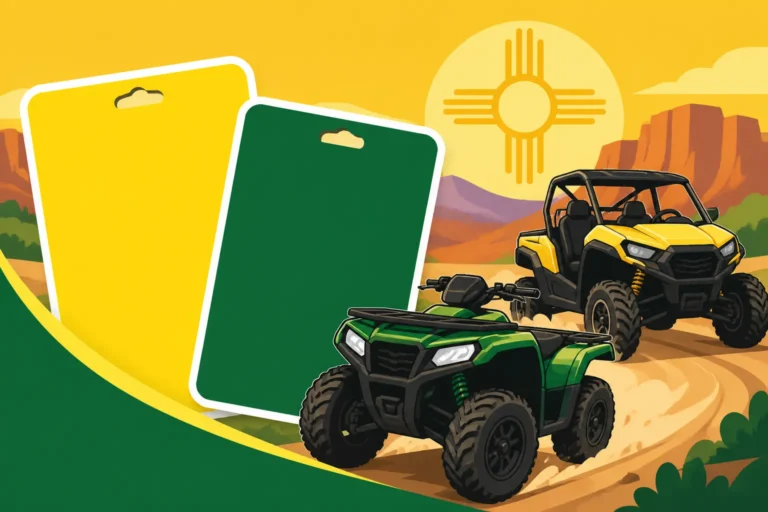
New Mexico has a pretty straightforward system for off-highway vehicles (OHVs), and it primarily involves two types of decals: yellow and green. Each serves a distinct purpose, and understanding them is the first step to proper compliance.
The yellow decal is your standard off-highway registration. If you plan to ride your dirt bike exclusively on designated trails, public lands, or private property where an OHV is allowed, this is the decal you'll have. It signifies that your machine is registered with the state for off-road use, contributing to the upkeep and development of our trail systems. Most dirt bike riders will start here, as the primary use for their machine is, well, off-road. You'll obtain this through the Motor Vehicle Division (MVD), which handles all [New Mexico OHV Registration at MVD] processes.
Then there's the green decal, which is a bit more specialized. This one allows you to legally operate your dirt bike on approved public paved roads within New Mexico, in addition to off-highway areas. Now, it's important to remember that dirt bikes generally have stricter rules about paved road use than ATVs or UTVs, and often don't qualify for the same "street legal" options. However, for those specific situations where a dirt bike might be granted access to a paved road (like crossing a highway or riding a county road where permitted), the green decal would be necessary. For most dirt bikers, though, the yellow decal is the primary focus. Both decals require you to ensure your registration is current, and documents like a bill of sale, perhaps generated using a template from a service like LawDepot, are crucial for both first-time registration and renewals.
Why Decal Placement Matters
You might think, "It's just a sticker, who cares exactly where it goes?" But proper decal placement isn't just about aesthetics; it's a critical part of being a legal and visible rider in New Mexico. There are a few key reasons why getting this right is important.
First and foremost, it's about legality. Law enforcement, whether it's an MVD officer, a county sheriff, or a Forest Service ranger, needs to quickly and easily identify that your dirt bike is properly registered. If your decal is obscured, damaged, or in the wrong spot, it can lead to uncomfortable roadside stops, citations, or even fines. Nobody wants their epic ride cut short by a registration issue! The state has specific rules for [New Mexico OHV Decal Placement Rules] for a reason, and adhering to them shows you're a responsible participant in the OHV community.
Secondly, it contributes to safety and accountability. In the event of an accident or if your dirt bike is stolen, a clearly visible and correctly placed decal makes it easier to track and identify your machine. This helps authorities quickly verify ownership and provides a clear record that you've fulfilled your part in the OHV system. Additionally, the funds generated by these registrations directly support OHV programs, including trail maintenance and safety initiatives, so proper registration—including correct decal placement—helps keep our riding areas open and safe. When you go through the registration process, often with documents you might prepare using tools from LawDepot, you're contributing to this larger ecosystem.
Pinpointing the Decal Spot on Your Dirt Bike
Now for the nitty-gritty: exactly where does that decal go on your dirt bike? Unlike ATVs or UTVs that might have a bit more flat surface to work with, dirt bikes have unique challenges due to their minimalist design and constant movement.
The Official Rule for Dirt Bikes
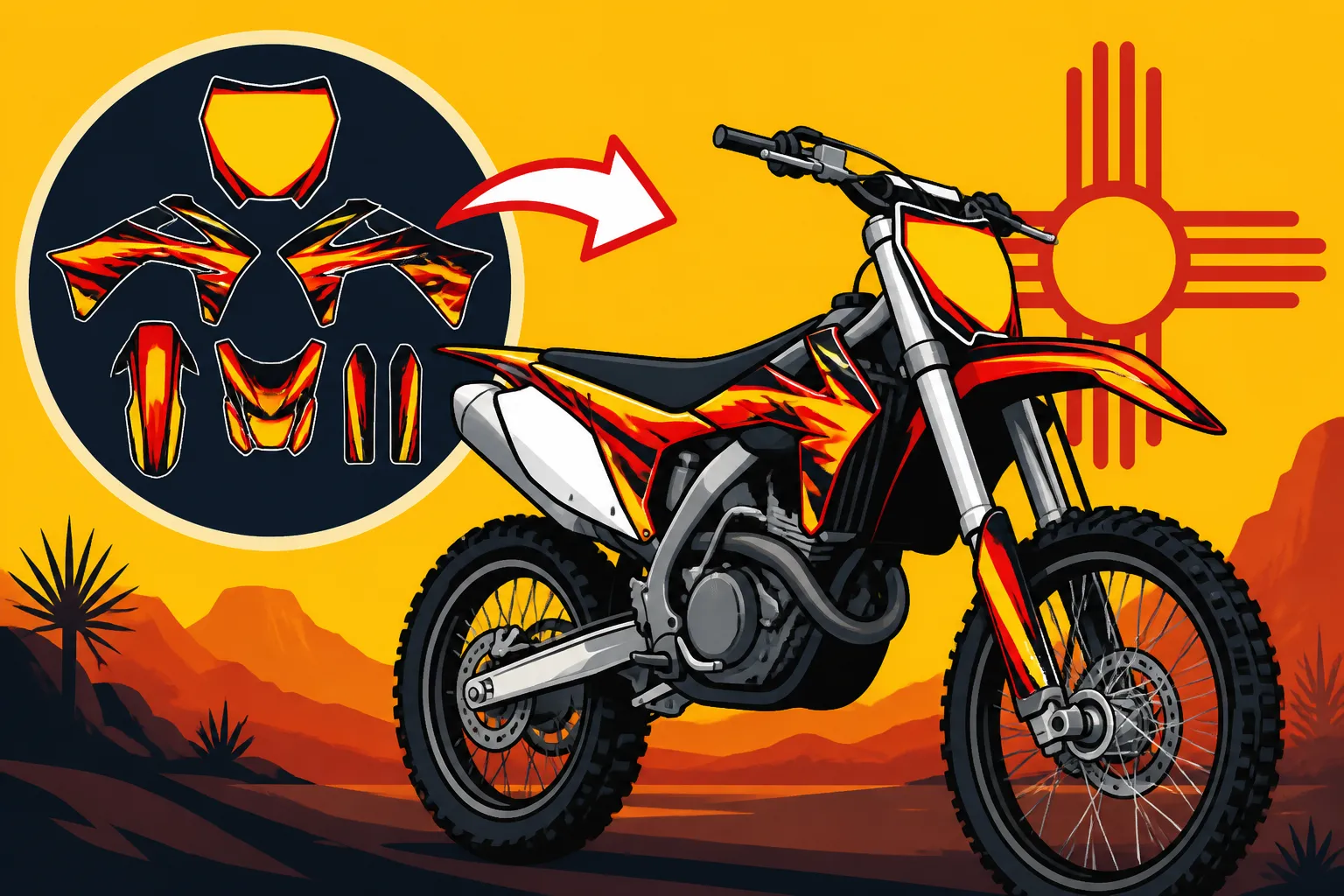
For dirt bikes (which the state often refers to as off-highway motorcycles), New Mexico law specifies a very particular placement for your registration decal. It must be prominently displayed on the left fork leg.
Think about it: the fork leg is usually visible from the front and side, and it's a fairly standardized part of every dirt bike. The "left" part is key here – it's not just any fork leg. This specific location ensures consistency across all off-highway motorcycles, making it easy for rangers and officers to spot the decal without having to search for it. This is why the rules specify [Sticking the Decal on a Dirt Bike's Fork Leg]. Make sure it's facing outwards so it's easily readable. Don't place it on the inside of the fork leg, or somewhere it could be easily obscured by mud or brush.
Practical Tips for Placement
Once you know where it goes, the next step is ensuring it stays there and remains legible. Dirt bikes go through a lot – mud, dust, water, vibrations – so proper application is key.
- Clean the Surface Thoroughly: This is probably the most crucial step. Before you even think about peeling the decal, clean the left fork leg meticulously. Use a degreaser or rubbing alcohol to remove any grease, dirt, or old adhesive residue. The surface needs to be completely dry and free of contaminants for the decal to adhere properly.
- Apply When Warm (But Not Hot): If you're working in freezing temperatures, the decal might not stick well. If it's scorching hot, the adhesive might become too gummy. A moderate temperature, ideally room temperature, is best for application.
- Smooth It Out: Once you've peeled the backing, carefully position the decal on the left fork leg. Start applying from one edge, smoothing it down with your fingers or a squeegee (a credit card works in a pinch) to prevent air bubbles. Work your way across until the entire decal is flat against the fork leg. Trapped air bubbles can lead to peeling later on.
- Consider a Clear Protective Layer (Optional): Some riders choose to put a layer of clear protective film or even a clear epoxy over their decals to give them an extra layer of defense against the elements and trail debris. While not mandatory, it's a good way to extend the life and legibility of your decal. Remember that your [New Mexico OHV Registration Cost] includes the decal itself, so protecting it makes sense.
| Decal Type | Color | Primary Use | Dirt Bike Placement Rule |
|---|---|---|---|
| Off-Highway | Yellow | Exclusive off-road riding on public lands | Left fork leg, visible outward |
| On & Off-Highway | Green | Off-road + approved paved road use (limited) | Left fork leg, visible outward |
Avoiding Common Mistakes and Ensuring Compliance
Even with the best intentions, it's easy to make small errors that can lead to big headaches. Let's look at how to avoid those pitfalls and keep your registration current and your decal visible.
What Happens If Your Decal Isn't Right
Incorrect decal placement, or having a decal that's faded, unreadable, or missing altogether, can result in repercussions. Typically, an officer will first issue a warning, but repeated offenses or clear non-compliance can lead to a citation. The fines for an unregistered OHV or one with an improperly displayed decal can vary, but they're certainly more expensive and inconvenient than taking a few minutes to apply the decal correctly.
Imagine you're out on a fantastic trail in the Carson National Forest, and a ranger stops you for a routine check. If your decal isn't where it should be, or it's so caked in mud it's unreadable, that pleasant interaction can quickly turn into a penalty. It's simply not worth the risk. Always ensure your decal is clearly visible on your dirt bike's left fork leg. This is part of the broader [New Mexico Fines for an Unregistered OHV] enforcement.
Keeping Your Decal in Top Shape
Just because it's stuck on doesn't mean your job is done forever. Decals endure a lot out on the trails. Sun, mud, rocks, and power washers can all take their toll.
Regularly check your decal to ensure it hasn't peeled, faded significantly, or become scratched to the point of being unreadable. If you notice it's starting to lift, you might be able to press it back down, but if it's seriously compromised, it's best to order a replacement. You can typically get a replacement decal through the MVD if yours becomes unreadable or gets lost. This typically incurs a small fee, but it's far better than facing a fine for non-compliance. Think of it like renewing a document generated with a tool like LawDepot – if it's expired or unreadable, it's no longer valid. Don't wait until you're on the trail to discover your decal is unreadable.
Other Registration Necessities
While this guide focuses on decal placement, it's crucial to remember that the decal is just one piece of the registration puzzle. To ride legally in New Mexico, especially on designated public lands, you'll also need:
- A Current Registration Certificate: This is the paper document that proves your dirt bike is registered. Always carry this with you when you ride. You can often access or renew this online, but always have a physical copy on hand.
- Proof of Ownership/Title: When you first register, or if you've recently purchased a used dirt bike, you'll need documents proving ownership, like a title or a bill of sale. Tools from LawDepot can assist in creating or managing these crucial ownership documents for a smooth MVD visit. If you're [Buying a Used ATV in New Mexico], for instance, having these documents in order is paramount.
- Safety Permit (for minors): Riders under the age of 18 need to complete an OHV safety course and carry a safety permit. This is separate from the machine's registration decal but equally important for young riders. This permit is a must-have for [New Mexico Safety Permit for a Minor].
- Non-Resident Permit (if applicable): If you're visiting New Mexico from certain states that don't have their own OHV registration program, you'll need to purchase a New Mexico Nonresident OHV Permit. This is a common requirement for visitors. Always check [New Mexico's Nonresident OHV Permit] rules before you trailer your dirt bike into the state.
Staying compliant with all these requirements ensures that you can fully enjoy the vast and beautiful riding opportunities New Mexico has to offer without any unnecessary interruptions. So, grab that decal, clean that fork leg, and get ready to ride!
Disclaimer
This article is for general informational purposes only and does not constitute professional advice. Laws, prices and regulations vary by location and change over time. Consult a qualified professional for guidance on your specific situation.