What a New Mexico Renewal Costs
Navigating the renewal process for your off-highway vehicle (OHV) in New Mexico can sometimes feel like deciphering a complex trail map, especially when you're trying to pin down the exact costs involved. Many riders are surprised by fees beyond the basic registration, or they simply forget about the biennial nature of renewals, leading to potential late fees. This guide will thoroughly break down what you can expect to pay when it's time to renew your ATV, UTV, dirt bike, or any other OHV in the Land of Enchantment.
The Standard Biennial Renewal Fee in New Mexico
When it comes to keeping your off-highway vehicle legal on New Mexico's public lands and designated trails, the state has a pretty straightforward approach to registration renewal costs. For most recreational riders, the primary fee you'll encounter is for a standard biennial renewal. This means your registration isn't something you handle every single year; instead, it's set up on a two-year cycle. This can be a relief for some, as it reduces the frequency of paperwork and payments, but it also means you need to be mindful of that two-year expiration date.
The fee collected for this standard renewal is designed to be consistent for the vast majority of OHV owners. It covers the administrative costs associated with updating your registration records and issuing a new decal for your machine. Think of it as your passport to continue enjoying the state's incredible landscapes, from the sandy washes of Red Sands to the high mountain trails of the Carson National Forest. This core fee is the baseline for nearly every renewal transaction, ensuring that all registered OHVs contribute to the system that allows us to ride legally and safely.
While the exact figure can shift over time due to legislative changes or administrative adjustments, the state aims to keep this fee accessible for the riding community. It's a critical component of funding for various OHV-related programs and services throughout New Mexico. We'll delve deeper into where this money goes later, but for now, understand that this one main charge covers the bulk of what you'll owe for a typical, on-time renewal. You won't find wildly different prices for different types of recreational OHVs under this standard fee structure, whether you're renewing a heavy-duty side-by-side or a nimble dirt bike.
This standard fee applies whether you're renewing your very first registration or you've been a seasoned rider for years. The purpose is to ensure that every active OHV on the system is current and accounted for. It's not about how old your machine is or how many miles you've put on it; it's about maintaining that official status. Therefore, when you start budgeting for your OHV expenses, this biennial renewal fee should be a consistent line item you prepare for every couple of years.
Understanding the Two-Year Renewal Cycle
Many folks who are new to OHV ownership in New Mexico, or even those who just occasionally hit the trails, might not initially realize that the state operates on a two-year registration cycle for these vehicles. This isn't like your annual car registration; instead, it's a biennial system, meaning "every two years." This setup can sometimes catch people off guard, especially if they're used to yearly renewals for other vehicles, but it's a consistent policy established for all off-highway vehicles in the state. You can learn more about this by checking out [How Long a New Mexico OHV Registration Lasts].
When you first register an OHV, that registration is valid for a full two years from the month it was issued. For example, if you register your machine in June 2024, your registration will typically be valid until June 2026. This two-year window is designed to reduce the administrative burden on both OHV owners and the state's Motor Vehicle Division (MVD), which is the agency responsible for handling these registrations. It means you have a bit more breathing room between renewal periods, giving you more time to enjoy your machine without constantly worrying about upcoming deadlines.
However, this biennial cycle also means you need to be diligent about marking your calendar or setting reminders. It's easy for two years to fly by, and suddenly you might find your registration has expired. The MVD typically sends out renewal notices, but it's always the owner's responsibility to ensure their OHV remains properly registered. Missing a renewal deadline can lead to complications, including potential late fees or even fines if you're caught riding on an expired registration. So, while the longer cycle is convenient, it requires a proactive approach to avoid unnecessary hassles. [When a New Mexico OHV Registration Expires] is a good read if you want to dive deeper into those dates.
This two-year structure also simplifies budgeting for many riders. Instead of a smaller, annual fee, you're looking at a single fee that covers a longer period. This might appear as a larger one-time expense, but over time, it evens out to the same cost, or sometimes even less, than if you had to pay annually with separate administrative charges each time. Knowing that you'll pay the standard renewal fee every other year allows you to plan accordingly, setting aside funds to ensure your machine is always street legal and ready for the trail.
Factors That Can Influence Your Renewal Cost Beyond the Basic Fee
While the biennial renewal fee is the main cost you'll encounter, there are several other factors and potential situations that can influence the total amount you end up paying when renewing your OHV registration in New Mexico. It's not always just a simple, single payment, and being aware of these possibilities can save you from surprises down the road.
One of the most common additional costs is a late fee. New Mexico's MVD has specific regulations regarding renewals, and if you miss your designated renewal window, you might be assessed an additional charge. This late fee is designed to encourage timely renewals and ensure that the state's registration records are kept current. It's a penalty for administrative oversight, not for riding unregistered, though riding unregistered carries its own, much higher penalties. The amount of a late fee can vary, but it's always more than the cost of simply renewing on time. This is why it’s so important to keep track of your expiration date, perhaps by noting it on your calendar or setting up digital reminders. Missing it can turn a straightforward renewal into a more expensive chore. To avoid this, make sure you know [New Mexico OHV Registration Late Fee] details.
Another factor that could affect your total cost is the need for a replacement decal. The state issues a physical decal that must be prominently displayed on your OHV. Over time, these decals can get worn, faded, damaged, or even lost due to rough riding conditions, weather exposure, or unforeseen incidents. If your decal is no longer legible or is missing, you'll need to request a replacement, which comes with its own separate fee. This fee covers the cost of printing and issuing a new decal and updating your records to reflect the change. While it’s usually a nominal amount, it adds to your total renewal expense. Keeping your decal protected and checking its condition periodically can help you avoid this extra charge.
Furthermore, if there have been any changes to your vehicle's information that require an update to the registration, such as modifications that change its classification (though less common for renewals), or if you're [Renewing on a Change of Ownership in New Mexico], there might be administrative fees associated with processing these updates. While the standard renewal form is usually simple, complex changes might involve extra steps or documentation, which could, in rare cases, trigger additional minor charges. Always be transparent and thorough when providing information to the MVD to avoid any potential complications or future issues with your registration.
Why Your Decal Type Might Affect Renewal Considerations
In New Mexico, not all OHV decals are created equal, and understanding the differences, particularly between the yellow and green decals, can impact your renewal considerations, even if the base fee remains consistent. The state has specific rules about where and how you can ride, and your decal color signifies the permissions your machine has.
The most common decal you'll encounter for pure off-highway riding is the yellow decal. This yellow decal signifies that your machine is registered for use exclusively on designated off-highway trails, areas, and roads where OHV use is permitted. When you renew with a yellow decal, the process is generally quite straightforward, as you're simply maintaining your status as a trail-only rider. There are no additional fees tied directly to the color of this decal during a standard renewal, as it doesn't grant you any special access to paved public roads. For more info, check out [New Mexico's Yellow Off-Highway Decal].
However, some riders choose to obtain a green decal, which provides broader access. The green decal, often referred to as the "on and off-highway" decal, allows your registered OHV to be operated on certain paved county and city roads where local ordinances permit it. This expanded privilege comes with additional requirements beyond just the decal, such as specific equipment (headlights, taillights, mirrors, etc.) and, crucially, liability insurance that meets state minimums for motor vehicles. While the renewal fee itself for the green decal is typically the same as the yellow, the underlying requirements can influence your overall costs.
For instance, if you're renewing a green-decaled OHV, you absolutely must maintain proof of the required liability insurance. While the insurance premium itself isn't a direct part of your MVD renewal cost, it's a mandatory expense for anyone opting for the green decal privileges. If you let your insurance lapse, or if you don't provide proof when asked (which MVD might request, especially if there's a system update), you could face issues with your renewal or even penalties for operating without insurance on paved roads. So, while the MVD only charges the biennial fee, the green decal effectively obligates you to a continuous insurance cost, which is a significant part of the financial consideration for those wanting to use paved roads. [New Mexico's Green On and Off-Highway Decal] goes into more detail.
Therefore, while the direct fee you pay to MVD for either a yellow or green decal renewal might be identical, the choice of decal implicitly dictates other financial obligations, namely insurance, for those who wish to leverage the green decal's expanded privileges. Always consider the total picture of costs and responsibilities associated with your chosen decal type when planning your OHV budget.
The Renewal Process and Associated Paperwork
Renewing your OHV registration in New Mexico is a process managed primarily through the Motor Vehicle Division (MVD). Understanding the steps involved and the paperwork you'll need can make the experience smoother and help you avoid any unexpected delays or additional costs. The goal is to make sure your records are up-to-date and your machine is legally recognized for another two years. For a comprehensive look, consider [Renewing a New Mexico OHV Registration].
Typically, the MVD will send out a renewal notice to the address on file a few weeks or months before your current registration is set to expire. This notice is a helpful reminder and often includes information specific to your vehicle, such as the expiration date and the amount due. It's crucial to ensure your address with the MVD is current, as missing this notice can lead to inadvertent late renewals. If you move, promptly update your address with the MVD to ensure you receive all official communications.
When you go to renew, whether in person, online, or by mail, you'll generally need your current registration certificate or the renewal notice. The MVD will confirm your vehicle's identification number (VIN) and your personal information. If you have a green decal and plan to continue riding on paved roads, you might also be required to provide proof of current liability insurance. This isn't always asked for every single time, but it's best practice to always have it ready, just in case. Keeping good records of your initial purchase, title, and previous registrations, perhaps using a tool like LawDepot for organizing important documents, can be extremely helpful during this process.
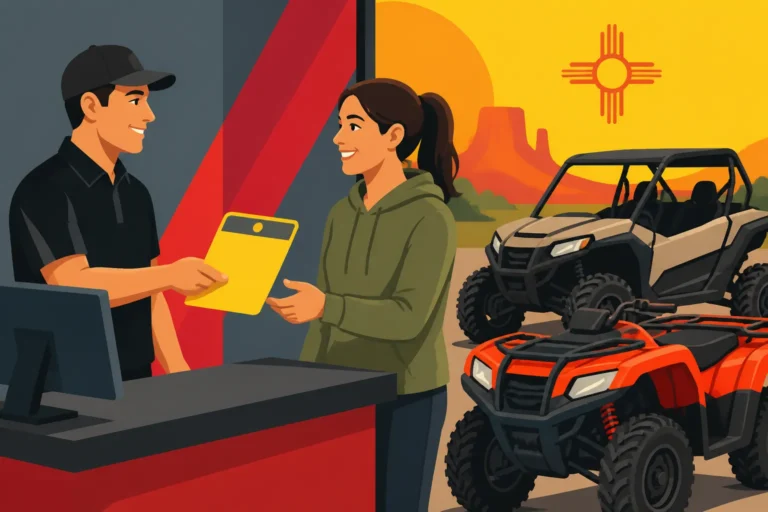
The actual payment of the biennial renewal fee can usually be made using various methods, including cash, check, or credit/debit card, depending on the MVD office or online portal you're using. Once the payment is processed and all requirements are met, the MVD will issue you a new registration certificate and a fresh decal. This new decal is critical; it proves your registration is current and must be affixed to your OHV according to state guidelines. Always double-check that the new decal reflects the correct expiration date and matches your vehicle's information. A quick guide on [What MVD Asks For at a Two-Year Renewal] can clarify the required items.
Potential Additional Costs and Avoiding Penalties
Beyond the standard renewal fee and the considerations for decal types, there are several other potential costs that OHV owners in New Mexico might face, largely tied to non-compliance or specific circumstances. Being aware of these can save you a significant amount of money and stress.
One of the most impactful additional costs comes from failing to renew your OHV registration altogether, or riding an OHV that has never been registered. While the late fee for an overdue renewal is one thing, the fines for operating an unregistered OHV on public land or designated trails are far more substantial. Law enforcement officers, whether from the Department of Game and Fish, BLM, Forest Service, or local police, regularly check for current registrations. If you're caught riding without a valid, current registration decal, you can expect a hefty fine. These penalties are designed to be a strong deterrent, emphasizing the state's commitment to having all OHVs accounted for and contributing to the system. Understanding [New Mexico Fines for an Unregistered OHV] is crucial.
Another less direct but very real cost can arise from legal issues if you're involved in an accident while riding an unregistered OHV. Even if you aren't at fault, operating an unregistered machine can complicate insurance claims and legal proceedings, potentially leading to greater financial liability. It's a risk that far outweighs the cost of a simple biennial renewal. Imagine dealing with vehicle repairs, medical bills, and legal fees, all compounded by the fact that your machine wasn't properly registered. This scenario highlights why consistent compliance is not just about avoiding fines, but about protecting yourself financially.
Finally, while not a direct MVD cost, there can be expenses related to ensuring your OHV meets all other state requirements for operation. For example, if your machine is excessively loud, you might need to invest in a new muffler or spark arrestor to avoid noise violations, which can also carry fines. Similarly, if you choose the green decal for paved road use, you'll need functional headlights, taillights, and mirrors, and the cost of installing or maintaining these can add up. These are not renewal fees, but they are necessary expenses to legally operate your OHV, and neglecting them can lead to penalties that quickly outpace the cost of the renewal itself.
Where Your Renewal Fees Go
It's natural to wonder where your hard-earned money goes when you pay for your OHV registration renewal in New Mexico. Rest assured, these fees aren't just disappearing into a generic state fund. Instead, they are specifically earmarked and dedicated to improving the OHV riding experience across the state, ensuring that the trails and resources we all enjoy are maintained and expanded.
A significant portion of your renewal fees, along with initial registration fees, is directed towards the New Mexico Department of Game and Fish (NMDGF). This agency plays a crucial role in overseeing OHV recreation, safety, and enforcement within the state. The funds help support various programs, including the development and maintenance of OHV trails. This means that when you pay your renewal fee, you're directly contributing to the upkeep of the very trails you ride, preventing erosion, clearing debris, and ensuring they remain accessible and safe for everyone. Without these funds, many of our favorite riding areas would quickly fall into disrepair.
Beyond trail maintenance, these funds also support vital safety and education initiatives. The NMDGF uses a portion of the fees to develop and implement OHV safety courses, particularly for younger riders, and to produce educational materials that promote responsible riding practices. This includes programs that teach proper etiquette, environmental awareness, and how to safely operate various types of OHVs. By fostering a culture of safety and responsibility, these initiatives help reduce accidents and ensure the long-term sustainability of OHV recreation in New Mexico.
Furthermore, a portion of the fees helps fund law enforcement patrols on OHV trails and in designated riding areas. These patrols ensure that riders are complying with state laws, including registration requirements, safety equipment rules, and environmental regulations. This enforcement helps protect both riders and the natural resources of New Mexico. It also addresses issues like illegal riding, which can damage sensitive ecosystems and create conflicts with other land users. In essence, your renewal fee helps ensure that there are dedicated resources to manage and protect the OHV recreation opportunities that make New Mexico such a fantastic place to ride. For more detail on these dedicated funds, check out [Where New Mexico OHV Fees Go].
| Item | Description | Cost Impact | Frequency |
|---|---|---|---|
| Standard Biennial Renewal Fee | The base charge for a two-year OHV registration renewal. | Primary, expected cost. | Every two years. |
| Late Fee | Assessed if renewal is not completed by the expiration date. | Additional, avoidable cost. | If renewal is late. |
| Replacement Decal Fee | Required if your current decal is lost, stolen, or unreadable. | Additional, avoidable cost. | As needed. |
| Liability Insurance | Mandatory for green decal holders (paved road use). | Ongoing, indirect cost (not paid to MVD). | Monthly/Annually (part of owning a green decal). |
| Unregistered OHV Fine | Penalty for operating an OHV without valid registration. | Significant, avoidable penalty. | If caught riding unregistered. |
| Equipment Upgrades | Costs for required items (lights, mirrors, etc.) for paved road use. | Periodic, indirect cost. | As needed, for green decal compliance. |
| Safety Course Fee (Youth) | Cost for minors to obtain a safety permit, if applicable. | Occasional, indirect cost (not MVD renewal fee). | One-time for permit, if required. |
Ultimately, the biennial renewal fee you pay is an investment in the future of OHV riding in New Mexico. It directly supports the infrastructure, safety, and oversight necessary to keep our trails open and enjoyable for generations of riders to come. When you see a well-maintained trail, know that your contribution, along with thousands of other riders, helped make that possible.
Disclaimer
This article is for general informational purposes only and does not constitute professional advice. Laws, prices and regulations vary by location and change over time. Consult a qualified professional for guidance on your specific situation.