Registering an Electric Machine in New Mexico
It can feel like a whole new world when you're looking at an electric off-highway vehicle (OHV) – they're quiet, emissions-free, and feel a bit futuristic. But many folks get tripped up thinking these modern marvels might be exempt from the usual red tape. The truth is, whether your machine hums or roars, New Mexico has clear rules for getting it properly registered. This guide will walk you through everything you need to know about registering your electric ATV, UTV, or dirt bike in the Land of Enchantment, ensuring you're ready to hit the trails legally and without a hitch.
The Basics: Why Even Electric OHVs Need Registration in New Mexico
When you think of an ATV or UTV, your mind probably conjures images of gas-guzzling engines kicking up dust. But the world of off-roading is evolving, and electric machines are becoming increasingly popular for their quiet operation and instant torque. However, a common misconception is that because they're electric, they might somehow be in a different category or even exempt from registration requirements. That's just not the case here in New Mexico. The state's OHV laws are comprehensive, covering all types of off-highway vehicles, regardless of their power source.
Understanding New Mexico's Broad OHV Definition
New Mexico's definition of an off-highway vehicle is quite broad, and it intentionally encompasses a wide variety of machines designed for off-pavement use. It doesn't discriminate based on whether the engine is internal combustion or an electric motor. If it's designed to be ridden off public roads, on land like that managed by the Bureau of Land Management (BLM) or in national forests, it falls under the OHV umbrella. This means that your sleek new electric UTV, even if it's practically silent, needs to be registered just like its gasoline-powered counterparts. The intent of the law is to ensure that all machines using public lands are accounted for, contribute to trail maintenance, and adhere to safety standards, not just those that make a lot of noise. Ignoring this crucial step can lead to fines and a lot of frustration when you're pulled over by a ranger.
It’s easy to assume that because an electric machine is environmentally friendly, it might get a pass. But think about it from the perspective of land management and public safety. Registration helps fund trail systems, facilitates identification in case of an accident or theft, and ensures compliance with broader OHV regulations. So, while your electric machine might not leave a carbon footprint, it still leaves a trail, and that trail needs to be recognized by the state. You'll find that [Registering an OHV in New Mexico] covers many of these fundamental principles.
The MVD's Role in Electric OHV Registration
In New Mexico, the Motor Vehicle Division (MVD) is the agency responsible for handling all off-highway vehicle registrations. This includes your electric machine. They don't have a separate department or process specifically for electric OHVs; it's all streamlined under their general OHV registration system. This is actually a good thing because it simplifies the process rather than creating a whole new set of rules you'd have to learn. Whether you're registering a dirt bike, a quad, or a side-by-side, if it's an OHV, you'll be working with the MVD.
The procedures, the forms, and even the fees are generally consistent across all OHV types. This means that if you've registered a gas-powered machine before, much of the experience will feel familiar. The MVD's role is to ensure proper titling, collect the necessary information, and issue the decals that prove your machine is legally registered for use on approved public lands. Don't worry about trying to find a special "electric vehicle desk" at the MVD; just head to the regular OHV counter. If you're curious about the MVD's overarching involvement, take a look at [Why MVD Registers New Mexico OHVs].
Essential Paperwork and Steps for Your Electric Machine
Registering any vehicle can feel like a mountain of paperwork, and electric OHVs are no exception. But with a bit of preparation, you can make the process smoother and avoid multiple trips to the MVD. Having all your ducks in a row before you go is key.
Proving Ownership: Title, Bill of Sale, and VIN Verification
The absolute cornerstone of registering your electric OHV is proving that you are the rightful owner. For brand new machines purchased from a dealer, this usually means having the manufacturer's Certificate of Origin (MCO) or the original title, signed over to you. If you're buying a used electric OHV in a private sale, you'll need a properly executed title from the previous owner, along with a bill of sale. A bill of sale is crucial, especially for private transactions, as it establishes the transfer of ownership, the purchase price, and the date of sale. Sometimes, people overlook the importance of a detailed bill of sale for OHVs, but it protects both the buyer and the seller. You can find reliable templates for this online from resources like LawDepot, which can help ensure you don't miss any critical details.
Beyond the ownership documents, your electric OHV will need a Vehicle Identification Number (VIN), just like any other motor vehicle. This VIN is usually stamped on the frame in an accessible location, often near the steering column or on a frame rail. The MVD will need to verify this VIN to match it with your ownership documents and prevent fraud. Sometimes, for older machines or those brought from out-of-state, a VIN inspection might be required by a certified inspector or an MVD agent. Don't underestimate the power of a clear [New Mexico ATV Bill of Sale Requirements] in this process.
The Application Process at the MVD
Once you have your ownership documents squared away and your VIN located, it's time to tackle the application itself. You'll typically need to fill out an application form for OHV registration, which you can often download from the MVD website beforehand, saving you time at the office. Along with this form, you'll present your title or MCO, your bill of sale, and a valid form of identification. If you're registering an out-of-state machine, you might also need proof of prior registration in that state, even if it didn't have a formal registration program.
The MVD will review your paperwork, verify the VIN, and process your payment for the registration fees. Keep in mind that a first-time registration often costs a bit more than a renewal because it involves the initial setup of your vehicle's record in the system. After everything is approved, you'll be issued your registration card and the all-important decal, which serves as your proof of registration. Remember, a clear paper trail is your best friend when dealing with government agencies. You can learn more about this general process in [New Mexico OHV Registration Paperwork].
Unique Considerations for Electric OHVs in New Mexico
While the core registration process is largely the same for all OHVs, there are a few nuances that electric machine owners might want to keep in mind, particularly regarding decals and paved road use. These aren't necessarily "electric-specific" rules, but rather common questions that come up due to the unique characteristics of electric vehicles.
Decals and Placement for Electric Machines
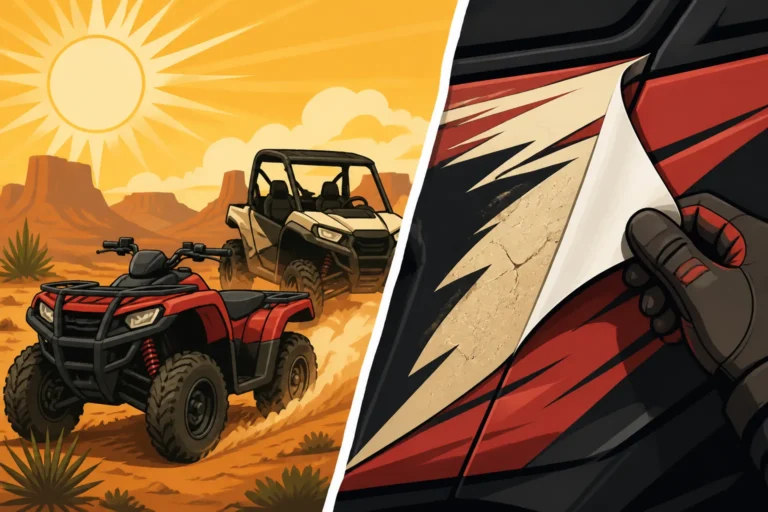
New Mexico uses a distinctive decal system for its OHVs: a yellow decal for strictly off-highway use and a green decal for machines that are approved for both on and off-highway travel. Your electric machine will need one of these decals, depending on how you intend to use it. The quiet nature of an electric motor might make you think the decals are less critical, but they are your visible proof of registration to law enforcement and land managers. They signify that you've paid your fees and that your machine is legally allowed on designated OHV trails.
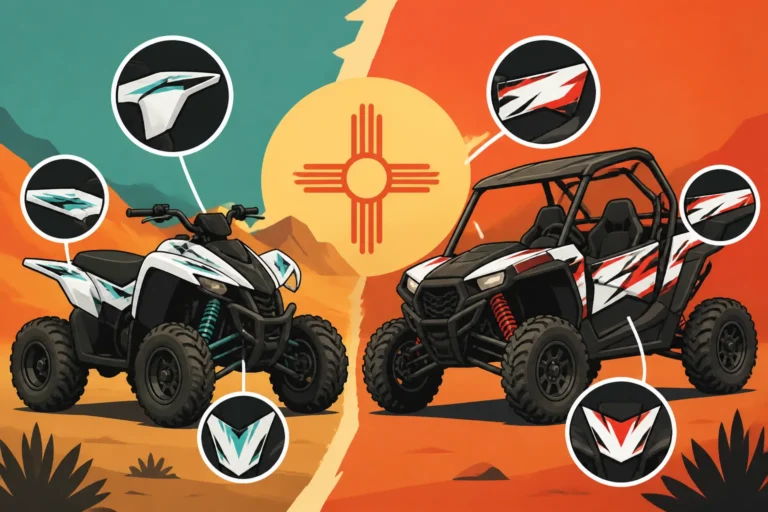
The placement of these decals is specific to the type of machine, not its power source. For an electric ATV, the decal generally goes on the left rear fender. For an electric side-by-side (ROV/UTV), it's typically placed on the left rear quarter panel. If you have an electric dirt bike, the decal will be affixed to the left fork leg. These placements are designed for easy visibility for officials checking compliance on trails or at staging areas. It's not just about having the decal; it's about having it correctly displayed. For more details on where yours should go, check out [New Mexico OHV Decal Placement Rules] and [New Mexico's Yellow Off-Highway Decal].
Paved Road Use and Electric OHVs
One of the biggest questions electric OHV owners have is about riding on paved roads. Because electric machines are so quiet and smooth, some owners might assume they have more leeway on pavement than a roaring gas-powered ATV. However, New Mexico's rules for paved road use apply equally to electric and gasoline OHVs. Generally, OHVs, regardless of their power source, are intended for off-highway use.
If you wish to legally operate your electric OHV on designated paved public roads (where permitted by local ordinances), you will need to meet additional requirements. This typically includes obtaining a special paved road plate from the MVD, carrying specific liability insurance coverage, and ensuring your machine has the necessary safety equipment like headlights, taillights, mirrors, and a horn. You'll also need a valid driver's license. The state makes no distinction between an electric or gas engine when it comes to these requirements; the focus is on the machine's classification as an OHV and its suitability for street travel. It's vital to understand [New Mexico's Green On and Off-Highway Decal] if you plan to venture onto pavement.
Common Roadblocks and How to Overcome Them
Even with the best intentions, you might run into a snag or two when trying to register your electric OHV. From missing paperwork to classification confusion, these challenges are common, but they're usually surmountable with a bit of persistence and the right information.
Dealing with Missing or Incomplete Documentation
One of the most frequent headaches people encounter is missing or incomplete documentation, especially when buying a used electric OHV in a private sale. What if the previous owner lost the title? Or what if you only have a flimsy handwritten bill of sale that lacks critical details? These situations can throw a wrench into your MVD visit. Without a clear chain of ownership, the MVD simply can't process your registration, as they need to establish who legally owns the vehicle.
If you find yourself in this predicament, don't despair. If the title is missing, you might be able to apply for a duplicate title if you can contact the previous owner. If the bill of sale is inadequate, reaching out to the seller for a more comprehensive one is often the first step. For private sales, having a robust, legally sound bill of sale is paramount. Using a service like LawDepot to generate a formal [A New Mexico Bill of Sale for an ATV] can save you a lot of trouble by ensuring all necessary information and legal clauses are included, proving proper transfer of ownership. In some cases, if the machine is very old or the original owner is untraceable, you might have to explore alternative methods, like a surety bond, which is a more complex process designed to protect the state and future owners.
Clarifying Machine Classification and Safety Standards
Sometimes, the lines can blur, especially with electric machines. Is it a golf cart? A low-speed vehicle? Or a bona fide off-highway vehicle? This confusion can arise because some electric machines are designed for very specific, limited uses, while others are built for rugged trail riding. The MVD relies on the manufacturer's classification and features to determine if a machine qualifies as an OHV. If your electric vehicle truly functions and is marketed as a golf cart for instance, it might fall under different regulations entirely.
Beyond classification, some machines, particularly those intended for paved road use, must meet certain safety standards. This isn't about the engine type, but about features like headlights, taillights, brake lights, turn signals, and mirrors. While not typically a requirement for pure off-road electric OHVs, it becomes critical if you intend to get a paved road plate. Ensure your electric machine meets the minimum equipment requirements if you plan to utilize the paved road opt-in. It’s always best to be sure of your machine’s classification before heading to the MVD, as it directly impacts what forms you need and what decals you'll receive.
Here’s a quick overview of what you’ll generally need for new vs. used electric OHV registration:
| Item | New Electric OHV (Dealer Purchase) | Used Electric OHV (Private Sale) |
|---|---|---|
| Proof of Ownership | Manufacturer's Certificate of Origin (MCO) | Signed-over Title (from previous owner) |
| Bill of Sale | Dealer's Purchase Agreement | Comprehensive Bill of Sale (LawDepot recommended) |
| Identification | Valid Driver's License or State ID | Valid Driver's License or State ID |
| VIN Verification | Usually done by dealer | MVD agent or certified inspector (may be required) |
| Application Form | MVD OHV Registration Application | MVD OHV Registration Application |
| Fees | Initial registration fees | Initial registration fees (might differ slightly) |
| Insurance | Not typically required for off-road use | Not typically required for off-road use |
| Paved Road Plate | Optional, additional requirements | Optional, additional requirements |
Disclaimer
This article is for general informational purposes only and does not constitute professional advice. Laws, prices and regulations vary by location and change over time. Consult a qualified professional for guidance on your specific situation.