Stopping Before You Enter a New Mexico Roadway
It's a familiar scenario for many off-highway vehicle (OHV) enthusiasts in New Mexico: you're cruising down a dusty two-track, enjoying the wide-open spaces, when suddenly you see the edge of a paved county road. That moment of transition, from dirt to asphalt, is where a lot of riders make a critical mistake that can lead to anything from a hefty fine to a serious accident. This guide is all about navigating that crucial intersection safely and legally, focusing specifically on the non-negotiable requirement to come to a complete and undeniable stop before you ever put a tire on a New Mexico roadway.
The Critical Importance of a Full Stop
Let's be honest, we've all done it – that little rolling stop, a quick glance, and then you're on your way. Out on the open trail, it might seem harmless. But when you're transitioning onto a public road in New Mexico, especially with an ATV or UTV, that "rolling stop" is not just poor practice; it's a dangerous gamble with serious legal and safety implications. The law is clear, and for good reason.
Why "Rolling Stops" Won't Cut It in New Mexico
New Mexico's traffic laws, like most states, are designed to ensure safety at intersections and points of entry onto public roadways. For OHVs, which might not be as visible or as quick to accelerate as a passenger car, these rules are even more stringent and important. A "rolling stop" implies you're still moving, even slowly. This means you haven't given yourself, or more importantly, other drivers, the full opportunity to assess the situation. You might think you've seen everything, but that split second you save by not stopping fully could be the difference between a clear path and a fast-approaching vehicle you didn't quite spot. This isn't just about avoiding a ticket; it's about avoiding a catastrophic incident. Your machine, whether it's a quad, a side-by-side, or a dirt bike, needs to be absolutely stationary before you proceed.
Safety First: Preventing Collisions at Intersections
The primary reason for a full stop is, without a doubt, safety. When you pull up to an intersection where a dirt path meets a paved road, you're not just dealing with other vehicles; you're often dealing with varying road conditions, blind spots, and the unexpected. Imagine a family car coming over a rise on the paved road, or a semi-truck rounding a bend. They're likely traveling at higher speeds, and they might not be expecting an OHV to suddenly appear from a dirt access point. A full stop gives you the time to look both ways, listen for traffic, and make eye contact with drivers if necessary. It allows you to confirm that the intersection is truly clear before you commit your machine to crossing or merging. It’s about putting yourself in the best possible position to react to the unpredictable nature of road traffic, and ensuring everyone goes home safe.
Legal Ramifications of Failure to Stop
Beyond the paramount concern for safety, failing to come to a complete stop carries significant legal consequences. In New Mexico, OHVs operating on designated paved roads are subject to the same traffic laws as any other motor vehicle. That means if a law enforcement officer observes you performing a rolling stop or blowing through a stop sign, you're looking at a traffic citation. These fines can be substantial, and accumulating points on your driving record is never fun. More critically, if an accident occurs because you failed to stop, you could be found entirely at fault, leading to severe penalties, lawsuits, and significantly higher insurance rates. Think about it: a moment of impatience could cost you thousands in legal fees, repairs, and medical bills, not to mention the potential for injury or worse. It’s simply not worth the risk. [New Mexico Fines for Illegal Road Riding] are no joke, and they often extend to violations like this.
Understanding New Mexico's "Stop" Requirement for OHVs
Riding an OHV on a public road in New Mexico isn't like riding on private land or a dedicated trail system. You're entering a realm with established rules, and understanding what the law actually expects of you is crucial. It’s not just about stopping; it’s about how and where you stop.
What Constitutes a Complete Stop?
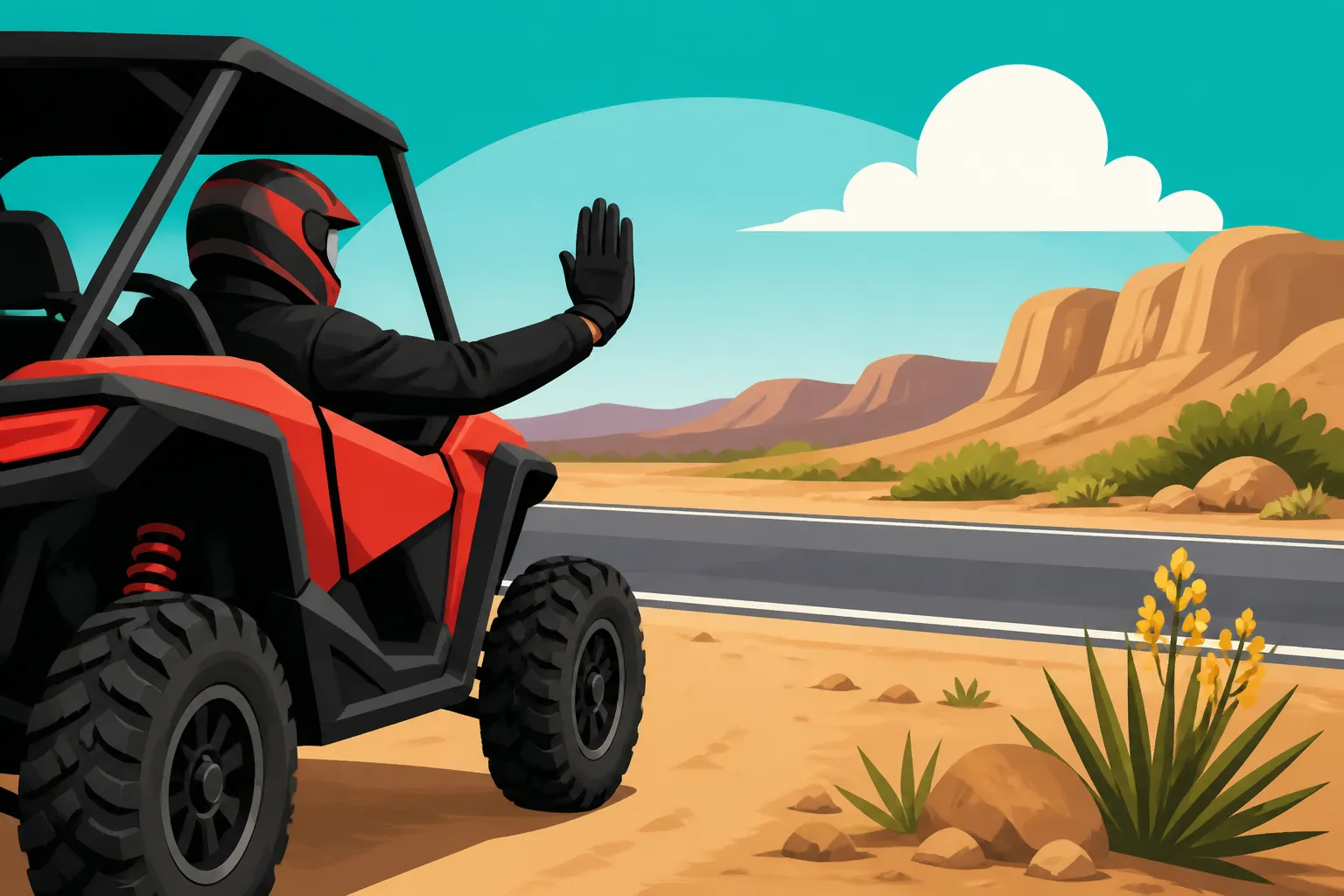
This might seem obvious, but there's a nuanced definition of a "complete stop" in traffic law. It means your vehicle must cease all forward motion. Your wheels should not be turning, even imperceptibly. The vehicle should be completely motionless for a discernible period – usually interpreted as at least one full second. This isn't just a tap of the brakes; it's a full pause. When you approach a stop sign or a marked stop line, your front tires should ideally be just behind that line. If there's no line, you stop before entering the crosswalk. If there's neither, you stop before entering the intersection, at a point where you have a clear view of oncoming traffic without obstructing it. Taking that extra second to truly halt your machine, assess your surroundings, and then proceed is exactly what the law demands and what common sense dictates.
Identifying Stop Signs and Traffic Signals for OHVs
Out in the wilderness, signs might be rustic or non-existent. On New Mexico roads, however, you'll encounter standard traffic control devices. This includes the familiar red octagonal STOP signs, yield signs, and traffic signals (red, yellow, green lights). As an OHV rider, you must obey these signs and signals precisely as a car driver would. This means if the light is red, you stop. If there's a stop sign, you stop completely. Ignoring these not only puts you at risk but also reinforces negative stereotypes about OHV riders being reckless or disrespectful of public roadways. Remember, you're an ambassador for the entire OHV community when you're on public roads. Proper adherence to these basic traffic controls is fundamental to everyone's safety and to the continued acceptance of OHVs on certain public thoroughfares.
The Perpendicular Crossing Rule and Its Application
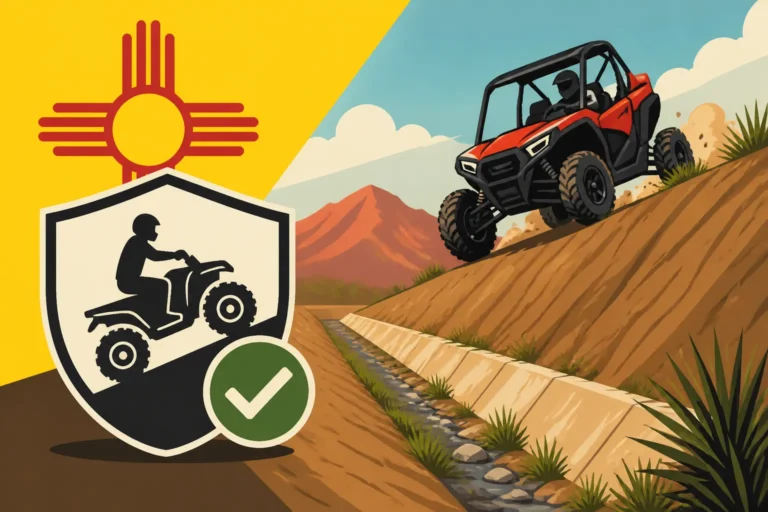
New Mexico has a specific rule regarding how OHVs may cross a paved road. It's often referred to as the "perpendicular crossing rule," and it's a vital piece of the puzzle for safety. This rule dictates that if you're crossing a paved road where OHVs are generally restricted from riding on the pavement for extended distances, you must cross the roadway at as close to a ninety-degree angle as possible. This minimizes your time on the paved surface and reduces the risk of being struck by oncoming traffic. You can't just meander diagonally across the road.
Furthermore, this rule is often paired with the requirement that you must first come to a complete stop before initiating the crossing. So, you pull up, come to a full stop, scan for traffic, and then, when it's absolutely safe, you proceed directly across to the other side at a right angle. This isn't just a suggestion; it's a legal requirement that helps streamline OHV movement and enhance safety on shared roadways. Familiarize yourself with [New Mexico's Perpendicular Crossing Rule] before heading out.
Navigating Different Roadway Types
New Mexico offers a diverse landscape, and with it comes a variety of road types you might encounter while riding your OHV. From remote county roads to bustling city streets, the rules for interaction with each can vary slightly, but the fundamental requirement for a full stop remains constant. Understanding these distinctions is key to a smooth and legal ride.
Entering Paved State or County Roads
The moment your tires leave the dirt and touch asphalt, you're subject to a different set of rules. State highways in New Mexico are generally off-limits for OHVs, except for specific crossings or designated segments. County roads, however, can often be open to OHV use, especially in counties that have passed ordinances allowing it. But regardless of whether it's a county road or a rare legal crossing of a state route, the protocol is the same: stop, look, and listen.
You need to treat every entry onto a paved road as a serious maneuver. Cars travel at higher speeds, and the surfaces are unforgiving. Ensure your OHV is properly registered and equipped for road use, if applicable, with things like adequate lighting and mirrors. [New Mexico Equipment Rules for Road Use] are in place for a reason. Imagine you're riding a powerful SuperATV UTV that's built for rugged trails; it might feel invincible off-road, but on pavement, you're sharing space with much larger and faster vehicles. Come to a full stop well before the edge of the pavement, ensure absolutely no traffic is approaching, and then proceed with caution.
Crossing Intersections with Through Traffic
Intersections with through traffic are arguably the most dangerous points for OHVs. These are spots where vehicles on the paved road have the right-of-way, and you, coming from a stop sign or a dirt track, must yield. This is where patience is not just a virtue, but a necessity. Don't rush it. Don't assume drivers see you.
Even if you're legally riding on a designated county road, when you come to a four-way stop or a controlled intersection, you must follow the same rules as any car. This means stopping completely behind the stop line, waiting your turn, and proceeding only when it is safe to do so, yielding to any traffic already in the intersection or approaching from an uncontrolled direction. For complex intersections, sometimes it's better to wait for a significant gap in traffic, even if it means waiting longer, rather than trying to squeeze through. Your machine's acceleration might be great on the trail, but it's not always a match for a quick-moving car on pavement.
Special Considerations for City Streets and OHV-Friendly Towns
Some New Mexico towns, like the popular Red River, have specific ordinances that allow OHVs on certain city streets. This is fantastic for riders, but it comes with its own set of responsibilities. Even in these OHV-friendly zones, standard traffic laws apply, including coming to a full stop at stop signs and obeying traffic signals.
In towns like Red River, you might see many other OHVs, which can create a sense of camaraderie, but it doesn't exempt you from the rules. In fact, it makes it even more important to be vigilant, as there will be more pedestrians, other OHVs, and traditional vehicles sharing the same space. Always [Stopping Fully Before You Cross the Asphalt] is paramount. These towns often have specific hours or routes where OHVs are permitted, so know the local rules. Getting a ticket in a vacation town for a simple rolling stop can quickly sour your trip. Always remember that even if the town is welcoming to OHVs, you're still expected to be a responsible road user. [New Mexico Rules for Riding a City Street] can vary from town to town, so always check local ordinances.
Equipping Your OHV for Roadway Use and Safety
While coming to a full stop is a behavioral requirement, your machine itself needs to be up to par for safe and legal operations on New Mexico roadways. Just because you can take your OHV on certain paved roads doesn't mean you should without proper preparation and equipment. Safety isn't just about what you do, but what your machine can do.
Essential Lighting and Visibility Gear
One of the biggest differences between off-road and on-road riding is visibility. On the trail, you're often seen or heard long before you're in close proximity to others. On a paved road, especially at dawn, dusk, or night, your OHV can be much harder to spot by other drivers. This is why proper lighting is non-negotiable. New Mexico law requires specific lighting for OHVs operating on public roads, including headlights that illuminate at least 150 feet ahead and taillights visible from at least 200 feet away.
Many stock OHVs might not meet these minimums, or their lights might be geared more towards trail riding than road visibility. Consider upgrading to brighter LED lights, adding auxiliary running lights, or even a light bar (used responsibly and covered when not in use on public roads). Reflectors on your machine are also a good idea. Investing in high-visibility clothing for yourself and any passengers is another smart move. The more visible you are, the safer you'll be, especially when you're stopped and waiting to enter a busy roadway. [New Mexico Headlight and Taillight Rules] are there to keep you safe.
Braking Systems and Maintenance
Your brakes are your most important safety feature, particularly when you need to come to a sudden and complete stop. Off-road riding can be tough on braking systems, with mud, water, and aggressive riding style putting extra strain on components. Before you ever consider taking your OHV onto a paved road, inspect your brakes thoroughly. Check brake fluid levels, pad wear, and rotor condition. Ensure both front and rear brakes are working effectively and that they provide consistent stopping power.
A spongy brake lever or pedal means trouble. If you notice any issues, get them addressed by a qualified technician or do the repair yourself if you're comfortable. A reliable braking system is your last line of defense against collisions, and it's essential for achieving that full, controlled stop required by law. Aftermarket parts from companies like SuperATV can often enhance braking performance and durability, which is a great upgrade for any rider who plans to use their machine on public roads. [Mirrors and Brakes for New Mexico Road Use] are critical components.
Driver Awareness and Defensive Riding Techniques
Beyond the machine itself, your mindset as a rider is paramount. Driver awareness and defensive riding techniques are crucial for navigating shared roadways safely. This means anticipating potential hazards, constantly scanning your surroundings, and assuming other drivers might not see you. When approaching an intersection, don't just look for cars directly in front or behind; check side streets, driveways, and even pedestrians or cyclists.
Develop a habit of scanning left, right, and then left again before proceeding from a stop. Use your mirrors frequently. If you're riding a side-by-side, encourage your passenger to also keep an eye out. Always leave ample space between yourself and other vehicles, especially when stopping. In a traffic jam, keep an escape route in mind. Being proactive and constantly alert will give you the precious seconds you might need to react to an unexpected situation, minimizing risks when you're making those critical stops and transitions.
Practice and Preparation for Safe Roadway Transitions
Just like any skill, safely riding your OHV on public roads and executing perfect stops requires practice and preparation. It's not something you just "wing it" with. Investing time in developing good habits before you even hit the pavement will make your rides safer, more enjoyable, and far less stressful.
Pre-Ride Checks and Route Planning
Before any ride that involves public roads, a thorough pre-ride check of your OHV is essential. This isn't just about kicking the tires. Check your lights, turn signals, mirrors, horn, and, as we discussed, your brakes. Ensure your tires are properly inflated for road use (this might be different from trail pressure). Make sure you have your [New Mexico Registration and Insurance Proof] handy, and if you need a driver's license for paved road use, make sure you have it too. [A Driver's License on a New Mexico Paved Road] is often required.
Beyond the machine, plan your route. Know which roads are legal for OHVs and which aren't. Identify potential problem intersections or high-traffic areas. Use a GPS or map to visualize your journey, noting where you'll be transitioning from dirt to pavement and where stop signs are located. Understanding your route beforehand reduces surprises and allows you to mentally prepare for each stop and turn. This kind of preparation drastically reduces the chances of an unexpected situation forcing a hasty or illegal maneuver.
Developing Good Habits on the Trail and Road
The best way to ensure you make a full stop at every critical juncture on the road is to make it a habit, even when you're off-road. Treat every trail intersection, every ranch gate, every time you come to a temporary pause, as an opportunity to practice coming to a full, complete stop. This muscle memory will serve you well when you transition to public roadways.
Encourage all riders in your group to adopt this practice. Consistency is key. Over time, that full stop will become second nature, and you won't even think about rolling through a stop sign because your brain and body will be conditioned to halt completely. It’s like tying your shoes; you don’t think about it, you just do it. Similarly, develop the habit of looking both ways multiple times, checking your mirrors, and taking that extra moment of assessment before moving on. [New Mexico Rules for Riding a County Road] or even [New Mexico Rules for Riding a City Street] apply whether you're alone or with a group, so everyone should be on the same page.
What to Do When a Stop Sign Is Unclear or Missing
Sometimes, especially on less-traveled county roads or where a dirt access road meets a paved one, a stop sign might be obscured by foliage, vandalized, or even missing entirely. This can create confusion and a dangerous situation. Your primary responsibility is still safety.
If you encounter an intersection where a stop sign should be but isn't, or if it's unclear who has the right-of-way, treat it as if there is a stop sign for you. Slow down dramatically, come to a complete stop, and proceed with extreme caution only when you are absolutely certain the way is clear. If you're truly unsure, it's better to err on the side of caution. If you frequently encounter missing or obscured signs, consider reporting them to the local county road department or MVD, as this is a hazard for all drivers, not just OHV riders. This proactive approach not only keeps you safe but also contributes to the overall safety of New Mexico's road system for everyone.
| Stop Type | Description | Key Action for OHV Riders | Potential Consequences of Failure |
|---|---|---|---|
| Mandatory Stop | Red octagonal STOP signs, Red traffic signals, Flashing Red lights. | Come to a complete halt before the stop line or intersection. | Fines, points, accident liability. |
| Yield | Triangle-shaped YIELD signs. | Slow down, be prepared to stop, yield to all cross traffic. | Fines, points, accident liability. |
| Uncontrolled | No signs or signals, common on rural roads. | Yield to traffic already in the intersection; first to arrive, first to proceed. | Accidents, disputes over right-of-way. |
| Private Drive | Exiting private property onto a public road. | Come to a complete stop at the sidewalk or before entering road. | Accidents, trespass, legal issues. |
| Perpendicular Crossing | Specific to OHVs crossing paved roads in New Mexico. | Full stop, cross at 90-degree angle, minimize pavement time. | Fines, accidents, restricted OHV access. |
Disclaimer
This article is for general informational purposes only and does not constitute professional advice. Laws, prices and regulations vary by location and change over time. Consult a qualified professional for guidance on your specific situation.