Slingshots and Rangers Side by Side
A Slingshot and a Ranger may both look like fun ways to explore New Mexico, but they’re built for very different rides. One is an open, three-wheeled road vehicle; the other is an off-road side-by-side. Knowing where each can go, who can ride, and what the rental includes helps you choose the right machine before booking.
The key difference between a Slingshot and a Ranger
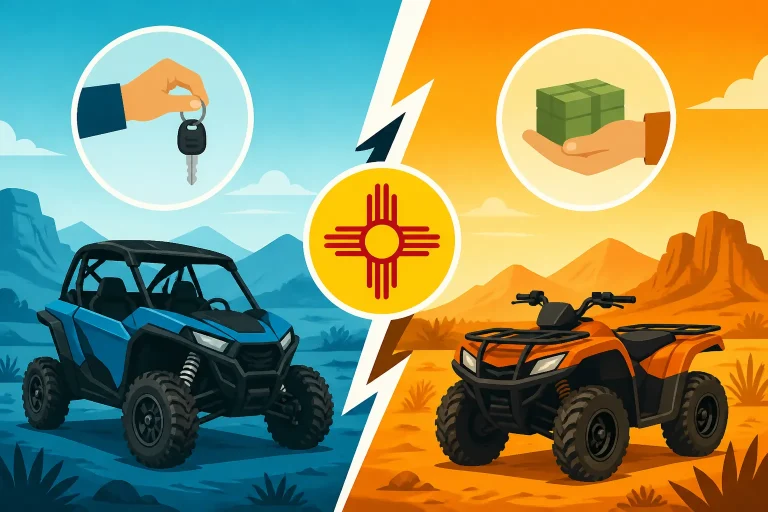
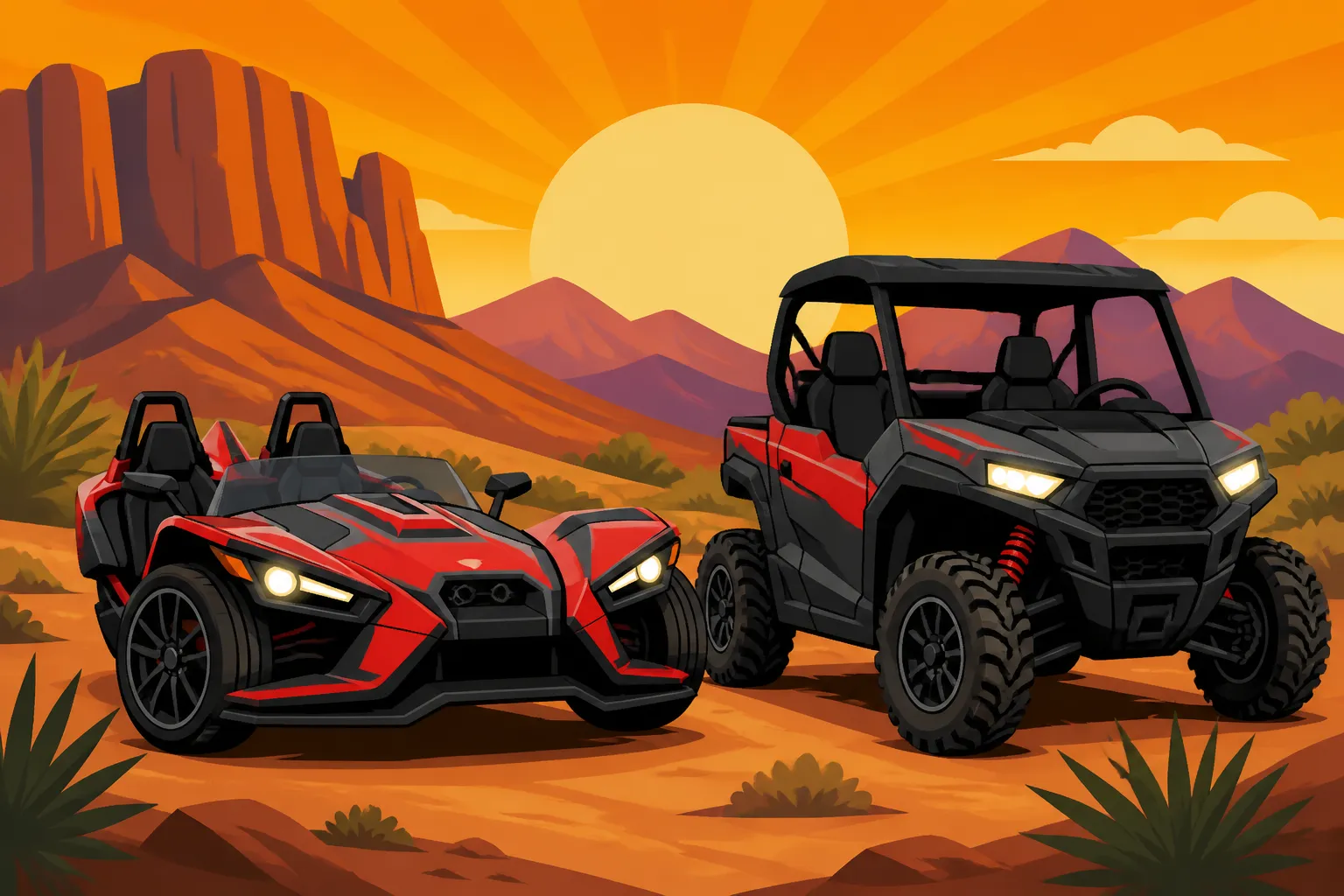
A Slingshot is an open-cockpit, three-wheeled vehicle with a steering wheel and seats arranged side by side. It is designed primarily for paved-road driving, not for riding trails like an ATV. A Ranger is a side-by-side utility vehicle, commonly called a UTV, built for off-road terrain. It has a steering wheel, seat belts, and a roll cage, and is designed to carry a driver and passengers over suitable dirt routes.
Both can make a memorable outing, but they deliver different experiences. In a Slingshot, the fun is the drive itself: the road, scenery, and open-air feel. In a Ranger, the focus is getting onto an appropriate off-road route and handling changing surfaces such as gravel, dirt, or sand.
| Feature | Slingshot | Ranger side-by-side |
|---|---|---|
| Best suited to | Paved-road drives | Off-road routes where vehicle access is allowed |
| Basic vehicle type | Three-wheeled road vehicle | Off-highway utility vehicle |
| Driving feel | Low, open, road-focused | Taller, more upright, terrain-focused |
| Typical route | Paved roads | Dirt roads or designated OHV routes |
| Main planning concern | Road rules, route, and weather | Route access, terrain, permits, and closures |
| Rental details to confirm | License, insurance, gear, and mileage rules | Passenger capacity, route limits, equipment, and recovery terms |
The model name alone does not tell you exactly what you’ll get. A rental shop may have different versions, seating arrangements, and rules. Ask for the specific vehicle and route details before paying a deposit. If you are comparing other side-by-sides, Renting a Ranger Instead of a RZR can help clarify what a utility-focused machine offers.
A Slingshot is not automatically an OHV just because it is open-air and has three wheels. Likewise, a Ranger is not automatically allowed on every dirt road. The vehicle’s registration and classification, the road or trail’s rules, and the rental agreement all matter. In New Mexico, a paved-road route and an off-highway route involve different requirements. For the road-use distinction, see Street Legal ATVs in New Mexico: The Short Answer and New Mexico Paved Road Plate Requirements.
Choosing the right ride for your New Mexico plans
Start with the experience you want rather than the vehicle that looks most exciting in a photo. If your group wants a scenic drive with stops for food, viewpoints, or a town visit, a Slingshot may be the better fit. If you want to travel on dirt routes in an off-road vehicle, a Ranger may suit the plan better, provided the rental allows the route and you meet its requirements.
Choose a Slingshot for paved-road touring
A Slingshot works best when the outing is planned around roads open to that vehicle. You can enjoy the landscape without navigating trail surfaces, but you still need to think about the route: road conditions, traffic, weather, and where you can safely stop. An open vehicle also exposes riders to sun, wind, dust, and changing temperatures, so a pleasant morning can feel uncomfortable during a long, hot afternoon.
The machine’s three-wheel layout and low seating position feel different from driving a car. Before leaving, take time to understand the controls and ask the rental staff how the vehicle handles, where its storage is, and what to do if you have a problem. The shop’s instructions matter more than assumptions based on driving an ordinary car.
If you want a pavement-focused outing, Renting a Slingshot for the Pavement covers the practical questions to ask. Do not assume a Slingshot can be taken on an OHV trail or that a trail route is suitable simply because it appears on a map. Confirm that the road is open to the specific rental vehicle.
Choose a Ranger for off-road access
A Ranger is a better match when the goal is an off-road outing on routes where the vehicle is permitted. Its taller seating and off-road design can make it more comfortable than a Slingshot on rougher surfaces, but that does not make every route appropriate. Width, ground clearance, current closures, surface conditions, and local rules can all affect where you can drive.
Some rentals are self-guided, while others are guided or limited to a named route or area. A route that is open to one kind of machine may have restrictions for another. Ask whether the rental company expects you to stay on a designated route, whether you can leave the rental’s immediate area, and what to do if you encounter a closed gate or sign.
For a general comparison of off-road rentals and access limits, see New Mexico Rentals and Where You Cannot Go. If you are still comparing models, Renting a Ranger Instead of a RZR can help you focus on how a utility-style side-by-side differs from a sport-focused vehicle.
Match the vehicle to the group
Passenger capacity depends on the exact model. Do not book based on a general label such as “Ranger” or “Slingshot”; confirm the number of approved seats and how the rental company counts children. A group may need more than one vehicle if everyone cannot ride safely and legally in one machine.
For each passenger, ask about seat belts, seating position, age rules, and required protective gear. Children should not be carried in a seat or position that the vehicle was not designed for. A child’s height or age may also affect whether they can use the provided safety equipment properly.
If your group includes a teenager or a driver who has not operated this kind of vehicle, ask the rental company about its minimum age, driver’s license rules, supervision requirements, and training. These conditions can vary by provider and vehicle. New Mexico Rental Age and License Rules is a useful starting point, but confirm the rental company’s current policy before booking.
Where each vehicle can go and what rules to check
The biggest planning mistake is treating “road,” “dirt road,” and “trail” as interchangeable. They are not. A paved road may have rules for ordinary road vehicles; a county dirt road may have its own access restrictions; an off-highway route may be open only to particular vehicle types. A rental company may also impose limits that are stricter than the general access rules.
Slingshot routes are road trips, not trail rides
Plan a Slingshot outing around roads the vehicle is allowed to use. Check the route with the rental provider and ask whether the vehicle may travel on highways, local streets, or particular roads. Do not assume that an OHV access route or a town’s ATV allowance applies to a Slingshot.
Road conditions also affect the experience. High winds, heavy rain, dust, cold temperatures, and intense sun can make an open-cockpit drive less comfortable. Consider the forecast and the length of the route, and leave time for fuel, rest stops, and safe turnarounds. If the rental company sets a mileage area or prohibits certain roads, stay within those limits.
Ranger routes need access and surface checks
A Ranger needs a route that is legally open to the vehicle and appropriate for its dimensions and capability. Public land may use designated routes and travel-management rules. A dirt track visible on a map is not proof that it is open to motorized use, and a route that was open on a previous visit may now be closed.
Before setting out, ask the rental provider which route or riding area is approved, whether permits or proof of registration are required, and how to check for closures. If the route crosses land with separate access rules, verify permission rather than assuming that a public road continues across private, tribal, or trust land. For more on visitor requirements, see New Mexico OHV Permits Explained and New Mexico Rules for Riding a Designated Route.
Red River is a good example of why the location matters. Local rules can restrict where different types of machines may travel, and town access is not the same as access to nearby off-road routes. If you are booking there, ask the outfitter exactly where the Ranger may be driven and whether it must be transported to a trailhead. Renting in Red River, New Mexico and Riding Out of Town Under the Ordinance provide additional context.
Confirm required documents and equipment
Requirements depend on the vehicle’s classification, where you drive, and the rental arrangement. Ask the provider what documents you must carry, whether the vehicle comes with the required registration or permit, and whether you need to obtain anything separately. For a Ranger, clarify the requirements for the planned off-road route rather than relying on a rule that applies to a different vehicle or location.
Ask what safety equipment comes with the rental and what you must bring. A Ranger’s seat belts and roll cage do not replace responsible driving or route planning. For a Slingshot, check the rental company’s instructions on helmets and eye protection, and do not assume the rules are the same as for a passenger car. New Mexico’s requirements can depend on vehicle type and circumstances; the rental provider should explain what applies to the exact machine and trip.
If you are riding an OHV, check the applicable New Mexico OHV Safety Permit Requirements and make sure any required permit is with the rider who needs it. For gear specifics, ask whether helmets or other equipment are included; New Mexico Rentals That Include Helmets can help you compare what to ask.
Booking, costs, and rental terms
The rental price is only one part of the decision. The total cost can depend on the length of the booking, vehicle type, season, location, included equipment, insurance or damage options, fuel, and any delivery or recovery services. Providers set their own terms, so check the current details directly rather than relying on an old listing or a price quoted for another model.
A Slingshot and a Ranger may be priced differently because they serve different purposes and can have different operating costs. When comparing offers, compare the same rental duration and passenger capacity. A lower advertised rate may not include the same gear, fuel allowance, route access, or protection options as another booking. See New Mexico UTV Rental Prices for a broader look at the factors that affect UTV rental costs.
Ask what the booking includes
Before you reserve, get clear answers to these questions:
- What exact model and seating configuration will you receive?
- What is the total amount due, including taxes and required charges?
- Is a deposit or card hold required, and when is it released?
- Are helmets, eye protection, or other safety items included?
- Is fuel included, or must you return the vehicle with a particular fuel level?
- Where may you drive, and are there route, mileage, or time limits?
- What happens if a road or riding area closes?
- What are the rules for damage, towing, recovery, and late return?
- What identification, license, or other documents must the driver bring?
For an off-road rental, ask specifically who is responsible if the machine becomes stuck, breaks down, or gets a flat tire away from the pickup location. Recovery can involve substantial charges depending on the circumstances and the rental agreement. Read the damage terms carefully and ask how the provider documents pre-existing wear. New Mexico Rental Deposits and Damage Holds explains why the card hold and the final rental charge are separate questions.
If booking online, make sure the listing describes the same vehicle, location, and route you intend to use. A booking platform can help you compare available activities, but the rental provider remains the source for machine specifications and operating rules. Viator may be useful when comparing bookable tours or activities, while Polaris Adventures may help locate experiences involving Polaris vehicles. Neither name by itself guarantees a specific model, route, or included feature; verify those details with the actual provider.
Understand the cancellation and weather terms
Weather can change a ride quickly in New Mexico. Heat, wind, dust, storms, and mountain conditions may affect whether a trip is comfortable or safe. Ask how the company handles cancellations or rescheduling when weather, fire restrictions, or a road closure disrupts the plan. Do not assume that a closure automatically qualifies for a refund; the written policy controls.
Also confirm the check-in time, pickup location, return deadline, and what happens if you arrive late. A guided tour may require the group to leave together, while a self-guided rental may have a set return time. Build enough time into the day to complete the required briefing and inspect the machine before departure.
A practical checklist before you choose
Use this checklist to make the decision less about the vehicle’s appearance and more about whether it fits your outing.
- Name the experience you want. Choose a road-focused scenic drive for a Slingshot or a permitted off-road route for a Ranger.
- Confirm the route. Ask the provider to identify where the vehicle may go. For a Ranger, check route access and closures. For a Slingshot, confirm that the planned roads are permitted.
- Match the seats to your group. Confirm the exact model, approved passenger count, and child requirements.
- Check driver requirements. Ask about age, license, experience, and any additional rules for younger riders.
- Clarify permits and documents. Find out what comes with the vehicle and what each rider must carry.
- Review safety equipment. Confirm what is included and what you should bring, including weather-appropriate clothing and eye protection.
- Read the full cost and damage terms. Separate the rental charge from deposits, holds, fuel, recovery, cleaning, or late-return charges.
- Plan for conditions. Check the forecast and route status, and ask how the provider handles cancellations caused by closures or unsafe weather.
For a first-time renter, a guided trip can reduce the work of route planning, but it also means following a guide’s schedule and route. A self-guided rental offers more independence within the provider’s limits, but you need to understand the permitted area and be prepared to handle navigation and basic decisions along the way. A Slingshot is generally the simpler choice for a paved itinerary; a Ranger demands more attention to where motorized travel is allowed.
Neither machine is the universally better rental. The right pick depends on where you want to go, who is coming, and whether the road or off-road experience is the point of the day. Get the exact vehicle and route confirmed before you book, then read the rental terms closely enough to know what you are responsible for.
Frequently Asked Questions
Is a Slingshot an ATV or UTV?
A Slingshot is a three-wheeled road vehicle, not an ATV or UTV for ordinary off-road planning. Confirm its classification and permitted route with the rental provider.
Can a Ranger drive on paved roads in New Mexico?
Do not assume that it can use any paved road. Access depends on the vehicle’s status and the road’s rules, as well as the rental agreement. Ask the provider which specific roads are allowed.
Which is better for a family?
It depends on the group and the exact model. Confirm the number of approved seats, child requirements, and safety equipment before booking. A vehicle’s advertised passenger capacity should not replace the provider’s instructions.
Does a Ranger rental include an OHV permit?
It may or may not. Ask whether the rental includes the required registration or permit for the machine and whether each rider needs separate documentation for the route.
Disclaimer
This article is for general informational purposes only and does not constitute professional advice. Laws, prices and regulations vary by location and change over time. Consult a qualified professional for guidance on your specific situation.